Production
Oil-Rich Alberta Tells Ottawa to Butt Out
A federal proposal on emissions from the fossil-fuel sector proved to be a step too far for Alberta
Released Wednesday, July 20, 2022
Written by Daniel Graeber for Industrial Info Resources (Sugar Land, Texas)--The provincial government of oil-rich Alberta is taking something of a greener posture, but a federal proposal on emissions from the fossil-fuel sector proved to be a step too far.
The federal government in Ottawa put forward a discussion paper that outlines how to cut total greenhouse gas emissions by as much as 45% below 2005 levels by 2030. The ultimate goal is to achieve a net-zero economy by 2050.
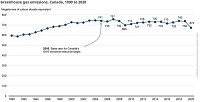
The federal government estimated that the oil and gas sector accounted for 27% of the nation's total greenhouse gas emissions last year, the largest and fastest-growing polluting industry in the country.
The government is now proposing either a cap-and-trade scheme or a carbon-pricing benchmark that would create "price-driven" incentives to cut back on emissions from the oil sector.
Steven Guilbeault, Canada's minister for environment and climate change, said that capping industry emissions is essential.
"True global energy security and affordability can only come with reduced emissions," he said in a statement.
Alberta holds some of the richest oil deposits in the world, and the provincial oil sector accounts for about 7% of total Canadian GDP. This puts Canada in a unique position at a time when supply-side concerns continue to roil the broader commodities market.
Alberta Energy Minister Sonya Savage told the Reuters news service from the sidelines of the CERAWeek energy conference in Houston early this year that "we are the solution" to global supply-side woes.
But Alberta also has continued with its theme of embracing the energy transition more vocally than other major fossil-fuel producers.
"Alberta has a real opportunity to become a leader in the hydrogen space," said Doug Schweitzer, Alberta's minister of jobs, economy and innovation, in April. "Not only do we have abundant natural gas resources, we have the talent, ingenuity and entrepreneurship to make hydrogen another Alberta success story."
Blue hydrogen includes carbon sequestration. Alberta has made strides in carbon capture, utilization and storage as well, and combining that with some hydrogen formation processes would be a win-win for the provincial energy transition.
For related information, see April 28, 2022, article - Alberta Pursues Blue Hydrogen in Earnest.
But Alberta is largely an oil province, on par with the likes of Texas. And, like the criticism of President Joe Biden's energy policy, leaders in Alberta said the federal government has taken things a bit too far.
Alberta Minister of Environment and Parks Whitney Issik joined Savage in issuing a joint statement saying the federal government was running afoul of the law by trying to exercise its authority over provincial resources.
"The federal government cannot act unilaterally to meet their emissions targets," they said.
Indeed, Alberta's emission's goals are similar to federal targets. Its government claims to have already put a limit on emissions from the oil sector and is spending more than US$540 million on programs meant to curb pollution even further.
The energy transition will be a slow process that has been thwarted further by the supply-side challenges brought on by the Russian invasion of Ukraine. The latter shows fossil fuels are still necessary in the global economy.
Russia is a world leader in both crude oil and natural gas production, and the resultant Western-backed sanctions have created a supply-side crisis that's keeping crude oil prices at about $100 per barrel. That's hurting the global economy, but so too was the energy transition as oil companies invested in things other than upstream activity. That, in turn, led to supply issues before the onset of war.
Transitions may be necessary, but they will remain slow. Like in the U.S., oil producers in Canada are accustomed to revenues derived from drilling, not green agendas. And the international players there are beholden to their shareholders, who would rather see capital returns than more drilling.
That tells us that transitions are never easy. Nor will they please all of the people all of the time.
Industrial Info Resources (IIR) is the world's leading provider of market intelligence across the upstream, midstream and downstream energy markets and all other major industrial markets. IIR's Global Market Intelligence Platform (GMI) supports our end-users across their core businesses, and helps them connect trends across multiple markets with access to real, qualified and validated project opportunities. Follow IIR on: LinkedIn.
/news/article.jsp
false
Want More IIR News Intelligence?
Make us a Preferred Source on Google to see more of us when you search.
Add Us On GoogleAsk Us
Have a question for our staff?
Submit a question and one of our experts will be happy to assist you.

Forecasts & Analytical Solutions
Where global project and asset data meets advanced analytics for smarter market sizing and forecasting.
Explore Our SolutionsRelated Articles

PECWeb Global Market Intelligence Platform
Identify opportunities, anticipate change, and execute with confidence. PECWeb connects the industrial intelligence you need, from projects and assets to operational events, all in one platform.
Discover PecwebIndustry Intel
-
European Chemicals and Transport Fuels OutlookPodcast Episode / Jul 10, 2026
-
2026 European Petroleum Refining Project OutlookPodcast Episode / Jun 26, 2026
-
Brazil: Efficiency, Innovation, and Opportunities in the Food & Beverage IndustryPodcast Episode / Jun 12, 2026
-
2026-2027 Investment Radar for Mexico, Central America & the CaribbeanPodcast Episode / May 29, 2026
-
Innovations Shaping the Next Era of Power GenerationPodcast Episode / May 22, 2026