Metals & Minerals
Senate Tax Bill Includes Metallurgical Coal Subsidy
The U.S. Senate's budget bill, while accelerating the phaseout of production tax credits for renewable energy, would add a subsidy for the production of metallurgical coal (met coal), which was added to the U.S. list of critical minerals in May.
Released Wednesday, July 02, 2025
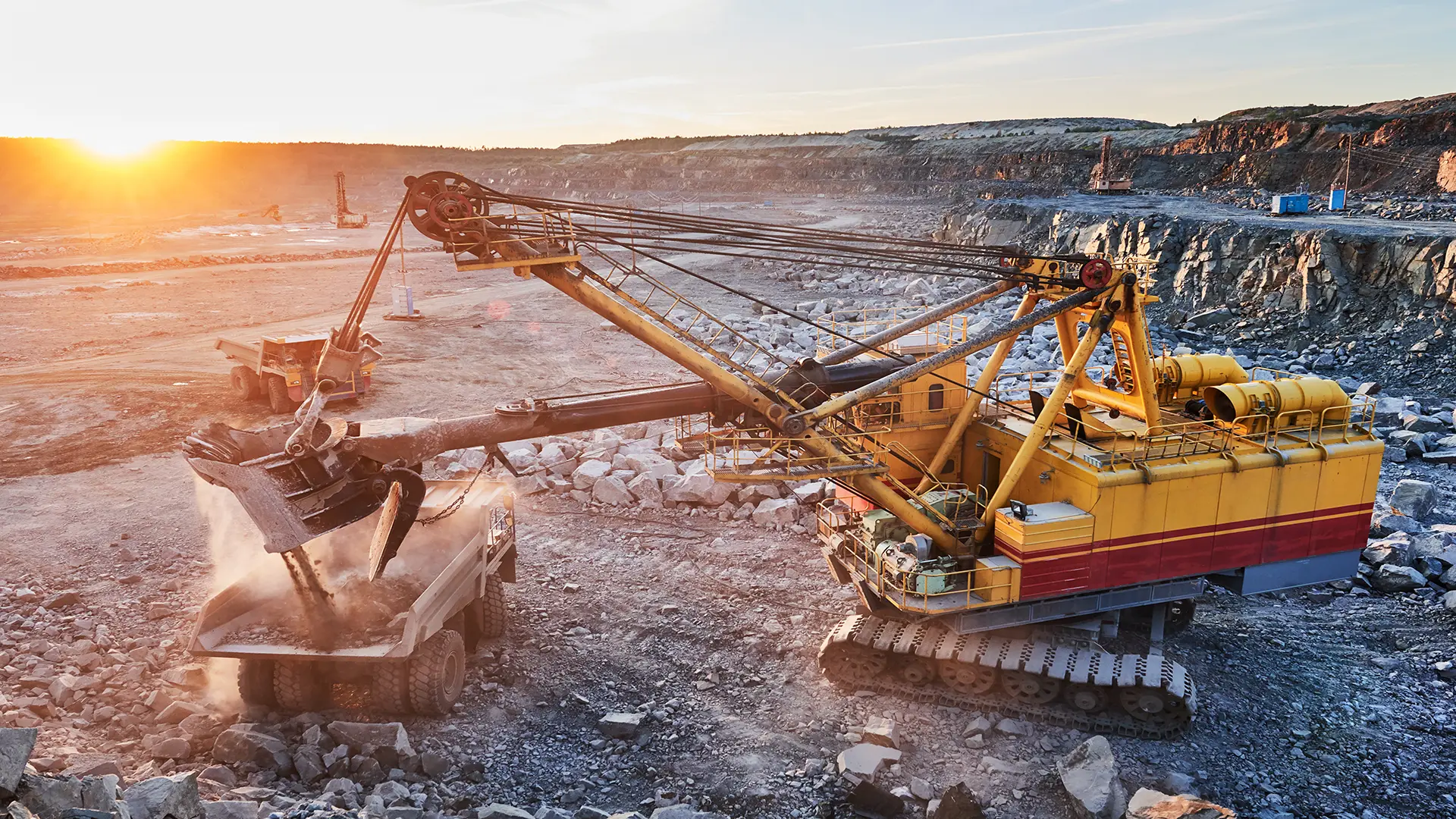
Researched by Industrial Info Resources (Sugar Land, Texas)--The U.S. Senate's budget bill, while accelerating the phaseout of production tax credits for renewable energy, would add a subsidy for the production of metallurgical coal (met coal), which was added to the U.S. list of critical minerals in May. While most critical minerals on the list are used in technological fields such as defense systems, computing and data centers, and automobiles, met coal, used to produce steel, doesn't fit this category, although other metals in steel manufacturing such as zinc and nickel also are on the list. However, while a majority of zinc and nickel used in the U.S. is imported, as are many of the other minerals that comprise the list, most met coal produced in the U.S. is exported to other countries.
The Senate voted 51-50 on Tuesday to pass the bill, with Vice President JD Vance breaking a tie. Under the bill, met coal could claim an advanced manufacturing production tax credit, available for critical minerals, that would pay 2.5% of costs for the coal. The measure now heads to the House of Representatives.
While the U.S. Geological Survey (USGS) states that the Energy Act of 2020 defines a critical mineral as "a non-fuel mineral or mineral material essential to the economic or national security of the U.S. and which has a supply chain vulnerable to disruption," some critics question whether met coal should receive this designation and if it should receive the 2.5% advanced manufacturing subsidy included in the Senate's proposed bill.
Met coal is used in steelmaking, and a substantial portion of this "critical mineral" is exported to China. Countries across the world have accused China of dumping subsidized steel on the global market. Chinese steel exports last year rose to a nine-year high at about 110.7 million tons. This comes despite overall steel production in China falling 1.7% in 2024 to a five-year low.
China's slowing steel production could see met coal prices decline even further as this key market consumes less for the steelmaking process. According to a blog on the World Bank website published last month, global coal demand (for both met coal and thermal coal used in power generation) increased slightly less than 80 million tons in 2024, "less than one-third of the increase recorded in each of the previous two years." The piece also states that China's coal consumption slowed by 80% in 2024, to about 60 million tons, while India, another key importer of coal, saw demand soften by about one-third.
A majority of the steel made in the U.S. doesn't rely on met coal, which is used in blast furnaces, but rather uses electric current in electric arc furnaces (EAF). Recent statistics suggest that about 70% of steel produced in the U.S. comes from EAFs rather than met coal-consuming blast furnaces.
EAFs are decidedly cleaner and less carbon-intensive than blast furnaces, potentially reducing carbon-dioxide emissions by 75% to 80% compared to blast furnaces. Global EAF use is much smaller than that of the U.S., accounting for about 29% of global steel production, versus 71% for blast furnaces, according to the World Steel Association. Is it possible that a U.S. met coal production subsidy, while perhaps being a boon to domestic met coal miners (many of which have reported recent quarterly losses), wouldn't in fact also be a subsidy on blast furnace-produced steel from other countries, potentially hurting steel producers in the U.S. and encouraging increased consumption of more carbon-intensive steel. According to a 2024 article from U.S. Energy Information Administration (EIA), "Metallurgical coal accounts for approximately 10% of U.S. coal output, and nearly all of it is exported."
Despite the relative rarity of many critical minerals, metallurgical coal is, in fact, seeing a global oversupply, which is driving down prices and causing many miners to curtail production. A U.S. production tax subsidy, rather than helping balancing an undersupplied market, could potentially contribute to this oversupply, further driving down prices and perhaps lowering prices of steel imported into the U.S. further, ultimately hurting U.S. steel producers, although tariffs could provide some protection from this.
Industrial Info Resources (IIR) is the leading provider of industrial market intelligence. Since 1983, IIR has provided comprehensive research, news and analysis on the industrial process, manufacturing and energy related industries. IIR's Global Market Intelligence (GMI) helps companies identify and pursue trends across multiple markets with access to real, qualified and validated plant and project opportunities. Across the world, IIR is tracking over 200,000 current and future projects worth $17.8 trillion (USD).
Want More IIR News Intelligence?
Make us a Preferred Source on Google to see more of us when you search.
Add Us On GoogleAsk Us
Have a question for our staff?
Submit a question and one of our experts will be happy to assist you.

Forecasts & Analytical Solutions
Where global project and asset data meets advanced analytics for smarter market sizing and forecasting.
Explore Our Solutions
PECWeb Global Market Intelligence Platform
Identify opportunities, anticipate change, and execute with confidence. PECWeb connects the industrial intelligence you need, from projects and assets to operational events, all in one platform.
Discover PecwebIndustry Intel
-
Latin America Data Center Outlook 2026: Power, Hubs & GrowthPodcast Episode / Oct 9, 2026
-
Food and Beverage CapEx Outlook 2026: Tariffs, AI, AfricaPodcast Episode / Oct 9, 2026
-
North America Refining 2026: New Pipelines to PADD 5Podcast Episode / Oct 2, 2026
-
Biomanufacturing Onshoring 2026: GLP-1, CDMO and ReshoringPodcast Episode / Oct 2, 2026
-
2026 US Data Center Outlook: Power, Land & CoolingPodcast Episode / Sep 18, 2026