Production
Texas Railroad Commission Raises Requirements for Disposal Wells
The Texas Railroad Commission has begun taking steps to analyze and control manmade earthquakes in the Permian Basin
Released Tuesday, February 14, 2023
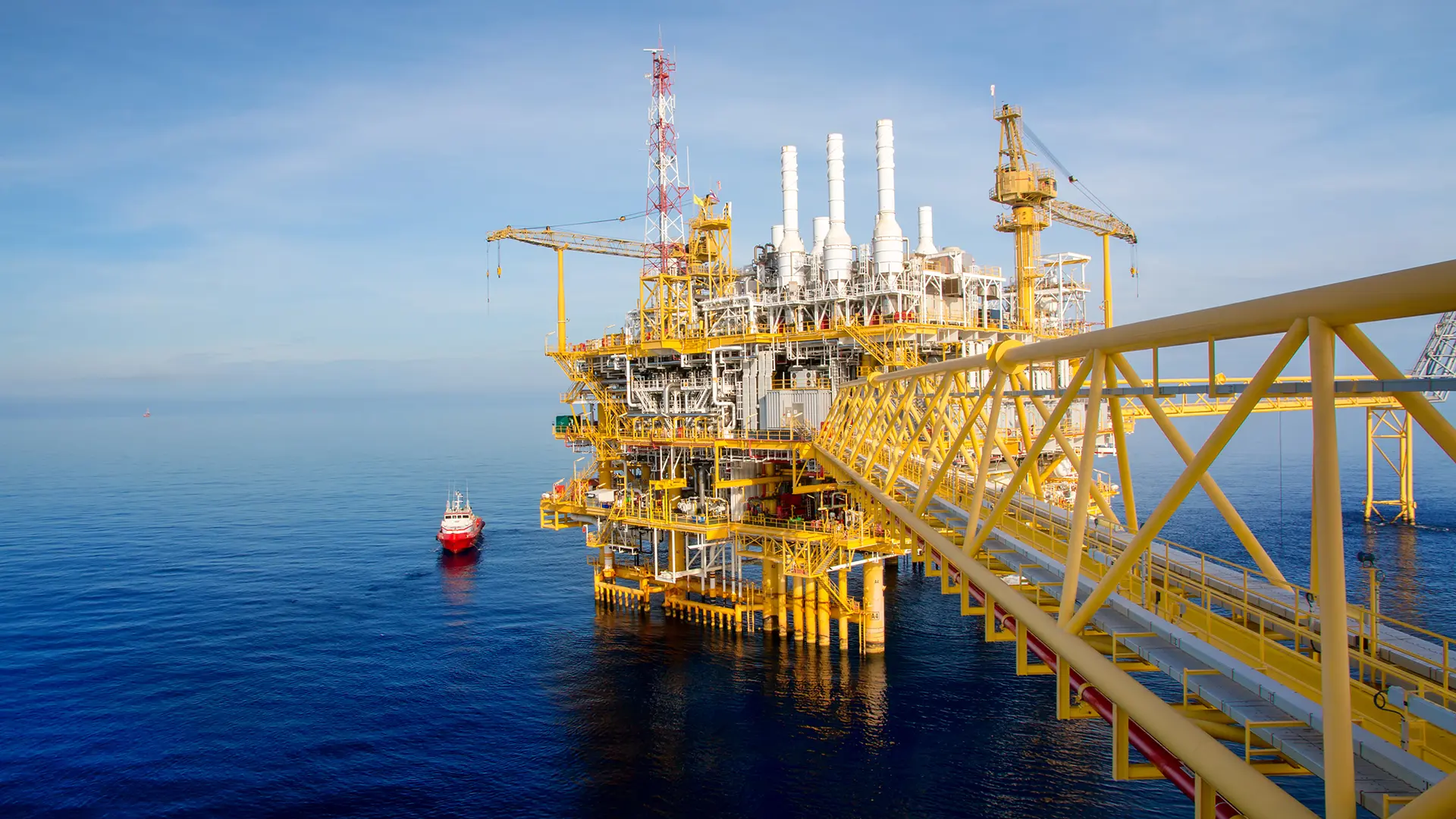
Written by Paul Wiseman for Industrial Info Resources (Sugar Land, Texas)--Over the last few years, human-induced earthquakes have increased in major oil producing regions of Texas, especially in the Permian Basin. Studies have connected this seismic activity to the disposal of produced water coming from nearby oil wells. Events of magnitude 3-5 have become so frequent in these areas, especially Odessa, Midland, Gardendale and Big Spring, that the Texas Railroad Commission (RRC), the state's oil and gas regulatory agency, has begun taking steps to analyze and control these quakes.
The RRC's most recent action, on February 6, was to issue a notice to operators (NTO) announcing a slate of regulations applicable to new disposal wells in areas previously designated as Seismic Response Areas (SRAs). The regulations will require monitoring and reporting activities aimed at tracking formation conditions and injection rates.
Areas currently identified as SRAs include Gardendale (just north of Midland/Odessa), northern Culberson and Reeves counties (near Pecos and Monahans) and Stanton (just east of Midland.) All of these are in the U.S.' most prolific producing area, the Permian.
The disposal problem arises from the fact that almost all oil wells produce significantly more water than oil. The water-to-oil ratio is typically 3-1, up to 10-1 or more in areas of the Permian. All the oil has somewhere to go--pipelines carry it to refineries for use in transportation and industry.
That water? Not so much. It's briny and otherwise unusable without extensive treatment. About 10% is indeed treated enough to be useful for fracking, but the rest is pumped into the ground in saltwater disposal wells (SWDs). Because Permian producers inject billions of barrels of produced water every year, and have been since the shale revolution of around 2010, the built-up downhole pressure is believed to be causing the temblors.
The RRC has already restricted injection in those SRAs, and now is taking further monitoring steps on certain wells, including:
- All new "deep" disposal wells in the Permian Basin, and
- All new "shallow" disposal wells in the Permian Basin that are in SRAs.
- Maximum surface injection pressure
- Average surface injection pressure
- Maximum bottomhole injection pressure
- Average bottomhole injection pressure
- Injection volume
- Maximum injection rate
- Average fluid density
Katie Smye, co-principal investigator of the Center for Integrated Seismicity Research at the Bureau of Economic Geology (BEG), is optimistic, with a caveat: these rules only apply to new wells, not to existing ones.
"Monitoring and reporting requirements outlined in the NTO reflect great progress in our understanding of pressure increases associated with wastewater injection, and resulting induced seismicity including the recent ML5.4 (Delaware Basin) and ML5.2 (Midland Basin) events," she said by email. The term ML refers to Local Magnitude, the BEG's format for reporting, as opposed to MW, for Moment Magnitude.
Smye adds that monitoring now in place has "already benefited from reporting of daily injection volumes in Seismic Response Areas (SRAs) and we have modified our modeling approaches to capture that temporal granularity. The pressure parameters outlined in the NTO, along with the requirement for reporting of daily volumes outside the SRAs, will be key in further understanding and mitigating induced seismicity. It is important to note, though, that this NTO applies only to new disposal well permits and not to existing disposal wells, of which there are thousands across the Permian Basin region."
Most of the biggest tremors in the Northern Delaware Basin are connected with deep injection wells, defined as areas below shale producing zones, Smye indicated. In the southern Delaware, quakes "are linked to injection into shallow strata," which generally means zones closer to the surface than the production layers. The deeper quakes have reached ML5.4, (ML refers to the Richter Scale) in November 2022. For shallower wells the ceiling appears to be closer to ML3.5.
The future could hold further reporting requirements, as the RRC's NTO says it will continue to look for additional data that could help it study and mitigate future seismic events in the Permian Basin.
Industrial Info Resources (IIR) is the leading provider of industrial market intelligence. Since 1983, IIR has provided comprehensive research, news and analysis on the industrial process, manufacturing and energy related industries. IIR's Global Market Intelligence (GMI) helps companies identify and pursue trends across multiple markets with access to real, qualified and validated plant and project opportunities. Across the world, IIR is tracking over 200,000 current and future projects worth $17.8 Trillion (USD).
/news/article.jsp
false
Want More IIR News Intelligence?
Make us a Preferred Source on Google to see more of us when you search.
Add Us On GoogleAsk Us
Have a question for our staff?
Submit a question and one of our experts will be happy to assist you.

Forecasts & Analytical Solutions
Where global project and asset data meets advanced analytics for smarter market sizing and forecasting.
Explore Our SolutionsRelated Articles
PECWeb Global Market Intelligence Platform
Identify opportunities, anticipate change, and execute with confidence. PECWeb connects the industrial intelligence you need, from projects and assets to operational events, all in one platform.
Discover PecwebIndustry Intel
-
European Chemicals and Transport Fuels OutlookPodcast Episode / Jul 10, 2026
-
2026 European Petroleum Refining Project OutlookPodcast Episode / Jun 26, 2026
-
Brazil: Efficiency, Innovation, and Opportunities in the Food & Beverage IndustryPodcast Episode / Jun 12, 2026
-
2026-2027 Investment Radar for Mexico, Central America & the CaribbeanPodcast Episode / May 29, 2026
-
Innovations Shaping the Next Era of Power GenerationPodcast Episode / May 22, 2026