The Age of Critical Minerals in the Americas
Video Language
Sponsored by
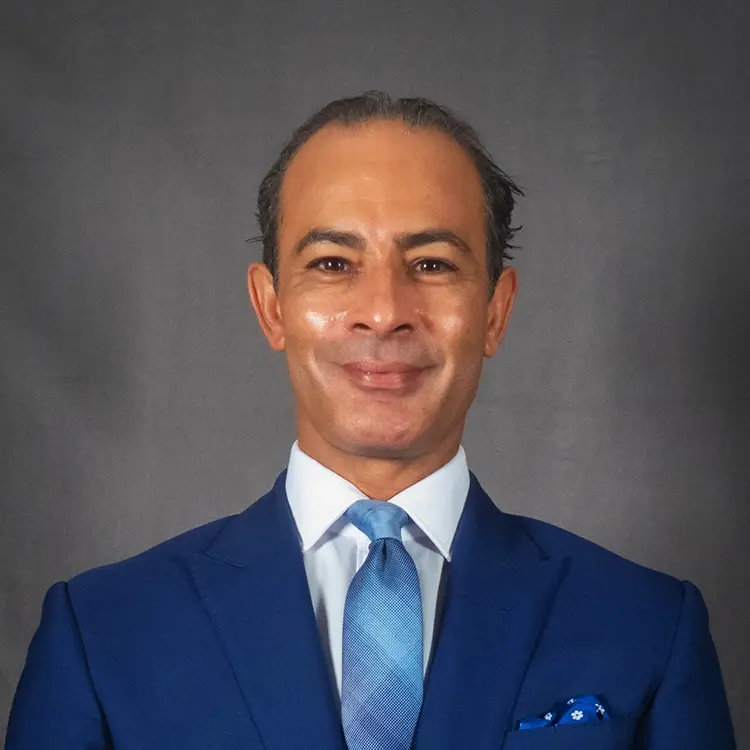
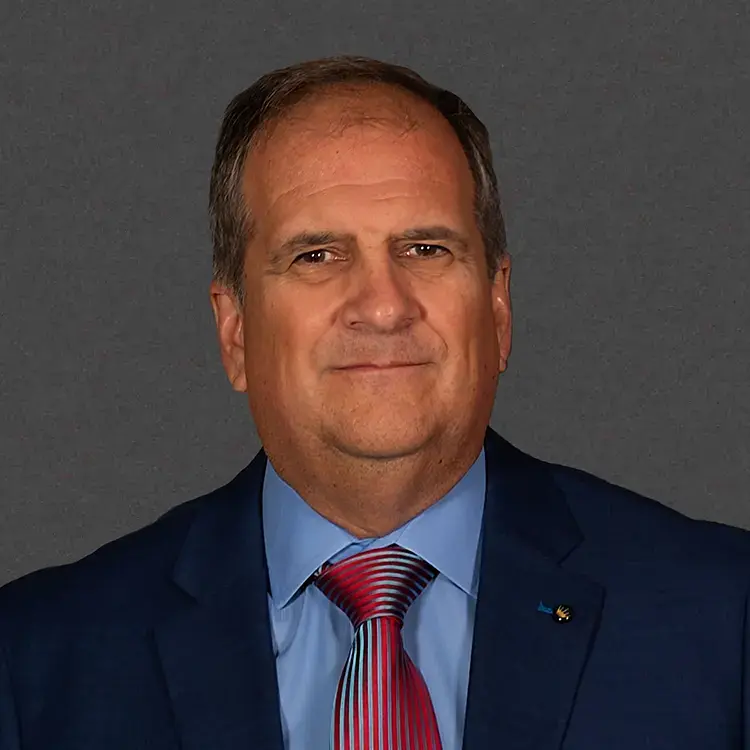
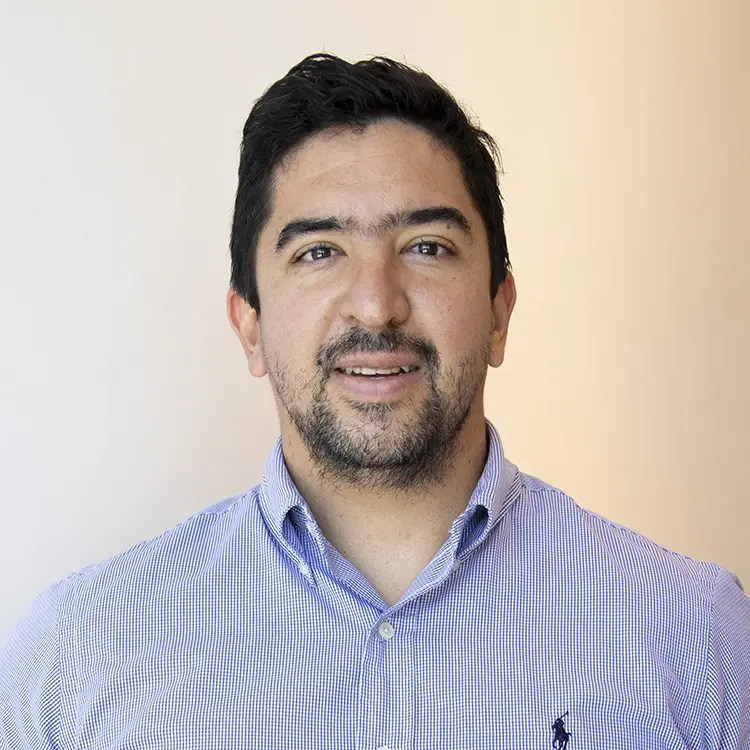
In this episode, Shaheen Chohan joins metals & minerals experts Joe Govreau (Sr. VP of Research Operations - Metals & Minerals) and Renzo Castillo (Assistant VP of Research - LATAM Metals & Minerals) to unpack the shifting policy landscape across the U.S. and Latin America. They explore how strategic supply chain agreements, permitting bottlenecks, and a growing preference for brownfield expansions are reshaping capital flows and resource security.
[Intro] (00:00):
The continued pace in demand for critical minerals to support the energy transition — and in particular to feed into the rising demand for electricity — is all coming on top of growing competition for resources and geopolitical shifts, which are having a tremendous impact on where and when projects are being developed in the US, Canada and the EU. There has been a tremendous shift in policy support for mining and downstream refining projects to shore up resource supply security concerns. So the big question is: are we now seeing a new mega cycle of capital investments now emerging, or are there still headwinds in place that could see us fall short of some of those most needed inputs?
Shaheen Chohan (01:03):
Welcome to Navigating the Currents of Change. My name is Shaheen Chohan and I lead Global Analytics here at Industrial Info Resources. For over 40 years, we have been providing market intelligence, data analytics and geospatial solutions to those companies involved in the design, construction and maintenance of plants and facilities across energy, mining and heavy industrial sectors across the world. Now, to help me unpack some of those trends we are seeing, I'm delighted to be joined by two of our subject matter experts. We have Joe Govreau — Joe is our global head of metals and minerals research. And also in the hot seat is Renzo Castillo, Assistant VP and Regional Manager for metals and minerals research in Latin America. Welcome, gentlemen.
Before we dive in, I would like to say a big thank you to our podcast sponsors. Hilliard Corporation is the world leader in industrial braking technology. Hilliard Braking Systems has a proven track record of performance, reliability and value. Hilliard offers an entire range of industrial modular brakes, calipers and electric brakes, and rail and disc brakes, power units and mounting brackets. Many thanks to the folks over at Hilliard for all of your support today on this podcast.
Now, Joe, I would obviously like to start with you. In the US, the metals and minerals industry is really going through something of a structural shift. It's been doing that over the last couple of years. Certainly we're starting to see more government policy — supportive policy — being moved into the mining and downstream processing sectors. And obviously some of that started with the previous administration. But there was a real realization that critical minerals in particular are very important and now being deemed as strategic. What are some of the things that you're now starting to see in terms of new momentum from the Trump administration?
Joe Govreau (03:13):
Yes, I think that's true, Shaheen, especially in the US and other Western countries that are looking for resource security — including those in the EU. You mentioned during the recent outlook event that we're in the age of electricity, and I definitely agree with you there, with all the electrification going on throughout the world. But if that's true, then we're also in the age of critical minerals, because critical minerals like copper, lithium and nickel are needed to electrify.
Over the past year, we've seen an incredible increase in project activity that's grown by about 24%. There's currently $1.2 trillion worth of projects in this space. The Americas, which is where we'll focus the topic of this discussion, accounts for about 46% of the global activity. We're seeing a lot of policy shifts definitely moving us into a pro-mining era. As you mentioned, especially in the US, starting early last year, we've seen numerous executive orders to support mining — the increase in American minerals production, the Defense Production Act, and even offshore mining. A critical minerals czar was created — David Copley, who formerly worked for Newmont, one of the major mining companies. There are 55 mining projects that have been added to the Fast 41 permitting program over the past year, numerous DOE and DOD funding and grants for mining and downstream refining and processing projects. The DOD has taken a 40% interest in a joint venture with Korea Zinc to construct a smelter in the US. The USGS expanded the critical minerals list from 50 to 60. This past year, the government is now investing directly in mining and downstream processing of critical minerals through partnerships with companies like MP Materials, US Rare Earths, Lithium Americas and Trilogy Metals. And the US has initiated partnering with countries including Australia, Japan, Canada, countries in Europe and deals with Thailand, Malaysia, Saudi Arabia and Kazakhstan. And just recently, we saw the Trump administration announce a $12 billion investment to create a strategic mineral stockpile. This has been a busy year for policy — that's an understatement.
Other countries are following suit. In Canada, for example, Ontario has implemented the one project, one permit framework to speed up the permitting process and has placed two mining projects into that program — the Frontier Lithium PAK project near Red Lake, and Canada Nickel's Crawford project, which is one of the largest nickel resources.
Shaheen Chohan (06:10):
So now I'd like to bring in my colleague Renzo Castillo, who heads up research for IIR in Latin America. Welcome, Renzo. Are you seeing similar policy developments happening to support projects in Latin America?
Renzo Castillo (06:25):
Thanks, Shaheen and Joe — it's great to be here. Yes, we are seeing policy developments across Latin America that clearly affect global demand for critical minerals. But they are being shaped by very country-by-country specific policies. Argentina is probably the clearest example right now. The new RIGI framework is attracting strong interest from mining and energy investors by offering long-term tax and FX incentives, particularly for lithium and copper projects. More than $33 billion in projects have already been submitted, mainly for lithium and copper more broadly.
Argentina remains a key part of the lithium triangle with Chile and Bolivia, and is currently leading the region in project spending. At current growth rates, it could surpass Chile in lithium production over the next five years. We are also seeing some positive trade and geopolitical signals, like the progress in the Mercosur and European Union agreement, which is helping reinforce Latin America's role in diversifying global supply chains. That said, the region isn't moving in one direction. Mexico's decision to nationalize lithium is a good example of how more state-driven approaches can introduce uncertainty to private investments. Overall, policy clarity and long-term stability are becoming decisive factors in where capital flows within the region.
Shaheen Chohan (08:04):
Thanks, Renzo. I'd like to keep you in the hot seat a little bit longer. At no point in time have we seen demand — and with it competition — for critical minerals at its most intense around the world. Now, obviously part of this intensity is because many of these critical minerals, and indeed rare earth elements as well, are really very concentrated — they're only found in a limited number of countries. From your perspective, which countries and indeed which commodities do you see the most project activity currently occurring with?
Renzo Castillo (08:39):
If we look at critical minerals, copper remains the backbone of the region, with Chile and Peru as the main producers. What is interesting is that most of the current project activity is not focused on greenfield or grassroots developments, but rather on expansions, optimizations and life extensions of projects at existing operations. This is a trend that we have been observing over the past few years, and we expect it to continue as companies look at risk capital deployment while still increasingly meeting supply requirements.
At the same time, Argentina is becoming more relevant, mainly due to the recent policy changes and more open approach to international markets. While we are not yet seeing a large wave of new greenfield copper projects, we are seeing increased mergers and acquisitions and joint venture activity — including the entry of major international players acquiring advanced projects. This shows growing confidence in the country as a long-term mining jurisdiction.
Shaheen Chohan (09:43):
So Renzo, to follow on from that — I'd like to turn specifically to the battery energy storage solution space and take a bit of a deeper look at lithium. Where are some of the epicenters of mining capital spending specific to lithium that you're seeing? And in particular, are you seeing any new emerging regional resources now being exploited, possibly for the first time, on the lithium side?
Renzo Castillo (10:16):
Latin America remains absolutely central in the global picture. The region accounts for over 50% of globally known lithium resources, making it a critical pillar of long-term global supply. In terms of mining capital spending — as we are talking — Argentina continues to attract a large share of investments, with multiple projects under construction or moving toward production. Chile remains one of the world's top lithium producers and a central player in global supply, supported by established resources, existing infrastructure and deep operating experience.
Looking ahead, industry data suggests we are entering another investment cycle. At IIR, we are recording over $6.4 billion in lithium-related capital investments with project kickoffs beginning in 2026, concentrated mainly in Argentina, Chile, Bolivia and Brazil. Overall, lithium investments in the region are closely aligned with global battery demand, but capital is being deployed selectively — with a strong focus on risk management, asset optimization and long-term strategic positioning.
Shaheen Chohan (11:27):
So, Joe, would it be right to say that mining companies right now are looking at alternative strategies to acquire and scale their resource portfolios beyond having to commit new capital to new grassroots mine developments — which are still being challenged by that age-old problem of very long, extended permitting lead times? So what are some of the other approaches that mining majors are taking to try and acquire resources and new assets?
Joe Govreau (12:04):
Yeah, I think it's challenging and expensive. Costs are rising. We're seeing increased merger and acquisition activity globally. Some of the global majors are combining or looking to combine — including Anglo American with Teck Resources. It's easier to acquire than grow organically in some cases.
Shaheen Chohan (12:23):
So Joe, would it be right to say that many of these mining majors are still favoring adding incremental production output through expansions? I recall many times you and I have sat and had these conversations and have said that grassroots development is still struggling, but where we are seeing momentum is on the expansion side — going deeper and wider. Is that still a core or key theme of spending?
Joe Govreau (12:53):
Yeah, absolutely. It's imperative for existing operations to do everything they can to extend or expand operations, because it's easier from a permitting and cost standpoint. In many cases, as a result, we're seeing more mine life extensions, expansions, underground pit additions, restarts, and other brownfield-type activity.
Shaheen Chohan (13:19):
So Renzo, are you seeing any other developing trends or opportunities impacting spending in Latin America?
Renzo Castillo (13:25):
Yes. There are several additional trends that are likely to influence project spending as we move into 2026. One important development is the growth of strategic supply chain agreements — those go beyond traditional government-to-government deals and increasingly include direct partnerships between miners, refiners, equipment manufacturers and downstream consumers for critical minerals. These agreements are becoming essential as companies look to reduce supply risk and gain long-term visibility over production. These partnerships can have a direct impact on where capital is deployed, often accelerating investments in jurisdictions that are seen as stable, resource-rich and strategically aligned with end markets. From that perspective, Latin America remains very well positioned, particularly for copper and lithium projects.
At the same time, lithium investments are expected to continue growing, supported by international partnerships and long-term offtake agreements. It will also be important to watch the evolution of direct lithium extraction technologies. If these technologies scale successfully, they could reduce development timelines and cause a reshaping of future investment decisions across our region.
Shaheen Chohan (14:53):
If I may, I've got an additional question for you. Bearing in mind the big contribution natural resources makes to the economic outlook for your region — are there moves to try and support the development of these, and are there also some challenges? I guess similar to what is being seen in the US around trying to move some of these big capital-intensive projects forward across Latin America.
Renzo Castillo (15:18):
Natural resources are absolutely central to Latin America's economic outlook. And while some governments are trying to support development, there are still significant challenges around execution. The most persistent issue is political and regulatory uncertainty. Even in countries with world-class geology like Chile, changes in government tax regimes or mining frameworks can complicate long-term investment decisions. Peru is also a good example — despite being a leading global copper producer, recent political instability has slowed permitting and delayed several projects. We have seen similar dynamics in Panama, where the suspension of operations at Cobre Panama shows how policy and legal uncertainty can impact large-scale mining activities.
Mexico illustrates a different approach. The decision to nationalize lithium and centralize control under the state entity has reshaped the investment landscape and introduced uncertainty for private capital in strategically important sectors. At the same time, there are more balanced models emerging in Chile — the agreement between Codelco and SQM provides a clear, long-term framework for lithium development, with its real impact expected around 2030. Overall, the region has enormous potential, but capital is increasingly selective and tends to flow toward countries that can offer clarity, stability and predictable rules.
Shaheen Chohan (16:55):
So, as we are also seeing in the US, permitting has continued to be a big headache. And I know Joe talked about the Fast 41 initiative, which is looking to sort of fast-track some of these projects. Are you also seeing any kind of pressure on permitting for Latin American projects, or do they tend to move a little bit faster? And if so, are there any additional moves in terms of policy to try and bring these projects quicker to market?
Renzo Castillo (17:33):
Well, that's a great connection, Shaheen. Permitting is definitely a significant challenge in Latin America, particularly when it comes to environmental permitting and social licensing. Environmental scrutiny has increased substantially in recent years, and water availability has become a critical issue, especially for copper and lithium projects. This is pushing companies to adopt more advanced water management and efficient technologies, which often increase upfront capital requirements and extend development timelines.
Access to capital is another constraint, particularly for junior and mid-tier developers. Investors are far more selective — projects need to demonstrate strong fundamentals, low risk profiles and clear execution to secure financing. On top of that, global geopolitical tensions and broader macroeconomic volatility continues to add uncertainty, affecting commodity prices, supply chains and financing conditions across our region.
Shaheen Chohan (18:42):
So, Joe, I guess in summary — the big question I'm sure everybody wants to ask, and I'm really keen to get your view and thoughts on this. Bearing in mind the big pent-up demand for critical minerals, metals and rare earths — the demand is really starting to loom. There are worries about being short in the future, and this may have some kind of knock-on effect and maybe slow down decarbonization efforts. Would it be right to say that maybe we are about to enter a big super CapEx cycle like we saw maybe back in 2010 through to 2012?
Joe Govreau (19:25):
Yeah, we've discussed that topic a couple of times. And my opinion is we've been in a supercycle since the bottom of the market in 2017. Now, it's not going to be as big as what we saw during the China investment period of 2012, but it's gaining momentum every year. And I think now that we're in the age of critical minerals, growth and CapEx is going to be steady going forward for the foreseeable future — especially with the demand drivers from electrification, and now policy backing will definitely help maintain that growth going forward.
Shaheen Chohan (20:02):
So, gentlemen, that brings us to the end of our discussion. I guess it's fair to say that the outlook for critical minerals is looking really quite strong, certainly in terms of strong long-term demand fundamentals. But as has been the case for a number of years, there obviously remains a number of practical challenges still in place that are holding back some of the full potential of capital flows that are clearly needed to help us meet the energy transition. So with that, just a couple of thank yous. First, to the folks over at Hilliard — thank you for your support today. If you'd like to find out a little more about the products and services that the folks at Hilliard offer, then please do visit their website. And to you, Joe and Renzo — a very big thank you to both of you for sharing your insights and your perspectives today. If any of you have any further questions about some of the topics discussed today, then please do reach out to myself, Joe or Renzo via our contact details you can see listed here. And finally, a big thanks to all of you who've taken the time out to join us today. I hope we have helped you all better navigate some of the currents of change we are seeing.
The continued pace in demand for critical minerals to support the energy transition — and in particular to feed into the rising demand for electricity — is all coming on top of growing competition for resources and geopolitical shifts, which are having a tremendous impact on where and when projects are being developed in the US, Canada and the EU. There has been a tremendous shift in policy support for mining and downstream refining projects to shore up resource supply security concerns. So the big question is: are we now seeing a new mega cycle of capital investments now emerging, or are there still headwinds in place that could see us fall short of some of those most needed inputs?
Shaheen Chohan (01:03):
Welcome to Navigating the Currents of Change. My name is Shaheen Chohan and I lead Global Analytics here at Industrial Info Resources. For over 40 years, we have been providing market intelligence, data analytics and geospatial solutions to those companies involved in the design, construction and maintenance of plants and facilities across energy, mining and heavy industrial sectors across the world. Now, to help me unpack some of those trends we are seeing, I'm delighted to be joined by two of our subject matter experts. We have Joe Govreau — Joe is our global head of metals and minerals research. And also in the hot seat is Renzo Castillo, Assistant VP and Regional Manager for metals and minerals research in Latin America. Welcome, gentlemen.
Before we dive in, I would like to say a big thank you to our podcast sponsors. Hilliard Corporation is the world leader in industrial braking technology. Hilliard Braking Systems has a proven track record of performance, reliability and value. Hilliard offers an entire range of industrial modular brakes, calipers and electric brakes, and rail and disc brakes, power units and mounting brackets. Many thanks to the folks over at Hilliard for all of your support today on this podcast.
Now, Joe, I would obviously like to start with you. In the US, the metals and minerals industry is really going through something of a structural shift. It's been doing that over the last couple of years. Certainly we're starting to see more government policy — supportive policy — being moved into the mining and downstream processing sectors. And obviously some of that started with the previous administration. But there was a real realization that critical minerals in particular are very important and now being deemed as strategic. What are some of the things that you're now starting to see in terms of new momentum from the Trump administration?
Joe Govreau (03:13):
Yes, I think that's true, Shaheen, especially in the US and other Western countries that are looking for resource security — including those in the EU. You mentioned during the recent outlook event that we're in the age of electricity, and I definitely agree with you there, with all the electrification going on throughout the world. But if that's true, then we're also in the age of critical minerals, because critical minerals like copper, lithium and nickel are needed to electrify.
Over the past year, we've seen an incredible increase in project activity that's grown by about 24%. There's currently $1.2 trillion worth of projects in this space. The Americas, which is where we'll focus the topic of this discussion, accounts for about 46% of the global activity. We're seeing a lot of policy shifts definitely moving us into a pro-mining era. As you mentioned, especially in the US, starting early last year, we've seen numerous executive orders to support mining — the increase in American minerals production, the Defense Production Act, and even offshore mining. A critical minerals czar was created — David Copley, who formerly worked for Newmont, one of the major mining companies. There are 55 mining projects that have been added to the Fast 41 permitting program over the past year, numerous DOE and DOD funding and grants for mining and downstream refining and processing projects. The DOD has taken a 40% interest in a joint venture with Korea Zinc to construct a smelter in the US. The USGS expanded the critical minerals list from 50 to 60. This past year, the government is now investing directly in mining and downstream processing of critical minerals through partnerships with companies like MP Materials, US Rare Earths, Lithium Americas and Trilogy Metals. And the US has initiated partnering with countries including Australia, Japan, Canada, countries in Europe and deals with Thailand, Malaysia, Saudi Arabia and Kazakhstan. And just recently, we saw the Trump administration announce a $12 billion investment to create a strategic mineral stockpile. This has been a busy year for policy — that's an understatement.
Other countries are following suit. In Canada, for example, Ontario has implemented the one project, one permit framework to speed up the permitting process and has placed two mining projects into that program — the Frontier Lithium PAK project near Red Lake, and Canada Nickel's Crawford project, which is one of the largest nickel resources.
Shaheen Chohan (06:10):
So now I'd like to bring in my colleague Renzo Castillo, who heads up research for IIR in Latin America. Welcome, Renzo. Are you seeing similar policy developments happening to support projects in Latin America?
Renzo Castillo (06:25):
Thanks, Shaheen and Joe — it's great to be here. Yes, we are seeing policy developments across Latin America that clearly affect global demand for critical minerals. But they are being shaped by very country-by-country specific policies. Argentina is probably the clearest example right now. The new RIGI framework is attracting strong interest from mining and energy investors by offering long-term tax and FX incentives, particularly for lithium and copper projects. More than $33 billion in projects have already been submitted, mainly for lithium and copper more broadly.
Argentina remains a key part of the lithium triangle with Chile and Bolivia, and is currently leading the region in project spending. At current growth rates, it could surpass Chile in lithium production over the next five years. We are also seeing some positive trade and geopolitical signals, like the progress in the Mercosur and European Union agreement, which is helping reinforce Latin America's role in diversifying global supply chains. That said, the region isn't moving in one direction. Mexico's decision to nationalize lithium is a good example of how more state-driven approaches can introduce uncertainty to private investments. Overall, policy clarity and long-term stability are becoming decisive factors in where capital flows within the region.
Shaheen Chohan (08:04):
Thanks, Renzo. I'd like to keep you in the hot seat a little bit longer. At no point in time have we seen demand — and with it competition — for critical minerals at its most intense around the world. Now, obviously part of this intensity is because many of these critical minerals, and indeed rare earth elements as well, are really very concentrated — they're only found in a limited number of countries. From your perspective, which countries and indeed which commodities do you see the most project activity currently occurring with?
Renzo Castillo (08:39):
If we look at critical minerals, copper remains the backbone of the region, with Chile and Peru as the main producers. What is interesting is that most of the current project activity is not focused on greenfield or grassroots developments, but rather on expansions, optimizations and life extensions of projects at existing operations. This is a trend that we have been observing over the past few years, and we expect it to continue as companies look at risk capital deployment while still increasingly meeting supply requirements.
At the same time, Argentina is becoming more relevant, mainly due to the recent policy changes and more open approach to international markets. While we are not yet seeing a large wave of new greenfield copper projects, we are seeing increased mergers and acquisitions and joint venture activity — including the entry of major international players acquiring advanced projects. This shows growing confidence in the country as a long-term mining jurisdiction.
Shaheen Chohan (09:43):
So Renzo, to follow on from that — I'd like to turn specifically to the battery energy storage solution space and take a bit of a deeper look at lithium. Where are some of the epicenters of mining capital spending specific to lithium that you're seeing? And in particular, are you seeing any new emerging regional resources now being exploited, possibly for the first time, on the lithium side?
Renzo Castillo (10:16):
Latin America remains absolutely central in the global picture. The region accounts for over 50% of globally known lithium resources, making it a critical pillar of long-term global supply. In terms of mining capital spending — as we are talking — Argentina continues to attract a large share of investments, with multiple projects under construction or moving toward production. Chile remains one of the world's top lithium producers and a central player in global supply, supported by established resources, existing infrastructure and deep operating experience.
Looking ahead, industry data suggests we are entering another investment cycle. At IIR, we are recording over $6.4 billion in lithium-related capital investments with project kickoffs beginning in 2026, concentrated mainly in Argentina, Chile, Bolivia and Brazil. Overall, lithium investments in the region are closely aligned with global battery demand, but capital is being deployed selectively — with a strong focus on risk management, asset optimization and long-term strategic positioning.
Shaheen Chohan (11:27):
So, Joe, would it be right to say that mining companies right now are looking at alternative strategies to acquire and scale their resource portfolios beyond having to commit new capital to new grassroots mine developments — which are still being challenged by that age-old problem of very long, extended permitting lead times? So what are some of the other approaches that mining majors are taking to try and acquire resources and new assets?
Joe Govreau (12:04):
Yeah, I think it's challenging and expensive. Costs are rising. We're seeing increased merger and acquisition activity globally. Some of the global majors are combining or looking to combine — including Anglo American with Teck Resources. It's easier to acquire than grow organically in some cases.
Shaheen Chohan (12:23):
So Joe, would it be right to say that many of these mining majors are still favoring adding incremental production output through expansions? I recall many times you and I have sat and had these conversations and have said that grassroots development is still struggling, but where we are seeing momentum is on the expansion side — going deeper and wider. Is that still a core or key theme of spending?
Joe Govreau (12:53):
Yeah, absolutely. It's imperative for existing operations to do everything they can to extend or expand operations, because it's easier from a permitting and cost standpoint. In many cases, as a result, we're seeing more mine life extensions, expansions, underground pit additions, restarts, and other brownfield-type activity.
Shaheen Chohan (13:19):
So Renzo, are you seeing any other developing trends or opportunities impacting spending in Latin America?
Renzo Castillo (13:25):
Yes. There are several additional trends that are likely to influence project spending as we move into 2026. One important development is the growth of strategic supply chain agreements — those go beyond traditional government-to-government deals and increasingly include direct partnerships between miners, refiners, equipment manufacturers and downstream consumers for critical minerals. These agreements are becoming essential as companies look to reduce supply risk and gain long-term visibility over production. These partnerships can have a direct impact on where capital is deployed, often accelerating investments in jurisdictions that are seen as stable, resource-rich and strategically aligned with end markets. From that perspective, Latin America remains very well positioned, particularly for copper and lithium projects.
At the same time, lithium investments are expected to continue growing, supported by international partnerships and long-term offtake agreements. It will also be important to watch the evolution of direct lithium extraction technologies. If these technologies scale successfully, they could reduce development timelines and cause a reshaping of future investment decisions across our region.
Shaheen Chohan (14:53):
If I may, I've got an additional question for you. Bearing in mind the big contribution natural resources makes to the economic outlook for your region — are there moves to try and support the development of these, and are there also some challenges? I guess similar to what is being seen in the US around trying to move some of these big capital-intensive projects forward across Latin America.
Renzo Castillo (15:18):
Natural resources are absolutely central to Latin America's economic outlook. And while some governments are trying to support development, there are still significant challenges around execution. The most persistent issue is political and regulatory uncertainty. Even in countries with world-class geology like Chile, changes in government tax regimes or mining frameworks can complicate long-term investment decisions. Peru is also a good example — despite being a leading global copper producer, recent political instability has slowed permitting and delayed several projects. We have seen similar dynamics in Panama, where the suspension of operations at Cobre Panama shows how policy and legal uncertainty can impact large-scale mining activities.
Mexico illustrates a different approach. The decision to nationalize lithium and centralize control under the state entity has reshaped the investment landscape and introduced uncertainty for private capital in strategically important sectors. At the same time, there are more balanced models emerging in Chile — the agreement between Codelco and SQM provides a clear, long-term framework for lithium development, with its real impact expected around 2030. Overall, the region has enormous potential, but capital is increasingly selective and tends to flow toward countries that can offer clarity, stability and predictable rules.
Shaheen Chohan (16:55):
So, as we are also seeing in the US, permitting has continued to be a big headache. And I know Joe talked about the Fast 41 initiative, which is looking to sort of fast-track some of these projects. Are you also seeing any kind of pressure on permitting for Latin American projects, or do they tend to move a little bit faster? And if so, are there any additional moves in terms of policy to try and bring these projects quicker to market?
Renzo Castillo (17:33):
Well, that's a great connection, Shaheen. Permitting is definitely a significant challenge in Latin America, particularly when it comes to environmental permitting and social licensing. Environmental scrutiny has increased substantially in recent years, and water availability has become a critical issue, especially for copper and lithium projects. This is pushing companies to adopt more advanced water management and efficient technologies, which often increase upfront capital requirements and extend development timelines.
Access to capital is another constraint, particularly for junior and mid-tier developers. Investors are far more selective — projects need to demonstrate strong fundamentals, low risk profiles and clear execution to secure financing. On top of that, global geopolitical tensions and broader macroeconomic volatility continues to add uncertainty, affecting commodity prices, supply chains and financing conditions across our region.
Shaheen Chohan (18:42):
So, Joe, I guess in summary — the big question I'm sure everybody wants to ask, and I'm really keen to get your view and thoughts on this. Bearing in mind the big pent-up demand for critical minerals, metals and rare earths — the demand is really starting to loom. There are worries about being short in the future, and this may have some kind of knock-on effect and maybe slow down decarbonization efforts. Would it be right to say that maybe we are about to enter a big super CapEx cycle like we saw maybe back in 2010 through to 2012?
Joe Govreau (19:25):
Yeah, we've discussed that topic a couple of times. And my opinion is we've been in a supercycle since the bottom of the market in 2017. Now, it's not going to be as big as what we saw during the China investment period of 2012, but it's gaining momentum every year. And I think now that we're in the age of critical minerals, growth and CapEx is going to be steady going forward for the foreseeable future — especially with the demand drivers from electrification, and now policy backing will definitely help maintain that growth going forward.
Shaheen Chohan (20:02):
So, gentlemen, that brings us to the end of our discussion. I guess it's fair to say that the outlook for critical minerals is looking really quite strong, certainly in terms of strong long-term demand fundamentals. But as has been the case for a number of years, there obviously remains a number of practical challenges still in place that are holding back some of the full potential of capital flows that are clearly needed to help us meet the energy transition. So with that, just a couple of thank yous. First, to the folks over at Hilliard — thank you for your support today. If you'd like to find out a little more about the products and services that the folks at Hilliard offer, then please do visit their website. And to you, Joe and Renzo — a very big thank you to both of you for sharing your insights and your perspectives today. If any of you have any further questions about some of the topics discussed today, then please do reach out to myself, Joe or Renzo via our contact details you can see listed here. And finally, a big thanks to all of you who've taken the time out to join us today. I hope we have helped you all better navigate some of the currents of change we are seeing.
Please Select A Language
*This episode is brought to you by Industrial Info's Latin American Office in Argentina.