Metals & Minerals
Asian Metals and Mining to Regroup in a Low-Inflation, Lower-Cost Environment
Asia's growth engine has been increasing at such a pace for two decades that the positive project development impetus is still being maintained beneath the tremors of the current credit ...
Released Monday, November 03, 2008
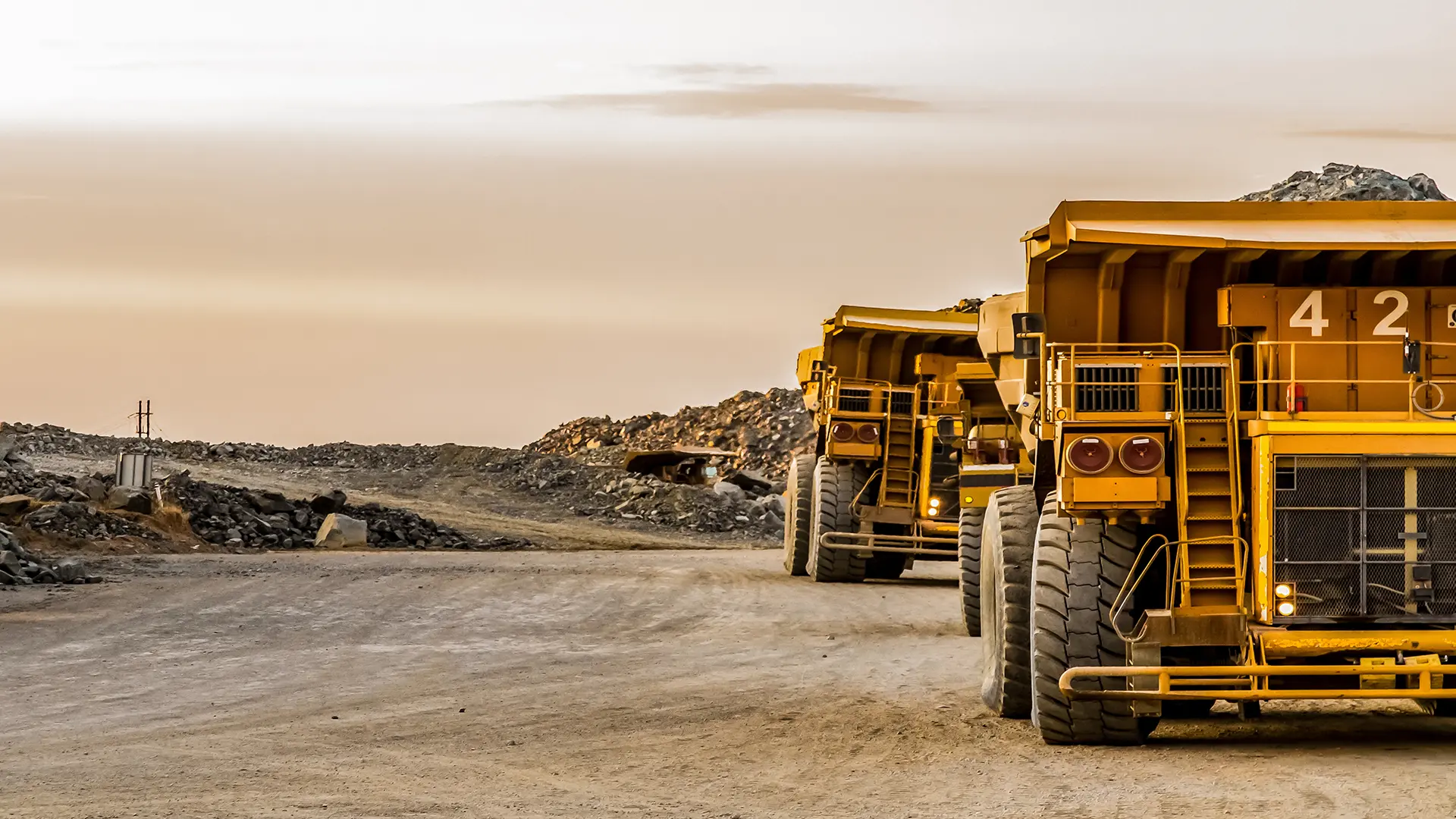
Researched by Industrial Info Resources (Sugar Land, Texas)--Asia's growth engine has been increasing at such a pace for two decades that the positive project development impetus is still being maintained beneath the tremors of the current credit crunch and banking crisis. A dramatic slowdown in most industrial sectors, including Metals & Minerals, is being witnessed in curtailed output, advancing dates for early plant maintenance and the reworking of budgets and targets.
For larger projects in progress, funds have already been committed. For others in the planning phase or in the beginning of construction, the date for final plant commissioning can be three or four years ahead, and funding plans can be phased to run parallel with the recovery in credit, which could start in earnest in the second half of 2009.
A good example of the type of pragmatic thinking process in progress with Asian stakeholders in the metals, mining and commodities sectors comes from a country whose profile in mining has generally been modest. At the end of the 8th Asia Pacific Mining Conference in mid-October, Benjamin Philip Romualdez, the President of the Philippines' Chamber of Mines, said that a forum with international banks and financial institutions had been scheduled for early 2009 to fast-track the development of several large mining projects in the country. Recognizing that the financial market was in turmoil, he said that the forum would be held in Manila on January 20 and 21 when a clearer picture of the world's financial system would be in place.
The Philippine government is driving a plan to achieve a "mining country" status by 2011. Currently, some mining majors have stalled mining projects in the face of financial uncertainty. The forum will tackle issues, including equity funding, project and structural financing, political risk and hedging. The country's government and mining industry is also watching how much the decline in China's gross domestic product will affect global commodity markets -- a typical world view of the outlook in the sector for 2009.
In the October update of the World Economic Outlook by the International Monetary Fund, China is forecast to have a 9.3% growth rate in 2009, down from 9.7% in 2008. The Chinese and global "pundits-of-the-crunch" industry have reached a general consensus that the real growth could be as low as 8% when a falling trade surplus is considered. This is down from the 11% to 12% growth rates of recent years. Some reports state that Chinese consumers in the "big spender" middle class are beginning to keep their purses zipped more often, which qualifies the hope that domestic consumer spending will keep driving industrial output. Inflation was down from a peak of 8.7% in March to 4.9% in September. Now, the government is more concerned with keeping life in the market rather than taking the heat out of it.
The better news for the heavier industrial sectors is that the impetus behind the drive for major infrastructure projects (not unlike Latin America) will bridge the gap until the financial streams are running strongly again. A Goldman Sachs (NYSE:GS) (New York, New York) report stated that China could invest $2.7 trillion in long-term investments in roads, highways, bridges, power plants and pipelines, with $1 trillion of the total being invested through 2012. This figure represents 60% of the global total with another Asian giant, India, investing $620 billion (14%) of the world's infrastructure investment total. There will be a large amount of mined metals in those infrastructure projects. China's National Bureau of Statistics reports that investments in fixed assets in the country totaled $1.7 trillion in the first nine months of 2008, or 27% higher year over year.
Another Asian giant, Japan, running the second largest economy in the world after the U.S., also provides snapshots of a less-than-disastrous picture of developments in 2009. The Nikkei Business Daily reported that Japanese steelmakers have benefited from lower shipping charges and the dramatic drop in the price of oil. There are also lower prices for raw materials, such as scrap iron and ferroalloys. In this environment, the country's two largest steel companies, Nippon Steel Corporation (TYO:5401) (Chiyoda, Tokyo) and JFE Holdings Incorporated (TYO:5411) (Chiyoda) have raised product prices. Nippon Steel is expected to raise its profit forecast to March 2009 to $5.1 billion, up from $4.2 billion in July. Similarly, JFE is forecast to turn a profit of $5 billion, up from July's forecast of $4.4 billion.
JFE is also reported to be planning to build a $4.9 billion blast furnace in Southeast Asia with a capacity to produce 6 million tons of steel per year. The Philippines, Thailand or Vietnam could be the site for the plant, which could begin construction in 2010. The project is planned to meet a surge in steel demand that is anticipated in the region.
During the height of the global banking crisis, Indian steelmakers continued to announce plans for new projects and major expansions. Reliance Infrastructure Limited (BSE:500390) (Mumbai) has announced that it has identified potential sites for an $8 billion greenfield steel project with an annual production capacity of 12 million tons. Many Indian companies are scanning the world for mining and resource projects that they can acquire or buy into, as are the counterparts in other Asian countries.
Even as output figures decline in the face of lower global demand and strangled lines of credit, the belief continues that the Asian engine is tuned for long-term growth, although it will sputter through to the end of 2008. In the next six months, with inflation cooled down, the financial structure of projects will be grounded under new design disciplines. Exporters will take advantage of container freight rates, which have dropped by more than 70% on some Asia-to-Europe routes. There will be a window of opportunity for lean and hungry manufacturers looking out at the world and for investors looking into Asia. Decisions will be made pragmatically, and manic hysteria, negative and positive, will be a memory. Official and independent statements coming out of China support the view that world markets and the Asian engine will have to pick up speed in a synchronized manner.
Industrial Info Resources (IIR) is a marketing information service specializing in industrial process, energy and financial related markets with products and services ranging from industry news, analytics, forecasting, plant and project databases, as well as multimedia services.
/news/article.jsp
false
Want More IIR News Intelligence?
Make us a Preferred Source on Google to see more of us when you search.
Add Us On GoogleAsk Us
Have a question for our staff?
Submit a question and one of our experts will be happy to assist you.

Forecasts & Analytical Solutions
Where global project and asset data meets advanced analytics for smarter market sizing and forecasting.
Explore Our Solutions
PECWeb Global Market Intelligence Platform
Identify opportunities, anticipate change, and execute with confidence. PECWeb connects the industrial intelligence you need, from projects and assets to operational events, all in one platform.
Discover PecwebIndustry Intel
-
European Chemicals and Transport Fuels OutlookPodcast Episode / Jul 10, 2026
-
2026 European Petroleum Refining Project OutlookPodcast Episode / Jun 26, 2026
-
Brazil: Efficiency, Innovation, and Opportunities in the Food & Beverage IndustryPodcast Episode / Jun 12, 2026
-
2026-2027 Investment Radar for Mexico, Central America & the CaribbeanPodcast Episode / May 29, 2026
-
Innovations Shaping the Next Era of Power GenerationPodcast Episode / May 22, 2026