Metals & Minerals
Coal Prep 2011 Hosts Discussions, Speeches on Advancing Clean Coal Technology
Several industry experts gathered at Coal Prep 2011 to share the latest research and technology in the coal industry with a common goal in mind: to make U.S. coal become...
Released Monday, May 09, 2011
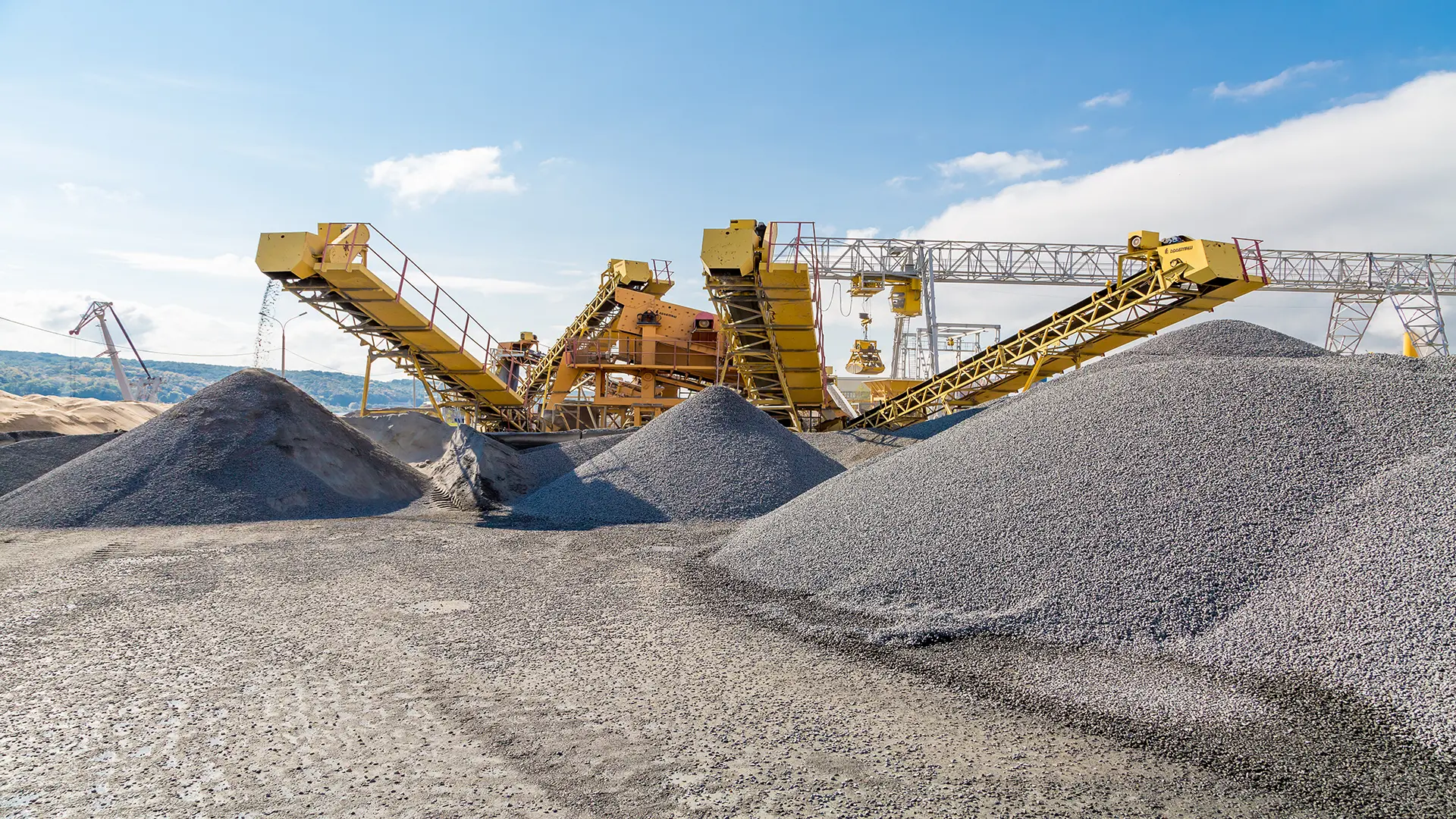
Researched by Industrial Info Resources (Sugar Land, Texas)--Several industry experts gathered at Coal Prep 2011 to share the latest research and technology in the coal industry with a common goal in mind: to make U.S. coal become more competitive in today's marketplace.
Dr. Roe-Hoan Yoon, the director of Virginia Tech College of Engineering, gave a speech opening the first of Coal Prep's 2011 technical sessions, titled "Coal Preparation & Research." The session involved several speakers who briefly discussed their research. Yoon provided information about the Center for Advanced Separation Technologies (CAST), which consists of five universities (Virginia Tech, West Virginia University, University of Kentucky, University of Utah and Montana Tech) that seek to improve upon and discover methods of separation technologies. CAST researchers hope to create additional jobs, improve coal-cleaning operations, and create ways to recover coal fines from abandoned impoundments.
"I'm here to talk about separation technology, because CAST is all about separation of ash from coal, water from coal and so on," Yoon said. He explained that the role of CAST is crucial in improving existing procedures, because the coal industry does not have its own research team or company.
"As researchers like us come up with new technologies, industry quickly adapts it," Yoon said. "We have evolved from handpicking to this modern flotation technology."
According to a National Research Council report, the U.S. coal industry discards 70 to 90 million tons of fine refuse to slurry impoundments annually. CAST is developing technologies to help coal companies recover all of their mined coal.
"We communicated with the industry," he said. "They told us that fine coal is their most serious problem, do something (about) it. ... It is so expensive to clean fine coal, so some companies are just discarding it."
He explained that it has not been easy getting funding for projects, adding that something bad sometimes has to happen before his group is taken seriously.
"Congress pays attention when there's an accident," he said.
He has been to the White House twice in hopes of getting more research money for the coal industry. He and many others have written technical papers carefully detailing the technology they are trying to develop, and how it can be used for other industries, such as other minerals, recycling and plastics.
"We can do more than just clean coal," he said. "Clean coal can be not only used as a fuel but as a source of carbon, a brand new idea."
The U.S. Department of Energy (DOE) has supported the center's research since 2002. According to its web site, CAST has funded 84 projects at seven universities. Total CAST funding from DOE to date is $17.5 million.
Mohindar Seehra, Research Professor & Eberly Distinguished Professor Emeritus of Physics at West Virginia University, spoke briefly about the coal industry's problem with the removal of moisture from fine coal.
He discussed a paper detailing the work written by himself and several colleagues about the use of conventional microwaves at 2.45 gigahertz (GHz) to dewater fine coal slurries. One of the most successful tests used a kitchen-like microwave oven modified to heat coal over a moving conveyor belt system. It showed an 83% efficiency in dewatering fine coal slurries without "significantly heating coal carbon or ash."
Due to the positive findings, more studies are under way.
Another speaker, Sean Dudley, Metallurgical & Materials Process Engineer at Montana Tech of the University of Montana, discussed the problems regarding Montana coal development.
"If Montana were its own country, it would have a third of the world's coal," Dudley said. "So we have a lot of coal. We have the additional benefit that Montana coal is traditionally low in sulfur, meaning we have an easier time complying with emission regulations."
Montana has approximately 120 billion tons of coal reserves, more than any other state in the U.S.; however, Montana is ranked number six in coal production. Dudley cited many reasons for this, including coal quality, mining conditions, transportation costs, taxation and environmental regulations, but the biggest issue is that Montana coal has a very high sodium content.
Elevated levels of sodium cause "excessive slagging" in most power plant boilers, so this coal can be sold only to power plants that have specially designed boilers.
Dudley said that experiments were being done with pretreatment of Montana coal, including conventional physical processing techniques; grinding; leaching of water-soluble sodium; ion exchange; and ionic liquids for dissolution and removal of sodium. Various other solutions have been proposed, including pH-adjusted waters to even hydrochloric acid. The problem remains that sodium removal is very difficult and expensive.
Dudley emphasized the importance of finding a way to successfully remove sodium from Montana coal, because while total coal production in the U.S. is somewhat plateauing, it is set to increase over the next few years.
"Traditionally, needs have been met by the Appalachian region, but unfortunately they are beginning to dwindle in their production," Dudley said. "The main reserves of coal will come from the West."
Industrial Info Resources (IIR) is the leading provider of global market intelligence specializing in the industrial process, heavy manufacturing and energy markets. IIR's quality-assurance philosophy, the Living Forward Reporting Principle, provides up-to-the-minute intelligence on what's happening now, while constantly keeping track of future opportunities.
/news/article.jsp
false
Want More IIR News Intelligence?
Make us a Preferred Source on Google to see more of us when you search.
Add Us On GoogleAsk Us
Have a question for our staff?
Submit a question and one of our experts will be happy to assist you.

Forecasts & Analytical Solutions
Where global project and asset data meets advanced analytics for smarter market sizing and forecasting.
Explore Our SolutionsRelated Articles

PECWeb Global Market Intelligence Platform
Identify opportunities, anticipate change, and execute with confidence. PECWeb connects the industrial intelligence you need, from projects and assets to operational events, all in one platform.
Discover PecwebIndustry Intel
-
2026 European Petroleum Refining Project OutlookPodcast Episode / Jun 26, 2026
-
Brazil: Efficiency, Innovation, and Opportunities in the Food & Beverage IndustryPodcast Episode / Jun 12, 2026
-
2026-2027 Investment Radar for Mexico, Central America & the CaribbeanPodcast Episode / May 29, 2026
-
Innovations Shaping the Next Era of Power GenerationPodcast Episode / May 22, 2026
-
The Role of Contract Manufacturing in Global Pharma GrowthPodcast Episode / May 8, 2026