Power
Construction of Nation's First Ultra-Supercritical Coal Plant Nears Completion
The future of coal-fired power may be taking shape in southwest Arkansas, at the John W. Turk Jr. Power Plant. If so, that future involves a lot of money, a small army of lawyers, and an extraordinary amount of managerial commitment.
Released Tuesday, September 20, 2011

Written by John Egan for Industrial Info Resources (Sugar Land, Texas)--The future of coal-fired power may be taking shape in southwest Arkansas, at the John W. Turk Jr. Power Plant. If so, that future involves a lot of money, a small army of lawyers, and an extraordinary amount of managerial commitment.
Southwestern Electric Power Company (SWEPCO) (Shreveport, Louisiana), a unit of American Electric Power Company Incorporated (NYSE:AEP) (Columbus, Ohio) owns 73% of the 600-megawatt (MW) Turk plant. Other owners include the Arkansas Electric Cooperative Corporation (Little Rock, Arkansas), the East Texas Electric Cooperative (Nacogdoches, Texas) and the Oklahoma Municipal Authority (Edmond, Oklahoma). The Shaw Group Incorporated (NYSE:SHAW) (Baton Rouge, Louisiana) is the project's engineering, procurement and construction (EPC) firm. Babcock & Wilcox Company (NYSE:BWC) (Charlotte, North Carolina) is supplying the ultra-supercritical boilers for the plant.
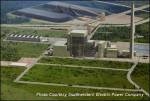 Click on the image at right for an artist's rendering of what the Turk plant will look like when it is completed near the end of 2012.
Construction is about 74% complete at the Turk plant, the nation's first ultra-supercritical (USC) coal-fired generator. The project is scheduled to come online during the fourth quarter of 2012. The higher temperatures and increased pressure in a USC boiler make it more efficient than supercritical and subcritical boilers, allowing it to produce the same amount of electricity using less coal and producing fewer emissions compared to the same sized sub-critical boiler.
Click on the image at right for an artist's rendering of what the Turk plant will look like when it is completed near the end of 2012.
Construction is about 74% complete at the Turk plant, the nation's first ultra-supercritical (USC) coal-fired generator. The project is scheduled to come online during the fourth quarter of 2012. The higher temperatures and increased pressure in a USC boiler make it more efficient than supercritical and subcritical boilers, allowing it to produce the same amount of electricity using less coal and producing fewer emissions compared to the same sized sub-critical boiler. Peter Main, a SWEPCO spokesman, told Industrial Info that the Turk plant will have an efficiency of 39-40%, compared to 35% for a subcritical boiler. The generator will burn about 13% less coal and produce 13% less carbon dioxide, compared to a subcritical coal unit of the same size. So the plant will have an advantage over other coal-fired plants if regulation or legislation limiting power-plant emissions of carbon dioxide are ever enacted.
The Turk plant will have equipment to reduce emissions of sulfur dioxide (SO2), oxides of nitrogen (NOx), particulates and mercury. And SWEPCO anticipates no trouble complying with the Environmental Protection Agency's (EPA) (Washington, D.C.) forthcoming final rule on power plant mercury emissions, he said.
Installing that environmental control equipment contributed to the plant's current estimated cost of $1.7 billion, about $400 million more than when it was first announced in 2006. SWEPCO's Main said that regulatory and legal challenges account for the bulk of the $400 million cost increase.


 Click on the images at left to see various stages of construction of the Turk plant.
Over the past five years, the Turk project has faced a wide range of opponents that have required it to spend a lot of time and money to overcome opposition to the plant and lawsuits that have been filed against it. In some cases, litigation interrupted construction of some parts of the plant, but Main stressed that construction at the site was never completely shut down.
This summer, SWEPCO reached a settlement with several Arkansas groups that had opposed the plant's construction. As part of the settlement, SWEPCO agreed to not build any additional generation on the Turk site and to not propose building any coal-fired plant within 30 miles of Turk. In addition, no future transmission lines associated with the Turk plant will cross sensitive environmental areas. In return, a group of litigants agreed to withdraw all of their legal and regulatory challenges to the plant.
In a statement to Industrial Info, Venita McCellon-Allen, president and chief operating officer of SWEPCO, said, "It's never easy to complete a project of this size, and there are always challenges. Quite frankly, we worked hard with the appropriate government agencies to provide information and gain permit approval. SWEPCO has been building the Turk Plant since 2008 under legally valid permits. What we didn't fully anticipate was the multiple legal challenges to those permits and the various civil cases that have been filed to delay progress. But we have found common ground and reached a settlement with the plant's neighbors. And we continue to defend those permits against challenges by other groups."
Two other litigants--the Sierra Club and the National Audubon Society/Audubon Arkansas--continue to challenge Turk's air permit before the Arkansas Court of Appeals and the plant's permit from the U.S. Army Corps of Engineers in a case still pending before the U.S. District Court in Texarkana. SWEPCO said it will continue to "aggressively defend" the permits it has been issued for Turk plant.
In June 2010, the Arkansas Supreme Court prohibited SWEPCO from charging its Arkansas retail electric customers for their proportional cost of the Turk plant. The company is continuing to mull its options for the 88-MW share of the Turk plant that was allocated to serve SWEPCO's 114,000 retail customers in Arkansas. SWEPCO also serves about 226,000 retail customers in Louisiana and 180,000 retail customers in Texas.
Ultra-supercritical technology initially drew wide interest from power, coal and engineering companies as a way for coal to keep its share of the U.S. electric market in the face of stricter environmental regulation. But the high costs of building a USC plant, plus continued regulatory uncertainty surrounding coal, appears to have dulled the industry's initial enthusiasm for USC technology. Several years of soft electric demand also has allowed utilities to defer proposals to build new power plants.
When asked if SWEPCO was still enthusiastic about ultra-supercritical generation technology, McCellon-Allen told Industrial Info: "SWEPCO continues to believe in the value of fuel diversity, using coal, natural gas and renewables to meet our customers' needs. Because fuel diversity benefits our customers, today's circumstances truly do support the Turk decision. As lower emission requirements challenge the viability of the older, traditional coal fleet, the Turk Plant will be ready as a new generation of technology to fill in, consistent with environmental compliance."
"The idea that our nation can fully meet its energy needs without coal is a false premise," she continued. "Coal generation accounts for almost half of all energy used by consumers in the United States--and consumers take it pretty personally if they don't have power when they need it. Ultra-supercritical technology is a bridge from the older, less efficient coal plants of the 1960s into a future of cleaner, more efficient coal use with compliance technology that protects the environment and public health. The Turk Plant is a 'more miles per gallon' coal plant. I think we can all agree more efficient use of our energy resources is a good thing."
Well, not everyone. Earlier this month the Turk plant received three bomb threats in the days leading up to the 10th anniversary of the September 11 terrorist attacks. On all three occasions, about 1,200 plant construction personnel were evacuated from the Turk site. No bombs were found, and officials have not disclosed who made the threats or why they were made. Local law enforcement and the Federal Bureau of Investigation continue to investigate.
View Plant Profile - 1069684
View Project Report - 20001096
Industrial Info Resources (IIR) is the leading provider of global market intelligence specializing in the industrial process, heavy manufacturing and energy markets. IIR's quality-assurance philosophy, the Living Forward Reporting Principle, provides up-to-the-minute intelligence on what's happening now, while constantly keeping track of future opportunities.
Want More IIR News Intelligence?
Make us a Preferred Source on Google to see more of us when you search.
Add Us On GoogleAsk Us
Have a question for our staff?
Submit a question and one of our experts will be happy to assist you.

Forecasts & Analytical Solutions
Where global project and asset data meets advanced analytics for smarter market sizing and forecasting.
Explore Our SolutionsRelated Articles
-
Peru's Government Seeks to Approve Mining Projects, Add Powe...August 26, 2026
-
Global Nuclear Investment of US$250 Billion a Year Needed to...August 26, 2026
-
Data Centers Push Vistra to Grow U.S. Nuclear, Natural Gas F...August 25, 2026
-
Typhoon Saudel Threatens Okinawa, Eastern ChinaAugust 25, 2026
-
DOE Seeking Loan Applicants for U.S. Energy Projects Favored...August 25, 2026

PECWeb Global Market Intelligence Platform
Identify opportunities, anticipate change, and execute with confidence. PECWeb connects the industrial intelligence you need, from projects and assets to operational events, all in one platform.
Discover PecwebIndustry Intel
-
European Chemicals and Transport Fuels OutlookPodcast Episode / Jul 10, 2026
-
2026 European Petroleum Refining Project OutlookPodcast Episode / Jun 26, 2026
-
Brazil: Efficiency, Innovation, and Opportunities in the Food & Beverage IndustryPodcast Episode / Jun 12, 2026
-
2026-2027 Investment Radar for Mexico, Central America & the CaribbeanPodcast Episode / May 29, 2026
-
Innovations Shaping the Next Era of Power GenerationPodcast Episode / May 22, 2026