Power
Infrastructure Pressure and 'Light-Handed' Regulation to Release $23 Billion Australian Energy Investment
Investment of around $23 billion must be made in Australia's downstream energy infrastructure, covering gas and electricity distribution over the next fifteen years
Released Thursday, March 31, 2005
Researched by Industrialinfo.com (Industrial Information Resources Incorporated; Houston, Texas). Investment of around $23 billion must be made in Australia's downstream energy infrastructure, covering gas and electricity distribution over the next fifteen years, the chief executive of the Energy Supply Association (ESAA) told an Australian Energy Summit meeting in mid-March. He said that state governments held the key to improving investor confidence and assuring energy supply reliability. He added that challenges for governments in providing and investor-friendly climate included completing governance and regulatory reform programs and ensuring that regulation and government intervention was limited to situations of market failure. "There is also a great need to improve existing infrastructure permitting processes and make greenhouse policy more consistent and coordinated," he said.
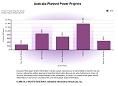 This doesn't include the billions of dollars that will be spent on upstream power plant development in the country. Industrialinfo.com is tracking almost $4 billion in new power plant development in Australia. Click on the image at right to view a chart showing planned spending by state.
When announcing ESAA's policy principles at the summit, he said that they were the measures against which the government proposals will be tested by the association to further the industry's achieving an investor-friendly climate.
Among the principles, which broadly look for government support in facilitating infrastructure development support and maintenance, was one which stated that the energy industry is not subjected to business and competition regulation, beyond that applying to the rest of the economy, and that government social and equity objectives that would not ordinarily be met by competitive market operations should be explicitly described and directly funded by governments.
Another key principle was that, to the extent that industry-specific regulation is justified by market failure, energy market regulation should be through a single national regime that is light-handed, low-cost, and delivers high quality regulatory decisions.
Ed Willet, commissioner of the Australian Competition and Consumer Commission (ACCC), told the summit that there had been no shortfall in investment infrastructure regulated by the ACCC.
"Many investment problems have been caused not by regulation, but by a lack of regulation in some areas of monopoly infrastructure. Regulation has limited price rises for regulated infrastructure and promoted competition in dependent markets to the benefit of consumers,' he said.
Willet said that 14,000 kilometers of new gas transmission pipelines had been laid in Australia since 1997, amounting to a doubling of the national pipeline network, to 28,000 kilometers, in seven years. Gas and electricity transmission were recording unprecedented levels of capital expenditure under the regulatory regime, and those who make these levels of investments were out-performing other sectors of the economy.
A few days after the summit, the state government of Queensland announced that it would fast-track planning for more than $770 million of infrastructure projects in the north of the state to boost coal exports. The Queensland premier, Peter Beattie, said that the focus would be on the expansion of the Abbot Point coal terminal, owned by the state's Ports Corporation, and the construction of a 78 kilometer rail link between the Goonyella and Newlands coal systems in the state's Bowen Basin coal province. He told the state parliament that the government had written to the Ports Corp and Queensland Rail to endorse $20 million worth of feasibility, design, and approval works for these projects.
This move followed days after an announcement by Australian Prime Minister, John Howard, establishing a three-man task force to examine the nation's infrastructure and regulations that may be hindering exports. This came after coal companies reported that infrastructure constraints were preventing them from meeting strong demand from overseas customers. For related news item see - March 24, 2005 - Coal Diggers Cashing in as Costs Up $95 a Ton for Buoyant Japanese Steelmakers in 2005
Industrialinfo.com is the leading provider of global industrial market research. We specialize in helping companies develop information solutions to maximize their sales and marketing efforts.
/news/article.jsp
false
Want More IIR News Intelligence?
Make us a Preferred Source on Google to see more of us when you search.
Add Us On GoogleAsk Us
Have a question for our staff?
Submit a question and one of our experts will be happy to assist you.

Forecasts & Analytical Solutions
Where global project and asset data meets advanced analytics for smarter market sizing and forecasting.
Explore Our SolutionsRelated Articles

PECWeb Global Market Intelligence Platform
Identify opportunities, anticipate change, and execute with confidence. PECWeb connects the industrial intelligence you need, from projects and assets to operational events, all in one platform.
Discover PecwebIndustry Intel
-
2026 European Petroleum Refining Project OutlookPodcast Episode / Jun 26, 2026
-
Brazil: Efficiency, Innovation, and Opportunities in the Food & Beverage IndustryPodcast Episode / Jun 12, 2026
-
2026-2027 Investment Radar for Mexico, Central America & the CaribbeanPodcast Episode / May 29, 2026
-
Innovations Shaping the Next Era of Power GenerationPodcast Episode / May 22, 2026
-
The Role of Contract Manufacturing in Global Pharma GrowthPodcast Episode / May 8, 2026