Production
"Pipeline on Wheels" Could Reduce Gas Flaring, Generate Added Revenue and Manage Environmental Risks
Hundreds of millions of dollars of natural gas and natural gas liquids (NGLs) are flared each year in North Dakota...
Released Wednesday, April 18, 2012
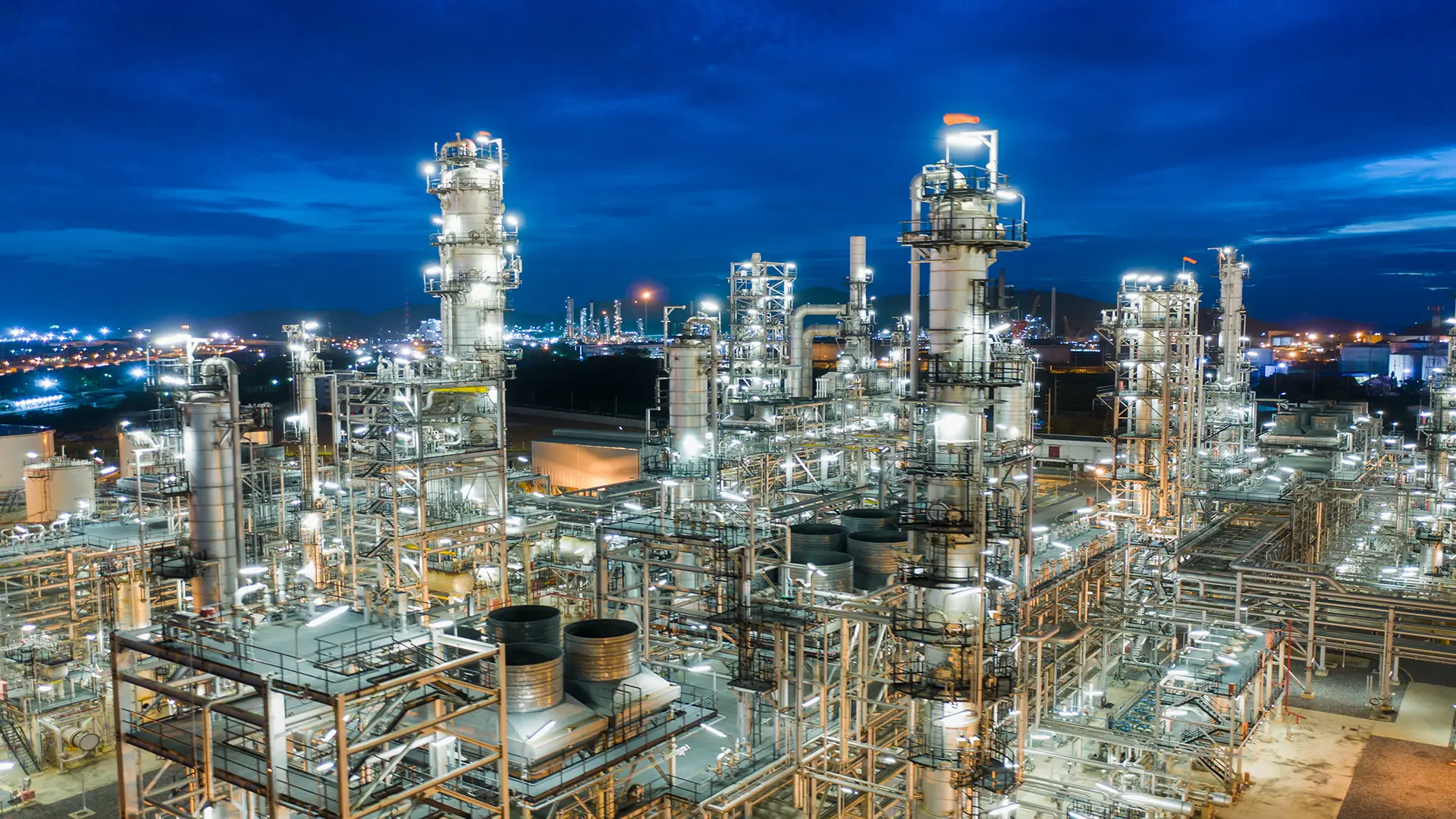
Written by John Egan for Industrial Info Resources (Sugar Land, Texas)--Hundreds of millions of dollars of natural gas and natural gas liquids (NGLs) are flared each year in North Dakota, as Oil & Gas producers capture the crude oil and burn as waste a significant portion of the gas and NGLs, because there is inadequate infrastructure to process and transport these products to market.
A small startup firm in Bismarck, North Dakota, may have the answer to a problem that is projected to spread from the Bakken formation to other NGL-rich formations. "Gas flaring is a pronounced problem in the Bakken formation, but the Eagle Ford and Niobrara formations are destined to have the same problems," Tim Maloney, business development manager for Bakken Express LLC, told Industrial Info in an interview.
"The problem of gas flaring is most mature in the Bakken," Maloney continued, where crude oil and gas production are rising faster than companies can build midstream and pipeline capacity to process and transport those materials to market. "But other large formations will experience the same problems over the next few years. It's physically impossible to keep up with the vast geography and the increasing rates of production" of some shale formations like the Bakken and Eagle Ford.
Maloney's company offers a solution he called, "a virtual pipeline on wheels." A fleet of gas compressors and trucks captures the gas and NGLs at the wellhead, compresses it, and transports it for injection into a pipeline or to be used as fuel at other drilling operations.He calls his company's approach a "pre-infrastructure solution to flaring." Maloney said his company's solution only works in NGL-rich gas formations, where liquids can add about $8 per thousand cubic feet (Mcf) to the value of dry gas production. Currently, dry gas fetches slightly under $2 per Mcf in the market. The combined value stream of $10 per Mcf makes Bakken Express' technology economically viable, he said.
The company, which has one customer in the Bakken, charges less than $1 million per well for its equipment and services, Maloney said. On a per-Mcf basis, he estimated those costs work out to between $3 and $6 per Mcf, depending on various factors.
Bakken Express is a small fish in a large pond, but Maloney says they are swimming where bigger fish like Schlumberger Limited (NYSE:SLB) (Houston, Texas) and Halliburton Company (NYSE:HAL) (Houston) are not. Right now, Bakken Express has seven compressed natural gas (CNG) tubes, three transport trucks, four compressors and eight employees. But in three years, Maloney said the company aims to have 150 CNG tubes, and 100 compressors.
"We are in the early days of a big opportunity," he said. "There is plenty of business." Maloney was a speaker at last week's 6th Annual Rockies Oil & Gas Conference, sponsored by Platts, which drew an estimated 350 attendees.
At the conference, Maloney and Trisha Curtis, a research analyst at the Energy Policy Research Foundation Incorporated (Washington, D.C.) discussed the size and scale of gas flaring in North Dakota. The state's daily gas production hovers around 600 million cubic feet per day (MMCF/d). About one-third of this is flared each day. At an assumed value of $10 per Mcf and current prices, the 200 MMCF/d of gas that is flared each day works out to about $730 million each year.
Last year, The New York Times published a prominent story about North Dakota gas flaring that triggered controversy and calls for federal regulation of the practice, Curtis told the Platts conference. Although the flaring accounted for less than 10% of the energy produced,Democrats in the U.S. House of Representatives pressed for a congressional inquiry into the practice, citing concerns over wasted domestic energy and the environmental impact of gas flaring. The U.S. Environmental Protection Agency (EPA) is considering regulating flaring and other emissions produced by oil and gas drilling.
"In North Dakota, the industry will invest over $3 billion for gathering and processing capacity over the next few years," Curtis told the conference. "Significant gathering and processing growth has taken place over the past several years, but has simply been unable to keep up with such strong production growth." She also noted that the size of the Bakken formation--more than 15,000 square miles--is enormous and home to many remote wells. The formation's older infrastructure was not built to handle current volumes of gas and NGL production, she added.
"Flaring is not unique to North Dakota, and we expect it will increase in other liquids-rich formations" where midstream and pipeline capacity can't be brought on fast enough to meet increasing gas and NGL production, she said in an interview. Continued high prices for NGLs and the prospect of flaring regulations could drive more companies to investigate Bakken Express' solution.
Industrial Info Resources (IIR), with global headquarters in Sugar Land, Texas, and eight offices outside of North America, is the leading provider of global market intelligence specializing in the industrial process, heavy manufacturing and energy markets. Industrial Info's quality-assurance philosophy, the Living Forward Reporting Principle, provides up-to-the-minute intelligence on what's happening now, while constantly keeping track of future opportunities.
/news/article.jsp
false
Want More IIR News Intelligence?
Make us a Preferred Source on Google to see more of us when you search.
Add Us On GoogleAsk Us
Have a question for our staff?
Submit a question and one of our experts will be happy to assist you.

Forecasts & Analytical Solutions
Where global project and asset data meets advanced analytics for smarter market sizing and forecasting.
Explore Our SolutionsRelated Articles
-
Iran Tensons Flare-Up, But Crude Moves LowerJune 26, 2026
-
U.S. Crude Oil Inventories Drop for 11th Straight WeekJune 26, 2026
-
Earthquakes Bring Devastation to VenezuelaJune 25, 2026
-
Pikka Alaska Oil Project Starts Continuous ProductionJune 25, 2026

PECWeb Global Market Intelligence Platform
Identify opportunities, anticipate change, and execute with confidence. PECWeb connects the industrial intelligence you need, from projects and assets to operational events, all in one platform.
Discover PecwebIndustry Intel
-
2026 European Petroleum Refining Project OutlookPodcast Episode / Jun 26, 2026
-
Brazil: Efficiency, Innovation, and Opportunities in the Food & Beverage IndustryPodcast Episode / Jun 12, 2026
-
2026-2027 Investment Radar for Mexico, Central America & the CaribbeanPodcast Episode / May 29, 2026
-
Innovations Shaping the Next Era of Power GenerationPodcast Episode / May 22, 2026
-
The Role of Contract Manufacturing in Global Pharma GrowthPodcast Episode / May 8, 2026