Production
Recycled Oilfield Water Needs a Lawyer--and Some Good PR
Water treatment ownership and health standards may be settled in court and in the court of public opinion
Released Tuesday, April 02, 2024
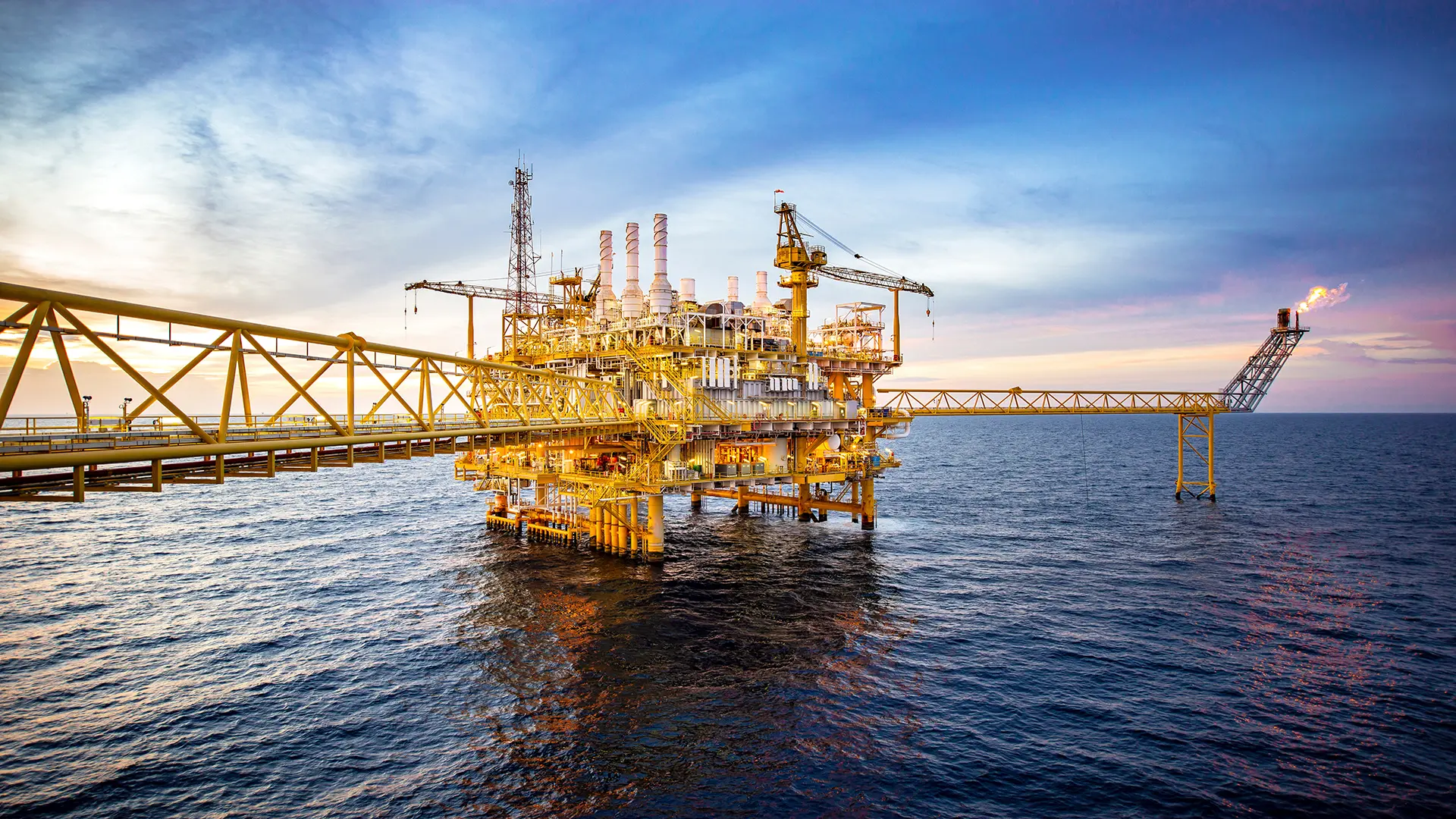
Written by Paul Wiseman for Industrial Info Resources (Sugar Land, Texas)--Precise numbers are difficult to come by, but it's safe to say the Oil and Gas Industry produces tens of millions of barrels of water every day, which have to be dealt with. In the Permian Basin alone, its two most prolific plays, the Delaware Basin and the Midland Basin, together produce about 14 million barrels per day, of which about 11 million is reused by the industry, according to estimates from the Texas Produced Water Consortium.
That leaves about 2-4 million barrels that could be reused in other industries or, with sufficient treatment, in agriculture--or, in a perfect world--for drinking water. Most of the oil in the U. S., as well as the world, is located in dry and thirsty lands of Biblical proportions. What a gift that would be if it could be worked out.
But first, some things have to be decided. Who regulates the use and health standards of recycled oilfield water? Who owns it when it surfaces and who's responsible for cleaning it up? Once it's clean, who can profit by selling it to thirsty end users?
Encore Green Environmental (Cheyenne, Wyoming) President Marvin Nash said most experts think these things will ultimately be decided by the courts. Encore Green has pioneered agricultural-use recycling projects in Wyoming and Texas, and has performed projects in other states. Nash also owns a patent for Conservation by Design, a process for treating and handling produced water. Nash said the states most actively scratching their heads over these solutions include Texas, Wyoming, New Mexico, Colorado and Oklahoma. Wyoming and Texas have begun settling on which agencies should handle permitting.
Nash finds it significant that those states, other than eastern Oklahoma and Texas, are west of the 98th meridian. "There's a difference between water east of the 98th meridian and west of the 98th meridian," he said. Texas' Walter Prescott Webb's 1931 work The Great Plains identified that line as the divider between the arid west and the more rain-friendly east. As might be imagined, water is more precious out west, and settlers crossing that meridian quickly learned that hanging onto their eastern ways would not work.
"Back then," Nash observed, "the legal system was simply whoever had the biggest gun." Now, fortunately, water disputes are settled in a more civil manner.
In Texas, the line passes near Austin, through Bee Cave (the latter having been declared in 2007 by the Texas Legislature to be the "West Pole"). And while there is much oil east of that line, the greater majority lies to the west.
Nash noted that the Texas Railroad Commission has pledged to provide permits as needed for recycling produced water in other applications. Encore Green received the first permit of that kind for a project south of Midland, to provide "what we then classified as a 'beneficial use water.'" However, due to a sudden disagreement about ownership of the water and its commoditization, Encore was unable to implement the permitted process, Nash said.
Getting the permit required Encore Green to submit detailed scientific data on soil, the amount of water to be applied to the soil, the proposed crops, and the type of treatment to be employed. While the permit was issued, Nash said that the Railroad Commission plans to continue tweaking the permits and the process to make sure it meets the needs of the community.
Many of the states listed have formed produced water consortiums "and I think that goes to address what I think are going to be the judicial challenges that are going to be coming forth."
The Court of Public Opinion
Perhaps the greatest challenge involves overcoming the fact that produced water starts out as undrinkable, loaded with chemicals and carcinogens. Nash compared the stigma of produced water to that of a recovering drug addict whose sobriety may never be trusted. Pointing out that California last year approved a "Toilet to Tap" process that would recycle sewer effluent into the municipal water supply, he feels that produced water should certainly be given the same benefit of a doubt. The City of Big Spring, Texas, began such a plan in 2013, although in neither California nor Big Spring are all the denizens on board.
Reassuring the public by providing the scientific data noted above is foundational in Nash's view.
Whose Water Is It, Anyway?
In Texas, said Nash, a landowner has rights to all water under their property "down to the center of the earth," which would include produced water. But if that water is a liability, requiring money to clean it or reinject it, he said landowners want producers to take responsibility. He's seen landowners tell producers, in effect, "You clean it, then you give it to me."
On the larger scale, when producers decide how to process the water, add value to it, and commoditize it, things will leap forward. That will be what, in effect, breaks the dam.
Industrial Info Resources (IIR) is the leading provider of industrial market intelligence. Since 1983, IIR has provided comprehensive research, news and analysis on the industrial process, manufacturing and energy related industries. IIR's Global Market Intelligence (GMI) platform helps companies identify and pursue trends across multiple markets with access to real, qualified and validated plant and project opportunities. Across the world, IIR is tracking more than 200,000 current and future projects worth $17.8 trillion (USD).
/news/article.jsp
false
Want More IIR News Intelligence?
Make us a Preferred Source on Google to see more of us when you search.
Add Us On GoogleAsk Us
Have a question for our staff?
Submit a question and one of our experts will be happy to assist you.

Forecasts & Analytical Solutions
Where global project and asset data meets advanced analytics for smarter market sizing and forecasting.
Explore Our SolutionsRelated Articles
-
Typhoon Saudel Threatens Okinawa, Eastern ChinaAugust 25, 2026
-
New LNG Projects Offsetting Some Supply-Side Issues, Study F...August 25, 2026
-
DOE Seeking Loan Applicants for U.S. Energy Projects Favored...August 25, 2026
-
Oil & Gas Projects Set to Transform Papua New Guinea's Energ...August 25, 2026

PECWeb Global Market Intelligence Platform
Identify opportunities, anticipate change, and execute with confidence. PECWeb connects the industrial intelligence you need, from projects and assets to operational events, all in one platform.
Discover PecwebIndustry Intel
-
European Chemicals and Transport Fuels OutlookPodcast Episode / Jul 10, 2026
-
2026 European Petroleum Refining Project OutlookPodcast Episode / Jun 26, 2026
-
Brazil: Efficiency, Innovation, and Opportunities in the Food & Beverage IndustryPodcast Episode / Jun 12, 2026
-
2026-2027 Investment Radar for Mexico, Central America & the CaribbeanPodcast Episode / May 29, 2026
-
Innovations Shaping the Next Era of Power GenerationPodcast Episode / May 22, 2026
