Metals & Minerals
Saudi Privatization Rainbow Points Way to Maaden's 100-Ton Gold Crock in 2010
The chief executive and president of the company, Dr Abdullah Dabbagh, said last month that he was hopeful that the newly revised mining code and investment law would attract more foreign funds to the sector.
Released Monday, March 07, 2005
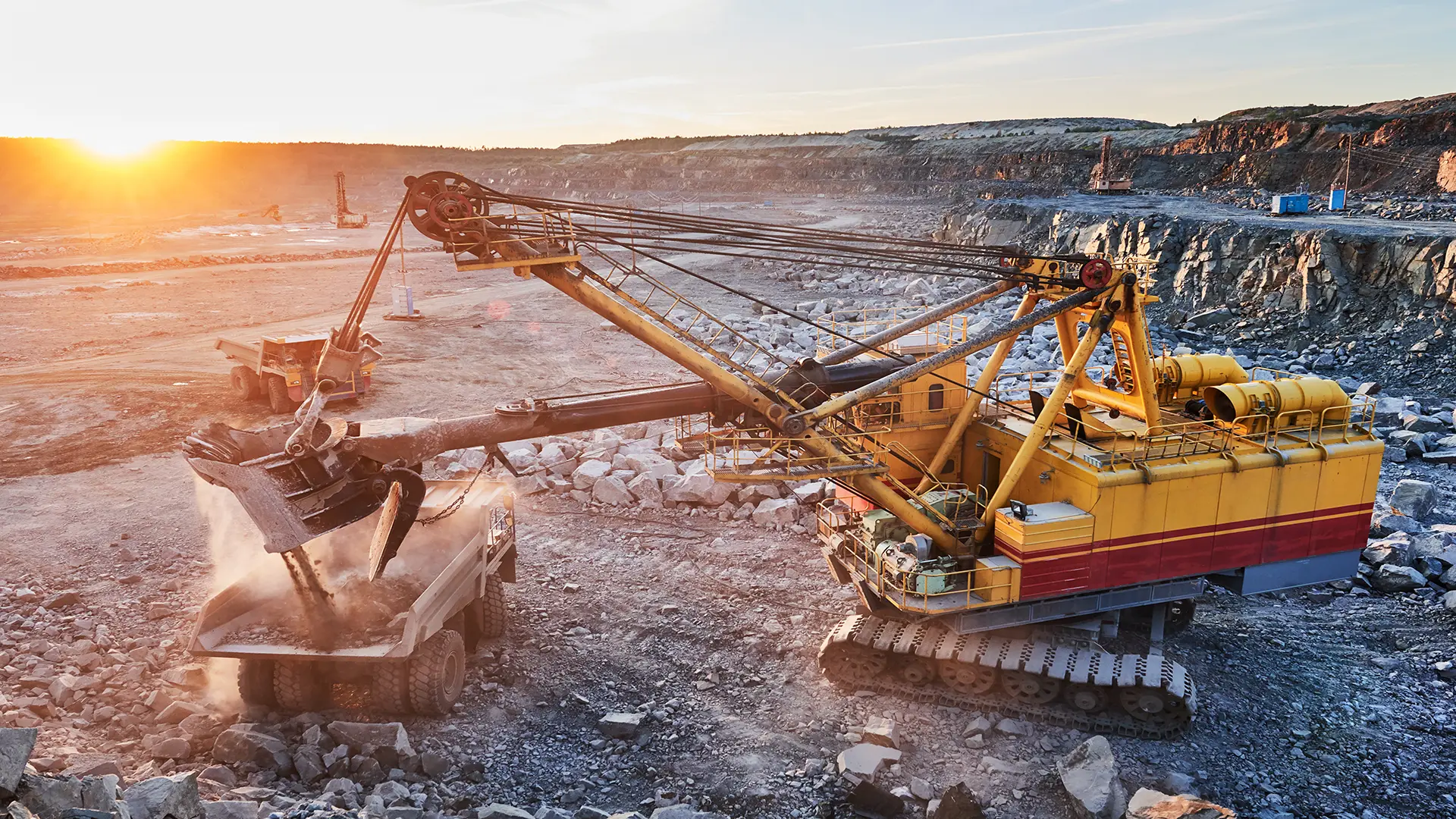
Researched by Industrialinfo.com (Industrial Information Resources Incorporated; Houston, Texas). The Saudi Arabian Mining Company (Maaden) is at the forefront of the country's plans to look for direct foreign investment to develop gold mining, with the target of an output of 100 tons within ten years. In line with the government's plans to transform the mining industry into an economic pillar alongside hydrocarbons and petrochemicals, Maaden has set up four companies for gold, phosphate, aluminum, and industrial metals.
The chief executive and president of the company, Dr Abdullah Dabbagh, said last month that he was hopeful that the newly revised mining code and investment law would attract more foreign funds to the sector. The new law has simplified and streamlined the procedures for obtaining exploration and mining licenses and offers local and foreign investors a number of benefits, including tax free import of equipment and spare parts, the right to obtain multiple licenses, and the ability to explore for various minerals in the licensed area.
The 100-ton gold target needs $533 million in investments, according to Maaden, which currently produces about 300,000 ounces of gold a year and employs 600 people. Involved in a number of major projects, the company is estimated to be worth $1 billion after being established with capital of $1 billion in 1997. But with an estimated $7 billion worth of projects planned, the opening up of the industries to foreign participation was a necessity, in terms of both capital and skills.
A royal decree is expected on Maaden's IPO to the market within a few months. Last year the Saudi government approved plans to privatize Maaden, which currently is wholly state-owned. The intention is to see 40-50% of the state's stake in the precious metals sector, in which the company has invested $160 million. Dr. Dabbagh expects that by 2010 the government will own less than 50% of Maaden, and that by 2020 the company in its present form will cease to exist, leaving the leadership of the mining industry to the private sector.
At present, Tertiary Minerals (LSE:TYM) (Macclesfield, U.K.) is the only foreign company operating in the mining sector. The company owns the exploration license for the Ghurayyah tantalum deposit in the northwest, which is said to be the world's single largest source of the metal used in the electronics industry.
Major projects in the Maaden development basket include an aluminum smelter at Ras-Al-Zawr on the east coast, alongside a phosphate fertilizer plant, with both plants powered by an oil-fired power station and exports facilitated by a planned port. Investments in developments at this site are put at a total of $4.6 billion against the maximum $1.2 billion available to the company.
"We are close to the markets in India and China, where aluminum consumption is growing, and we have very cheap energy, which is the most important cost for running an aluminum plant," Dr Dabbagh told the Financial Times. "We would like others to share the risks and opportunities," he said, focusing on the aluminum project he hopes will be completed in 2008.
Companies to which Maaden is thought to have spoken on the project include Alcoa (NYSE:AA) (Pittsburgh, Pennsylvania) and Alcan (NYSE:AL) (Montreal, Quebec), the world's two largest aluminum producers, and Chalco (Beijing), China's leader in the sector.
The prospect of 13,000 new jobs at the Al Zawr complex and port, with another 40,000 employed in downstream activities is attractive for the government, which faces an unemployment rate of over 15% and a high population growth rate of 2.4% a year. The country's population of 26 million has doubled since 1980, putting pressure on the government to fund job creation programs.
To date, the state owns the major corporations including Saudi Electric Company, banks, SABIC (Saudi Arabian Basic Industries, the world's 11th largest petrochemical company), Maaden, and Saudi Telecommunications. Saudi Aramco has a monopoly on Saudi upstream oil development and controls 98% of the country's oil reserves. Loosening the state's grip on these giants may go hand in hand with a desire to join the WTO, and an inexorable, slow or merely majestic move towards economic reform and privatization. Maaden and the gold targets for 2010 may give some indication of time frames.
Further focus on Saudi's major project prospects will be aired at a conference to be held at the Saudi Arabian Energy Industries Chamber headquarters in Damman in May. Investment projects outlining opportunities for local contractors to participate and international energy and petrochemical companies to supply technology and project leadership are on the agenda. The conference is titled ' Saudi Mega-Projects: New Opportunities in Services for Saudi Arabia's Energy Industries.'
Industrialinfo.com is the leading provider of global industrial market research. We specialize in helping companies develop information solutions to maximize their sales and marketing efforts.
/news/article.jsp
false
Want More IIR News Intelligence?
Make us a Preferred Source on Google to see more of us when you search.
Add Us On GoogleAsk Us
Have a question for our staff?
Submit a question and one of our experts will be happy to assist you.

Forecasts & Analytical Solutions
Where global project and asset data meets advanced analytics for smarter market sizing and forecasting.
Explore Our SolutionsRelated Articles
-
Glencore Eyes Growth at North American Copper, Nickel MinesAugust 21, 2026
-
Australia Steps In to Save Largest Aluminium SmelterAugust 21, 2026
-
Copper Miners Cut 2026 Guidance Following Severe Storms in C...August 21, 2026

PECWeb Global Market Intelligence Platform
Identify opportunities, anticipate change, and execute with confidence. PECWeb connects the industrial intelligence you need, from projects and assets to operational events, all in one platform.
Discover PecwebIndustry Intel
-
European Chemicals and Transport Fuels OutlookPodcast Episode / Jul 10, 2026
-
2026 European Petroleum Refining Project OutlookPodcast Episode / Jun 26, 2026
-
Brazil: Efficiency, Innovation, and Opportunities in the Food & Beverage IndustryPodcast Episode / Jun 12, 2026
-
2026-2027 Investment Radar for Mexico, Central America & the CaribbeanPodcast Episode / May 29, 2026
-
Innovations Shaping the Next Era of Power GenerationPodcast Episode / May 22, 2026
