Power
Nuclear Power Update: Finish Line in Sight for Watts Bar Unit 2, but Delays and Cost Overruns Still Plague Vogtle and Summer Unit Additions
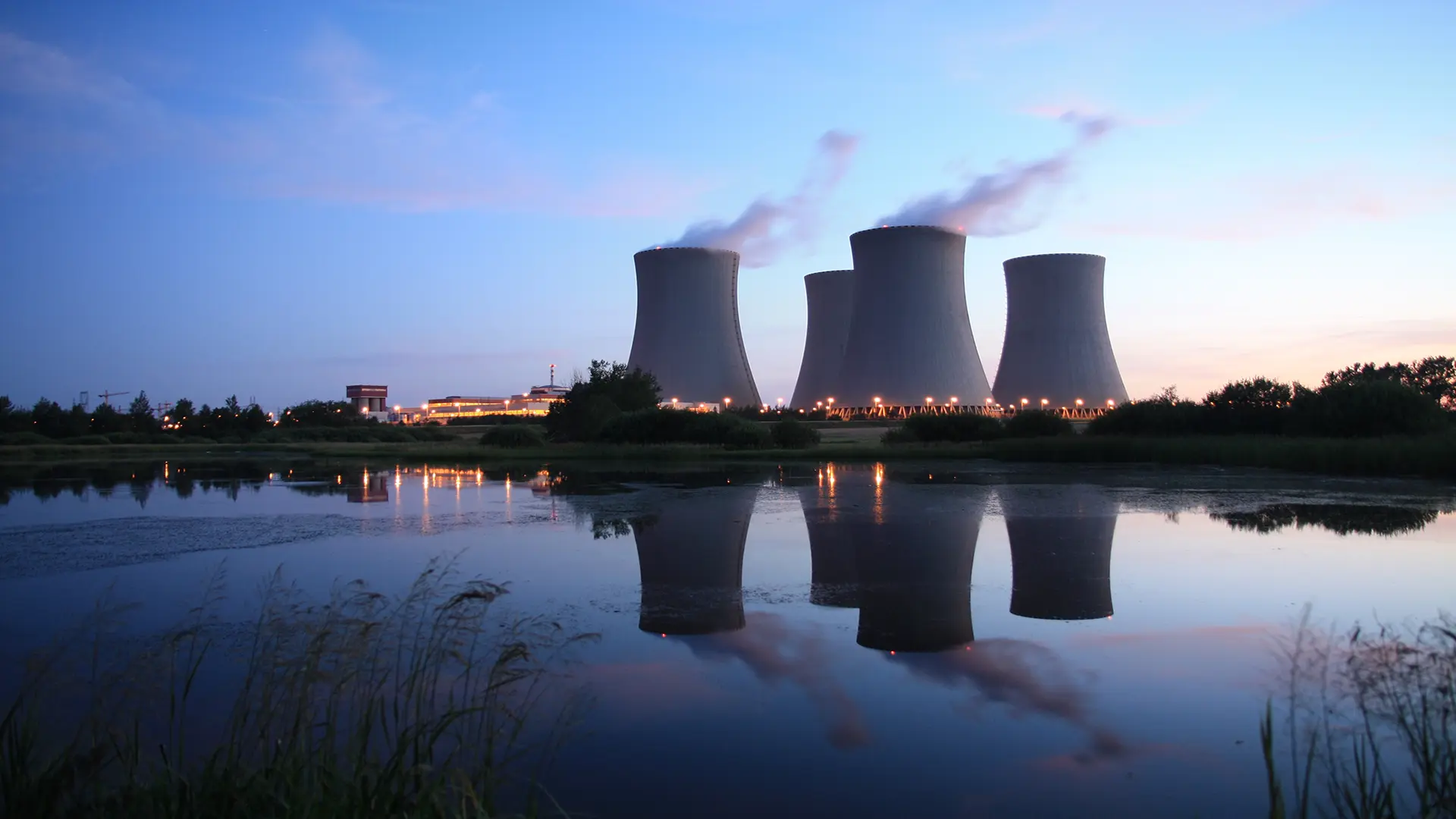
The Watts Bar Unit 2 nuclear project is 98% complete.
Released Tuesday, July 14, 2015
Reports related to this article:
Project(s): View 3 related projects in PECWeb
Plant(s): View 7 related plants in PECWeb
Written by John Egan for Industrial Info Resources (Sugar Land, Texas)--The Watts Bar Unit 2 nuclear project, owned by Tennessee Valley Authority (NYSE:TVE) (TVA) (Knoxville, Tennessee), is turning out to be the belle of the nuclear power ball. Construction of the unit is now about 98% complete, and it is adhering to its construction schedules and cost estimates, TVA spokesman Scott Brooks told Industrial Info TVA will spend between $4 billion and $4.5 billion to complete the 1,180-megawatt (MW) pressurized water reactor, which is expected to be online in early 2016.
Construction of the unit, located in Spring City, Tennessee, began in 1972, but was suspended in 1988, and resumed in 2007. When construction resumed, the plant's engineering, procurement and construction (EPC) firm, a unit of Bechtel Corporation (San Francisco, California), estimated it would cost about $2.5 billion and take about five years to finish. Those plans were revised in 2011, and since then, the estimated completion costs have not exceeded the $4 billion to $4.5 billion range.
By contrast, two other nuclear construction projects--adding two units to the V.C. Summer Nuclear Station in Jenkinsville, South Carolina, and adding two units to the Vogtle Nuclear Power Station in Waynesboro, Georgia--continue to report cost overruns and delayed in-service dates.
The current estimate is that Vogtle units 3 and 4 will cost about $14 billion to build and finance, about $1.4 billion higher than the original estimate. The in-service dates for the two new units have slipped to 2019 and 2020, from the original dates of 2016 and 2017. Vogtle 3 and 4 will be the nation's first installation of the Westinghouse AP1000 advanced pressurized reactor. When complete, Vogtle 3 and 4 will add about 2,234 MW of new generation capacity. The Vogtle plant is operated by Georgia Power Company (Atlanta, Georgia), a unit of the Southern Company (NYSE:SO) (Atlanta, Georgia). Georgia Power owns 45.7% of the plant. Other owners include: Oglethorpe Power Corporation (Tucker, Georgia), which own 30%; MEAG Power (Atlanta, Georgia), which owns 22.7%); and the City of Dalton, Georgia, which owns 1.6%.
The U.S. Department of Energy has offered up to $8 billion in federal construction loan guarantees. For more on that issue, see February 17, 2014, article - Obama Administration Commits $8 Billion in Loan Guarantees to Georgia Power's Vogtle Units 3 and 4.
Vogtle was the first nuclear plant to deploy Westinghouse's (Pittsburgh, Pennsylvania) AP1000 reactor, and cost overruns and project delays are not unusual when deploying a technology for the first time. But the Vogtle construction project also has been complicated and delayed by disputes between Georgia Power and its engineering, procurement and construction (EPC) firm, Chicago Bridge & Iron Company NV (NYSE:CBI) (CB&I) (The Hague, Netherlands). At one point, the firms were suing each other, but the litigious fires have since cooled.
"The contractor has faced numerous challenges to the execution of the schedule related to engineering design, design changes, major equipment fabrication and deliveries, module fabrication and deliveries, and field construction performance," John O'Brien, a senior communications specialist with Georgia Power, told Industrial Info.
Georgia Power continues to say constructing the two units at Vogtle is cheaper than the alternative, which was constructing natural gas combustion-cycle (NGCC) plants. The savings are $3 billion, the utility said in a fact sheet. The company added it is "enforcing our contract which shields customers from cost increases related to schedule extension."
Constructing Vogtle "is going to have less of an impact on customer rates than originally anticipated: the impact on customer rates is currently projected to be 6% to 8% at peak due to financing and other benefits of the project that Georgia Power has proactively pursued, and the fuel savings of nuclear," O'Brien said. "Most of this increase has already been phased into rates."
The Georgia Power spokesman added: "We are focused on ensuring that the project is completed safely and correctly--this is more important than building them quickly."
South Carolina Electric & Gas (SCE&G) (Cayce, South Carolina), a unit of SCANA Corporation (NYSE:SCG) (Cayce), also has encountered construction delays and cost overruns at its two-unit addition to the Summer Nuclear Station. CB&I is the EPC for that project, and the utility is installing two Westingthouse AP1000 reactors. SCE&G owns 55% of the unit additions, while Santee Cooper (Moncks Corner, South Carolina), owns the other 45%, but Santee Cooper agreed to sell some of its stake to SCG&E. The two new units each will be able to generate up to about 1,117 MW of electricity.
SCE&G is negotiating with its consortium partners, including CB&I, over who has to absorb cost overruns for Summer units 2 and 3. The current cost estimate for the project is approximately $11.7 billion, up about $500 million from original estimates. The units are scheduled to be operating by mid-2019 and mid-2020. When originally announced, the in-service dates were projected to be 2016 and 2019.
SCE&G has requested and been granted six retail electric price increases to cover Summer's licensing and construction costs. Those increases total about 14%. Earlier this year, the utility sought a seventh price increase, this one for 2.8%. South Carolina regulators are scheduled to make a decision on the most recent price increase request later this month. By collecting price increases as the plant is being built, company officials estimate SCE&G customers will save about $1 billion compared to traditional cost-recovery methods, where customers are only charged after a project is completed. Georgia Power has a similar cost-recovery mechanism for Vogtle.
In addition to nuclear units being constructed, the U.S. Nuclear Regulatory Commission (NRC) (Rockville, Maryland) in April granted Detroit Edison Company, a unit of DTE Energy (NYSE:DTE) (Detroit, Michigan) a combined construction and operating license (COL) to build a new unit at the existing Fermi 2 nuclear site in Newport, Michigan. The utility has not committed to building the new plant, but will keep the option open for long-term planning purposes. If it does build Fermi 3, it is expected to cost about $10 billion. The GE Hitachi Economic Simplified Boiling Water Reactor, whose design the NRC certified last November, is scheduled to be the reactor deployed at Fermi Unit 3.
"With this license, DTE Energy now possesses the most diverse, comprehensive slate of options to plan for Michigan's energy future," said Steven Kurmas, DTE Energy's president and chief operating officer. "The potential of additional nuclear energy gives us the option of reliable, base-load generation that does not emit greenhouse gases."
Another nuclear utility, Florida Power & Light (FPL) (Juno Beach, Florida), a unit of NextEra Energy Incorporated (NYSE:NEE) (Juno Beach, Florida), recently released updated estimated costs to build two new nuclear plants at its Turkey Point site in south Florida. The new projected cost range to build Turkey Point units 6 and 7 is $13.7 billion to $20 billion, up almost 9% from last year's estimate of $12.6 billion to $18.4 billion, according to an article by The Palm Beach Post. When originally announced in 2007, FPL estimated it would cost between $12 billion and $17.7 billion to build Turkey Point units 6 and 7. Those units are scheduled to use Westinghouse AP1000 reactors. CB&I is providing engineering and construction services to the project.
Like Georgia Power and SCE&G, FPL also is able to recover costs for planned nuclear plants before construction is complete. By yearend 2015, FPL customers will have paid more than $241 million toward the two-unit Turkey Point unit additions, which have been on hold for about five years. The utility recently filed a new request with Florida utility regulators to recover an additional $34 million for Turkey Point units 6 and 7 in 2016. A decision is expected later this summer.
Construction of Turkey Point Unit 6 originally was scheduled to kick off in 2014 while construction of Unit 7 was scheduled to begin in mid-2016. In 2007, FPL estimated Turkey Point Unit 6 would be operating by 2022 while Unit 7 would be generating electricity in 2023. The units have not received a COL from the NRC, but FPL reportedly is expecting that in 2017.
FPL officials have said it is still cost-effective to construct Turkey Point units 6 and 7 compared to other generation options. Specifically, since nuclear power emits no carbon dioxide (CO2), nitrogen oxides (NOx) or sulfur dioxide (SO2), it is ideally suited to operate in an era of tightening regulation of power-plant emissions, including President Obama's Clean Power Plan, the final details of which are scheduled to be released later this summer.
In New York, the embattled two-unit Indian Point Energy Center, owned by a unit of Entergy Incorporated (NYSE:ETR) (New Orleans, Louisiana), suffered a transformer fire that shut down the operation of Unit 3 for a few weeks this spring. That reignited calls from the plant's opponents, including New York Governor Andrew Cuomo, to close the plant, which is located about 35 miles north of New York City. Unit 2's license expired last year and Unit 3's license is scheduled to expire this year, although plants are allowed to continue operating if they have filed license extension applications with the NRC. For more on the May 9 transformer fire, see May 11, 2015, article - New York's Indian Point Energy Center Unit 3 Goes Offline after Fire.
A few days after Unit 3 returned to service, an electrical disturbance in the switchyard caused Unit 3 to trip offline. Company officials predicted the unit would return to service in a few days. However, another shutdown was reported July 9. For more on the shutdowns, see June 16, 2015, article - Unit 3 at New York's Indian Point Nuclear Plant Shuts Down for Repairs, and July 9, 2015, article - Unit 3 at New York's Indian Point Nuclear Plant Shuts Down for Second Time in Four Weeks.
Coming to the defense of one of its members, the Nuclear Energy Institute (NEI) (Washington, D.C.) recently issued an economic analysis of Indian Point's value to the local and state economy. The NEI study, released June 8 and titled "Economic Impacts of The Indian Point Energy Center," determined the plant contributed about $1.6 billion to New York's economy and $2.5 billion to the nation as a whole in 2014. Late last year, NEI produced a similar economic analysis of the value of Exelon's nuclear plants in Illinois, which have been under pressure in recent months. For more on that, see December 10, 2014, article - NEI Warns of Costs to Prematurely Closing Three Illinois Nuclear Stations.
In assessing the Indian Point plant, NEI said the facility employs nearly 1,000 people, with an annual payroll of about $140 million. NEI estimated that Indian Point employment stimulated nearly 4,400 additional jobs in other businesses in New York last year. One of the largest taxpayers in Westchester County, Indian Point contributed about $30 million in state and local property taxes, with a total tax benefit of $340 million to local, state and federal governments, the trade group said.
"Indian Point greatly strengthens the local, regional and state economies through job creation, tax payments, and direct and secondary spending," said Richard Myers, NEI's vice president for policy development and planning, who directed the study. "In many ways, Indian Point and its 1,000 employees provide outputs that are crucial for the well-being of the local communities and the state."
"The so-called nuclear renaissance in the U.S., which began around 2007, really flourished for a few years, but as the industry moved into actual construction, the enthusiasm really died down," said Brock Ramey, Industrial Info's North American Power specialist. "Aside from the Vogtle and Summer unit additions, plans to build other new units have been delayed or canceled as the costs became more clear and the risks more alarming. Even extended power uprates have become less attractive as low load growth, low natural gas prices and increased investment in energy-efficiency programs have been a triple whammy that puts incremental nuclear generation at a competitive disadvantage. The industry could revisit construction plans for new units if the president's Clean Power Plan is affirmed by the courts, but that is by no means certain."
Industrial Info Resources (IIR), with global headquarters in Sugar Land, Texas, five offices in North America and 10 international offices, is the leading provider of global market intelligence specializing in the industrial process, heavy manufacturing and energy markets. Industrial Info's quality-assurance philosophy, the Living Forward Reporting Principle, provides up-to-the-minute intelligence on what's happening now, while constantly keeping track of future opportunities.
/news/article.jsp
false
Want More IIR News Intelligence?
Make us a Preferred Source on Google to see more of us when you search.
Add Us On GoogleAsk Us
Have a question for our staff?
Submit a question and one of our experts will be happy to assist you.

Forecasts & Analytical Solutions
Where global project and asset data meets advanced analytics for smarter market sizing and forecasting.
Explore Our Solutions
PECWeb Global Market Intelligence Platform
Identify opportunities, anticipate change, and execute with confidence. PECWeb connects the industrial intelligence you need, from projects and assets to operational events, all in one platform.
Discover PecwebIndustry Intel
-
2026 European Petroleum Refining Project OutlookPodcast Episode / Jun 26, 2026
-
Brazil: Efficiency, Innovation, and Opportunities in the Food & Beverage IndustryPodcast Episode / Jun 12, 2026
-
2026-2027 Investment Radar for Mexico, Central America & the CaribbeanPodcast Episode / May 29, 2026
-
Innovations Shaping the Next Era of Power GenerationPodcast Episode / May 22, 2026
-
The Role of Contract Manufacturing in Global Pharma GrowthPodcast Episode / May 8, 2026