Power
Boxer-Kerry Draft Climate Bill Seeks Larger Emissions Reductions, Is Silent on Cap and Trade
Sens. Barbara Boxer (D-Calif.) and John Kerry (D-Mass.) unveiled their long-awaited draft energy legislation in a press conference held in front of the U.S. Capitol on September 30...
Released Friday, October 02, 2009
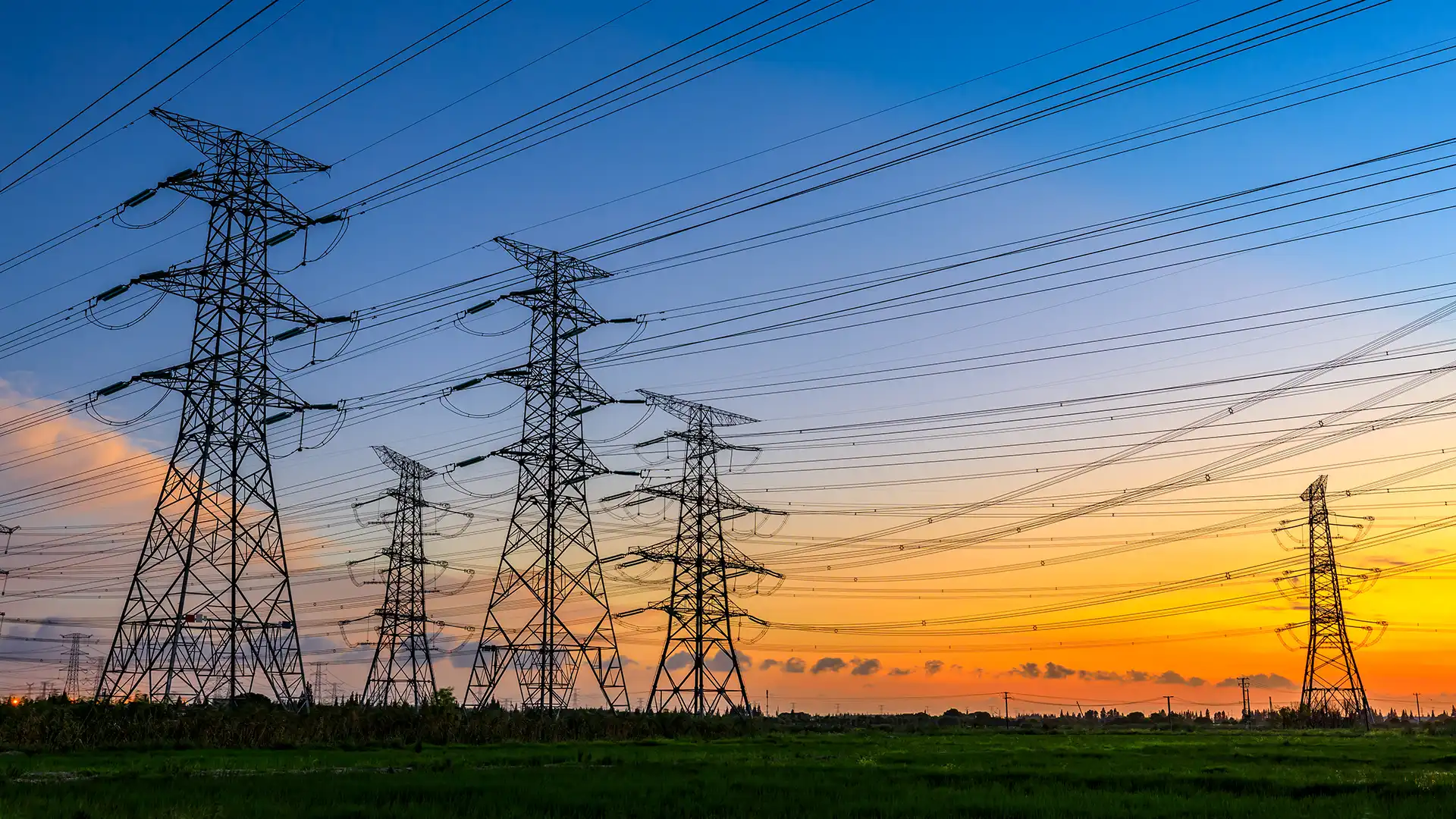
Written by John Egan for Industrial Info Resources (Sugar Land, Texas)--Sens. Barbara Boxer (D-Calif.) and John Kerry (D-Mass.) unveiled their long-awaited draft energy legislation in a press conference held in front of the U.S. Capitol on September 30. The staging was not accidental: News media photos and footage showed the two senators positioned before the Capitol dome, speaking in patriotic tones about how energy issues were inextricably tied to national security, and how the bill would strengthen and expand the U.S. economy.
The draft bill, titled the "Clean Energy Jobs and American Power Act," is 821 pages in length and differs in several respects from the Waxman-Markey climate change bill that the House of Representatives passed by a slim margin in June.
Most significantly, Boxer-Kerry mandates that, by 2020, greenhouse gas emissions be reduced 20% from their 2005 levels, higher than the 17% cut contained by Waxman-Markey and the 14% sought by the Obama administration. And while Waxman-Markey was built around a cap-and-trade system to reduce greenhouse gas emissions, Boxer-Kerry was silent on cap and trade. Sen. Kerry said the Senate Finance Committee would take up this issue, given its potential to raise or reduce revenue for the government. However, the committee, chaired by Sen. Max Baucus (D-Mont.), has been preoccupied with healthcare legislation for months. Kerry is a member of the committee.
Addressing the Senate bill's higher greenhouse gas emissions reduction mandate, Kerry said that the emissions had already fallen 6% during the recession, so the legislation really only sought an additional 14% reduction. "This is not a reach," Kerry told reporters. "If people approach it in good faith, I think we can get something done. If people are determined just to block and stop, I still believe we can get something done, because I think we can build a critical mass here. People need to take a breath and step back and look at the facts before they start making judgments."
Despite Kerry's call, there was a rush to comment on the bill, which has taken months to draft. The formal introduction of the bill has been delayed several times. Utilities and manufacturers have spent tens of millions of dollars lobbying legislators, funding competing economic studies, and running advertisements opposing climate-change legislation this year.
The National Association of Manufacturers (NAM) questioned the wisdom of the higher greenhouse gas emissions reduction mandate. Saying that Waxman-Markey's 17% reduction of the emissions was "an ambitious and potentially costly goal," NAM said that Boxer-Kerry represents "an even more significant technological and economic challenge to manufacturers, while resulting in little benefit to the environment." The trade group, which opposed Waxman-Markey, expressed concern over, but not outright opposition to, Boxer-Kerry. While worrying about the potential cost to manufacturers and consumers, NAM welcomed Boxer-Kerry's support for nuclear power research and development and for advanced alternative fuel technology.
Other industry groups were more sharply critical of the draft legislation. Boxer-Kerry is "a major step backward from the House version of the bill. It will put even greater pressure on energy-intensive, trade-sensitive industries such as the steel industry," said Thomas Gibson, president and CEO of the American Iron and Steel Institute. As drafted, the bill would go "even further in seeking more unrealistic reductions that will impose onerous regulatory burdens on domestic refiners amidst fierce global competition and increased costs on the driving public, farmers, and truckers," said Charles Drevna, president of the National Petrochemical & Refiners Association.
The Edison Electric Institute (Washington, D.C.) tried to find a middle ground on Boxer-Kerry. Calling the draft legislation a "work in progress," the trade group that represents shareholder-owned electric utilities said it was "encouraged" by the process to craft climate-change legislation. But the group said that "effective consumer protections" and "reasonable emissions targets and timetables that reflect technology availability" were needed in order to lower the cost of greenhouse gas emissions reduction.
Senators on both sides of the aisle issued a flurry of statements as Boxer and Kerry introduced their bill. As expected, Republican senators attacked it, but even some moderate, swing-state senators also fired away, or at least issued non-committal statements, raising the question of whether the Democrats can muster the 60-vote majority necessary to overcome a widely expected filibuster on the Senate floor. Democrats hold 60 seats in the Senate, and that body's rules for limiting floor debate, called cloture, require a vote of 60 senators.
"Requiring 20% emission reductions by 2020 is unrealistic and harmful," said Sen. Jay Rockefeller (D-W. Va.), a coal-rich state. "It is simply not enough time to deploy the carbon capture and storage and energy efficiency technologies we need."
In separate statements, Sens. Robert Byrd (D-W. Va.) and Joe Lieberman (I-Conn.) supported the goals and some of the specifics of Boxer-Kerry while also commenting on the challenges to assembling a filibuster-proof 60 votes. "They've started a process today, and I thank them for that," Sen. Lieberman said. "I think they would agree that their bill as it's laid down today can't get 60 votes. I'm going to do whatever I can [to gain supporters]," said Byrd. "While this is an encouraging sign, we have a long way to go on this legislation. Many issues have yet to be addressed. There is still a tough road ahead."
To no one's surprise, several Republican senators attacked Boxer-Kerry: "It is to the left of Speaker [Nancy] Pelosi and to the left of the president," said Sen. Mike Johanns (R-Neb.). Sen. John Thune (R-S.D.) said Boxer-Kerry was "much worse" than Waxman-Markey: "It's more expensive, it's more restrictive, it's more aggressive," he said. Sen. Lamar Alexander (R-Tenn.), a member of the Senate Environment and Public Works Committee, which is chaired by Sen. Boxer, had this to say: "These are fancy, complicated words for high-cost energy that will send jobs overseas looking for cheap energy." In the past, Alexander has supported cap-and-trade legislation on power plants alone.
Sen. Lisa Murkowski (R-Alaska), ranking minority member of the Energy and Natural Resources Committee, predicted the bill would drive up energy prices. "We must determine how to balance environmental progress with economic growth. Our economy is already struggling. Now is not the time to enact a bill that imposes financial burdens, the extent of which we don't know for sure." If enacted, Boxer-Kerry would lead to "a massive transfer of wealth, from the Midwest to the East and West coasts," she said, creating "huge regional disparities" and passionate fights over how these incremental costs will be distributed.
Maine Senator Olympia Snowe, a moderate Republican, appeared to damn the bill with faint praise, saying, "I believe it is imperative that we end energy paralysis and confront this monumental 21st century challenge. At the same time, it is imperative any legislation incorporates the well-being of our economy as a foremost priority--especially given unemployment rates nationally are approaching 10 percent."
Boxer-Kerry did not address two aspects of the contentious issue of emissions allowances: how many would be provided for free, and which industries would get what percentage of the free allowances. Under Waxman-Markey, 85% of carbon-dioxide emissions allowances would be distributed at no cost to affected industries, which include electric utilities, oil refiners, manufacturers, and agriculture. Electric utilities won the largest share of free allowances under Waxman-Markey, garnering 35% of them, somewhat less than the industry's proportional emissions of carbon dioxide. Oil refiners only received about 2% of the free emissions under Waxman-Markey, though their level of carbon dioxide emissions is comparable to electric utilities' emissions. Refiners have said that they would have to pay tens of billions of dollars to buy allowances at auction just to remain in business.
Industrial Info Resources (IIR) is the leading provider of global market intelligence specializing in the industrial process, heavy manufacturing and energy related markets. For more than 26 years, Industrial Info has provided plant and project opportunity databases, market forecasts, high resolution maps, and daily industry news.
/news/article.jsp
false
Want More IIR News Intelligence?
Make us a Preferred Source on Google to see more of us when you search.
Add Us On GoogleAsk Us
Have a question for our staff?
Submit a question and one of our experts will be happy to assist you.

Forecasts & Analytical Solutions
Where global project and asset data meets advanced analytics for smarter market sizing and forecasting.
Explore Our Solutions
Industrial Project Opportunity Database and Project Leads
Get access to verified capital and maintenance project leads to power your growth.
Discover Our DatabaseIndustry Intel
-
2026-2027 Investment Radar for Mexico, Central America & the CaribbeanPodcast Episode / May 29, 2026
-
Innovations Shaping the Next Era of Power GenerationPodcast Episode / May 22, 2026
-
The Role of Contract Manufacturing in Global Pharma GrowthPodcast Episode / May 8, 2026
-
2026 North American Labor OutlookPodcast Episode / Apr 24, 2026
-
2026 European Metals & Minerals Project Spending OutlookPodcast Episode / Apr 7, 2026