Industrial Manufacturing
Ford Motor and Other Automakers Automate and Reign in Suppliers to Improve Production Efficiencies
The Claycomo plant was the first Ford plant to adopt automation on a large scale. The present body shop alone has 340 robots, which have enabled the plant to eliminate some 200 feet of...
Released Monday, October 28, 2002
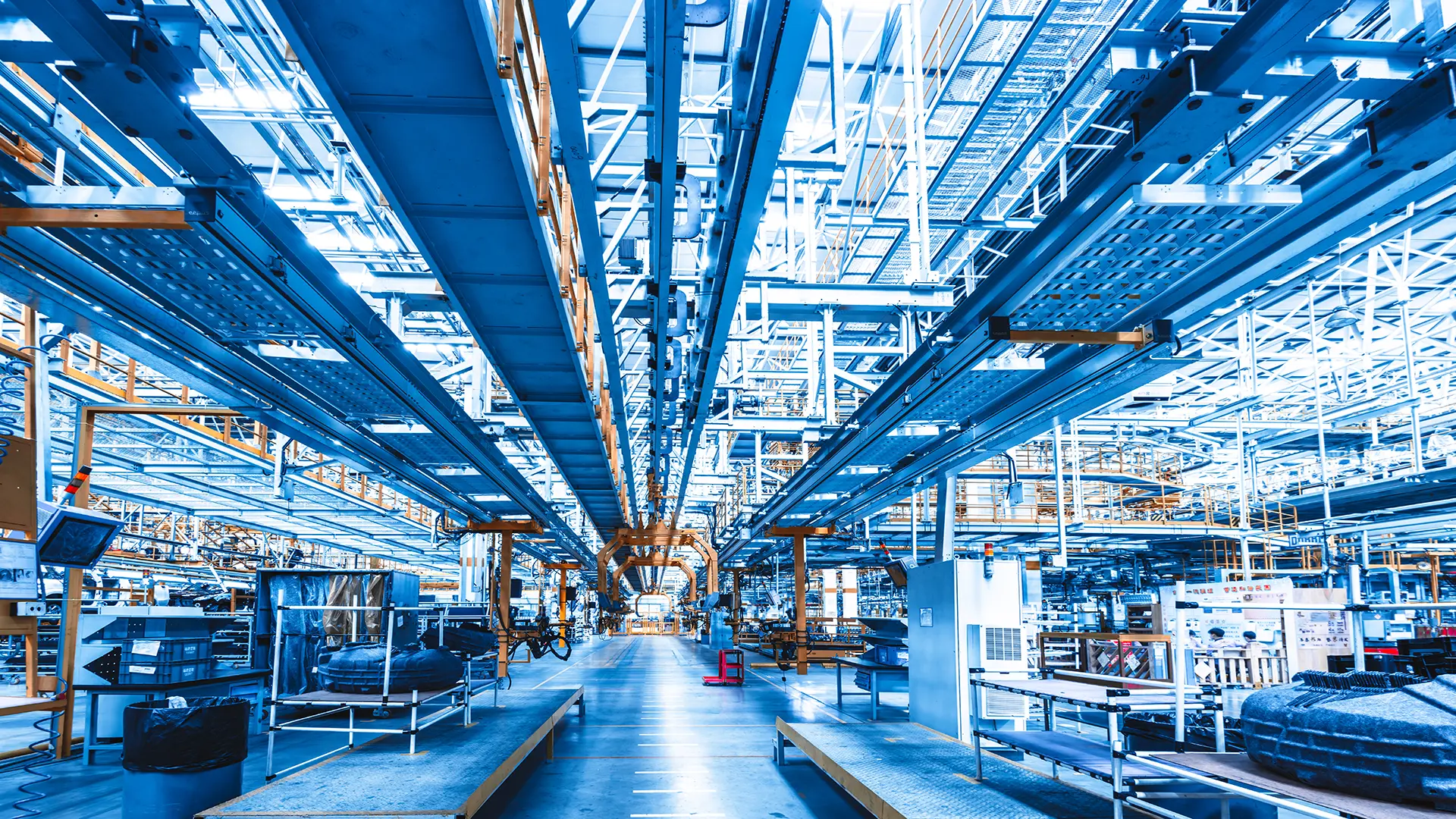
Researched by Industrialinfo.com (Industrial Information Resources Incorporated; Houston, Texas). Ford Motor Company (NYSE:F) (Dearborn, Michigan) will be doing an extensive overhaul of its Claycomo vehicle assembly plant in Kansas City, Missouri, during the next eight months, in order to expand production capabilities. The project will include a major expansion of the paint shop, a complete overhaul of the body shop, and renovation of the chassis line.
The Claycomo plant was the first Ford plant to adopt automation on a large scale. The present body shop alone has 340 robots, which have enabled the plant to eliminate some 200 feet of conveyor line, thus simplifying and stream-lining vehicle assembly. Ford and other American manufacturers are borrowing production-streamlining techniques from Japanese automotive manufacturers, such as Toyota and Nissan, in order to cut their manufacturing costs and increase production levels.
Ford has also recently stripped down and remodeled its antiquated Chicago assembly plant and opened a supplier campus nearby to facilitate just-in-time delivery from several of its suppliers. (See related article:Chicago Brownfield Site To Blossom Again)
The supplier park idea has not seen great popularity in the U.S. yet, primarily because of union opposition, but implementation of this concept will be increasingly necessary in the future, since both suppliers and OEM's need to pare unnecessary costs from their budgets in today's stressed automotive market. Both Ford and General Motors (Detroit, Michigan) (NYSE:GM) have created supplier parks adjacent to, and in some cases actually inside, their new South American plants, with about half the suppliers having space within the assembly plants themselves. In-plant supplier sites facilitate delivery straight from the supplier to the OEM's assembly line, thus saving on lost work time and transportation costs, preventing line slowdowns due to late or defaulted deliveries, and enabling the OEM to further streamline its assembly by eliminating excess conveyor line length.
Nissan North America (Gardena, California), a subsidiary of Nissan Motor Company, Limited, (Japan) (NASDAQ:NSANY) in addressing the supplier problem, has specified the maximum distances its Tier I, Tier II, and Tier III suppliers must be from its new state-of-the-art assembly plant in Canton, Mississippi, thus improving chances that production won't come to a stand-still because a supplier is late in its shipment. Most of these shipments are scheduled every hour or half-hour, making timely delivery vital to meeting production schedules. Toyota, Honda, and Hyundai, all with highly efficient assembly plants in the South, have similar arrangements with their suppliers. Ford, General Motors, DaimlerChrysler, and others are racing to catch up, but their awesome disadvantage in the run toward production efficiency is not only outdated plants, but also burdensome pension programs and out-of-control unions, but that's fodder for another article.
/news/article.jsp
false
Want More IIR News Intelligence?
Make us a Preferred Source on Google to see more of us when you search.
Add Us On GoogleAsk Us
Have a question for our staff?
Submit a question and one of our experts will be happy to assist you.

Forecasts & Analytical Solutions
Where global project and asset data meets advanced analytics for smarter market sizing and forecasting.
Explore Our SolutionsRelated Articles
-
Blackstone Upbeat on Long-Term Outlook for U.S. Data CentersOctober 23, 2026
-
Roofing Materials Production Drives Multiple U.S. Constructi...October 22, 2026
-
ABB Builds Backlog with Canadian Mining, U.S. Tech WorkOctober 21, 2026
-
Argentina y Brasil lideran los cinco principales proyectos d...October 21, 2026

PECWeb Global Market Intelligence Platform
Identify opportunities, anticipate change, and execute with confidence. PECWeb connects the industrial intelligence you need, from projects and assets to operational events, all in one platform.
Discover PecwebIndustry Intel
-
Mining Capital Spending 2026: Copper, Rare Earths, AluminumPodcast Episode / Oct 23, 2026
-
Brazil Critical Minerals 2027: Rare Earths, Lithium, CopperPodcast Episode / Oct 16, 2026
-
US Craft Labor Outlook 2026: Wages, Per Diems, Data CentersPodcast Episode / Oct 16, 2026
-
Latin America Data Center Outlook 2026: Power, Hubs & GrowthPodcast Episode / Oct 9, 2026
-
Food and Beverage CapEx Outlook 2026: Tariffs, AI, AfricaPodcast Episode / Oct 9, 2026