Power
IEA Report Details the Fall and Rise of Global Carbon Emissions for 2020
For those concerned about global emissions of CO2 and global warming, last week's release of a report from the International Energy Agency (IEA) was the ultimate good news-bad news story
Released Wednesday, March 10, 2021
Written by John Egan for Industrial Info Resources (Sugar Land, Texas)--For those concerned about global emissions of carbon dioxide (CO2) and global warming, last week's release of a report from the International Energy Agency (IEA) (Paris, France) was the ultimate good news-bad news story. The good news: Energy-related global emissions of CO2 fell nearly 2 billion tons, or about 6%, around the world in 2020, the largest absolute decline in history. Slightly more than 50% of that decline came from transportation, and another 25%, or about 450 million tons, came from the global power sector.
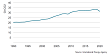 Click on the image at right to see a line chart of global energy-related CO2 emissions since 1990.
The bad news: Keeping global temperature increases below 2 degrees (Celsius) will require annual emission reductions of 500 million tons or more each year across industries, the IEA said in its Global Energy Review: CO2 Emissions in 2020, released March 2.
While global emissions fell on an annual basis in 2020, a month-by-month tally showed dramatic reductions in February and March, as national economic lockdowns went into effect. But as those lockdowns eased starting in April, emissions rose steadily.
In a statement, IEA Executive Director Fatih Birol said: "The rebound in global carbon emissions toward the end of last year is a stark warning that not enough is being done to accelerate clean energy transitions worldwide. If governments don't move quickly with the right energy policies, this could put at risk the world's historic opportunity to make 2019 the definitive peak in global emissions."
"Our numbers show we are returning to carbon-intensive business-as-usual," he continued. "This year is pivotal for international climate action--and it began with high hopes--but these latest numbers are a sharp reminder of the immense challenge we face in rapidly transforming the global energy system."
Therein lies the vexing challenge facing policymakers, business leaders and non-governmental organizations around the world. The lockdowns have been very unpopular in parts of the U.S., though other nations did not appear to have experienced the same level of rancor over them. Even among those who consider climate change an existential crisis, like the Biden administration, is there the political will to try to enact dramatic carbon restrictions with no end date?
The IEA plans to tackle that issue in a future report on how the energy sector can reach net-zero emissions by 2050. In a report released last year, the energy agency provided four scenarios that policymakers, business leaders and non-governmental organizations could use to guide their actions over the next decade or so. For more on that, see October 14, 2020, article - IEA Identifies Four Scenarios for Rebuilding Global Energy Markets.
The IEA's Global Energy Review limited itself to all uses of fossil fuels for energy purposes. As such, it did not include emissions from industrial processes, industrial waste, and non-renewable municipal waste.
On a year-over-year basis, CO2 emissions fell the most in the U.S. in 2020, followed by the European Union, India and Russia, the IEA CO2 report said. In advanced economies, 2020 emissions fell 5% to 10%. In the U.S., the decline was about 10%, or nearly 500 million tons. China was the only nation where emissions increased last year, when compared with 2019.
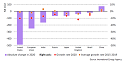 Click on the image at right to see a country-by-country CO2 emissions scoreboard for 2020 compared to 2019.
Measured by fuels, oil took the biggest global hit in 2020, where sharply declining demand lowered CO2 emissions from that fuel by about 1.1 billion tons--more than 50% of global emissions reduction.
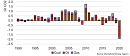 Click on the image at right to see the percentage of CO2 emissions reductions in 2020 that could be attributable to oil, coal and natural gas.
In the global power sector, the Global Energy Review said, CO2 emissions declined 3.3%, or about 450 million tons in 2020, the largest relative and absolute fall on record. "While the pandemic reduced electricity demand last year, the accelerating expansion of power generation from renewables was the biggest contributor to lower emissions from the sector," it said. The share of renewables in global electricity generation rose from 27% in 2019 to 29% in 2020, the biggest annual increase on record, it added.
Across the world, coal's share of the electricity generation mix fell to about 35% last year, down about five percentage points since 2010, while renewables' market share rose to 29% in 2020, up from about 20% a decade earlier. Gas' share of the electric fuel mix has held steady at slightly under 25% for the last several years, IEA said.
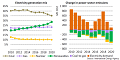 Click on the image at right to see how the global electric fuel mix has shifted over the last decade.
Industrial Info Resources (IIR), with global headquarters in Sugar Land, Texas, six offices in North America and 12 international offices, is the leading provider of global market intelligence specializing in the industrial process, heavy manufacturing and energy markets. Industrial Info's quality-assurance philosophy, the Living Forward Reporting Principle, provides up-to-the-minute intelligence on what's happening now, while constantly keeping track of future opportunities. Follow IIR on: Facebook - Twitter - LinkedIn. For more information on our coverage, send inquiries to info@industrialinfo.com or visit us online at http://www.industrialinfo.com.
/news/article.jsp
false
Want More IIR News Intelligence?
Make us a Preferred Source on Google to see more of us when you search.
Add Us On GoogleAsk Us
Have a question for our staff?
Submit a question and one of our experts will be happy to assist you.

Forecasts & Analytical Solutions
Where global project and asset data meets advanced analytics for smarter market sizing and forecasting.
Explore Our SolutionsRelated Articles
-
Turkey Announces New Wind and Solar DriveJuly 24, 2026
-
Nuclear Resurgence Spurs Permitting, Supply Chain IssuesJuly 24, 2026
-
GE Vernova Orders Up 88% Year-over-YearJuly 23, 2026

PECWeb Global Market Intelligence Platform
Identify opportunities, anticipate change, and execute with confidence. PECWeb connects the industrial intelligence you need, from projects and assets to operational events, all in one platform.
Discover PecwebIndustry Intel
-
European Chemicals and Transport Fuels OutlookPodcast Episode / Jul 10, 2026
-
2026 European Petroleum Refining Project OutlookPodcast Episode / Jun 26, 2026
-
Brazil: Efficiency, Innovation, and Opportunities in the Food & Beverage IndustryPodcast Episode / Jun 12, 2026
-
2026-2027 Investment Radar for Mexico, Central America & the CaribbeanPodcast Episode / May 29, 2026
-
Innovations Shaping the Next Era of Power GenerationPodcast Episode / May 22, 2026
