Petroleum Refining
IIR's COVID-19 Impact Views
Industrial Info's daily COVID-19 Impact Report gives you the latest inside intelligence on outages, derates, shutdowns, closures, delays and more caused by the pandemic, across the global energy and industrial landscape.
Released Tuesday, May 05, 2020
PETROLEUM REFINING HIGHLIGHTS
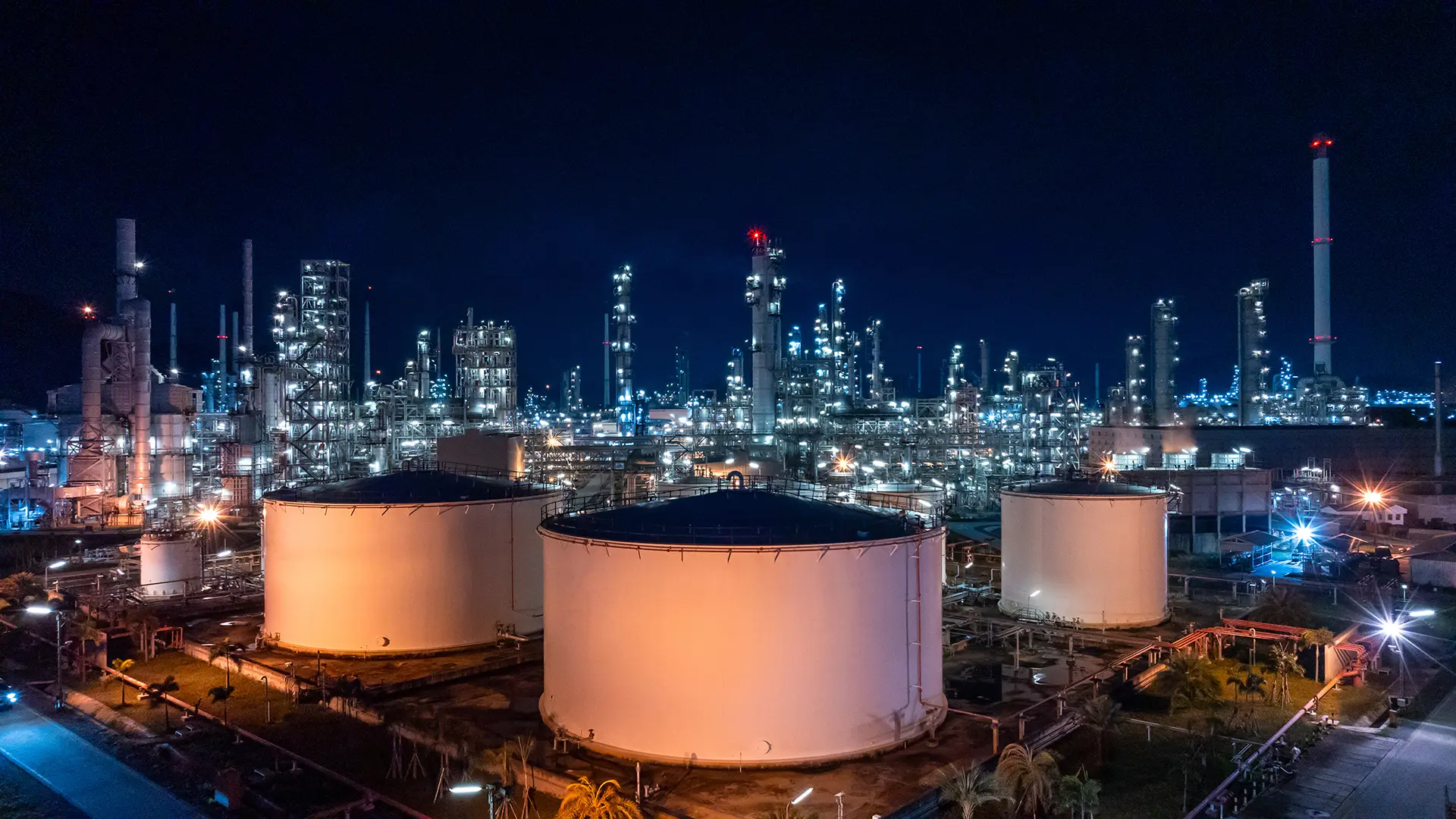
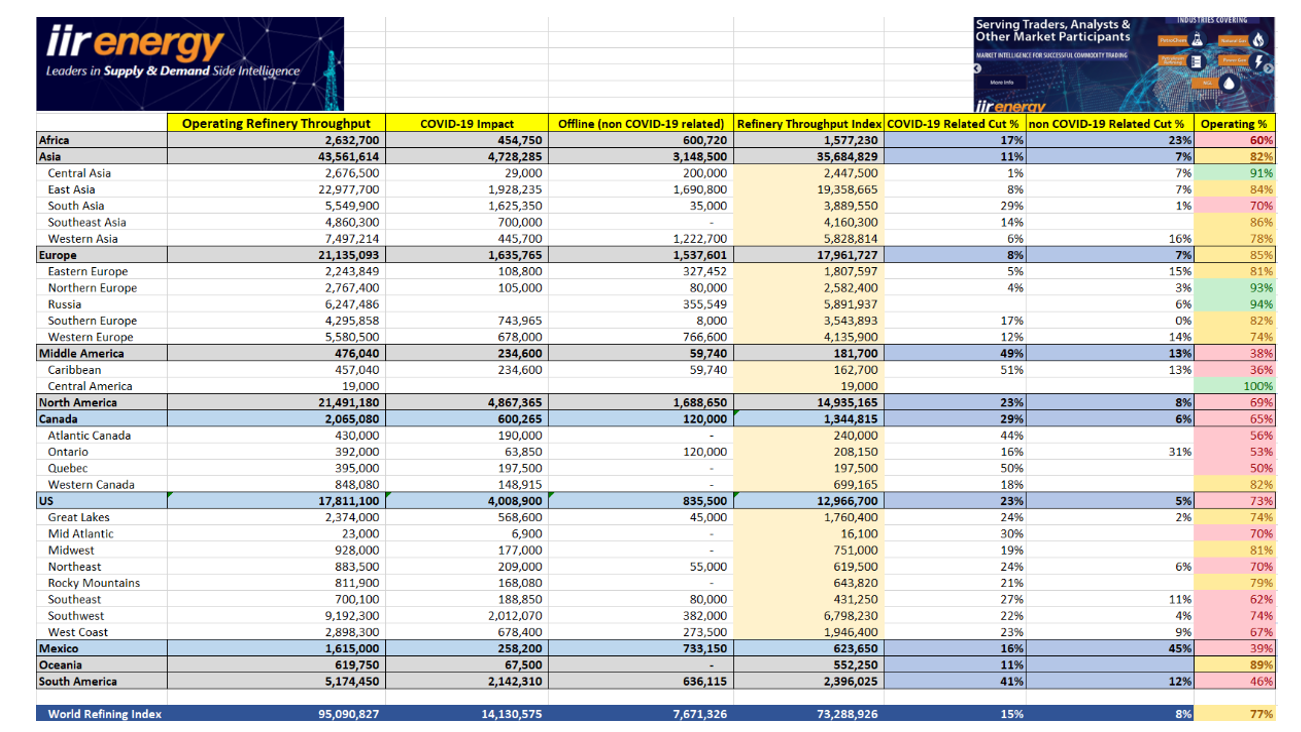
Looking at Industrial Info's Global Refinery Index (GRI) below shows the global operating percentage holding at a 78%, but U.S. refiners in the Southeast and West Coast have dipped to the mid-60s, showing that the decline in crude oil processing has not quite hit bottom yet. Globally, some countries are easing domestic travel restrictions as the spread of the coronavirus slows, but a corresponding increase in fuel demand is expected to be gradual as refiners struggle with high inventories and run rates. There is always a refinery lag once the signal comes from the market that demand is back.
Processing volumes at these large refiners remain at the mercy of the pace at which demand ramps back up. Most driving activity is itself going to take some time to return as phases of workers go back on location, but overall driving will not return overnight. Automobile demand, maritime/ agriculture (diesel), then jet fuel will gradually rise, in that order, but some experts estimate five years to get back to pre-COVID-19 numbers. The oil production and refinery capacity footprint will likely be permanently reduced as the market re-balances.
PETROCHEMICAL HIGHLIGHTS
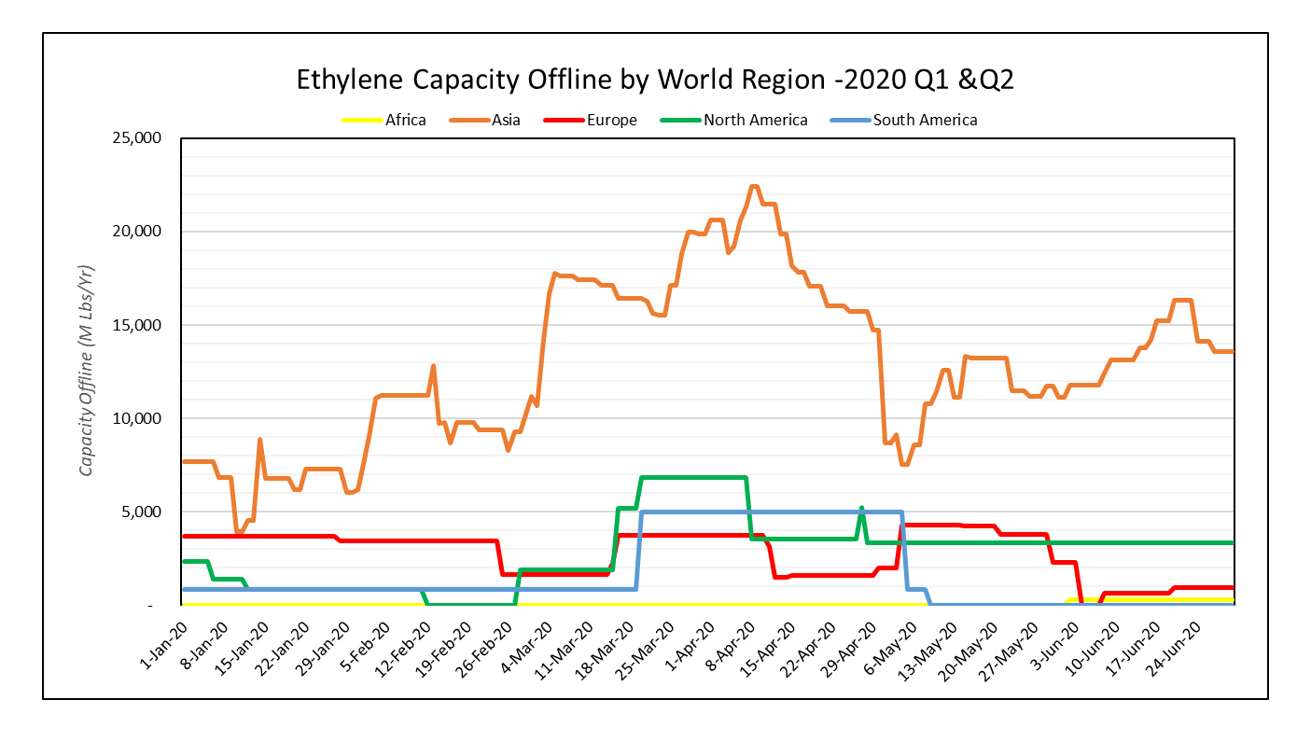
Industrial Info sees the Ohio Valley and Appalachians, home of natural gas liquids (NGL)-rich shale plays--namely the Utica--under the gun now. These rich liquid plays made the region an ideal spot for building a string of new petrochemical plants featuring ethane crackers, which are the building blocks for the world's evolving plastics industry. As an epicenter of the U.S. fracking boom, this region is awash in both gas and NGLS, exploration of which came just in time to be built partly on the bones of the region's dying coal industry.
Industrial Info sees that some of the work is already underway for these ethane crackers; however, in recent months, storm clouds have been rolling in as more capacity idles as the below graph indicates.
The petrochemical buildout in the U.S. has oversupplied the market. Cracker plants, which have been sourced by an abundance of ethane from this region's liquid plays, have placed downward pressure on operating rates and expected sales prices, not to mention plastics manufacturer margins. Most rates are expected to continue to decline in the U.S. and around the world.
Industrial Info notes that one of the victims could be a massive $5.7 billion petrochemical facility planned for Belmont County, Ohio, which is witnessing a delay after a period of site prep and civil work has already been done.
POWER HIGHLIGHTS
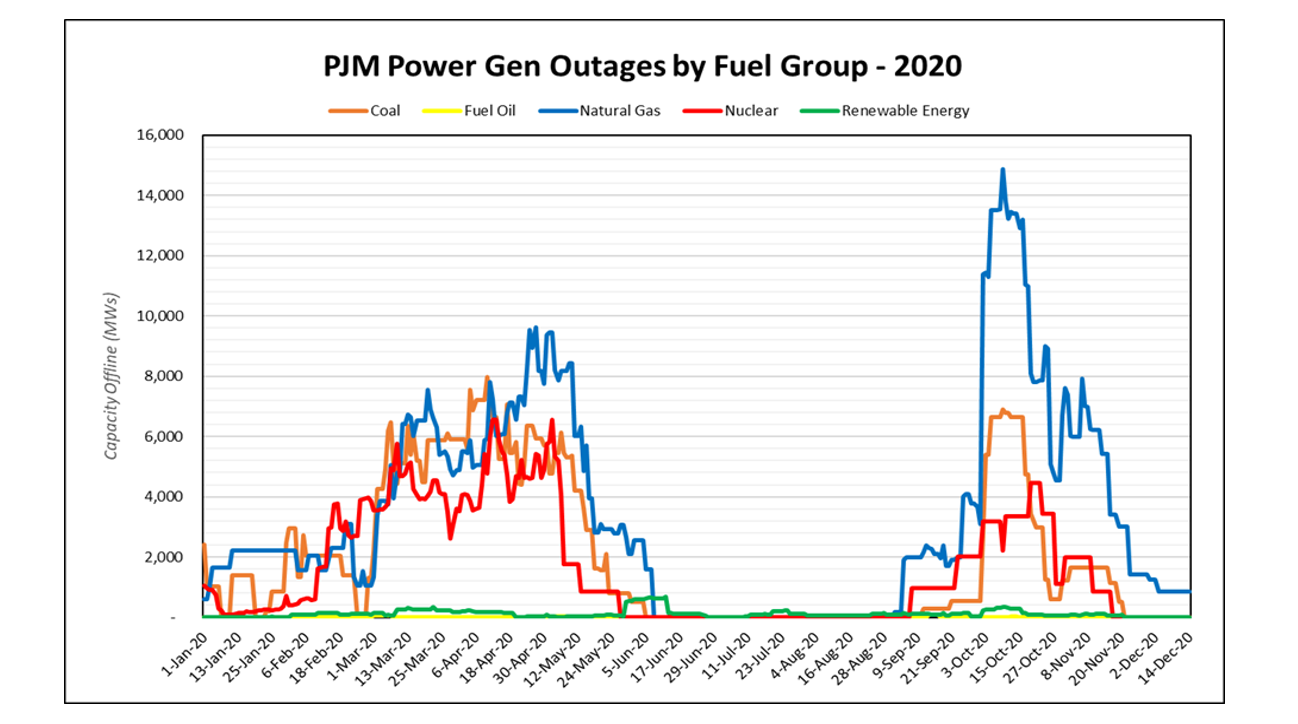
Industrial Info's experts predict that electricity demand is clearly going to come back more strongly than transportation demand. Power is being less effected than the hydrocarbon markets, but demand still lags. And since power tends to move more in tune with gas as more and more of the fleet changes to gas-fired, the outlook for gas is much better than for oil in the near term.
Looking farther out, natural gas prices could rise as production falls in oil basins, as much of the oversupply with gas came from associated oil production, so look for power prices to rise, not fall.
Industrial Info predicts that if prices even rise slightly, that could be good for sources of renewable energy, prices for which are falling and increasingly competitive with natural gas. As the world moves to more baseload generation with gas, and with less capital for new types of investment, gas will drive power. Industrial Info looks for power prices to have hit lows as summer heat builds. Industrial Info's graphs show just how much natural gas maintenance is occurring.
ALTERNATIVE FUELS HIGHLIGHTS
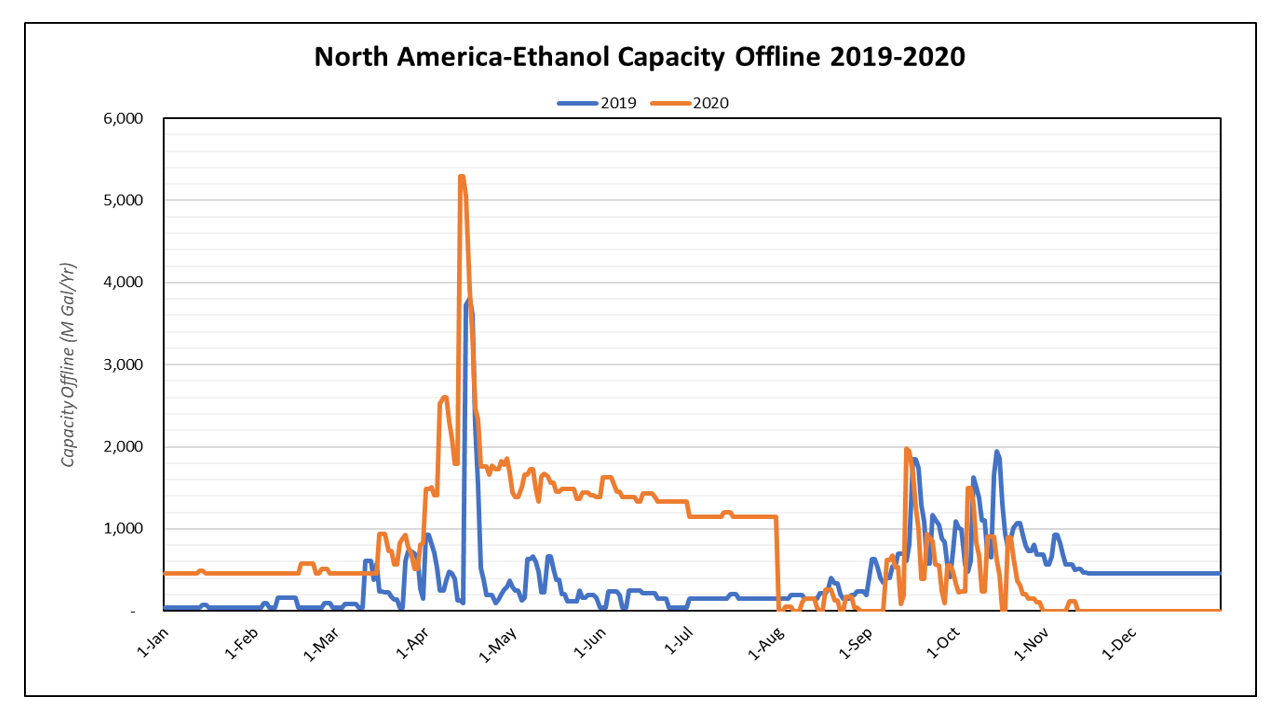
Corn-based ethanol is a part of each gallon that goes into your car. So, corn-based ethanol is obviously getting the worst of things, as its percentage of the barrel was already under fire. Industrial Info still shows a record number of plants idling. One bright spot is the old tactic of changing the chemistry and make what they will buy...Industrial Info reports that some Kansas ethanol plants are following this national trend of changing horses in midstream and now making hand sanitizers. Kansas plants produce more than 600 million gallons of biofuel annually, so any relief they can find is a help to the community.
With demand low, Info has seen ethanol producers get creative, pivot and sell their ethanol to people making hand sanitizers and still maintain some production and staffing. Two plants--East Kansas Agri-Energy and Pratt Energy--have now switched over.
Thankfully, the U.S. Food & Drug Administration put a waiver on using fuel-grade ethanol for hand sanitizer. The excise tax has been removed until the end of the year, and this is helping Kansas ethanol producers find a way to turn lemons into lemonade and generate some out-of-state commerce, while supporting the effort to battle COVID-19.
OIL & GAS PRODUCTION HIGHLIGHTS
Industrial Info is seeing that natural gas is withstanding the coronavirus-fueled economic crash in a way that its cousin, oil, is not. Oil prices have reached record lows, with production being cut, wells shut in, and tanks brimming.
The U.S. natural gas price, meanwhile, is stable, staying below $2 per million British thermal units, a historically low level it has been hovering at for a while due to a glut produced from the shale boom.
Oil producers are shutting in their wells, prompting tens of thousands of layoffs, because the pace of the price collapse was so sudden, caused mostly by the fact that the pandemic has crushed demand for transportation fuels made with oil, as people forgo driving and flying.
Industrial Info believes the negative impact on demand in gas markets is not as significant as it is with oil because it's not being driven by transportation, but by power and manufacturing.
U.S. natural gas production, by contrast, has remained steady as people stuck at home depend on it for power and heat. Because it's been so cheap for so long, natural gas in recent years passed coal as the most used fuel for electricity, at 38% of the mix at the start of 2020.
While some important uses for gas are falling, without the need to power or heat large office spaces and some nonessential manufacturing facilities, demand has picked up in other places, such as in feedstock for plastics used to make key health equipment, this creates a bit of price stability or even resilience with natural gas because its primary end use in the U.S. hasn't changed all that much. Natural gas demand is falling, just not as severely as oil.
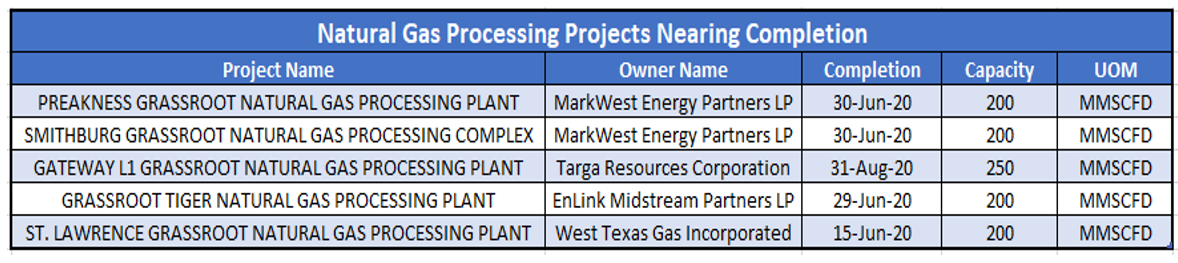
Natural gas used in the U.S. was already down before the pandemic because of a mild winter that meant less heating of homes, so the headwinds that the sector is facing are well versed, and the industry won't topple too much. See the list of projects below that are still going full speed ahead and nearing completion.
OIL & GAS PIPELINE HIGHLIGHTS
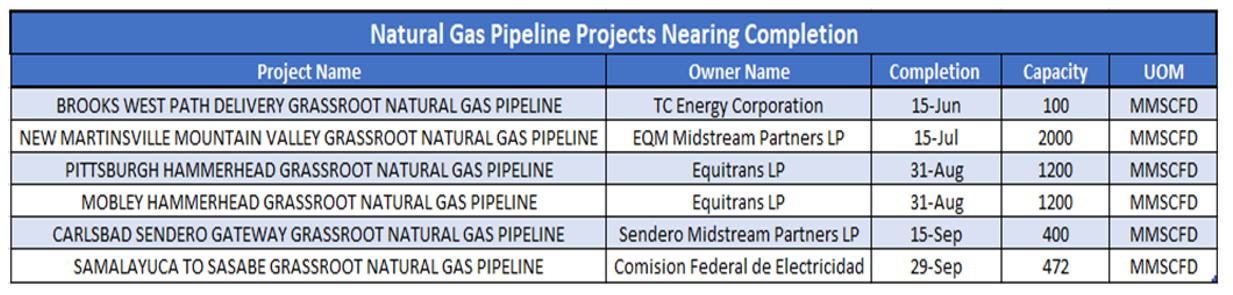
Industrial Info research shows that most oil and gas pipeline projects that are in the construction stage are still moving forward. Gas prices have not suffered as much as the oil market, and long-term gas deals and liquefied natural gas (LNG) shipments that connect the market globally have held a bit of a floor under the natural gas operators. These projects below are still going strong. Industrial Info's research show that Magellan will not defer any projects because most of its expansion projects are nearing completion and are supported by long-term agreements.
Industrial Info shows that construction of Magellan's West Texas refined products pipeline expansion and new Midland, Texas, terminal is in the final stages, with both projects expected to begin operations in the early third quarter.
TERMINALS HIGHLIGHTS
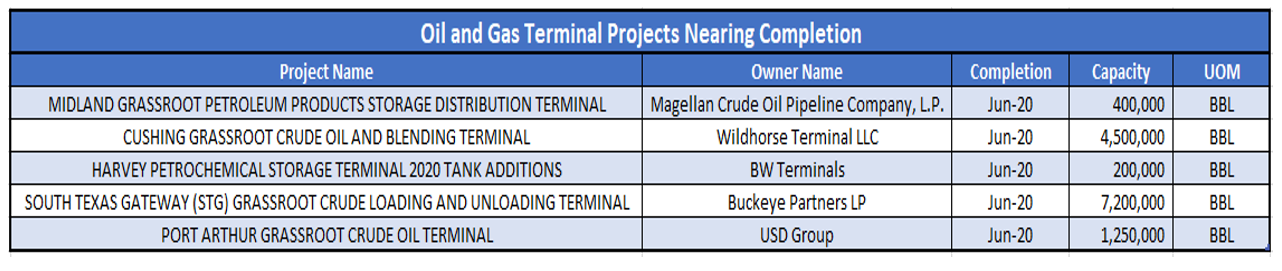
Industrial Info sees the global LNG sector has been hit by supply overhang, followed by the COVID-19-induced economic slowdown and lower demand worldwide, which is on par with the overall global GDP decreases, so of course this sector is not immune, Industrial Info data shows.
The fall in oil prices, spread between oil-indexed long-term LNG contracts and spot contracts, has been considerably reduced. This can make it challenging for LNG producers to meet their revenue targets. In addition, a rapid decline in gas demand is affecting financing of capital-intensive new liquefaction projects, but look for a light at the end of the tunnel as the world has already committed to this clean hydrocarbon of the future.
FOOD & BEVERAGE
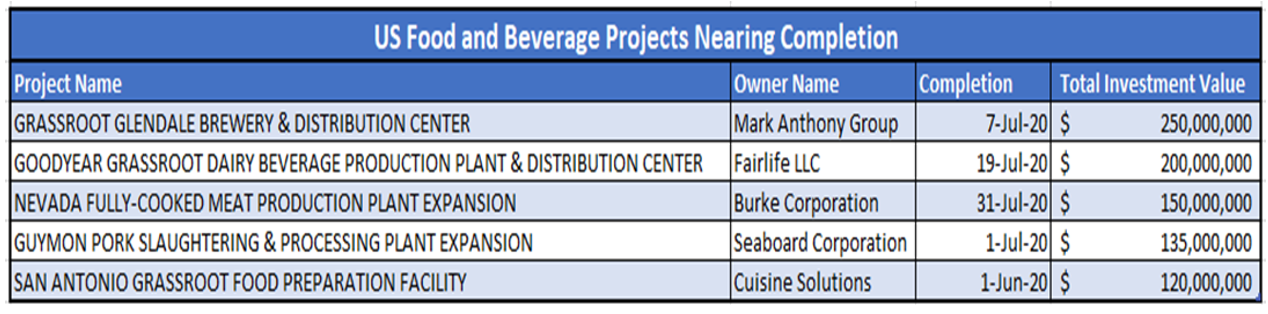
Industrial Info sees that meat processing, specifically beef and poultry, can have critical production issues without much notice. This industry is not similar to a petrochemical plant in that the product does not go through miles of pipe and valves untouched by humans. Food plants rely on human contacts, as the process is very manual, even in this day of modern technology. This has been shown to be the most vulnerable supply chain in the COVID-19 pandemic, and Industrial Info shows a drastic case of plant shutdowns. As a result of the lockdown measures and controls on population mobility, transport of agricultural inputs was limited and labor was in shortage, which potentially could cause disruptions from the production side. Industrial Info has seen hundreds of plant closures and shutdowns, and this list is growing.

/news/article.jsp
false
Want More IIR News Intelligence?
Make us a Preferred Source on Google to see more of us when you search.
Add Us On GoogleAsk Us
Have a question for our staff?
Submit a question and one of our experts will be happy to assist you.

Forecasts & Analytical Solutions
Where global project and asset data meets advanced analytics for smarter market sizing and forecasting.
Explore Our SolutionsRelated Articles
-
Typhoon Saudel Threatens Okinawa, Eastern ChinaAugust 25, 2026
-
U.S. Drivers Weary as Gas Station Prices at August HighAugust 24, 2026
-
U.S. Taking in More than Half of Venezuela's Crude Oil Expor...August 20, 2026
-
U.S. Refineries Can do More, Energy Secretary SaysAugust 19, 2026
-
Georgia's Only Refinery Ditches Russian Crude OilAugust 18, 2026

PECWeb Global Market Intelligence Platform
Identify opportunities, anticipate change, and execute with confidence. PECWeb connects the industrial intelligence you need, from projects and assets to operational events, all in one platform.
Discover PecwebIndustry Intel
-
European Chemicals and Transport Fuels OutlookPodcast Episode / Jul 10, 2026
-
2026 European Petroleum Refining Project OutlookPodcast Episode / Jun 26, 2026
-
Brazil: Efficiency, Innovation, and Opportunities in the Food & Beverage IndustryPodcast Episode / Jun 12, 2026
-
2026-2027 Investment Radar for Mexico, Central America & the CaribbeanPodcast Episode / May 29, 2026
-
Innovations Shaping the Next Era of Power GenerationPodcast Episode / May 22, 2026