Metals & Minerals
Mining Drives Development in Sub-Saharan Africa
As if to signal its endorsement of a number of positive projections for Sub-Saharan Africa's economic development prospects Brazilian mining major Vale...
Released Friday, October 29, 2010
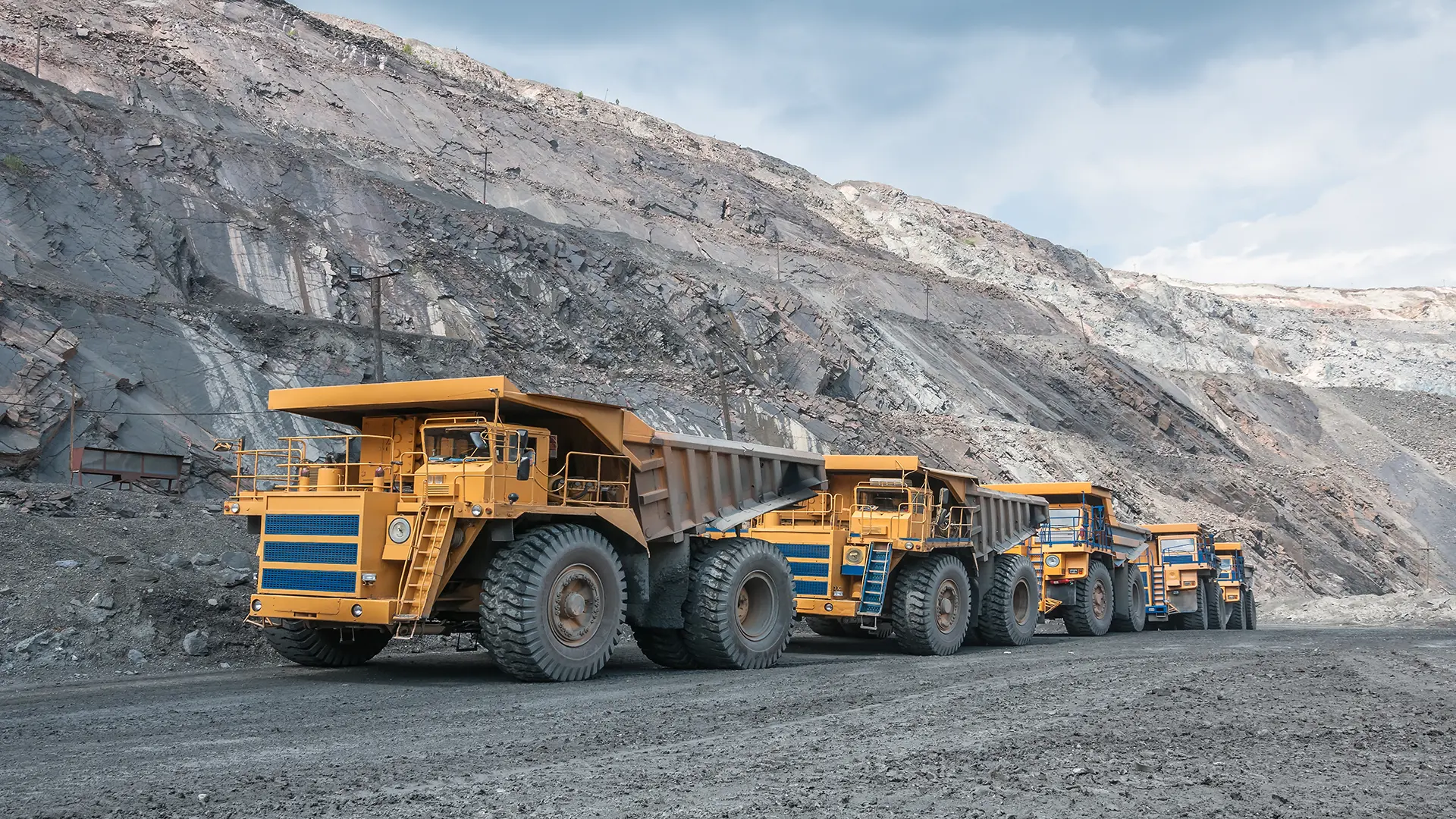
Written by Richard Finlayson, Senior International Editor for Industrial Info Resources (Sugar Land, Texas)--As if to signal its endorsement of a number of positive projections for Sub-Saharan Africa's economic development prospects, Brazilian mining major Vale (NYSE:VALE) (Rio de Janeiro) has announced the intention to invest up to $20 billion in the continent through 2016, which is an 800% increase on the $2.5 billion currently invested . Vale is targeting a position as one of the top three copper miners in Africa, with opportunities in Zambia's Copperbelt, the Democratic Republic of Congo and Angola. Vale will also go big on iron ore and coal mining, with a major portion of the new investment going to projects in Mozambique, Zambia, Guinea and Liberia.
The International Monetary Fund (IMF) sees the continent as being open to the possible negative effects of international austerity measures, but forecasts overall GDP growth of 5.5%, which is slightly down from the 5.9% forecast in July 2010. The growth rate projected for 2010 remains at 5%. Growth in 2010 and 2011 is expected to be broad-based, with domestic demand remaining strong on the basis of rising real incomes and sustained private and public investment. Exports are expected to benefit from the increased reorientation of trade toward fast-growing markets in Asia.
If the predicted growth is sustained, a majority of African countries will bounce back to the high levels of growth registered in the middle of the decade. The IMF also gives a positive nod to the sound economic policy implementation that allowed countries to handle the shock of the global financial crisis with fiscal and monetary policies that showed nimble policy implementation and resilience.
The Metals & Minerals Industry will continue to be one of the main drivers of industrial development on the continent, complementing Africa's oil-producing regions. But even with the competition for African resources driven by Chinese and Indian interests, certain inhibiting factors prevent the full exploitation of local resources to benefit local populations. Corruption, spawned by the traditional Big Man government model, short circuits the ability to create local companies and build managerial and artisan capacity. Deals are struck with international companies in return for patronage and a slice of the action, with only a select few of the local hierarchy getting their hands on the loot. Locally managed company potential is sidelined for the lesser good, with some partial exceptions, which include South Africa, Botswana, Ghana and Zambia.
Corruption has a first cousin in regulatory problems, which are currently inhibiting many potential fast-track project developments that could take advantage of the upward global commodities cycle. Bureaucratic procedures and obfuscation are laid at the door of "lack-of-capacity," which feeds on its own negatives.
The effects of regulation in the mining industry are currently being played out in the Democratic Republic of Congo (DRC), where mining investors will be required to make payments to a fund intended to bridge government income shortfalls when mines come to the end of their productive lives. The government has awarded about 4,000 mining licenses since 2003, but less than 20 mine development projects have been undertaken. This has led to an impasse between the DRC government and miners. The government had targeted a 100% increase in copper and cobalt production by 2012, based on expansion plans at Freeport-McMoran Copper & Gold's (Phoenix, Arizona) Tenke Fungurume Mine, where copper production of up to 2 million tons per year was targeted. Then First Quantum Minerals Limited (Vancouver, British Columbia) lost its Kolwezi mine concession under the review process, which gave the miners pause for thought on the merits of proceeding to invest in projects in the DRC. In the fallout, Freeport-McMoran, under review, crafted a deal with the government, enabling the company to retain a controlling stake in the copper project. All this happens at a time when the massively mineral-rich country is aiming to have mining contribute 50% of its GDP by 2015.
A complex of regulatory problems has been stalling South Africa's mining project investment both at home and in the rest of Africa, where the country is not represented in proportion to the weight of its mining experience. This has been exacerbated by the youth wing of the African National Congress Party's calling for the nationalization of mines. Industry and government have come together, and solutions for fast-track permitting appear to be at hand. The government has also said that there is no policy initiative for nationalization. Other African countries have taken note of the problems put in the way of mining development in the DRC and South Africa.
The oil-exporting countries of Nigeria, Angola, Cameroon, Chad, Republic of Congo, Equatorial Guinea, Gabon and Nigeria are forecast to have an average GDP growth in 2011 of 6.7%, ranging between Equatorial Guinea's 2.1% and the Republic of Congo's 8.7%. The average is up from a projected growth for these countries of 6.4% in 2010. Nigeria has forecast growth of 4.9% in 2010 and 5.6% in 2011.
The middle income countries of Botswana, Cape Verde, Lesotho, Mauritius, Namibia, Seychelles, South Africa and Swaziland are forecast to grow at an average of 3.6% in 2011, up from 3.3% in 2010. South Africa will grow at 3.5% in 2011, up from 3% in 2010. Cape Verde and Seychelles will top the growth rate in 2011, with 6% and 5%, respectively. Countries classed as "low income" and "fragile" show growth of 6.6% and 4.8%, respectively, with mining and resources being key drivers in a number of these countries.
South Africa is the only significant steel producer in Sub-Saharan Africa and will produce about 8.5 million tons in 2010. Any continuing upward production trend could be driven by a 32% rise in exports in the country's automotive sector. Now that the 2010 World Soccer Cup has passed, construction in the country will be flat until the end of 2011, and various factors in cost inputs, such as power and raw materials, will challenge the industry. Major challenges are being addressed in improving the key transportation links in South Africa's domestic and export supply chain. Infrastructure could be a growth driver in South Africa and many other African countries. The latter may partner Chinese and Indian support in this sector. If funding is available for infrastructure projects, progress in this area will depend on keeping large public projects corruption-free and having the correct "capacities" assigned to them.
Industrial Info Resources (IIR) is the leading provider of global market intelligence specializing in the industrial process, heavy manufacturing and energy markets. IIR's quality-assurance philosophy, the Living Forward Reporting Principle, provides up-to-the-minute intelligence on what's happening now, while constantly keeping track of future opportunities.
/news/article.jsp
false
Want More IIR News Intelligence?
Make us a Preferred Source on Google to see more of us when you search.
Add Us On GoogleAsk Us
Have a question for our staff?
Submit a question and one of our experts will be happy to assist you.

Forecasts & Analytical Solutions
Where global project and asset data meets advanced analytics for smarter market sizing and forecasting.
Explore Our SolutionsRelated Articles
-
Glencore Eyes Growth at North American Copper, Nickel MinesAugust 21, 2026
-
Australia Steps In to Save Largest Aluminium SmelterAugust 21, 2026
-
Copper Miners Cut 2026 Guidance Following Severe Storms in C...August 21, 2026

PECWeb Global Market Intelligence Platform
Identify opportunities, anticipate change, and execute with confidence. PECWeb connects the industrial intelligence you need, from projects and assets to operational events, all in one platform.
Discover PecwebIndustry Intel
-
European Chemicals and Transport Fuels OutlookPodcast Episode / Jul 10, 2026
-
2026 European Petroleum Refining Project OutlookPodcast Episode / Jun 26, 2026
-
Brazil: Efficiency, Innovation, and Opportunities in the Food & Beverage IndustryPodcast Episode / Jun 12, 2026
-
2026-2027 Investment Radar for Mexico, Central America & the CaribbeanPodcast Episode / May 29, 2026
-
Innovations Shaping the Next Era of Power GenerationPodcast Episode / May 22, 2026