Power
Texas Uses Unique Advantages to Expedite Renewable Energy and Transmission Planning
If Texas were its own country, it would be the world's third-largest national wind market.
Released Tuesday, March 09, 2010
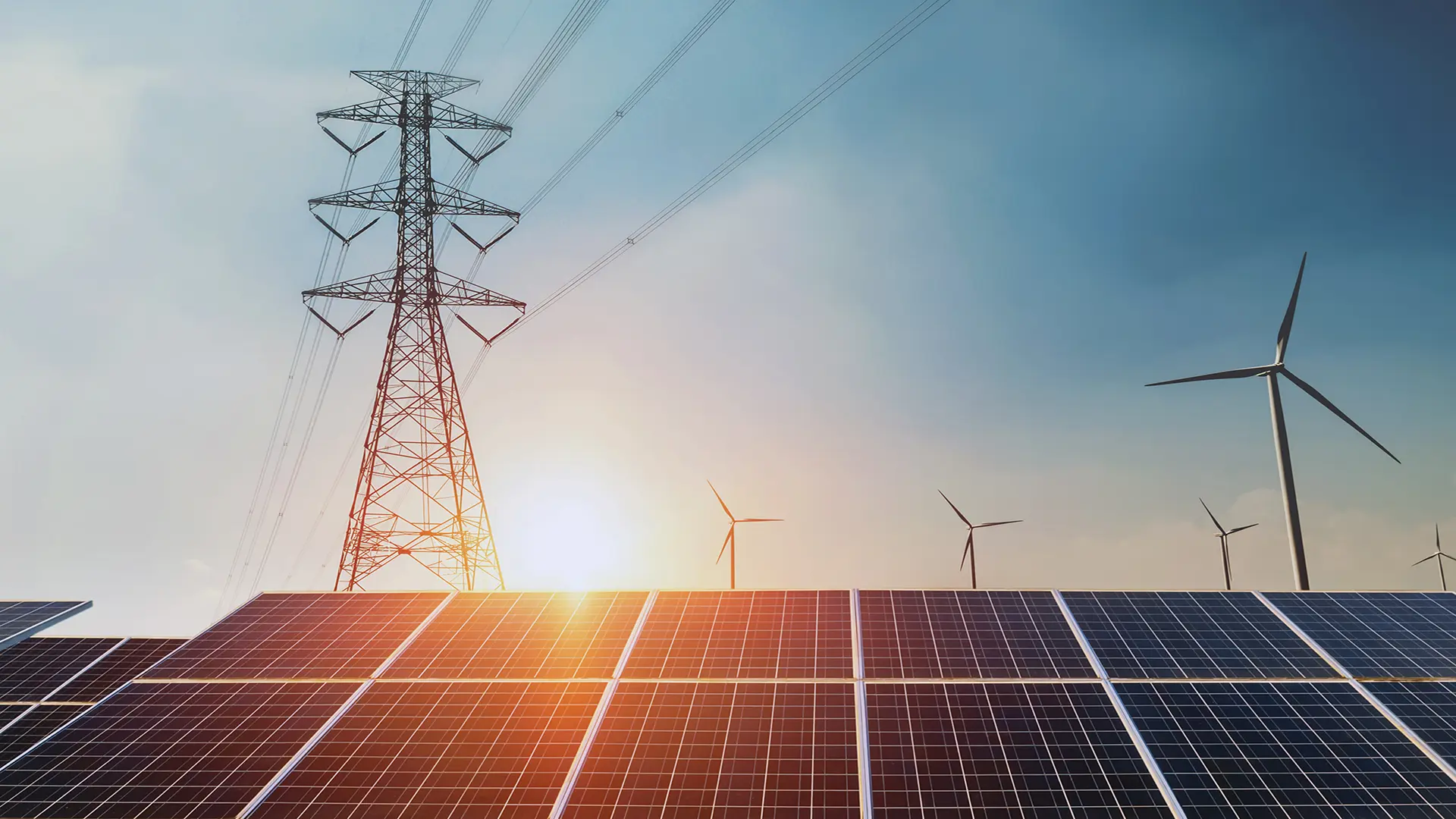
Written by John Egan for Industrial Info Resources (Sugar Land, Texas)--If Texas were its own country, it would be the world's third-largest national wind market. To which Charles Jenkins, chief operating officer at Oncor Electric Delivery Company (Dallas, Texas), asks, "What do you mean, 'if'?"
Jenkins' quip drew laughter from the 350 or so attendees at a wind and transmission workshop held by the American Wind Energy Association (AWEA) (Washington, D.C.) in Denver March 2-3. But the audience was very interested to learn how wind energy and transmission projects were being built so quickly in the Lone Star State, while projects in other states slogged through regulatory molasses, years behind schedule.
"Many states are talking about building transmission lines--in Texas we're doing it," remarked Paul Sadler, executive director of the Wind Coalition, a group of 44 wind power developers, transmission companies, environmental groups and citizens organizations. "We've done that by building a broad coalition and creating a common message platform. If you're trying to build transmission lines and you don't have a broad coalition or a common message platform, you can be sure that your opponents will."
"Siting lines on federal land is the biggest challenge facing transmission project developers," said Dawn Tran, an Industrial Info energy analyst who attended the AWEA conference. "Private enterprise will invest money to build new transmission lines if there are clear and predictable federal policies to guide those projects. Transmission provides a variety of benefits to all parties. New transmission will be required for all future wind scenarios in the Eastern Interconnection."
Sadler and other speakers at the AWEA conference acknowledged that a large part of Texas' success in siting and building windfarms and transmission lines stems from the state's unique regulatory and electrical situation. The state of Texas functions as a self-contained electric market, almost entirely unconnected to adjacent states. By contrast, 11 western states and two Canadian provinces comprise an integrated regional power pool, called the Western Interconnection. On the other side of North America, the Eastern Interconnection is comprised of 37 U.S. states and three Canadian provinces, which are further organized into seven regional power groups. Members of the Eastern and Western interconnections often generate and transmit electricity across state, and even national, borders. Interstate transmission projects and interstate electric sales made by members of the Western and Eastern interconnections are subject to review by regulators at the Federal Energy Regulatory Commission (FERC), as well as other state and federal authorities.
Texas has no such requirements. Five years ago the Texas legislature instructed the Public Utilities Commission of Texas to establish a competitive renewable energy zone (CREZ) to facilitate the construction of renewable energy projects and the transmission lines to carry the energy from often-remote generation sites to distant cities in Texas. CREZ is a mechanism to build transmission lines to high-quality wind energy areas before windfarms have even been developed. To ensure that sufficient transmission infrastructure exists to meet the state's goal for renewable energy, the Texas legislature required that CREZs be designated in the best areas in the state and that an electric transmission infrastructure be constructed to move renewable energy from those zones to markets where people use energy.
CREZ is a $5 billion project that includes more than a dozen separate transmission lines. All told, the lines will be able to carry about 18,500 megawatts of renewable energy throughout the state of Texas. Two utilities will be responsible for all of the construction. Construction of CREZ's transmission lines is about to begin; the lines are scheduled for completion in 2013.
Even with all of its advantages, CREZ has been an "unbelievably political process," Becky Motal, executive manager of external affairs at the Lower Colorado River Authority (Austin, Texas), told the AWEA event. "Getting transmission sited is very contentious. People don't connect the CREZ transmission lines with the renewable energy they say they want. We've had to do many more land condemnations than we thought we would."
"Don't let Texas' advantages discourage you if you operate in the Western or Eastern interconnections," Oncor's Jenkins told Industrial Info. "The basic process is the same: obtain clear regulatory authority, start early, build coalitions, allow plenty of time for the regulatory process, and be prepared to really up your game in terms of communication and outreach. Texas has unique advantages. It used an innovative process. Even so, it's not quick, and it can be frustrating. But it can be done."
Industrial Info Resources (IIR) is the leading provider of global market intelligence specializing in the industrial process, heavy manufacturing and energy-related markets. For more than 26 years, Industrial Info has provided plant and project opportunity databases, market forecasts, high resolution maps, and daily industry news.
/news/article.jsp
false
Want More IIR News Intelligence?
Make us a Preferred Source on Google to see more of us when you search.
Add Us On GoogleAsk Us
Have a question for our staff?
Submit a question and one of our experts will be happy to assist you.

Forecasts & Analytical Solutions
Where global project and asset data meets advanced analytics for smarter market sizing and forecasting.
Explore Our SolutionsRelated Articles
-
Turkey Announces New Wind and Solar DriveJuly 24, 2026
-
Nuclear Resurgence Spurs Permitting, Supply Chain IssuesJuly 24, 2026
-
GE Vernova Orders Up 88% Year-over-YearJuly 23, 2026

PECWeb Global Market Intelligence Platform
Identify opportunities, anticipate change, and execute with confidence. PECWeb connects the industrial intelligence you need, from projects and assets to operational events, all in one platform.
Discover PecwebIndustry Intel
-
European Chemicals and Transport Fuels OutlookPodcast Episode / Jul 10, 2026
-
2026 European Petroleum Refining Project OutlookPodcast Episode / Jun 26, 2026
-
Brazil: Efficiency, Innovation, and Opportunities in the Food & Beverage IndustryPodcast Episode / Jun 12, 2026
-
2026-2027 Investment Radar for Mexico, Central America & the CaribbeanPodcast Episode / May 29, 2026
-
Innovations Shaping the Next Era of Power GenerationPodcast Episode / May 22, 2026
