Metals & Minerals
Trump Administration Takes Energy, Offshore Mining Policies to U.S. Territories
This week, the administration of U.S. President Donald Trump took steps to further its push for mining and fossil-fueled power into the U.S. territories of American Samoa and Puerto Rico.
Released Friday, May 23, 2025
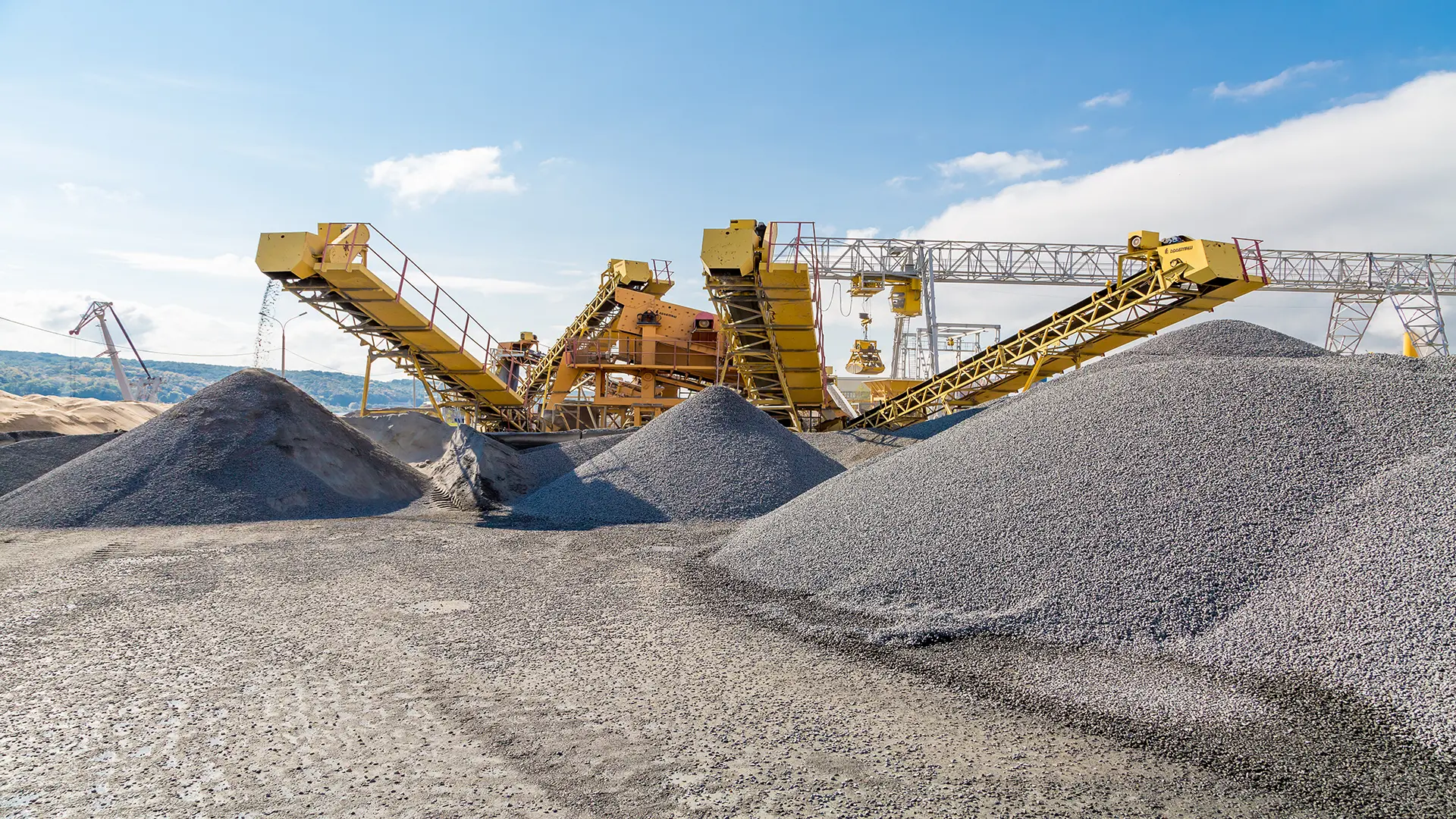
Researched by Industrial Info Resources (Sugar Land, Texas)--This week, the administration of U.S. President Donald Trump took steps to further its push for mining and fossil-fueled power into the U.S. territories of American Samoa and Puerto Rico. On Monday, the U.S. Department of the Interior announced that it would start the evaluation process for issuing a mining lease in waters offshore American Samoa in the South Pacific, while on Wednesday, the Department of Energy announced that funds originally allocated for solar and battery projects in Puerto Rico would go toward strengthening primarily oil-fired baseload power as well as infrastructure maintenance.
Offshore Mining in American Samoa
On April 24, Trump issued an executive action titled "Unleashing America's Offshore Critical Minerals and Resources," which stated, "Our Nation must take immediate action to accelerate the responsible development of seabed mineral resources, quantify the Nation's endowment of seabed minerals, reinvigorate American leadership in associated extraction and processing technologies, and ensure secure supply chains for our defense, infrastructure, and energy sectors."
The first move under this executive order, which as to be expected stirred up a great deal of environmental controversy, seems to be occurring in the unincorporated U.S. territory of American Samoa, where the Interior Department said it would begin the evaluation of a potential mineral lease in the island archipelago's territorial waters.
The move comes from a request for a lease sale by Impossible Metals Incorporated (San Jose, California). If the lease is granted, it would be the first mineral lease granted in federal waters in more than 30 years, according to the Department of the Interior, "and could pave the way for future extraction of critical minerals from the U.S. Outer Continental Shelf." The department said it manages approximately 3.2 billion acres of the Outer Continental Shelf--an area larger that the landmass of the U.S.
Interior said the U.S. Bureau of Ocean Energy Management (BOEM) "will begin a multi-step evaluation process grounded in science, public engagement and environmental stewardship." The first formal step entails entering a request for information and interest in the Federal Register that will seek input from industry stakeholders, the Indigenous Island community, government agencies and other members of the public.
Redirected Power Funds in Puerto Rico
In 2024, the Biden administration allocated $365 million toward the installation of rooftop solar panels and battery storage systems in Puerto Rico as part of a $1 billion pledge to strengthen the island's power resources, which have faced widespread outages, the most of recent of which happened about a month ago, affecting 134,000 customers.
According to an article earlier this month in industry publication Utility Dive, in Puerto Rico, "about 4,000 homes are connecting new rooftop solar and battery systems to the grid each month. This rapid adoption is not only providing relief to families--it's actively improving grid stability, thanks to smart inverter standards now required for all systems installed since Jan. 1."
However, the federal government now doesn't see this as the proper route toward grid stability and will redirect the funds for rooftop solar "to support practical fixes and emergency activities that offer a faster, more impactful solution to the current crisis." The reallocation follows two emergency orders issued last week by U.S. Energy Secretary Chris Wright that will allow the territory to fill electricity shortfalls from oil-burning power plants without repercussions from environmental laws. Wright issued the two orders under Section 202(c) of the Federal Power Act, which overrides federal and state environmental laws for a brief time to address emergency power shortages.
The first order applied to eight fuel oil-burning power plants and a several temporary generators installed by the Federal Emergency Management Agency (FEMA). The second order regarded the management of the island's overgrown vegetation that is affecting its power transmission and distribution network.
With the reallocation of the Biden administration's solar funds coming less than a week after Wright's orders were issued, the obvious assumption is that the $365 million that will now be directed "to support practical fixes and emergency activities that offer a faster, more impactful solution to the current crisis, benefiting critical facilities like hospitals and community centers," will be used to strengthen the island's oil-fired power network.
The move is receiving mixed reception. Keeping in line with the Trump administration's outlook and policies, Puerto Rico Governor Jenniffer González-Colón said in the Energy Department's related press release, "Rather than impacting a few customers, deploying these funds for urgent projects that improve the resiliency and reliability of our grid will have widespread, lasting benefits for all 3.2 million Americans in Puerto Rico."
The governor's remarks were in line with the Energy Department, which stated, "The redirection of these funds will expand access to reliable power for millions of people rather than thousands and generate a higher return on investment for taxpayers while advancing grid resiliency for Puerto Rico."
However, the move was greeted with criticism by others. In an Associated Press article, Javier Rúa Jovet, public policy director for Puerto Rico's Solar and Energy Storage Association, noted that there is at least $16 billion in unspent funds from FEMA meant to improve Puerto Rico's electric grid, adding that the $365 million should be used for its original purpose.
More than 60% of energy in Puerto Rico is generated by petroleum-fired power plants, 24% by natural gas, 8% by coal and 7% by renewables, according to the U.S. Energy Information Administration (EIA).
Industrial Info Resources (IIR) is the leading provider of industrial market intelligence. Since 1983, IIR has provided comprehensive research, news and analysis on the industrial process, manufacturing and energy related industries. IIR's Global Market Intelligence (GMI) helps companies identify and pursue trends across multiple markets with access to real, qualified and validated plant and project opportunities. Across the world, IIR is tracking over 200,000 current and future projects worth $17.8 trillion (USD).
/news/article.jsp
false
Want More IIR News Intelligence?
Make us a Preferred Source on Google to see more of us when you search.
Add Us On GoogleAsk Us
Have a question for our staff?
Submit a question and one of our experts will be happy to assist you.

Forecasts & Analytical Solutions
Where global project and asset data meets advanced analytics for smarter market sizing and forecasting.
Explore Our SolutionsRelated Articles
-
Glencore Eyes Growth at North American Copper, Nickel MinesAugust 21, 2026
-
Australia Steps In to Save Largest Aluminium SmelterAugust 21, 2026
-
Copper Miners Cut 2026 Guidance Following Severe Storms in C...August 21, 2026
-
In Minnesota Mining Blow, Governor Walz Bans Mine Permits in...August 19, 2026
-
Chile's Copper Growth Hinges on Faster Permitting, More Ince...August 19, 2026

PECWeb Global Market Intelligence Platform
Identify opportunities, anticipate change, and execute with confidence. PECWeb connects the industrial intelligence you need, from projects and assets to operational events, all in one platform.
Discover PecwebIndustry Intel
-
European Chemicals and Transport Fuels OutlookPodcast Episode / Jul 10, 2026
-
2026 European Petroleum Refining Project OutlookPodcast Episode / Jun 26, 2026
-
Brazil: Efficiency, Innovation, and Opportunities in the Food & Beverage IndustryPodcast Episode / Jun 12, 2026
-
2026-2027 Investment Radar for Mexico, Central America & the CaribbeanPodcast Episode / May 29, 2026
-
Innovations Shaping the Next Era of Power GenerationPodcast Episode / May 22, 2026