Metals & Minerals
Mining Industry's 3 R's: Reduce, Reuse and Recycle Water
'Reduce, reuse and recycle' was the mantra heard repeatedly during a two-day conference on water and mining in Denver late last month.
Released Friday, November 15, 2013
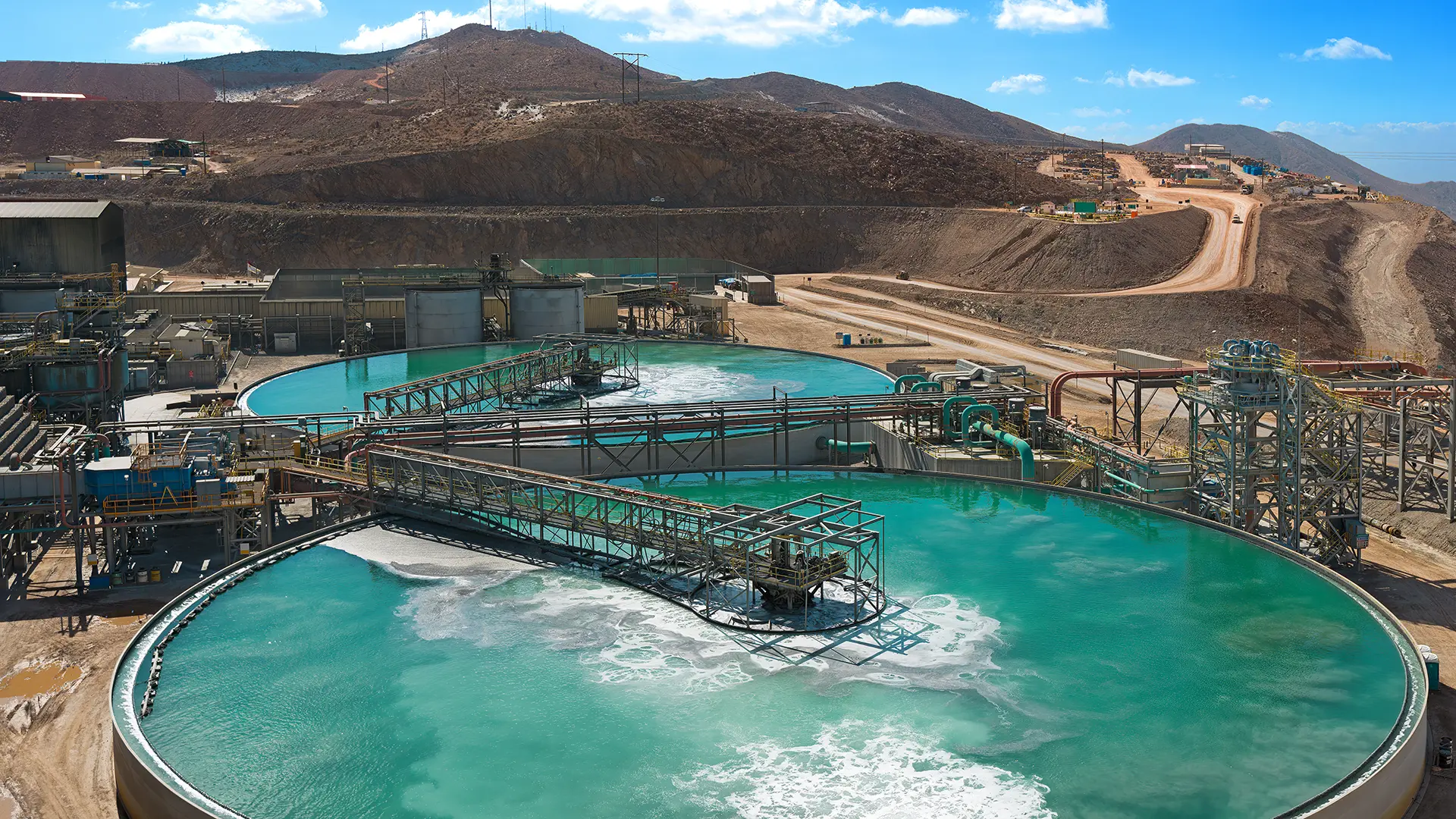
Written by John Egan for Industrial Info Resources (Sugar Land, Texas)--"Reduce, reuse and recycle" was the mantra heard repeatedly during a two-day conference on water and mining here late last month. "The global situation for water is not improving, and mining will be one of the most affected industries by the growing imbalance between supply of and demand for freshwater," Forbes Guthrie, a vice president at Stewart Environmental Consultants (Fort Collins, Colorado), told the Third Water Management for Mining Summit, organized by Information Forecast Incorporated (Infocast) (Woodland Hills, California).
An estimated 97% of the world's water is undrinkable salt water, and most of the remainder of the world's freshwater is locked away in ice, Guthrie continued. "The world's freshwater supplies are overwhelmed by population growth, energy development and production, industry, irrigation waste and the urban concentration of populations. Today, fresh water is more scarce, more expensive, and of a lower quality than in previous times. Clean water will trump energy as a looming crisis."
Guthrie cited data from public opinion researcher GlobeScan (Toronto, Ontario) that showed nearly all industries would need to transform their operations as a result of water shortages. In the survey, conducted in 2009, 80% of mining company executives agreed or strongly agreed with that statement. Executives in the food & agriculture, pulp & paper, beverage, manufacturing, chemicals and electricity industries overwhelmingly agreed as well.
There are two basic approaches to addressing the world's growing water crisis, Guthrie told the Infocast conference: reduce the demand (through innovative pricing mechanisms or conservation activities) or enhance the supply (with smarter water management practices, advanced technologies and improved water reuse rates).
Conservation was preferable to innovative pricing mechanisms as a way to reduce demand for fresh water, Guthrie said. This is because innovative water pricing mechanisms could lead to higher costs for water, which would place mines at odds with local communities that depend on fresh water for their livelihood. Regarding enhancing the supply of water, one obvious option--building new dams--has fallen out of favor due to the environmental impact of building dams, he noted.
Social license to operate (SLTO) was invoked by several speakers as a powerful factor affecting the continued operation of mines, as well as development of new mines. At mine sites from Latin America to the U.S., Africa and Australia, speakers detailed how mining companies had been damaged by management practices or worksite accidents that cost them community support, leading to lost revenue or declines in stock price. For more on this issue, see September 14, 2012, article - Mining Profitability and Viability Shaped by 'Social License to Operate,' say Conference Attendees.
Apart from potential financial penalties for mining mishaps, one conference speaker, Steve Wilson, senior vice president for North America minerals services for SGS S.A. (Geneva, Switzerland), presented data that the environmental compliance spending of Canadian mining companies was three to six times greater than their actual spending for exploration from 1999 through 2012.
Aside from the risk of fines or operating restrictions, environmental compliance is a significant operating cost for mines. In a global commodities business like mining, where the price of a mineral determines whether it will be sold, vigilant cost control is required for mines to operate profitably.
Around the world, mining companies face huge environmental liabilities, Wilson continued. In the U.S., hard-rock mines face enormous acid mine drainage costs, estimated by the environmental organization Earthworks at $57 billion to $67 billion annually. "Even if Earthworks is off by a factor of 10, that's still cleanup costs of $5 billion annually, and that's just in the U.S.," Wilson said. "That's an enormous sum of money. And there is no end in sight for environmental cleanup."
To an increasing degree, "water will be the limiting factor in mining, which is why it is so important to reduce water use, reuse more water, and recycle water after using it," Wilson said. "Adopting a best-in-class standard for water management is a tough decision, because it is an expensive decision. But failure to develop a comprehensive strategy for water conservation will jeopardize mining companies' profitability by exposing them to risk of unexpected shutdowns, fines and unexpected operating costs."
Several conference speakers pointed to the "water footprint" concept gaining currency among mining companies as a necessary first step toward implementing best-in-class standards for water use. Jerry Rowe, global director of water resource management for Hatch (Mississauga, Ontario), told conference attendees that the water footprint was similar to the concept of a carbon footprint that measures direct and indirect emissions of carbon dioxide from a business process. By carefully measuring a company's freshwater use, the water footprint is geared to reduce use and minimize the negative environmental impacts a mine has on a specific area.
Rowe recommended attendees consider participating in the CEO Water Mandate, a voluntary group of business leaders from around the world who commit to work collaboratively with governmental agencies, non-governmental organizations and other stakeholders to address the global water challenge by making water-resource management a corporate priority. He said the initiative, launched in 2007 by the United Nations, is an important step forward in managing the world's scarce freshwater resources.
Rowe noted that 14 months ago, the CEO Water Mandate published guidelines for corporate water disclosure. "Water disclosure is becoming a reality," he said, adding that he could see a day when the U.S. Securities and Exchange Commission (SEC) (Washington, D.C.) could require all publicly traded companies--not just mines--to disclose water-related risks in their mandatory annual financial filings.
Industrial Info Resources (IIR), with global headquarters in Sugar Land, Texas, three offices in North America and nine international offices, is the leading provider of global market intelligence specializing in the industrial process, heavy manufacturing and energy markets. Industrial Info's quality-assurance philosophy, the Living Forward Reporting Principle, provides up-to-the-minute intelligence on what's happening now, while constantly keeping track of future opportunities.
/news/article.jsp
false
Want More IIR News Intelligence?
Make us a Preferred Source on Google to see more of us when you search.
Add Us On GoogleAsk Us
Have a question for our staff?
Submit a question and one of our experts will be happy to assist you.

Forecasts & Analytical Solutions
Where global project and asset data meets advanced analytics for smarter market sizing and forecasting.
Learn More
Industrial Project Opportunity Database and Project Leads
Get access to verified capital and maintenance project leads to power your growth.
Learn MoreIndustry Intel
-
2026 Regional Chemical Processing OutlookOn-Demand Podcast / Mar. 2, 2026
-
From Data to Decisions: How IIR Energy Helps Navigate Market VolatilityOn-Demand Podcast / Nov. 18, 2025
-
Navigating the Hydrogen Horizon: Trends in Blue and Green EnergyOn-Demand Podcast / Nov. 3, 2025
-
ESG Trends & Challenges in Latin AmericaOn-Demand Podcast / Nov. 3, 2025
-
2025 European Transportation & Biofuels Spending OutlookOn-Demand Podcast / Oct. 27, 2025