Power
European Investment Bank to Contribute 300 Million Euros for BritNed Interconnector Project
The European Investment Bank (EIB) (Luxembourg), the financial backbone of the European Union, has announced that it will contribute 300 million...
Released Monday, December 21, 2009
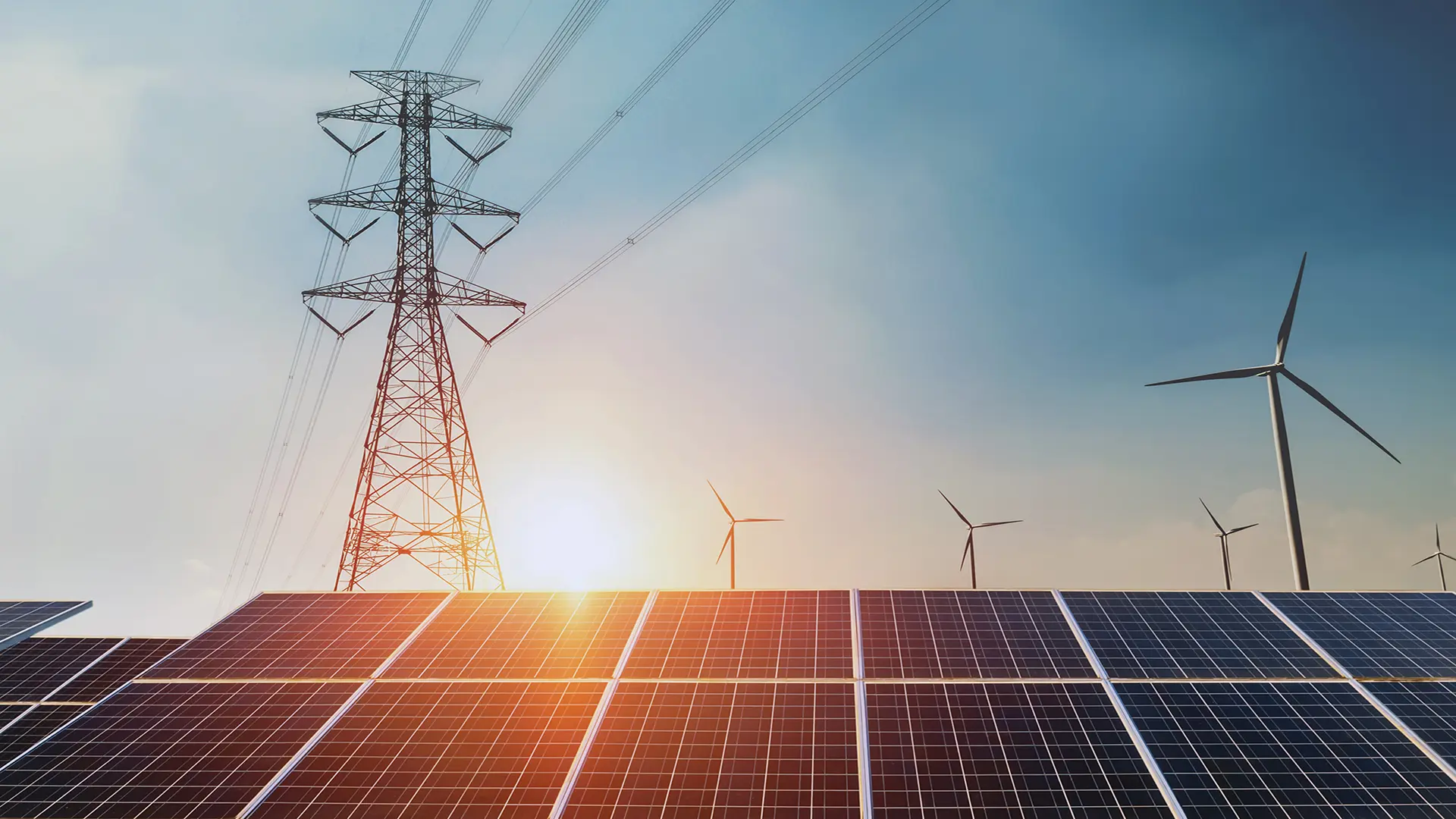
Researched by Industrial Info Resources (Sugar Land, Texas)--The European Investment Bank (EIB) (Luxembourg), the financial backbone of the European Union, has announced that it will contribute 300 million euros ($428.1 million) toward the construction of the BritNed Interconnector, a new power transmission cable between the Netherlands and the United Kingdom. The total cost of the project has been estimated at 600 million euros ($856.3 million), and EIB will contribute 50% of this amount.
The BritNed Interconnector project is a 50:50 joint venture between state-owned transmission grid company TenneT TSO BV (Arnhem, Netherlands) and electricity and gas company National Grid plc (NYSE:NGG) (London). BritNed will be the first interconnector between the two nations. Both companies have signed separate agreements with the EIB, and each will receive 150 million euros ($214 million) to implement the project.
The cable, which will have a 1,000-megawatt (MW) capacity, will significantly enhance the diversity and security of electricity supplies in both nations, in addition to boosting competition and electricity trading. The larger supply of green electricity that will be available as a result of the interconnector is an added advantage. According to Mel Kroon, CEO of TenneT, the BritNed cable will increase international trade, resulting in stable electricity prices in both nations. Paul Wilczek, regulatory affairs adviser at the European Wind Energy Association (EWEA) (Brussels, Belgium), said that the EIB's contribution of 300 million euros is a positive step toward building a much needed European offshore grid that will be able to integrate marine power and the proposed 150,000 MW of offshore wind power generation capacity to be added by 2030. The grid will help Europe meet its renewable energy and emission-reduction targets, too.
The 260-kilometre high-voltage direct current (HVDC) submarine power cable will run between Maasvlakte, near Rotterdam, and the Isle of Grain in Kent. About 250 kilometres of bundled marine cables will be buried below the North Sea seabed and land cables will connect the submarine cable to converter stations on both sides. Construction is already under way and is scheduled for completion by December 2010. The BritNed Interconnector is slated to begin commercial operations from the first quarter of 2011. With the commissioning of BritNed, power market participants on both sides can begin importing and exporting electricity.
The cable is being manufactured by ABB Limited (NYSE:ABB) (Zurich, Switzerland) at its factory in Sweden. Earlier this year, ABB awarded marine engineering company Global Marine Systems Limited (Chelmsford, England) with a contract to implement offshore cabling work. The onshore cabling work is being implemented by Visser & Smit Marine Contracting, a partner of Global Marine and a subsidiary of Visser & Smit Hanab (Rotterdam).
Among other developments in the European power transmission sector, Denmark and Norway have announced plans to set up a fourth electricity interconnector in an effort to enhance the utilization of renewable energy in Scandinavia. The Skagerrak 4 Interconnector project will be implemented by electricity transmission companies Energinet.dk (Frederica, Denmark) and Statnett (Oslo, Norway). The 700-MW cable will be constructed at an estimated cost of 380 million euros ($540 million), of which about 200 million euros ($285 million) will be contributed by Denmark. The 240-kilometre cable will run from the transformer station in Kristiansand, Norway, to its counterpart in Tjele, Denmark. About 140 kilometres of the connection will be in the sea, while 90 kilometres of the cable will be on land in Denmark, and about 12 kilometres will be on land in Norway. The project is scheduled for completion by 2014. The interconnector will ensure greater security of power supply in both countries, and any surplus power will help reduce the cost of grid power.
According to Torben Glar Nielson, executive vice president of the Electricity Division of Energinet.dk, wind power will be transmitted to Norway when winds in Denmark are very strong, and in the absence of sufficient winds, Denmark will procure hydropower from Norway. The power reservoirs of Norway's hydropower could be used to store wind power from Denmark, which has a current wind power generation capacity of 3,000 MW. Denmark's target is to add a further 3,000 MW of wind power generating capacity by 2025.
Denmark and Norway are currently served by three electric cables with a combined capacity of 1,000 MW.
Industrial Info Resources (IIR) is the leading provider of global market intelligence specializing in the industrial process, heavy manufacturing and energy related markets. For more than 26 years, Industrial Info has provided plant and project opportunity databases, market forecasts, high resolution maps, and daily industry news.
/news/article.jsp
false
Want More IIR News Intelligence?
Make us a Preferred Source on Google to see more of us when you search.
Add Us On GoogleAsk Us
Have a question for our staff?
Submit a question and one of our experts will be happy to assist you.

Forecasts & Analytical Solutions
Where global project and asset data meets advanced analytics for smarter market sizing and forecasting.
Learn More
Industrial Project Opportunity Database and Project Leads
Get access to verified capital and maintenance project leads to power your growth.
Learn MoreIndustry Intel
-
2026 North American Labor OutlookPodcast Episode / Apr 24, 2026
-
2026 European Metals & Minerals Project Spending OutlookPodcast Episode / Apr 7, 2026
-
The Age of Critical Minerals in the AmericasPodcast Episode / Mar 20, 2026
-
2026 Regional Chemical Processing OutlookPodcast Episode / Mar 6, 2026
-
From Data to Decisions: How IIR Energy Helps Navigate Market VolatilityPodcast Episode / Nov 21, 2025