Petroleum Refining
Chinese Backed $1 Billion Refinery Part of Syrias No Crude Export Strategy
Currently Syria has a negative fuel balance spending more on fuel imports than the revenue, which accrues from exporting 200,000 bpd of crude oil.
Released Monday, July 16, 2007
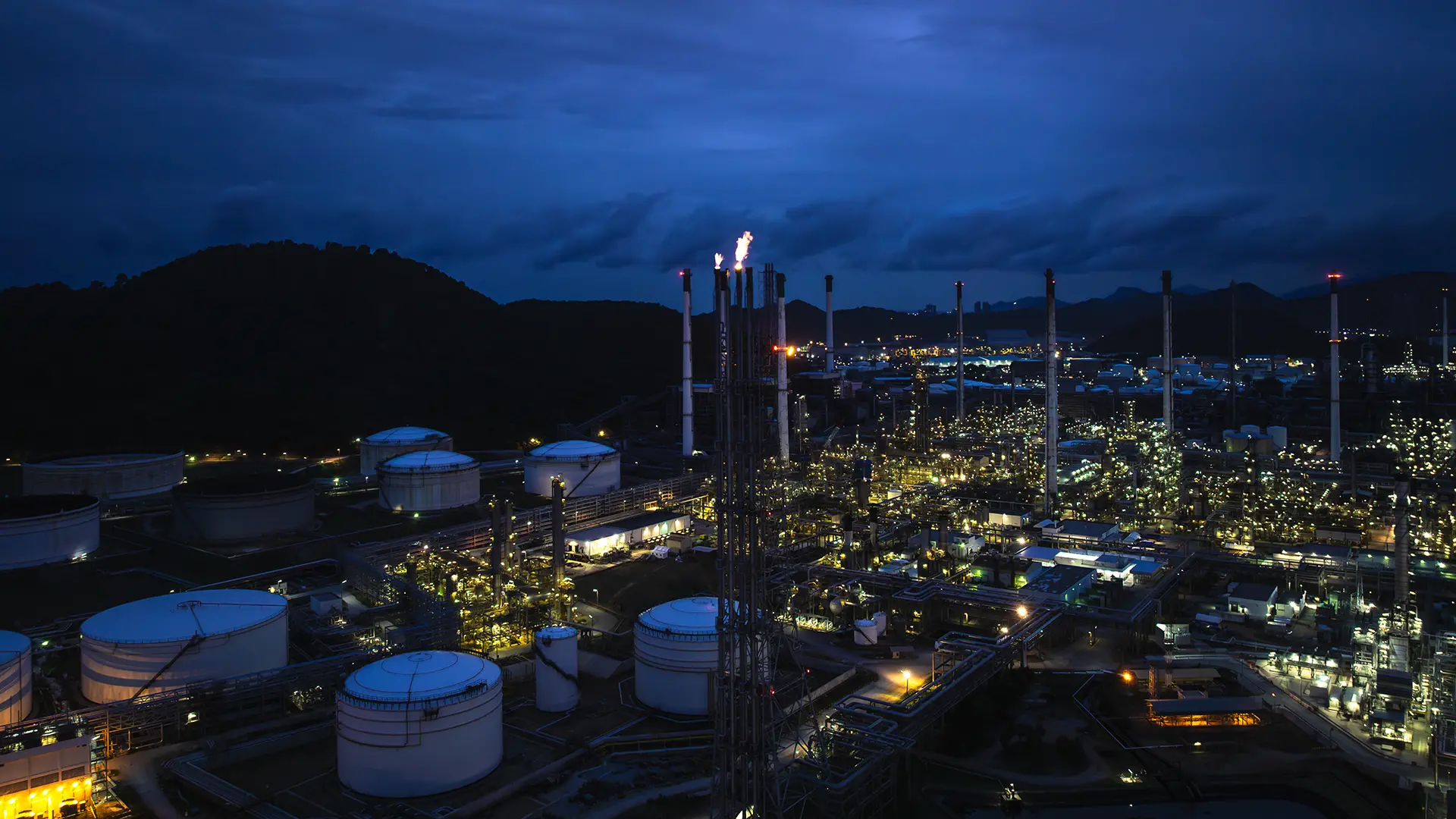
Researched by Industrial Info Resources (Sugar Land, Texas). Syria and China are in discussions on a joint venture to build a 70,000 barrels per day (BPD) refinery for Syrian heavy crude at the oil complex of Deir Al Zor in the east of Syria. Finance for the project would come from Chinas state owned oil company, China National Petroleum Corp (CNPC). Sufian Allaway, Syrias oil minister said that a deal would be signed after the completion of a feasibility study. Construction is expected to start in 2008 and be completed in 2010. A decision will be made on whether to operate the $1 billion project on a BOT (build+operate+transfer) basis or as a joint stock company with the Syrian state taking a minority stake.
Oil field cooperation is a crucial part of trade ties between Syria and China. Following the imposition of US sanctions in 2004 the country has been boosting ties with China and is looking to import Chinese technology to increase production at its oilfields. International majors including Total and Shell operate in the country but priority focus has been given to Chinese, Russian and Indian companies. At the end of 2005 CNPC and Indias ONGC (Oil and Natural Gas Corp) together invested $580 million in the oil sector. Now Syria is inviting Chinese companies to explore offshore oil fields with an area of 3,200 square kilometers. Another 140,000 bpd refinery at Deir Al Zor is under study by the Kuwaiti group, Noor Financial. Syria, Iran and Venezuela have agreed to construct a 140,000 bpd refinery at Homs. Currently the country is producing 400,000 bpd of oil split equally between light and heavy.
Phase III of the Arab Gas Pipeline is due for completion by the end of Q3. This 324-kilometer section will run from Jordans Rihab power station to Homs. The next two Syrian sections will stretch 230 kilometers to Turkey to deliver Egyptian gas to Europe. Talks are taking place between the three countries on finance for this section. The 600-kilometer pipeline has a 10 billion cubic meters per annum capacity. At Homs the pipeline will split going northwest to the Mediterranean and west to the Zahrani refinery in Lebanon. Eventually it is planned to extend the pipeline undersea to Cyprus. Currently Syrian gas production is being used to meet domestic demand of 12 million cubic meters a day including power generation feeds.
View Project Report - 98100015
Industrial Info Resources (IIR) provides marketing communication services ranging from industrial database solutions to market forecasting, custom analytics, and specialty promotions that support high-level image campaigns.
/news/article.jsp
false
Want More IIR News Intelligence?
Make us a Preferred Source on Google to see more of us when you search.
Add Us On GoogleAsk Us
Have a question for our staff?
Submit a question and one of our experts will be happy to assist you.

Forecasts & Analytical Solutions
Where global project and asset data meets advanced analytics for smarter market sizing and forecasting.
Explore Our Solutions
PECWeb Global Market Intelligence Platform
Identify opportunities, anticipate change, and execute with confidence. PECWeb connects the industrial intelligence you need, from projects and assets to operational events, all in one platform.
Discover PecwebIndustry Intel
-
2026 European Petroleum Refining Project OutlookPodcast Episode / Jun 26, 2026
-
Brazil: Efficiency, Innovation, and Opportunities in the Food & Beverage IndustryPodcast Episode / Jun 12, 2026
-
2026-2027 Investment Radar for Mexico, Central America & the CaribbeanPodcast Episode / May 29, 2026
-
Innovations Shaping the Next Era of Power GenerationPodcast Episode / May 22, 2026
-
The Role of Contract Manufacturing in Global Pharma GrowthPodcast Episode / May 8, 2026