Production
IEA: Global Oil Demand Recovering in 2021, but Near-Term Future Depends on Government, Consumer Decisions
Absent government action and behavioral changes, global demand is projected to return to its pre-pandemic level by 2022, and add another 4 million barrels per day by 2026
Released Wednesday, March 17, 2021
Written by John Egan for Industrial Info Resources (Sugar Land, Texas)--Global oil supply is expected to exceed global demand for the next few years, as the world works through the supply cushion created by the COVID-19 pandemic, according to Oil 2021, a medium-term outlook released today by the International Energy Agency (IEA) (Paris, France). But, absent government action and behavioral changes, global demand is projected to return to its pre-pandemic level by 2022, and add another 4 million barrels per day (BBL/d) of demand, about 4% over the pre-pandemic level of 100 million BBL/d, by 2026, the report said.
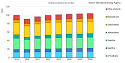 Click on the image at right to see the IEA's projection of global oil demand through 2026.
But the IEA, which is keenly concerned about global warming, noted that increased global oil demand is not a foregone conclusion. First, it requires defeating the pandemic. However, assuming that, IEA outlines several government and consumer actions--including improved vehicle fuel efficiency standards, higher levels of electric vehicle sales, a turn away from oil use in the power sector, increased teleworking, and continued low levels of air travel--that could lower global oil demand by as much as 5.6 million BBL/d by 2026. These structural and long-lived changes could ensure that global oil demand never returns to its pre-pandemic level, the agency added.
"The COVID-19 crisis caused a historic decline in global oil demand--but not necessarily a lasting one," IEA Executive Director Fatih Birol said in a statement accompanying the release of Oil 2021. "Achieving an orderly transition away from oil is essential to meet climate goals, but it will require major policy changes from governments, as well as accelerated behavioral changes. Without that, global oil demand is set to increase every year between now and 2026."
In 2020, the COVID-19 pandemic lowered global oil demand by approximately 8.7 million BBL/d, when compared with 2019 demand. But demand in 2021 is expected to recapture about two-thirds of that, or nearly 6 million BBL/d, the agency said. Beyond 2021, the agency expects annual demand growth to slow.
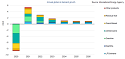 Click on the image at right to see IEA's projection of oil demand growth by product to 2026.
Asia will continue to dominate growth in global oil demand, accounting for about 90% of the expected increase between 2019 and 2026, Oil 2021 said. "By contrast, demand in many advanced economies, where vehicle ownership and oil use per capita are much higher, is not expected to return to pre-crisis levels," it added.
The report continued: "A reduction in global oil demand over the medium term is crucial to reaching (long-term) net-zero emissions ambitions, but formidable challenges lie ahead. For a start, the transportation sector, which makes up roughly 60% of total consumption, will have to lower its dependence on oil for overall demand to decline. Buildings and industry, as well as the power and petrochemical sectors, also must burn less oil. Efficiency gains and energy substitution also will be critical."
On the supply side, the IEA report discussed the dilemma faced by oil producers: Although surplus capacity exists today, that cushion could be rapidly eaten up once the pandemic is defeated and economies return to growth. "Investment decisions made today could either bring on too much capacity that is left unused, or too little oil to meet demand. Only a marginal rise in global upstream investment is expected this year after operators spent one-third less in 2020 than planned at the start of the year."
Oil producers confront this dilemma following tens of billions of dollars of write-downs and losses triggered by plummeting demand and low prices. Further, as large investment firms increasingly use ESG (environment, social and governance) criteria to guide investment decisions, and those metrics cut against oil due to its high carbon content, the perils of investing in net oil discoveries seem to exceed potential gains. In recent months, several large oil companies, including BP plc (NYSE:BP) (London, England), Royal Dutch Shell plc (NYSE:RDS.A) (The Hague, Netherlands) and Exxon Mobil Corporation (NYSE:XOM) (Irving, Texas) have announced a shift toward natural gas and low-carbon businesses at the expense of oil.
Despite the moves from "Big Oil," global crude oil supply is expected to rise from 93.9 million BBL/d in 2020 to 104.2 million BBL/d in 2026. Future production gains through 2026 are expected to come mainly from the U.S., Saudi Arabia, the United Arab Emirates, Iraq and Brazil.
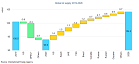 Click on the image at right to view IEA's projected oil production growth, by country, to 2026.
The report doesn't include projections of crude oil prices. But it would appear that robust economic growth and a reluctance by governments and consumers to adopt low-carbon measures would lead to higher future prices. Alternatively, the adoption of low-carbon rules and behaviors could undercut expected demand growth and act to weaken crude oil prices.
U.S. crude oil supply, including natural gas liquids (NGLs) and other liquids, is not expected to hit production estimates the agency issued last year, in its Oil 2020 report. Although production from unconventional formations, also known as light tight oil (LTO), is expected to grow slowly over the next few years, the biggest gain in U.S. production is anticipated to come from NGLs.
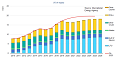 Click on the image at right to see IEA's prediction of U.S. crude oil production through 2026 as compared to its predicted growth in last year's oil report.
For the next few years, the IEA report projected, U.S. production gains will resume "as investment and activity levels pick up in tandem with rising prices. A West Texas Intermediate price of $60 per barrel (current WTI prices are roughly $5 higher than that) will provide tight oil producers with strong incremental cash from operations, which can justify substantial capex increases. Yet, growth will likely not be near lofty levels seen in the past."
"The tight oil industry appears to have shifted to a new business model that focuses on disciplined spending, free cash flow generation, deleveraging and cash returns for investors," Oil 2021 continued. "We expect the industry to remain cautious in 2021 and do not expect to see rapid recovery in activity and capex. A wave of bankruptcies and consolidation in the industry during 2020 will likely reinforce this trend."
Therein lies one of the critical unknowns highlighted by the energy agency: Investor sentiment. The report noted that upstream spending for oil and gas fell 30% from 2019 to 2020, as the pandemic and government restrictions sharply curtailed demand, pushing down prices and ratcheting up financial pressures on oil companies. The IEA expects upstream spending this year to remain flat with 2020 spending, based on guidance issued by oil companies.
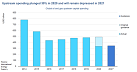 Click on the image at right to see historical levels of worldwide upstream capital spending and the prediction for 2021.
Industrial Info Resources (IIR), with global headquarters in Sugar Land, Texas, six offices in North America and 12 international offices, is the leading provider of global market intelligence specializing in the industrial process, heavy manufacturing and energy markets. Industrial Info's quality-assurance philosophy, the Living Forward Reporting Principle, provides up-to-the-minute intelligence on what's happening now, while constantly keeping track of future opportunities. Follow IIR on: Facebook - Twitter - LinkedIn. For more information on our coverage, send inquiries to info@industrialinfo.com or visit us online at http://www.industrialinfo.com.
/news/article.jsp
false
Want More IIR News Intelligence?
Make us a Preferred Source on Google to see more of us when you search.
Add Us On GoogleAsk Us
Have a question for our staff?
Submit a question and one of our experts will be happy to assist you.

Forecasts & Analytical Solutions
Where global project and asset data meets advanced analytics for smarter market sizing and forecasting.
Explore Our SolutionsRelated Articles
-
Feed Gas for U.S. LNG Dipped in Q2July 27, 2026
-
War-Related High Oil Prices Not Supporting SLB RevenueJuly 27, 2026

PECWeb Global Market Intelligence Platform
Identify opportunities, anticipate change, and execute with confidence. PECWeb connects the industrial intelligence you need, from projects and assets to operational events, all in one platform.
Discover PecwebIndustry Intel
-
European Chemicals and Transport Fuels OutlookPodcast Episode / Jul 10, 2026
-
2026 European Petroleum Refining Project OutlookPodcast Episode / Jun 26, 2026
-
Brazil: Efficiency, Innovation, and Opportunities in the Food & Beverage IndustryPodcast Episode / Jun 12, 2026
-
2026-2027 Investment Radar for Mexico, Central America & the CaribbeanPodcast Episode / May 29, 2026
-
Innovations Shaping the Next Era of Power GenerationPodcast Episode / May 22, 2026
