Petroleum Refining
Iraq Seeks $20 Billion Investment to Boost Domestic Refining Capacity by 740,000 Barrels per Day
Iraq is seeking $20 billion in funds for four domestic refineries that will increase the country's refining capacity to 740,000 barrels per day.
Released Thursday, July 01, 2010
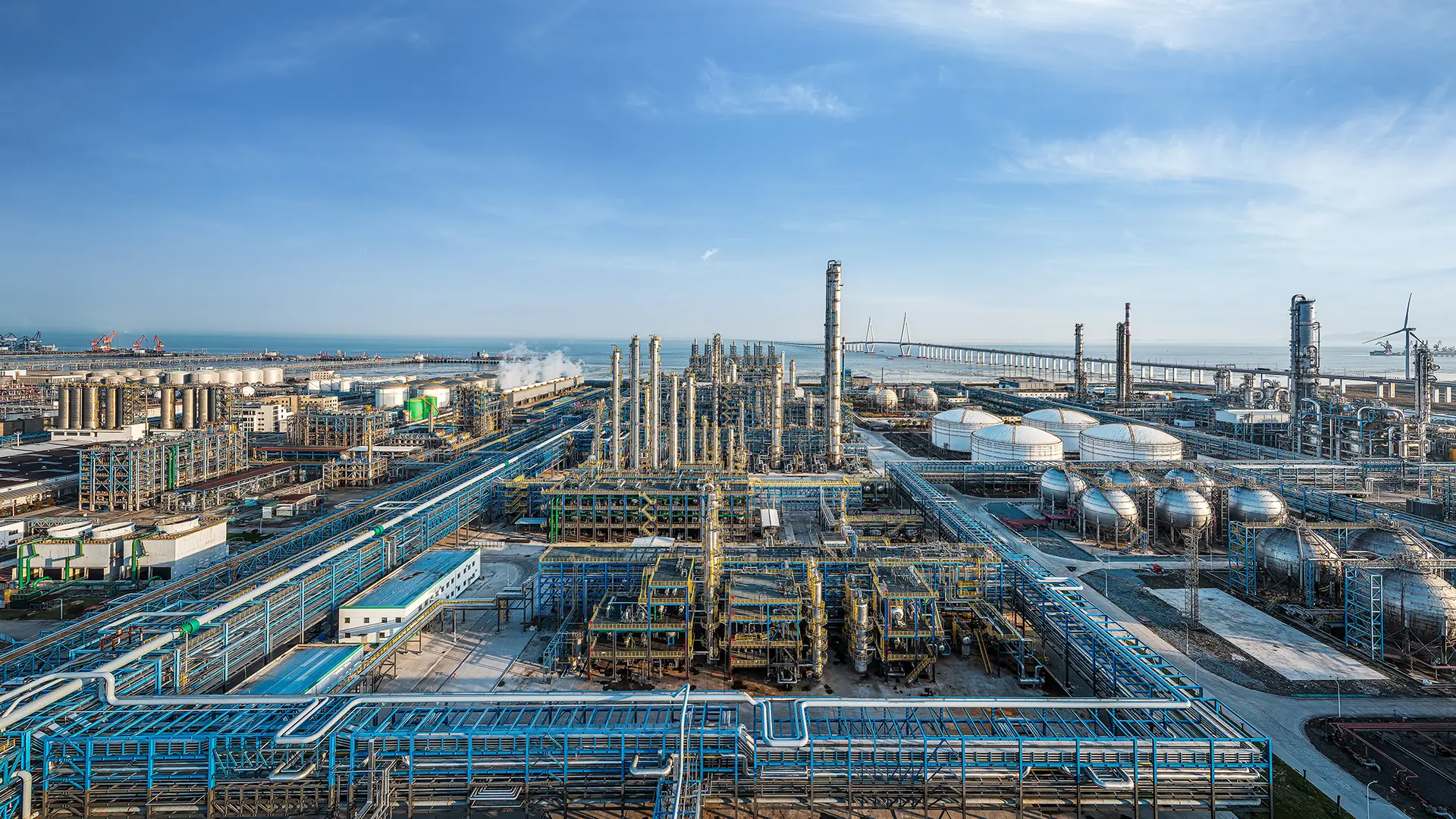
Researched by Industrial Info Resources (Sugar Land, Texas)--Iraq is seeking $20 billion in funds for four domestic refineries that will increase the country's refining capacity to 740,000 barrels per day (BBL/d). Iraq's current refining capability is about 550,000 BBL/d. The announcement was made by Iraq's Oil Minister, Hussain Al-Shahristani, at a global energy and construction convention. The augmented refining capacity is aimed at turning Iraq into a net exporter of petroleum products.
The proposed refineries will be in Kirkuk, Karbala, Maysan and Nasiriyah. The 300,000-BBL/d Nasiriyah refinery will be the largest, followed by a 150,000-BBL/d facility each at Maysan and Kirkuk, and a 140,000-BBL/d Karbala refining complex. Bids and construction activities at Karbala will commence first, followed by Maysan, Kirkuk and Nasiriyah in that order. Iraq is scouting for international partners for its refining projects.
In 2007, the Iraqi parliament approved legislation allowing full foreign ownership or international partnership in its oil and gas projects, moving the country away from the state's monopoly of energy resources and projects under Saddam Hussein's rule. Foster Wheeler Group (NASDAQ:FWLT) (Zug, Switzerland), which is undertaking feasibility studies for Karbala and Nasiriyah, will complete the project by the first quarter of 2011. Shaw Group Incorporated (NYSE:SHAW) (Baton Rouge, Louisiana) will perform the feasibility studies for Maysan and Kirkuk; they are scheduled to be completed by late 2011.
Shahrishtani also said that foreign collaborators and investors would be given a 5% discount on global crude-oil prices. Tax waivers and other incentives on transportation and land acquisition would be extended. Initially, the new refineries may have surplus output, but during the next 20-year period, the refineries will be needed to address increasing demand. Presently, Iraq has three operating refineries in Doura, Baiji and Basra, with a combined capacity of 550,000 BBL/d. The three refineries annually produce 9 million liters of heating oil, 12 million liters of petrol, 15 million liters of diesel, and fuel oil for power plants. The development of the new refineries is in line with Iraq's strategy to increase its crude output to 12 million barrels per day from 2.5 million barrels per day. Experts have observed that it has become imperative for Iraq to invest in new refineries and refurbish and modernize existing facilities. Years of civil war, dictatorship, United Nations-imposed sanctions, and the U.S.-led invasion in 2003 have necessitated the refurbishment of the nation's energy resources.
Since 2003, Iraq has faced acute electricity outages. Households and industrial establishments face hours of power cuts on a daily basis. Shahristani, who also took over as Electricity Minister last week, has indicated that the government is taking steps to reduce power outages. Special power supplies to government officials and other allocations will be scrapped. Earlier, public outrage and unrest about the electricity crisis in the country led to the resignation of Karim Waheed, erstwhile Electricity Minister of Iraq.
Iraq's oil reserve of 115 billion barrels is considered to be the third-largest in the world. In a recent move, the government has signed several deals with international energy companies to develop oil fields. In a related development, Shahristani has expressed optimism that global crude oil prices will stabilize at $70 to $80 per barrel this year. Earlier, fuelled by concerns over a storm in the Caribbean Sea and the Gulf of Mexico oil leak, crude prices reached a seven-week high of $78 per barrel. However, balanced supply-demand and sustained markets are expected to stabilize prices. The Middle East, Latin America, China and India will be the primary demand growth drivers.
View Project Report - 96000011 96000012 96000013 96000014 96000015 96000016 96000017 96000018 200005656 200005663 200005667 200005671 200005678 200005679 200005803 200005809 200005821 200005825 200006440 200006433 200006456 200006548 200006552 200006549 200006458 200006553 200006777 200006781 200006785 200007763 200007769 200007770 200007775 300007058 300007060
Industrial Info Resources (IIR) is the leading provider of global market intelligence specializing in the industrial process, heavy manufacturing and energy markets. IIR's quality-assurance philosophy, the Living Forward Reporting Principle, provides up-to-the-minute intelligence on what's happening now, while constantly keeping track of future opportunities.
/news/article.jsp
false
Want More IIR News Intelligence?
Make us a Preferred Source on Google to see more of us when you search.
Add Us On GoogleAsk Us
Have a question for our staff?
Submit a question and one of our experts will be happy to assist you.

Forecasts & Analytical Solutions
Where global project and asset data meets advanced analytics for smarter market sizing and forecasting.
Explore Our Solutions
PECWeb Global Market Intelligence Platform
Identify opportunities, anticipate change, and execute with confidence. PECWeb connects the industrial intelligence you need, from projects and assets to operational events, all in one platform.
Discover PecwebIndustry Intel
-
2026 European Petroleum Refining Project OutlookPodcast Episode / Jun 26, 2026
-
Brazil: Efficiency, Innovation, and Opportunities in the Food & Beverage IndustryPodcast Episode / Jun 12, 2026
-
2026-2027 Investment Radar for Mexico, Central America & the CaribbeanPodcast Episode / May 29, 2026
-
Innovations Shaping the Next Era of Power GenerationPodcast Episode / May 22, 2026
-
The Role of Contract Manufacturing in Global Pharma GrowthPodcast Episode / May 8, 2026