Metals & Minerals
U.S. Army Announces Base Lease Agreements with Critical Minerals Miners
Miners of graphite, lithium, boron, dysprosium and terbium will pay rent in kind at four U.S. Army bases by funding and executing infrastructure improvements.
Released Tuesday, July 14, 2026
Reports related to this article:
Project(s): View 6 related projects in PECWeb
Plant(s): View 5 related plants in PECWeb
Written by Paul Wiseman for IIR News Intelligence (Sugar Land, Texas)
Summary
Miners of graphite, lithium, boron, dysprosium and terbium will pay rent in kind at four military bases by funding and executing infrastructure improvements.Critical Minerals on Base
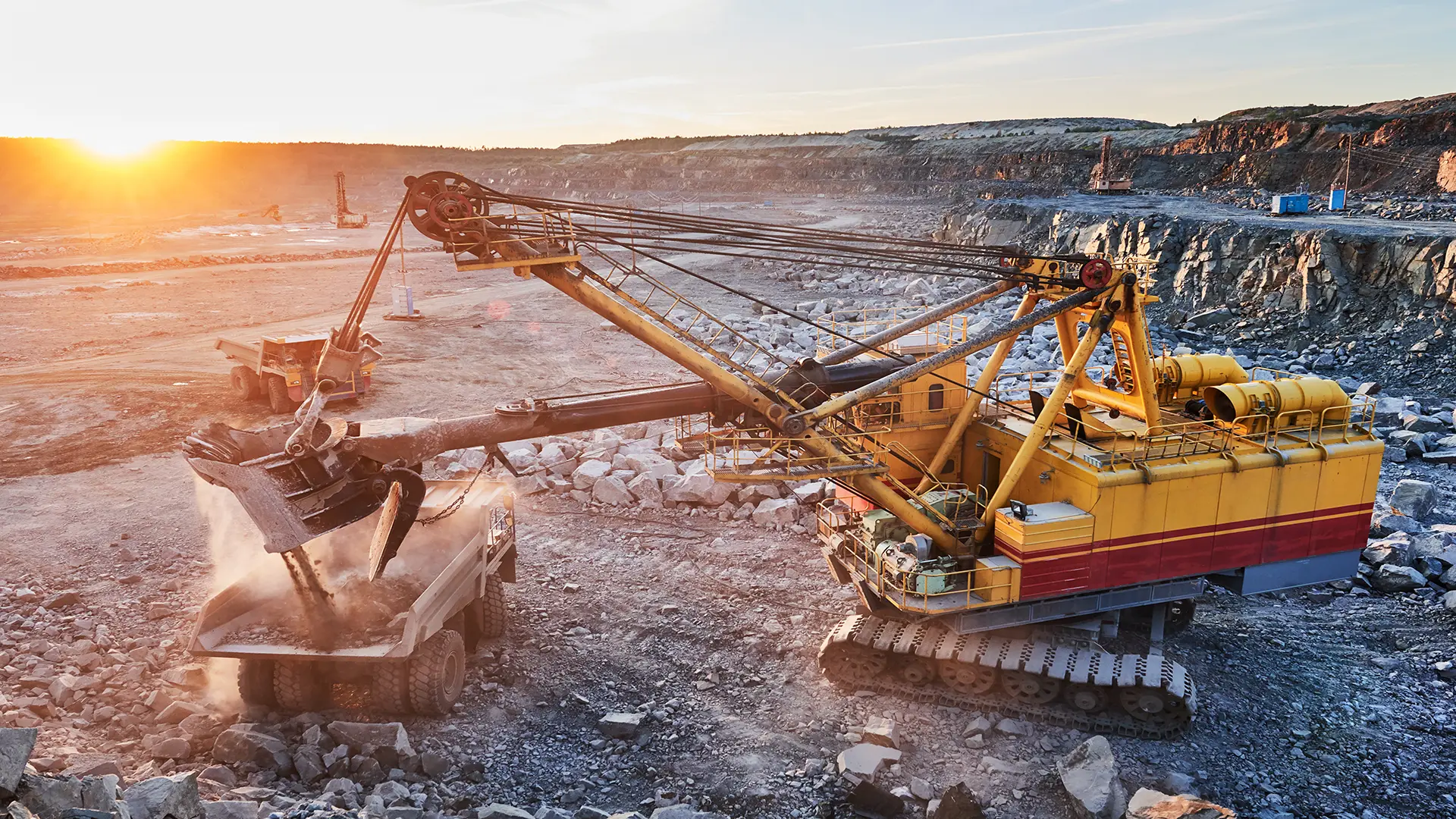
With the goal of "strengthening national defense and securing domestic supply chains," the U.S. Army last week announced conditional award of long-term leases to four U.S.-based minerals miners. The lease allows the companies to "design, finance, build, and operate critical mineral processing facilities," with each company on one of four army bases.Paying for the lease "in kind," the miners would be required to fund and build general infrastructure improvements at their respective bases instead of sending a rent check.
Industrial Info Resources is tracking a total of five projects at the four bases:
- Anniston Army Depot, Bynum, Alabama - Empire State Mines, LLC, a wholly owned subsidiary of Titan Mining Corporation (battery-grade refining of graphite)
- Pine Bluff Arsenal, Jefferson County, Arkansas - Empire State Mines, LLC, a wholly owned subsidiary of Titan Mining Corporation (battery-grade refining of graphite)
- Red River Army Depot (New Boston, Texas) - EnergyX (lithium)
- Tooele Army Depot (40 miles southwest of Salt Lake City, Utah) - Ioneer USA Corporation (boron)
- Tooele Army Depot: REalloys (dysprosium, terbium)
The Army's Reasoning and Methods
It is no surprise that national security tops the listed reasons, with the U.S. importing the vast majorities of all minerals used in electronics in all areas, including weapons.The vehicle for this is known as an Enhanced Use Lease (EUL). While the name was only formalized in 2001, the idea of repurposing underutilized space on military bases originated in the post-World War II environment, when the U.S. military found itself owning large parcels of land it could no longer fully utilize. It comes under Title 10 of the U.S. Code (U.S.C.) § 2667, originally enacted in August of 1956.
Essentially, "An EUL is a real estate agreement that allows the Army to lease non-excess, underutilized land to private-sector partners," said the army's statement.
Mutual benefits are a key part of the mix, said Dr. Jeff Waksman, principal deputy assistant secretary of the Army for Installations, Energy and Environment. "Leveraging our legal authorities and land, the U.S. Army is able to help nurture a critical minerals industrial base which equips and sustains America's Soldiers without putting any taxpayer dollars at risk."
Presidential Order Part of the Impetus
It was enacted by the Army's Strategic Capital Initiatives (SCI) an effort to partner with private enterprise and was based on President Donald Trump's executive order 14241.Entitled "Immediate Measures to Increase American Mineral Production," it invoked the Defense Production Act (DPA) of 1950 to expand domestic mining and processing of critical minerals. Enacted during the start of the Korean war, the DPA directs federal agencies to fast-track permitting involving the use of federal lands for such operations. It also allows the government to require businesses to prioritize government contracts and to provide financial incentives to expand production.
While the DPA is a longtime law, this is the first time the Pentagon has used it to allow commercial mineral plants on U.S. military bases, reinforcing the idea that establishing a domestic supply chain of critical minerals is important for defense technologies in reducing reliance on China.
By the Numbers
- Four: Number of Army bases with pending projects
- Five: Total number of projects
- U.S. Army has preliminarily entered into agreements with critical minerals miners/processors allowing them to rent space at four bases.
- Payment will be in kind. In other words the processors will plan, fund and build infrastructure for the base instead of paying money.
About Industrial Info Resources
Industrial Info Resources (IIR) is the leading provider of industrial market intelligence. Since 1983, IIR has provided comprehensive research, news and analysis on the industrial process, manufacturing and energy related industries. IIR's Global Market Intelligence (GMI) helps companies identify and pursue trends across multiple markets with access to real, qualified and validated plant and project opportunities. Across the world, Industrial Info Resources is tracking over 250,000 current and future projects worth $30.2 trillion (USD).
/news/article.jsp
false
Want More IIR News Intelligence?
Make us a Preferred Source on Google to see more of us when you search.
Add Us On GoogleAsk Us
Have a question for our staff?
Submit a question and one of our experts will be happy to assist you.

Forecasts & Analytical Solutions
Where global project and asset data meets advanced analytics for smarter market sizing and forecasting.
Explore Our SolutionsRelated Articles
-
Smackover Lithium Assesses Potential of Texas Brine Mine at ...September 16, 2026
-
GM-Backed Company Joins Smackover Lithium RushJuly 16, 2025
-
DOE Funding Critical Mineral WorkforceAugust 11, 2026
-
Ioneer Looks to Korea for Help with Ryholite Ridge MineJuly 09, 2026

PECWeb Global Market Intelligence Platform
Identify opportunities, anticipate change, and execute with confidence. PECWeb connects the industrial intelligence you need, from projects and assets to operational events, all in one platform.
Discover PecwebIndustry Intel
-
North America Refining 2026: New Pipelines to PADD 5Podcast Episode / Oct 2, 2026
-
Biomanufacturing Onshoring 2026: GLP-1 Drives CapexPodcast Episode / Oct 2, 2026
-
2026 US Data Center Outlook: Power, Land & CoolingPodcast Episode / Sep 18, 2026
-
2026 Global Power Demand Outlook: Gas, Nuclear & RenewablesPodcast Episode / Sep 18, 2026
-
2026 Oil & Gas CapEx Outlook: Middle East, LNG & PermianPodcast Episode / Sep 4, 2026