Power
Supreme Court Seems Skeptical of EPA's Ability to Regulate Power Plant CO2 Emissions
The EPA is defending its ability to regulate carbon dioxide (CO2) emissions from the Power industry
Released Monday, March 14, 2022
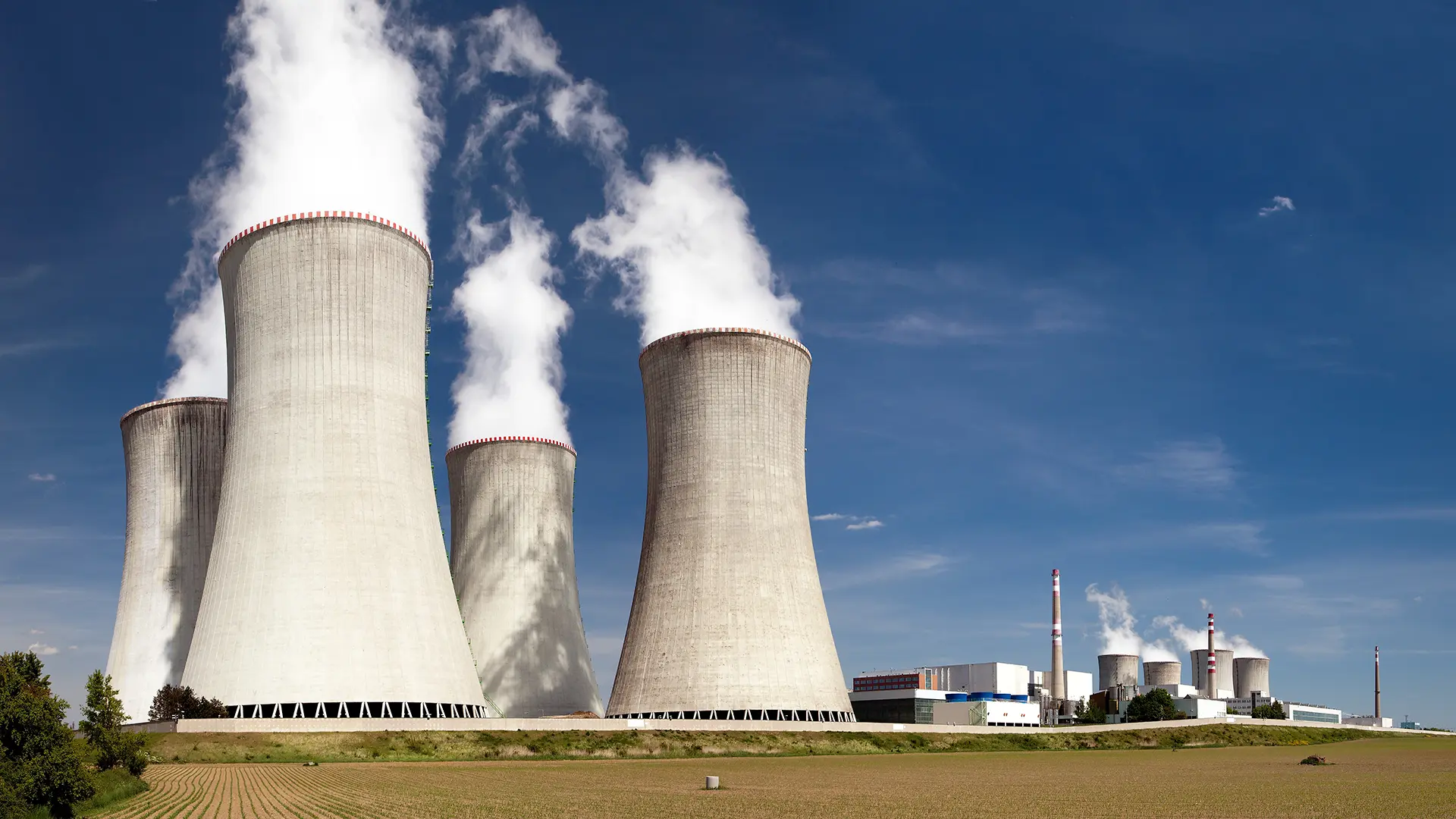
Written by John Egan for Industrial Info Resources (Sugar Land, Texas)--The Biden administration's energy and environment agenda, blocked by a divided Congress and under attack in the federal court system, had its biggest challenge February 28 when it appeared before the U.S. Supreme Court defending its ability to regulate carbon dioxide (CO2) emissions from the Power industry.
The fact that the court was hearing the case at all was a defeat for the Biden administration, which argued that since no regulation was in place, the issue would amount to an advisory opinion, which courts traditionally have been reluctant to issue.
And skeptical questions from the court's conservative justices during two hours of oral arguments on February 28 suggested the agency could be facing an even steeper uphill climb in preserving its ability to regulate gases that scientists say trap heat in the atmosphere and lead to global climate change.
The case, West Virginia v. E.P.A., is the culmination of at least 15 years of federal regulation and litigation over the agency's ability to regulate CO2. Interestingly, in this case members of the Power industry, including Consolidated Edison Incorporated (NYSE:ED) (New York, New York), Exelon Corporation (NYSE:EXC) (Chicago, Illinois), National Grid Plc, (NYSE:NGG) (London, England) and the Los Angeles Department of Water & Power (Los Angeles, California), lined up on the government's side. Coal interests and GOP governors were on the opposite side.
In the landmark 2007 case, Massachusetts v. EPA, a less-conservative Supreme Court ruled 5-4 that CO2 and greenhouse gases were pollutants, and that the Clean Air Act required the agency to regulate them if they posed a danger to human health. The so-called "endangerment" finding from the EPA was the first step down this complex legal path.
In 2015, the Obama administration used the "endangerment" finding to support its Clean Power Plan (CPP). The Supreme Court stayed that rule in 2016, before it could be implemented. The Trump administration withdrew the CPP in favor of a more lenient American Clean Energy (ACE) rule, which imposed a significantly less burden on owners of power plants to reduce CO2 emissions. In 2021, on the last day of the Trump administration, the U.S. Court of Appeals for the D.C. Circuit threw out the Trump plan, saying it relied on a "tortured series of misreadings" and a "fundamental misconstruction" of the Clean Air Act.
With no federal plan in place to regulate the CO2 emissions of power plants, and the Biden administration committed to decarbonizing the power sector by 2035, the current EPA has been working to craft a replacement rule . It hoped to issue a draft this summer, and finalize it next year.
That's why lawyers for the EPA, some academics and members of the environmental community were said to be surprised that the Supreme Court agreed to hear a case that did not involve an actual regulation.
That surprise no doubt turned to dismay when several of the court's more conservative justices asked whether the EPA was overstepping its authority under what the court terms the "major questions" doctrine. In essence, this doctrine questions whether a regulatory agency can issue far-reaching rules in the absence of specific authority granted by Congress.
In discussing the "major questions" doctrine in oral arguments on February 28, Associate Justice Brett Kavanaugh said, "One thing we said is that Congress must speak clearly if it wishes to assign an agency decisions of vast economic and political significance. And the second thing we said is that the Court greets with a measure of skepticism when agencies claim to have found in a long-extant statute an unheralded power to regulate a significant portion of the American economy."
His conservative colleague Samuel Alito Jr. added that the EPA is claiming "authority to set industrial policy and energy policy and balance such things as jobs, economic impact, the potentially catastrophic effects of climate change, as well as costs." When regulations have such broad and far-reaching effect, the conservative justices wanted to see specific authority from Congress.
Aside from the "major decisions" threshold, another issue is the degree to which EPA authority should be limited to actions taken at specific power plant facilities, also known as "inside the fence," or whether the agency has the power to regulate more broadly across state lines, known as "outside the fence."
"This is a big case because it involves the statute that's been central to the EPA's work" on climate change, Georgetown University Law Center Professor Lisa Heinzerling told The Washington Post before oral arguments. Invoking the "major questions" doctrine, she added, is "a huge potential wrecking ball for regulation." Heinzerling worked at the EPA during the Obama administration.
West Virginia Attorney General Patrick Morrisey (R), who is leading the lawsuit against the EPA but did not participate in oral arguments, recently told The Washington Post that the court should not hesitate to rule before Biden's team is finished working on a power-plant regulation.
"We have a federal government that wants to cut emissions in half by 2030, and they're going to be very aggressive in the issuance of those rules," Morrisey said. "The damage would be done if the rulemaking would continue unabated. It has to be addressed right now."
Arguing on behalf of the power companies that supported the EPA, Beth Brinkmann, a partner with Covington & Burling LLP (Washington, D.C.), said that under other sections of the Clean Air Act, as amended, Congress granted the EPA the authority to perform "outside-the-fence" regulation to control mercury emissions, acid rain and establish the so-called "Good Neighbor" doctrine.
"Congress directed the expert agency (EPA) to look to reality when it makes the empirical determination of the best system of emission reduction for the source category," she said. "Congress would have expected the agency to consider emissions trading. Congress had allowed emissions trading by fossil fuel plants to control emissions of various pollutants for decades."
The court, with a majority of conservative jurists who are skeptical about expansive federal power in the absence of specific congressional authorization, is expected to issue its ruling by the end of its term in June.
Industrial Info Resources (IIR), with global headquarters in Sugar Land, Texas, six offices in North America and 12 international offices, is the leading provider of global market intelligence specializing in the industrial process, heavy manufacturing and energy markets. Industrial Info's quality-assurance philosophy, the Living Forward Reporting Principle, provides up-to-the-minute intelligence on what's happening now, while constantly keeping track of future opportunities. Follow IIR on: LinkedIn.
/news/article.jsp
false
Want More IIR News Intelligence?
Make us a Preferred Source on Google to see more of us when you search.
Add Us On GoogleAsk Us
Have a question for our staff?
Submit a question and one of our experts will be happy to assist you.

Forecasts & Analytical Solutions
Where global project and asset data meets advanced analytics for smarter market sizing and forecasting.
Explore Our SolutionsRelated Articles

PECWeb Global Market Intelligence Platform
Identify opportunities, anticipate change, and execute with confidence. PECWeb connects the industrial intelligence you need, from projects and assets to operational events, all in one platform.
Discover PecwebIndustry Intel
-
Brazil: Efficiency, Innovation, and Opportunities in the Food & Beverage IndustryPodcast Episode / Jun 12, 2026
-
2026-2027 Investment Radar for Mexico, Central America & the CaribbeanPodcast Episode / May 29, 2026
-
Innovations Shaping the Next Era of Power GenerationPodcast Episode / May 22, 2026
-
The Role of Contract Manufacturing in Global Pharma GrowthPodcast Episode / May 8, 2026
-
2026 North American Labor OutlookPodcast Episode / Apr 24, 2026