Production
Despite an Apparent Administration Push, Can U.S. Shale Make Up for Banned Russian Oil?
Statements at the recent CERAWeek by S&P Global in Houston took on a somewhat surreal aura
Released Monday, March 21, 2022
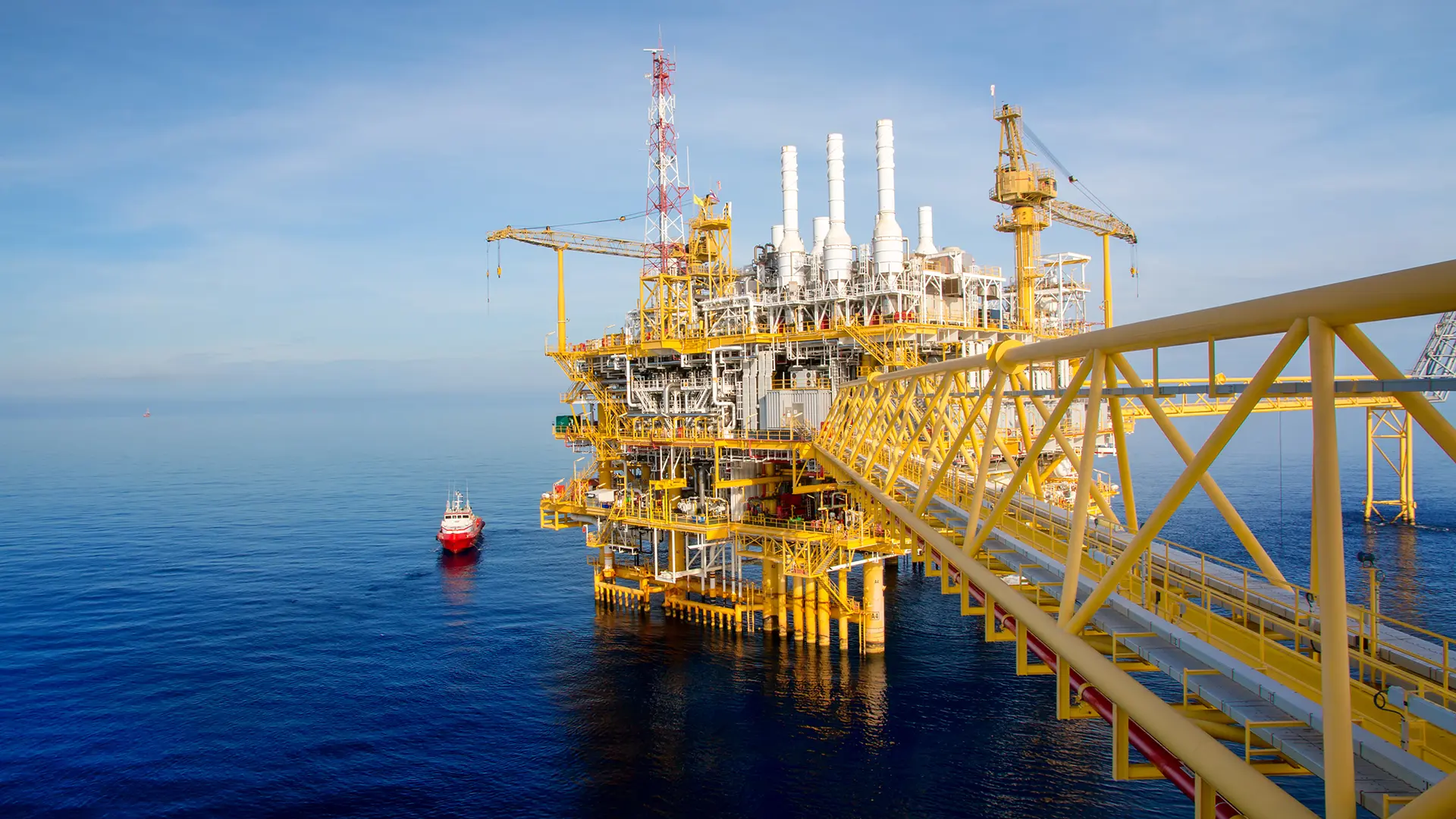
Written by Paul Wiseman for Industrial Info Resources (Sugar Land, Texas)--Statements made at S&P Global's recent CERAWeek event in Houston took on a somewhat surreal aura. The energy secretary under a green-talking president encouraged shale producers to drill more, while chief executives of those formerly drill-happy companies declined the invitation.
Referring to the Russian invasion of Ukraine and the ensuing bans on buying Russian oil and gas, Energy Secretary Jennifer Granholm said, "We are on a war footing. We are in an emergency." Among the actions she listed, including releases from worldwide strategic reserves, she added, "That means you producing more right now, where and if you can."
Meanwhile at the White House, Press Secretary Jen Psaki was announcing that there were 9,000 leases on Federal lands that were producing no oil, implying that oil companies were not being unpatriotic in the process. If sincere, the request to drill would signal quite a turn from an administration that started by cancelling the Keystone XL Pipeline that would have delivered more than 700,000 barrels per day (BBL/d) to the U.S. from just across the border.
Facing rising fuel prices, the Biden administration is dealing with consumer backlash as it approaches midterm elections. With experts mulling the possibility of prices hitting as high as $200 per barrel should the market continue to lack Russian supplies, Granholm and others are looking for a short-term fix. With requests for more production from the Organization of Petroleum Exporting Countries (OPEC) and Venezuela falling on deaf ears, the administration appears to be turning to previously shunned domestic producers as a last resort.
But is that reasonable or even possible? Already the prolific Permian Basin is producing record amounts of oil, setting new highs every month since December of 2021. The U.S. Energy Information Administration (EIA) expects the country's leading oil basin to average record highs of 5.3 million BBL/d in 2022 and 5.7 million BBL/d in 2023. The EIA also is expecting record-high national production levels of 12.6 million BBL/d in 2023. Most of that increase is due to the completion of DUC (drilled and uncompleted) wells that were drilled during the pandemic. Many of those were left uncompleted due to a glut of production and the resulting low prices.
Chief executive officers at the conference vowed profit chastity based on investor expectations, as opposed to opening checkbooks to capital expenditures for new E&P activity. Permian leader Pioneer Natural Resources (NYSE:PXD) (Irving, Texas) plans to limit growth to 5% for the long term. Exxon Mobil Corporation (NYSE:XOM) (Irving) also has set a goal of 5% growth for 2022, and Chevron Corporation (NYSE:CVX) (San Ramon, California) has pushed the envelope to 25%.
The administration's reasoning is lost on some, including IIR's Shane Mullins. "It still puzzles too many Americans as to why the Biden administration would see the increasing U.S. production as the option of last resort," he said. "What region of the world has a higher emissions intensity per barrel than Venezuela or Iraq? Why go there first? I thought we were trying to transition to using lower carbon resources."
The reason shale drillers are holding back goes back to lessons learned the hard way over the previous decade.
Explained Bryan Sheffield, former chief executive officer of Parsley Energy, in an email interview, "I personally don't think it's possible that the Permian shale players will ever be the swing producers again. The model has changed within the investor base from privates to publics. The growth model is no longer favored--we are now focused purely on cash flow and returning (cash) back to investors."
Public investors began demanding cash flow neutrality from E&Ps in 2017-18, and have not changed their stances since then.
Just the act of ramping up rapid growth comes with the risk of speeding through the process and making too many mistakes, Sheffield added.
Many leaders at CERAWeek pointed to the administration's cancellation of the Keystone XL as a mistake, particularly in light of the growing restrictions on Russian oil. Canada's current exports to the U.S. travel through two systems: Canadian operator Enbridge Incorporated's (NYSE:ENB) (Calgary, Alberta) Mainline System and TC Energy's (NYSE:TRP) (Calgary) Keystone Pipeline.
Enbridge is looking for ways to increase flow through lines that are already tight. In a statement they said, "Both our liquids and natural gas systems are at or near capacity but we're exploring options that may be taken to provide more energy to the U.S. and Europe. That includes using export facilities on the Gulf Coast for crude and natural gas."
So while U.S. production is slated to increase in the near future, so is energy use. It would appear that higher prices are likely to be in place until and beyond the upcoming election cycle.
Industrial Info Resources (IIR) is the world's leading provider of market intelligence across the upstream, midstream and downstream energy markets and all other major industrial markets. IIR's Global Market Intelligence Platform (GMI) supports our end-users across their core businesses, and helps them connect trends across multiple markets with access to real, qualified and validated project opportunities. Follow IIR on: LinkedIn.
/news/article.jsp
false
Want More IIR News Intelligence?
Make us a Preferred Source on Google to see more of us when you search.
Add Us On GoogleAsk Us
Have a question for our staff?
Submit a question and one of our experts will be happy to assist you.

Forecasts & Analytical Solutions
Where global project and asset data meets advanced analytics for smarter market sizing and forecasting.
Explore Our Solutions
PECWeb Global Market Intelligence Platform
Identify opportunities, anticipate change, and execute with confidence. PECWeb connects the industrial intelligence you need, from projects and assets to operational events, all in one platform.
Discover PecwebIndustry Intel
-
Brazil: Efficiency, Innovation, and Opportunities in the Food & Beverage IndustryPodcast Episode / Jun 12, 2026
-
2026-2027 Investment Radar for Mexico, Central America & the CaribbeanPodcast Episode / May 29, 2026
-
Innovations Shaping the Next Era of Power GenerationPodcast Episode / May 22, 2026
-
The Role of Contract Manufacturing in Global Pharma GrowthPodcast Episode / May 8, 2026
-
2026 North American Labor OutlookPodcast Episode / Apr 24, 2026