Terminals
Germany to Double Underground Natural Gas Storage Capacity
Germany is planning to increase its underground natural gas storage capacity to almost twice the current levels.
Released Monday, May 03, 2010
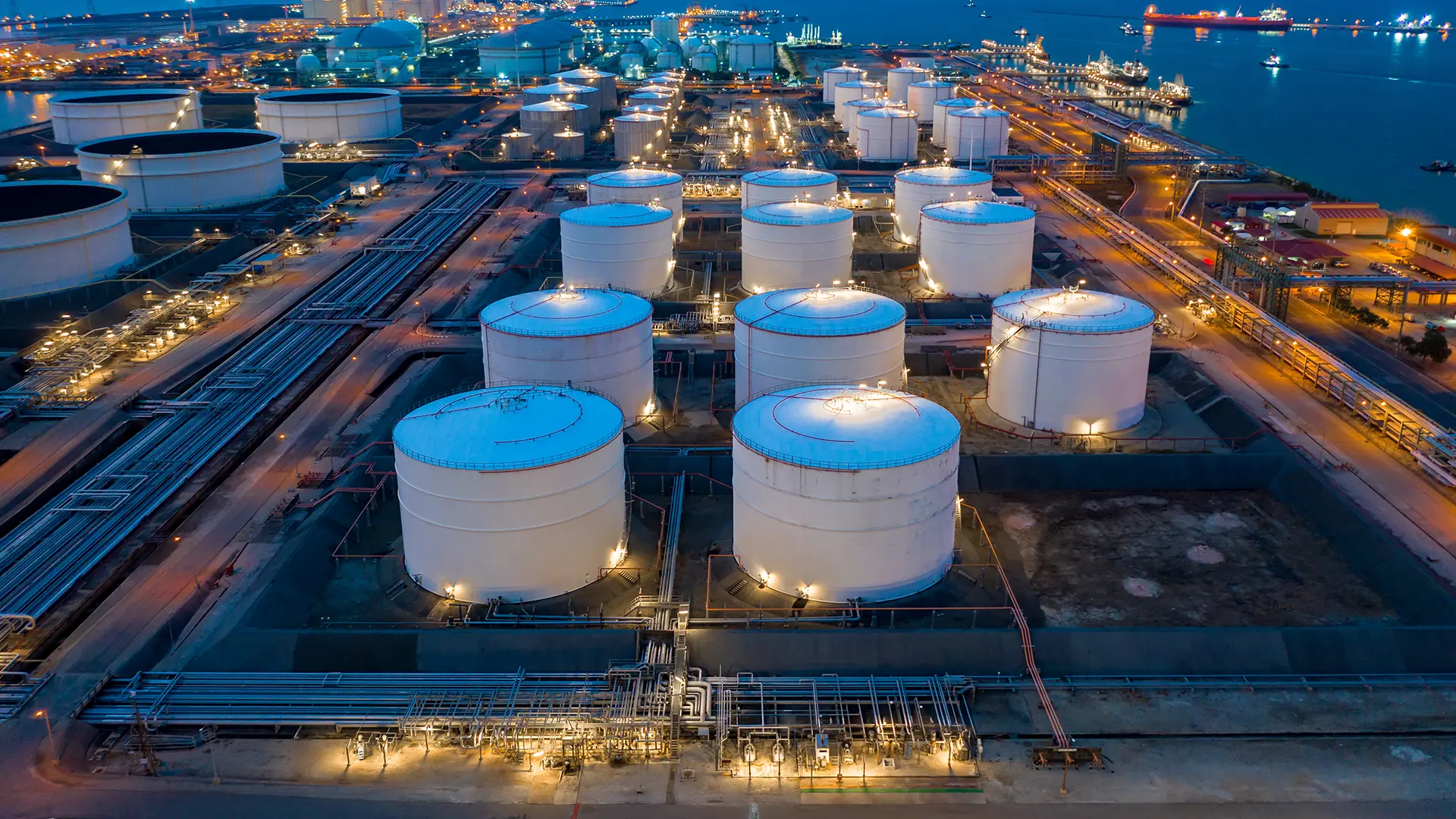
Researched by Industrial Info Resources (Sugar Land, Texas)--Germany is planning to increase its underground storage capacity to almost twice the current levels. The State Office for Mining, Energy and Geology in Lower Saxony confirmed in a statement that the new capacity would be primarily for the country's natural gas supply, the majority of which is imported from Russia.
The new capacity will be created in permeable rock situated deep under the surface of the earth. Once completed, it will be capable of storing 37 billion cubic meters of natural gas--a 76% increase from the current storage capacity of 21 billion cubic meters.
The head of the State Office for Mining, Energy and Geology, Lothar Lohff, said, "Lower Saxony is becoming a gas hub. Nearly three quarters of the additional working gas volume is to be implemented in Lower Saxony in new storage projects."
He also added that, in spite of the higher costs involved in compacting the gas and depositing it underground, natural gas producers still require new storage to be prepared for changes in the natural gas market and supply chain.
"Natural gas storage plays an important role for a secure energy supply in Germany. The gas state of Lower Saxony, with its beneficiary geological situation, plays a central role," Lohff insisted. More than 95% of Germany's natural gas is produced in Lower Saxony.
The major areas of gas production are located between the Elbe and Weser rivers, near the northern coastal region of Germany. Among the top 10 productive regions in Lower Saxony are the natural gas fields in Hemsbünde, Bötersen and Völkersen. In fact, the Völkersen gas field has produced more than 10 billion cubic metres of gas since it first commenced production in 1992.
As time goes by, Lower Saxony continues to become more important as a 'natural gas hub.' In fact, late last year, it was also reported that Exxon Mobil Corporation (NYSE:XOM) (Irving, Texas) was keen to invest in the exploration of the Lower Saxony region, in areas where the company thought that large natural gas reserves lay dormant and untapped.
The region, which possesses more than 90% of Germany's natural gas deposits, is expected to witness a depletion of these reserves in the next 30 years. ExxonMobil was interested in untapped reserves caught in porous rock and was expected to invest nearly $132 million in the drilling and exploration process.
According to sources, storage facilities play a major role in seasonal and market-related consumption fluctuations. New storage facilities will definitely help Germany create a buffer against increased reliance on gas imports from Russia. In fact, in a bid to battle new developments in the gas market with the 2011 commissioning of Russia's 1,222-kilometer Nord Stream gas pipeline, Germany is working at creating new storage capacity to stock up on gas supplies for the future.
The Nord Stream line, also commonly known as the Russo-German gas pipeline or the Baltic Sea gas pipeline, is an offshore natural gas pipeline being constructed to connect Vyborg, a town in Leningrad Oblast, Russia, to the town of Griefswald in northeastern Germany. The first phase of the line will be constructed in 2010-11, with delivery of gas planned to begin in late 2011. The second phase will be completed in 2012. Once commissioned, the pipeline will have a carrying capacity of 55 billion cubic meters of gas per year to Western Europe. Once finished, the pipeline will be the world's longest undersea pipeline.
The pipeline has been in the news for controversial reasons, including the increasing dependence of Europe on Russian gas and the possible environmental damage that the pipeline will cause.
However, Russian Prime Minister Vladimir Putin said recently that if needed, the capacity of the line could be increased if the South Stream pipeline is delayed.
The South Stream pipeline project is being handled by Russia to build another gas pipeline under the Black Sea that will initially carry 31 billion cubic meters of natural gas per year from Russia to Bulgaria, eventually continuing to Italy and Austria. The pipeline is scheduled for commissioning in late 2015. In later stages, the pipeline's capacity could reach 63 billion cubic meters per year.
Currently, 70% of Europe's gas supplies are sourced from Russia, which is Germany's major supplier. Although the largely exploited natural gas deposits in Russia are gradually decreasing, natural gas demand is increasing every year, and a minimum rise of 50% in demand is expected by 2030. Although gas imports from Russia to Europe are expected to drop by 2030, Russia will remain crucial to the world's natural gas demands in the coming years.
Industrial Info Resources (IIR) is the leading provider of global market intelligence specializing in the industrial process, heavy manufacturing and energy markets. IIR's quality-assurance philosophy, the Living Forward Reporting Principle, provides up-to-the-minute intelligence on what's happening now, while constantly keeping track of future opportunities.
/news/article.jsp
false
Want More IIR News Intelligence?
Make us a Preferred Source on Google to see more of us when you search.
Add Us On GoogleAsk Us
Have a question for our staff?
Submit a question and one of our experts will be happy to assist you.

Forecasts & Analytical Solutions
Where global project and asset data meets advanced analytics for smarter market sizing and forecasting.
Explore Our SolutionsRelated Articles
-
Typhoon Saudel Threatens Okinawa, Eastern ChinaAugust 25, 2026
-
Oil & Gas Projects Set to Transform Papua New Guinea's Energ...August 25, 2026
-
Lula Backs Petrobras' Oil Discovery in Mouth of Amazon BasinAugust 19, 2026
-
Africa Nations Invest Billions in Oil/Gas Production, Infras...August 19, 2026
-
Tropical Storm Lala Takes Aim at HawaiiAugust 13, 2026

PECWeb Global Market Intelligence Platform
Identify opportunities, anticipate change, and execute with confidence. PECWeb connects the industrial intelligence you need, from projects and assets to operational events, all in one platform.
Discover PecwebIndustry Intel
-
European Chemicals and Transport Fuels OutlookPodcast Episode / Jul 10, 2026
-
2026 European Petroleum Refining Project OutlookPodcast Episode / Jun 26, 2026
-
Brazil: Efficiency, Innovation, and Opportunities in the Food & Beverage IndustryPodcast Episode / Jun 12, 2026
-
2026-2027 Investment Radar for Mexico, Central America & the CaribbeanPodcast Episode / May 29, 2026
-
Innovations Shaping the Next Era of Power GenerationPodcast Episode / May 22, 2026