Power
With Nine Reactors Under Construction India Targets 20,000 Megawatts of Nuclear Power by 2020
The nuclear power plans are part of a target to add 150,000 MW of power to the nations generating capacity in the next ten years - Includes a chart showing the breakdown of unit addition in India by state
Released Wednesday, September 07, 2005
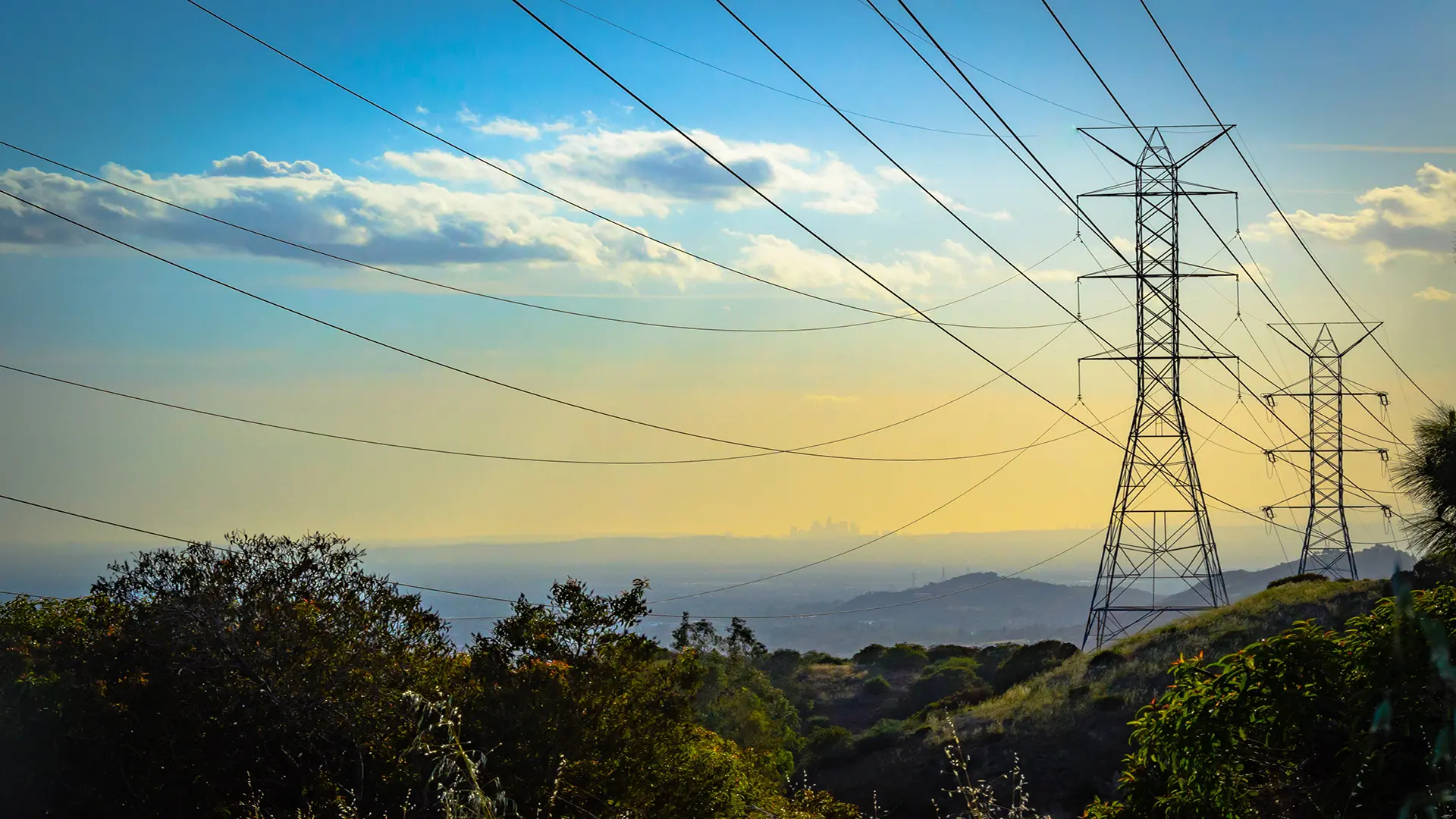
Researched by Industriaslinfo.com (Industrial Information Resources, Incorporated; Houston, Texas). The removal of restrictions on U.S. exports of nuclear fuel and reactor components to six Indian nuclear and space facilities is a boost for the countrys nuclear power station plans, which envisage an output of 20,000 MW by 2020. The nuclear power plans are part of a target to add 150,000 MW of power to the nations generating capacity in the next ten years.
Industrialinfo.com is currently tracking 103 grassroot power plant or unit addition projects in India scheduled to begin construction in 2005 or beyond. These projects representing all fuel types exceed $45 billion in total investment value.
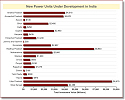 Click on the image at right to view a chart showing the breakdown of these projects by state.
The current generating capacity of about 117,000 MW falls well short of peak demand. The plan to add 100,000 MW between 2002 and 2012 to provide power to all Indias billion plus citizens has been put in doubt by slow decision delivery and the scaling down of funds available for the job.
In August 2005, Prime Minister Manmohan Singh put another target into play when he said that he expected the addition of 150,000 MW in the next ten years through coal and hydroelectric power. Coal currently supplies the feedstock for over 50% of Indias power generation. He also said that the government was looking for the means to install a community biomass plant in every village for domestic electricity generation and to provide gas for cooking.
Having been instrumental in obtaining the lifting of the nuclear ban Singh will be behind Indias nuclear power generation targets. Singh is backing the drive to 20,000 MW from a base of 2,500 MW in 2003, and onward to an envisaged 25% of the countrys power needs by 2050. With per capita consumption of electricity expected to grow at a rate of 6.3% per annum through 2020, Indias coal reserves will begin to run down and nuclear power will take up an increasing part of baseload supply.
India has pursued a policy of nuclear self-sufficiency after being excluded from the 1970 Nuclear Non-Proliferation Treaty (NPT) after it acquired nuclear weapons capability post-1970, reports the World Nuclear Association. This self sufficiency extends from uranium exploration and mining through fuel fabrication, heavy water production, reactor design and construction to reprocessing and waste management. A small fast breeder reactor is in operation and a much larger fast breeder is scheduled to start construction. India is also developing technology to utilize the 25% of world reserves of thorium it holds as a nuclear fuel.
Between 2006 and 2010 nine new reactors will start up. These are Tarapur 3 and 4 (2 x 490 MW) in 2006 and 2007; Kaiga 3 and 4 (2 x 220 MW) in 2007; Rawatbhata 5 and 6 (2 x 220) in 2007, 2008; Kudankulam 1 and 2 (2 x 905 MW) and Kalpakkam (470 MW) in 2010. The reactors in this program will carry investment of about $7 billion. They will be situated in the southern states of Tamil Nadu and Karnataka and the western states of Maharashtra and Rajasthan.
India has fourteen small to medium nuclear reactors in operation currently, ranging from Tarapur 1 and 2 (2 x 150 MW), which started up in 1969, to Rawatbhata 3 and 4 (2 x 2020 MW), which started up in 1999.
Responsibility for the design construction, commissioning, and operation of thermal nuclear power plants lies with the Nuclear Power Corporation of India Limited (NPCIL). The countrys first large nuclear plant, Kudankulam 1 and 2 will run Russian VVER - 1000 reactors, which come under a $3 billion contract backed by Russian finance. NPCIL will build the units and will commission and operate them under international safeguards. The enriched fuel will be supplied by Russia and India will reprocess it and retain the plutonium. A further four of the 905 MW units could also be constructed at the same site.
Nuclear power units planned for construction between 2010 and 2020 include 4 x 220 MW; 10 x 700 MW, 3 x 500 MW and a possible 6 x 1,000 MW VVER units. 50% of the total will be PHWRs (Pressurized heavy water reactors). Some 300 MW units could also be built. The first prototype 500 MW fast breeder reactor using the thorium cycle is now under construction and is expected to be in operation by 2010. This will be fuelled with uranium-plutonium oxide with a thorium blanket to breed fissile U-233. This will herald stage 2 of the program with another four fast reactors using the thorium cycle to be constructed by 2020. The later models will replace the mixed oxide fuel with metallic fuel which will speed up the breeder process. The countrys rich thorium deposits could eventually displace local coal and uranium as the power generation feedstock mainstay.
The availability of U.S. components to the program should help to maintain the advance in Indian reactors capacity factors, which rose from 60% in 1995 to 85% in 2001/2002.
View Project Report - 89000266 89000267 89000577 89000578 89000638 89000639 89000640 89000669 89000670
Industrial Information Resources (IIR) is a Marketing Information Service company that has been doing business for over 22 years. IIR is respected as a leader in providing comprehensive market intelligence pertaining to the industrial processing, heavy manufacturing, and energy-related industries throughout the world.
/news/article.jsp
false
Want More IIR News Intelligence?
Make us a Preferred Source on Google to see more of us when you search.
Add Us On GoogleAsk Us
Have a question for our staff?
Submit a question and one of our experts will be happy to assist you.

Forecasts & Analytical Solutions
Where global project and asset data meets advanced analytics for smarter market sizing and forecasting.
Explore Our SolutionsRelated Articles

PECWeb Global Market Intelligence Platform
Identify opportunities, anticipate change, and execute with confidence. PECWeb connects the industrial intelligence you need, from projects and assets to operational events, all in one platform.
Discover PecwebIndustry Intel
-
Brazil: Efficiency, Innovation, and Opportunities in the Food & Beverage IndustryPodcast Episode / Jun 12, 2026
-
2026-2027 Investment Radar for Mexico, Central America & the CaribbeanPodcast Episode / May 29, 2026
-
Innovations Shaping the Next Era of Power GenerationPodcast Episode / May 22, 2026
-
The Role of Contract Manufacturing in Global Pharma GrowthPodcast Episode / May 8, 2026
-
2026 North American Labor OutlookPodcast Episode / Apr 24, 2026