Terminals
Crude-Oil Price Collapse Leads to Cutbacks in Capital Spending, but Efficiency Gains Should Keep Production Levels High
The collapse of oil prices is causing North American producers to cut back on their capital expenditure plans.
Released Wednesday, January 14, 2015
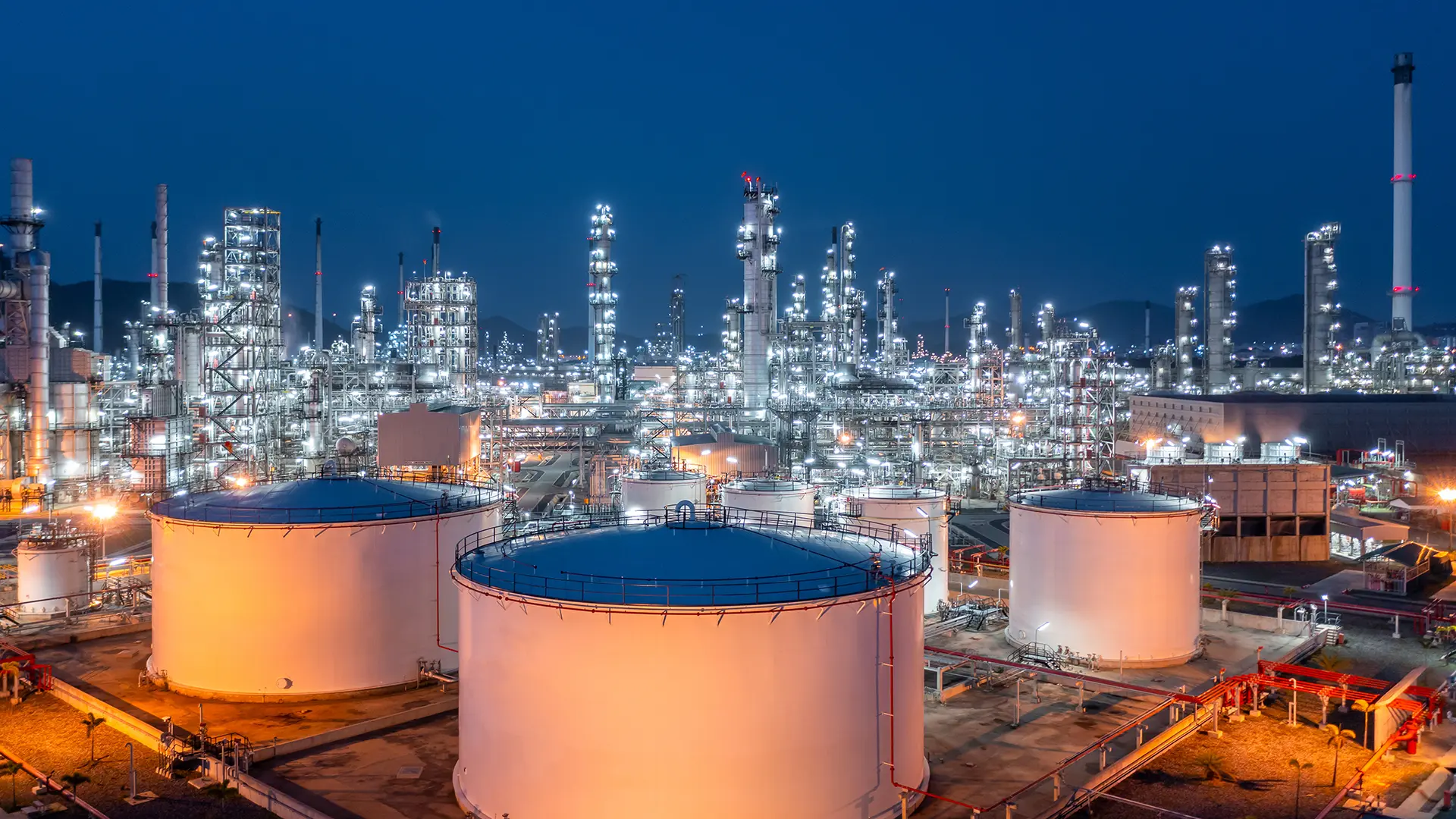
Written by John Egan for Industrial Info Resources (Sugar Land, Texas)--The dramatic decline in crude-oil prices is forcing a number of oil and gas companies to trim their capital budgets. Oilfield service providers are scaling back their 2015 plans as rigs are idled. Energy bankers are bracing for a big hit to one of their most active industry segments. Oil-producing states are bracing for a sharp shortfall in royalties and severance taxes. A prolonged period of low oil and gas prices may threaten the economics of some proposed pipeline and infrastructure projects.
Across the U.S., businesses that supply equipment and services to the Oil & Gas Industry are reassessing their business plans to square with today's market realities. Companies and industries that benefitted from five years of high oil prices--including steel-pipe manufacturers, rig rental companies, equipment providers, restaurants, logistics companies, railroads, banks, lawyers, consultants, real estate firms and hotels--are soon expected to feel the effects of lower oil prices and leaner budgets.
In late-2014 earnings calls, at least a dozen companies, including Apache Corporation (NYSE:APA) (Houston, Texas), Concho Resources Incorporated (NYSE:CXO) (Midland, Texas), Continental Resources Incorporated (NYSE:CLR) (Oklahoma City, Oklahoma), MEG Energy (Toronto: MEG) (Calgary, Alberta) and SandRidge Energy Company (NYSE:SD) (Oklahoma City, Oklahoma), told investors they were cutting planned 2015 capital spending in the face of low oil prices. More capital cutbacks are expected in the coming weeks as companies announce fourth-quarter 2014 results and provide guidance on 2015 operations.
The cutbacks by independent producers follow a series of moves last summer by the super-majors, including Chevron (NYSE:CVX) (San Ramon, California), Exxon Mobil Corporation (NYSE:XOM) (Irving, Texas) and Royal Dutch Shell (NYSE:RDSA) (The Hague, Netherlands), to slash spending on their more exotic, big-ticket projects.
Crude oil prices -- both West Texas Intermediate (WTI) and Brent -- have fallen about 55% from their mid-2014 highs to a current level of under $50 per barrel. Surging crude-oil supplies -- mainly from U.S. shale formations -- and weak global demand growth have combined to halve global oil prices. In a recent interview with USA Today's Maria Bartiromo, Saudi billionaire businessman Alwaleed bin Talal said the world will never again see $100 per barrel oil. And if producers don't start taking oil off the market, weak demand ensures further price declines, he predicted.
Click on the icon below to see a graphic on WTI crude-oil prices since April 2014.

A week before the late-November meeting of the Organization of Petroleum Exporting Countries (OPEC), investment bankers Goldman Sachs Group Incorporated (NYSE:GS) (New York, New York), predicted crude oil prices would average $75 a barrel for the first quarter of 2015. At that price, drilling in 19 shale formations across the U.S. would be unprofitable, according to an estimate from Bloomberg New Energy Finance. But even Goldman's projection might be too upbeat. One week after the bank released its price projection, OPEC refused to cut oil production, driving prices even lower. Today, crude oil prices are about $30 below Goldman's late-November estimate. In its January 13 Short-Term Energy Outlook (STEO), the U.S. Energy Information Administration (EIA) (Washington, D.C.) predicted WTI prices will average $54.58 a barrel for 2015, nearly $39 per barrel less than 2014's average price. For 2016, the agency forecast an average WTI price of $71 barrel.
This year, EIA, the independent statistical and analytic branch of the U.S. Department of Energy (DoE) (Washington, D.C.), said it expects drilling activity to decline as a result of less-attractive economic returns in some areas of both emerging and mature oil production regions. "Many companies will redirect investment away from marginal exploration and research drilling and into core areas of major tight oil plays. However, projected oil prices remain high enough to support development drilling activity in the Bakken, Eagle Ford, Niobrara, and Permian Basin, which contribute the majority of U.S. oil production growth," EIA said in its mid-December STEO.
EIA expects U.S. crude oil production to average 9.3 million barrels per day (MMBBL/d) this year, up 700,000 BBL/d from 2014, but down from expected growth of 900,000 BBL/d projected in November. The agency expects production to continue growing in the first half of 2015, but decline in second-half production. It noted its forecasts were "particularly sensitive to actual prices available at the wellhead and drilling economics that vary across regions and operators."
On January 9, Baker Hughes Incorporated (NYSE:BHI) (Houston, Texas) reported there were 1,750 rotary rigs operating in the U.S., a decline of 61 from the prior week but about flat with year-earlier numbers. The Permian Basin suffered the largest decline in rigs, falling to 502 on Jan. 9 from 530 the previous week, Baker Hughes said. But that basin is still employing 31 more rigs than it was last January. According to the North Dakota Industrial Commission (Bismarck, North Dakota), North Dakota currently has about 165 rigs operating, down from 195 in September.
Earlier this month, Helmerich & Payne (NYSE:HP) (Tulsa, Oklahoma) announced it would idle up to 50 rigs over the next month. In a separate announcement in late 2014, the contract rig operator said it was idling 11 rigs due to falling prices and reduced demand. "Demand for rigs is falling off the cliff," Joseph Triepke, a financial analyst and managing director of Oilpro, told The New York Times. "Exploration and production budgets are down anywhere from 30% to 40%, and the cuts are happening faster than we thought."
Dramatically lower crude-oil prices are driving asset sales as oil and gas companies sell peripheral assets to focus on the core properties. Land that once fetched $5,000 or $10,000 per acre when oil was priced at $100 per barrel is worth dramatically less today. In November, Apache Corporation announced it was selling about $1.4 billion of properties in Louisiana, Texas and Oklahoma. Shortly before Christmas, Spanish oil giant Repsol (Madrid) announced it would acquire Talisman Energy Incorporated (NYSE:TLM) (Calgary, Alberta), one of Canada's largest oil companies. Analysts expect an accelerated pace of asset sales and acquisitions once companies decide oil prices have bottomed.
Many producers hedge their production, so they may be protected from the near-term problems created by falling oil prices. But that means the counter-party that committed to buy the oil at a hedged price has locked commitments to buy oil at prices far above current market prices. And hedges have a specific lifespan, so when they expire, producers will confront a low-priced environment without the cushion of someone else committing to buy their oil at $89 per barrel.
The New York Times reported banks will soon be forced to disclose problem loans and over-stretched positions in their quarterly presentations to investors. "Banks have been lending hand over fist to companies in the nation's energy industry, underwriting bonds, advising on mergers, even financing the building of homes for oil workers," the Times reported. "Strains are being felt (by banks) and defaults are likely. While it may take some time for the crunch in the oil industry to translate into losses, one thing already seems clear: The energy banking boom is over." The news isn't all bad across the Oil & Gas Industry. Efficiency gains in hydraulic fracturing techniques are allowing some companies to cut spending while still increasing production, as Apache and MEG Energy predict will happen in 2015. Low-cost producers like Encana Corporation (NYSE:ECA) (Calgary, Alberta) and Range Resources Corporation (NYSE:RRC) (Fort Worth, Texas) are able to operate profitably in today's low-price environment. And, earlier this month, North Dakota's chief mineral resources regulator estimated break-even prices for new wells in that state range from $29 per barrel to $41 per barrel in the four counties that represent about 90% of North Dakota's production.
Falling energy prices doesn't affect all segments of the economy equally. Petrochemical manufacturers continue to benefit from low natural gas prices. Consumers are cheering gasoline and diesel prices that have fallen by an average of over $1.25 per gallon during the second-half of 2014. Economists expect consumers will plow most of the savings from lower fill-up costs into other aspects of the economy, potentially offsetting the macroeconomic impact of reduced capital spending tied to the Oil & Gas Industry.
"We've been wondering when the bull run in crude-oil prices would end, and it appears to have ended," remarked Jesus Davis, Industrial Info's vice president of research for the Oil & Gas, Pipelines and Terminals industries. "It's a boom and bust business, and we've had a prolonged boom. Whether WTI bottoms at $46 per barrel, or goes even lower, we will see a very different landscape in 2015. Efficient producers will thrive, likely acquiring assets from less-efficient producers. On a national basis, production should not be impaired that much, as efficiency gains offset budget cuts. Projects that are only economical at $100 per barrel have been shelved. As painful as a 55% decline in oil prices has been, it does remove a lot of the froth from the market."
Industrial Info Resources (IIR), with global headquarters in Sugar Land, Texas, three offices in North America and 10 international offices, is the leading provider of global market intelligence specializing in the industrial process, heavy manufacturing and energy markets. Industrial Info's quality-assurance philosophy, the Living Forward Reporting Principle, provides up-to-the-minute intelligence on what's happening now, while constantly keeping track of future opportunities.
/news/article.jsp
false
Want More IIR News Intelligence?
Make us a Preferred Source on Google to see more of us when you search.
Add Us On GoogleAsk Us
Have a question for our staff?
Submit a question and one of our experts will be happy to assist you.

Forecasts & Analytical Solutions
Where global project and asset data meets advanced analytics for smarter market sizing and forecasting.
Explore Our SolutionsRelated Articles
-
Brent Hits $100, U.S. Oil Inventories RiseJuly 23, 2026
-
Europe's Gas Storage Problem 'Challenging'July 21, 2026

PECWeb Global Market Intelligence Platform
Identify opportunities, anticipate change, and execute with confidence. PECWeb connects the industrial intelligence you need, from projects and assets to operational events, all in one platform.
Discover PecwebIndustry Intel
-
European Chemicals and Transport Fuels OutlookPodcast Episode / Jul 10, 2026
-
2026 European Petroleum Refining Project OutlookPodcast Episode / Jun 26, 2026
-
Brazil: Efficiency, Innovation, and Opportunities in the Food & Beverage IndustryPodcast Episode / Jun 12, 2026
-
2026-2027 Investment Radar for Mexico, Central America & the CaribbeanPodcast Episode / May 29, 2026
-
Innovations Shaping the Next Era of Power GenerationPodcast Episode / May 22, 2026