Metals & Minerals
Affected Industries Slam New EPA Standard for Fine Particle Pollution
A tough new air-quality rule received a mixed response
Released Friday, February 09, 2024
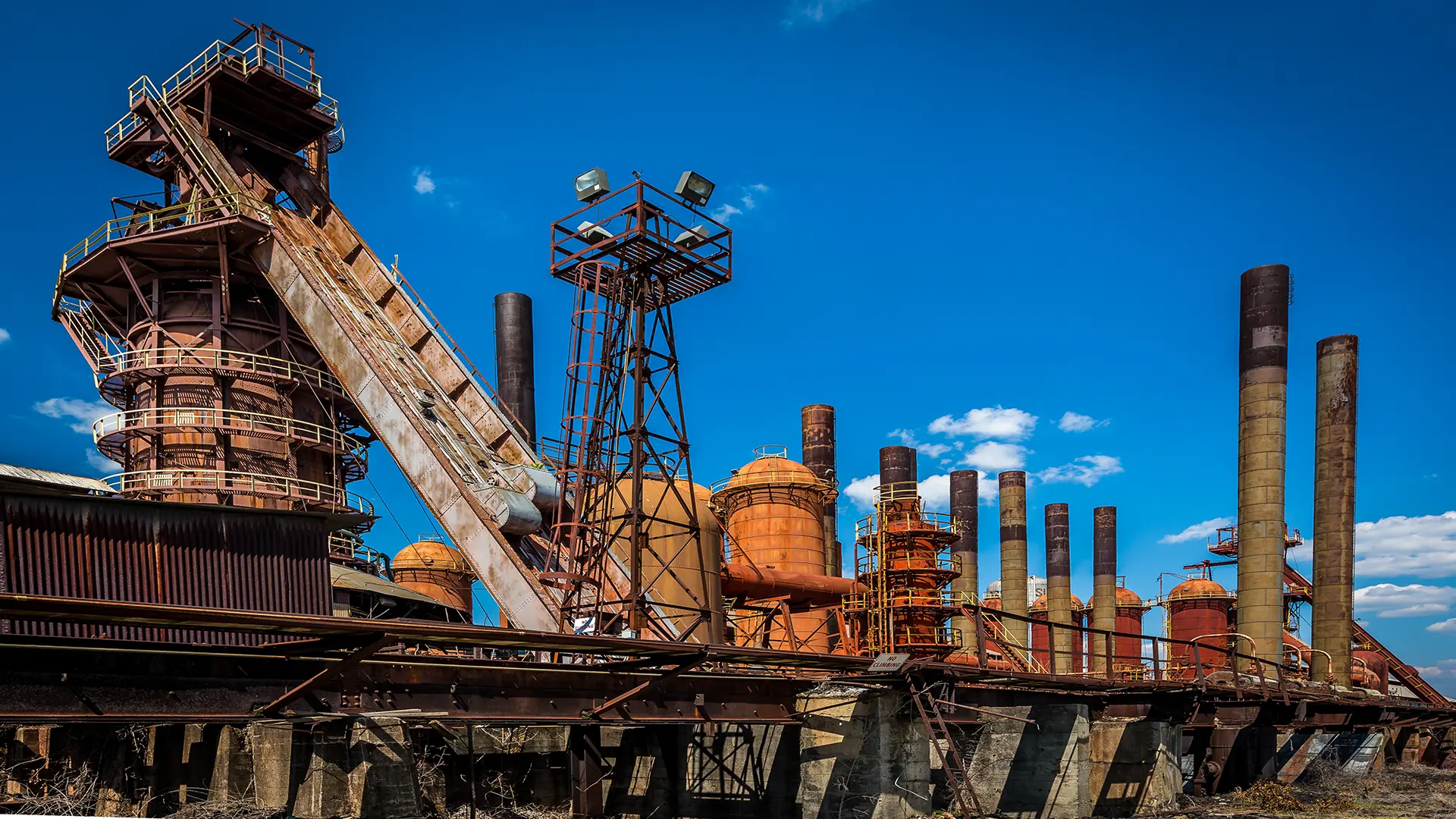
Written by John Egan for Industrial Info Resources (Sugar Land, Texas)--A familiar chorus greeted a tough new air-quality rule issued Wednesday by the U.S. Environmental Protection Agency (EPA): Republican elected officials and affected industries slammed the new rule while public health advocates and Democratic elected officials praised it.
At issue is the new tougher standard for emissions of fine particulate matter (PM2.5), which has not changed since 2012. The Clean Air Act's National Ambient Air Quality Standards (NAAQS) calls for a scientific review of emission standards every five years, but the Trump administration declined to change the standards when it had the opportunity. The new standard, 9.0 micrograms per cubic meter, down from the current standard of 12 micrograms per cubic meter, reflects the latest available health science, the EPA said.
The agency said it has set "two primary standards for PM2.5, which work together to protect public health: the annual standard, which (the final rule) has revised, and a 24-hour standard, which the agency (is not seeking to change). The EPA also retained the current primary 24-hour standard for PM10, which provides protection against coarse particles. The EPA is also not changing the secondary (welfare-based) standards for fine particles and coarse particles at this time."
The new standard will produce a variety of health benefits by 2032: up to 4,500 avoided premature deaths, 800,000 avoided cases of asthma symptoms, and 290,000 avoided lost workdays, the agency estimated. The new PM2.5 standard will produce net benefits of between $22 billion and $46 billion in 2032, measured in 2017 dollars. The costs are about $590 million in 2032, again measured in 2017 dollars, the agency estimated.
PM2.5 is emitted by power plants, factories, internal combustion engines, unpaved roads, wildfires and other sources. In announcing the new finalized fine particulate matter standards, the EPA said, "Particle pollution is of great concern to those with heart or lung disease and other vulnerable communities, including children, older adults, and people with health conditions like asthma, as well as already overburdened communities, including many communities of color and low-income communities throughout the United States."
Public health experts say the tougher standard is needed because fine particle pollution and its deadly effects are far from gone. Researchers estimate PM2.5 pollution kills up to 100,000 people across the country each year, making it, by some measures, the most profound public health hazard in the U.S. today.
Those experts said tiny particulates like PM2.5 are dangerous because they can penetrate deep into people's lungs and can pass into the bloodstream, driving inflammation and other chronic problems. Long-term exposure leads to increased risks including heart attacks, strokes, dementia, hypertension and chronic kidney disease.
Anticipating critics who say the new rule would choke off economic activity, the EPA said federal regulations have helped lower PM2.5 concentrations in the outdoor air by 42% since 2000. Since that year, the U.S. gross domestic product grew about 52%. For every $1 spent to lower PM2.5 emissions, there could be as much as $77 in human health benefits in 2032, the agency added.
"Strengthening the Clean Air Act standard for fine particle pollution improves air quality nationally for everyone, ensuring that communities that are overburdened by pollution are not left behind," it continued.
The February 7 announcement said that forthcoming EPA rules on "power plants, vehicles and industrial facilities, paired with historic investments under President Biden's Inflation Reduction Act and the Bipartisan Infrastructure Law," will help states and tribes achieve the new PM2.5 standard.
The agency's statement continued: "Tribes, industry, communities and EPA have already taken (action) to reduce dangerous pollution in communities across the country, 99% of U.S. counties are projected to meet the more protective standard in 2032, likely the earliest year that states would need to meet the revised standard. That's even before accounting for additional actions on the horizon to implement the Bipartisan Infrastructure Law and Inflation Reduction Act investments and to update source-specific emission standards."
The EPA announcement included quotes from leaders in public-health and environmental organizations praising the move. Separately, one prominent public health organization, the American Lung Association, praised the new standard but asked the administration to lower the PM2.5 standards to less than 9 micrograms per cubic meter.
U.S. Representative Frank Pallone, Jr. (Democrat-NJ), ranking minority member of the House Energy and Commerce Committee, applauded the EPA's final rule: "Fine particulate matter poses serious and significant health risks to our communities every day, including increased rates of heart disease and respiratory impacts. This pollution is dangerous, and Americans have a right to clean, safe air."
However, a wide variety of potentially affected industries slammed the final rule. For example:
- Will Hupman, vice president of downstream policy for the American Petroleum Institute (API) (Washington, D.C.), said the final rule "is the latest in a growing list of short-sighted policy actions that have no scientific basis and prioritize foreign energy and manufacturing from unstable regions of the world over American jobs, manufacturing and national security ... Cleaner fuels, advanced technologies and industry actions have contributed to a 42% decline in fine particle concentrations since 2000. As a result, the majority of PM2.5 emissions originate from non-point sources such as wildfires and road dust, while industrial sources account for less than 7%."
- The American Chemistry Council (ACC) (Washington, D.C.) said it was "disappointed that EPA continues to make permitting for important projects harder and more challenging through its revised standards for fine particulate matter under the National Ambient Air Quality Standards (NAAQS). ... We are significantly concerned about the EPA's choice to intentionally ignore costs and create a more stringent annual NAAQS."
- The steel industry also was sharply critical of the final EPA rule. Philip Bell, president of the Steel Manufacturers Association (SMA) (Washington, D.C.), said the new standard will be detrimental to the steel industry and create significant "regulatory exposure" for the sector. Kevin Dempsey, president and chief executive officer of the American Iron and Steel Institute (AISI) (Washington, D.C.), asserted the new standard "will place most of the United States in nonattainment for PM2.5, regardless of the fact that the majority of PM2.5 emissions come from natural causes and non-industrial sources. It could put as much as 40% of the U.S. population in nonattainment areas, causing manufacturers to abruptly change or curtail operations and cancel new projects."
- Marty Durbin, senior vice president for policy at the U.S. Chamber of Commerce (Washington, D.C.), commented, "tightening the NAAQS PM2.5 standard will grind permits to a halt for a large portion of our country. EPA's new rule is expected to put 569 counties out of compliance and push many others close to the limit, which threatens economic growth. Compliance with the new standard will be very difficult because 84% of emissions now come from non-industrial sources like wildfires and road dust that are costly and hard to control."
Industries affected by the new standard may choose to fight it in court. This November, should Republicans recapture the White House and Senate, and keep their House majority, a reversal or revision of the final standard could be an option.
Industrial Info Resources (IIR) is the leading provider of industrial market intelligence. Since 1983, IIR has provided comprehensive research, news and analysis on the industrial process, manufacturing and energy related industries. IIR's Global Market Intelligence (GMI) platform helps companies identify and pursue trends across multiple markets with access to real, qualified and validated plant and project opportunities. Across the world, IIR is tracking over 200,000 current and future projects worth $17.8 Trillion (USD).
/news/article.jsp
false
Want More IIR News Intelligence?
Make us a Preferred Source on Google to see more of us when you search.
Add Us On GoogleAsk Us
Have a question for our staff?
Submit a question and one of our experts will be happy to assist you.

Forecasts & Analytical Solutions
Where global project and asset data meets advanced analytics for smarter market sizing and forecasting.
Explore Our SolutionsRelated Articles

Industrial Project Opportunity Database and Project Leads
Get access to verified capital and maintenance project leads to power your growth.
Discover Our DatabaseIndustry Intel
-
2026-2027 Investment Radar for Mexico, Central America & the CaribbeanPodcast Episode / May 29, 2026
-
Innovations Shaping the Next Era of Power GenerationPodcast Episode / May 22, 2026
-
The Role of Contract Manufacturing in Global Pharma GrowthPodcast Episode / May 8, 2026
-
2026 North American Labor OutlookPodcast Episode / Apr 24, 2026
-
2026 European Metals & Minerals Project Spending OutlookPodcast Episode / Apr 7, 2026