Power
April 17 COVID-19 Latin American Impact Report
Industrial Info's Latin American COVID-19 Impact Report gives you the latest related supply and production data.
Released Friday, April 17, 2020

Reports related to this article:
Project(s): View 6 related projects in PECWeb
Plant(s): View 16 related plants in PECWeb
Power
The situation in the power sector in Latin America remains quite stable; project activity is still active, although with large limitations. The major impact on investment and project development comes from the prohibition or restrictions on workforce and equipment circulation and other logistic difficulties impacting on the continuation of under construction projects together with the temporary closure of governmental and other administrative offices affecting permitting and authorization processes, power-purchase auctions or other similar activities impacting in the development projects in the planning or engineering stage. Industrial Info has identified 145 power projects in Latin America that have been impacted by COVID-19, but none of these has been cancelled.
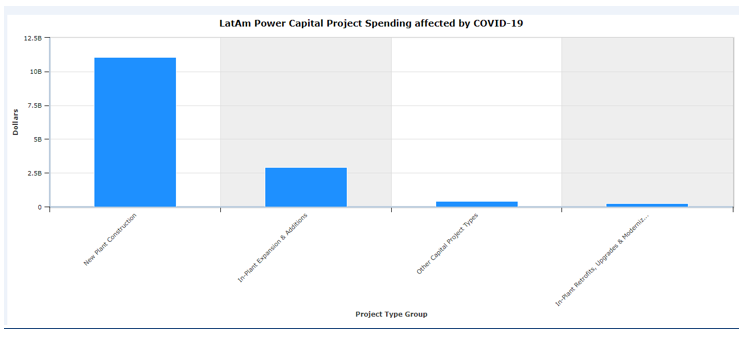
In countries like Chile, Argentina, and the two the largest economies in the region, Brazil and Mexico, construction activities continue with different degrees of normality, especially on projects in the last stages of construction like the 875-megawatt Tierra Mojada combined-cycle plant in Mexico, which managed to successfully start operations of two turbines in March and continues with the final commissioning of its last unit.
Pharmaceutical-Biotech
Latin America's Pharmaceutical & Biotech plants producing essential health items remain at full production capacity. Capital and maintenance investments have been affected by COVID-19, and 102 active capital projects are being postponed until later in the year.
As for those companies that are committed to respond to COVID-19 with research, development and production activities, it has been identified, for instance, that Laboratorio de Hemoderivados UNC in Cordoba, Argentina, plans to produce injectable immunoglobulin to treat patients affected by the pandemic; the product expected to be ready by the third quarter of 2020.
Cosmetic company L'Oreal plans to add lines for antibacterial gel at its San Luis Potosi and Xochimilco plants in Mexico.
Food & Beverage
In the meat sector, JBS and Minerva Foods, the most important meat producers and exporters in Latin America, are considering the cessation of slaughtering operations at some of their plants in Brazil due to logistics issues related to the availability of refrigerated containers to be exported to China. In Argentina, shipments to China are facing the same logistics issue, and exports to Europe have practically stopped due to a drop in demand. The facilities remain operating since companies are trying to continue their activities by expanding the domestic supply, which of course will impact prices and profits. Meat producers in Uruguay and Paraguay also are evaluating the closure of some plants due to the difficulties of shipping to China and Russia and the unviability of selling the products in their domestic markets.
In the alcoholic beverages sector, AB Inbev has reported that its breweries in Mexico (Grupo Modelo), Colombia (Bavaria), Peru (Backus), Dominican Republic (Cerveceria Nacional Republicana) and Ecuador (Cerveceria Nacional) produced 90 tons of alcohol from their dealcoholization process (used to make non-alcoholic beers) and turned it into an antibacterial alcohol.
Tequila and rum manufacturers thorughout Latin America and the Caribbean are allocating part of their production to increase the supply of disinfectant alcohol in their countries.
In the last couple of years, due to the low prices of sugar, the sugar mills in Brazil have decided to change the production mix in favor of fuel ethanol production. However, with the COVID-19 outbreak the prices of ethanol have dropped as a result of the low prices of petroleum and reduction in demand. The crushing season has just begun in Brazil, and the sugar mills are once again moving their production towards sugar since demands for this commodity have increased following the implementation of quarantine measures. Almost all the sugar mills in Brazil produce fuel ethanol; however, only a few of them have the authorization to produce and commercialize 70% alcohol for antibacterial purposes.
Industrial Manufacturing
Almost all the most important automotive companies have decided to postpone the return of production in their plants. According to reports, monthly production has fallen 37% from last year.
Brazil
- Toyota has postponed production until June 22-24.
- General Motors has extended its shutdown until mid-June
- BMW has extended the shutdown of Brazilian plants through May 4.
- Mercedes-Benz plans to resume production, which has been stopped since March 23, by the beginning of May.
- Honda has extended its shutdown until April 30.
- Hyundai has extended production suspension at its plant in Piracicaba until April 27.
- Marcopolo resumed partial production in Brazilian plants on April 13.
- Random resumed production with half of the employees in Caxias do Sul Manufacturing Plant on April 13
- Tramontina resumed production at is Carlos Barbosa manufacturing plant on April 13
- VWCO's plant in Resende is planned to reopen on April 20, but with a smaller workforce for 60 days.
Mexico
- Honda has extended the shutdowns of two plants till April 30.
- Cooper Tire restarted its facility April 13.
- FCA Group's complex in Saltillo is shuttered until April 20.
Most of the ports in Latin America are fully operational for cargo business and have closed or restricted operations for passenger vessels, especially cruise ships. The vast majority of ports are endeavoring to have all cargo-related services operational 24/7 while ensuring a safe working environment for shore and office personnel.
Alternative Fuels
According to parliamentarians, the Brazilian sugar-energy sector is experiencing "a perfect storm" caused by the economic crisis resulting from the COVID-19 pandemic, which has led to the retraction of ethanol and sugar consumption. This conclusion follows pleas for the national government to step in and rescue the sector from economic collapse.
The sector represents 2% of Brazil's gross domestic product (GDP) and brings together sugarcane producers, workers in the chemical and food sectors, cooperatives and agro-industries responsible for the production of sugar, ethanol and bioelectricity in the south-central and northeast of the country. This culminates in a production chain that includes 360 plants and distilleries, 750,000 direct jobs and 1.5 million indirect jobs, in more than 1,200 Brazilian cities.
Already by the second week of March, ethanol prices had fallen by 13%, and they have now decreased by about 40%, placing it well below the cost of production. To counter this, the sector has demanded that a warrantee program be implemented in order to allow the storage and financing of at least 6 billion liters of anhydrous and/or hydrated ethanol in addition to a temporary reduction in the federal tax burden applied to hydrated ethanol.
Another measure taken by several sugarcane-based ethanol producers is to ramp up the production of 70% alcohol, a necessary and high-demand product due to the ongoing health crisis. In one week, 250,000 liters of ethanol were delivered to the states of São Paulo, Santa Catarina, Paraná, Rio Grande do Sul and Espírito Santo. Other plants have already committed to donations to Minas Gerais, Alagoas and Pernambuco.
It is not just the sugarcane-based ethanol sector, however, which has started to feel the effects of the COVID-19 pandemic, as the corn-based ethanol sector has also suffered consequences after the implementation of social-distancing measures. One example is that of producer Grupo FS Bioenergia, which has operational plants in Lucas do Rio Verde and Sorriso, one underway with site preparation in Nova Mutum, and a further three grassroot projects in the permitting stage. It has been confirmed that, as a result of the pandemic and economic crisis, the ongoing expansion project in Sorriso have been delayed for six months until social distancing measures can once again be relaxed. Furthermore, only site preparation has taken place in Nova Mutum as the last permits are sought, and so for the time being, civil construction remains on schedule (August 2020) until further notice. The three remaining grassroot projects remain unaffected by the pandemic, as they are still in the initial study phases, although the economic effects of the crisis could delay these investments to a later date.
Meanwhile, in Argentina, the fall in demand of ethanol as a result of the nationwide lockdown which commenced on March 20 has led to the suspension of production at ACA Bio's corn-based plant in Villa Maria. For the meantime the measure will extend for at least 10 days with the clear objective of liquidating stocks. Their tanks are currently filled with around 11,000 cubic meters of corn ethanol, and purchases by the oil industry have practically stopped. Other companies such as Bio 4 in Rio Cuarto continue to produce ethanol and will do so until its storage capacity is exhausted. If market demand does not reactivate in the short term, however, the company is also looking into a temporary cessation of operations.
Metals & Minerals
Vale, the biggest mining company in Brazil, is helping the country by bringing supplies, rapid tests and medical equipment to their plants. Mines and plants are still operational. Field works and explorations works are currently being suspended. Cement plants and steel mills are still operating, as shutting down operations is up to the owners.
Industrial Info has identified that companies like Nemak Aluminio, Tupy, Votorantim Cimentos and Intercement have decided to stop operations due to low demand.
Mining activity in Mexico is still being considered as a non-essential activity, and mines are being shuttered all over the country. With mines and plants being under care and maintenance, the economic impact will be huge. Field works and exploration activities have been halted.
Teck in Chile has already suspended the Quebrada Blanca II project, which is currently under construction, and it is not determined yet how the coronavirus pandemic will affect other projects. Lithium production in Argentina is currently almost stopped. Although mining is considered as an essential activity in the current lockdown, plants and mines are working at a minimal capacity.
The COVID-19 outbreak has impacted several companies in Latin America. With operations suspended, low mineral production, low demand, a decrease of commodity prices and uncertainty in the market, mining companies are suspending under-construction projects or future investments in order to secure capital. The mining supply chain is being affected as major players are suspending contracts and pushing forward payments.
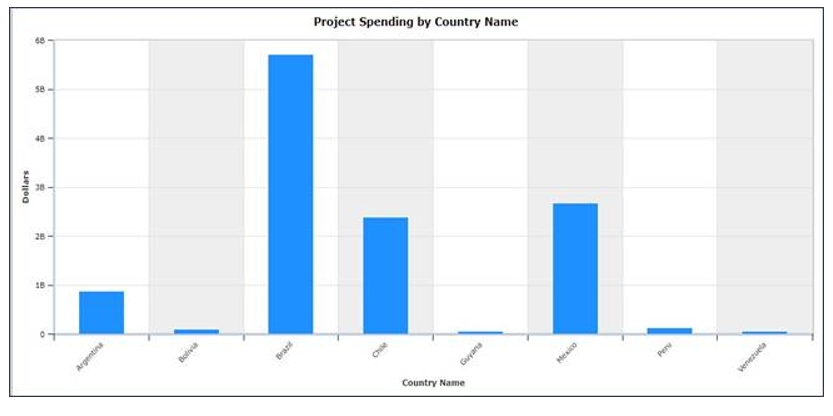
Industrial Info is tracking 105 Metals & Minerals projects worth $11.91 billion expected to kick off in the next six months. See graph below.
Refining
The COVID-19 pandemic continues to strike Latin America's refining capacity by having the main sites working at approximately 40% to 50% capacity, or even forcing a stop in operations, such as at the Plaza Huincul (YPF) refinery in Argentina. It is expected that the run cuts will continue and even increase during the coming weeks. Maintenance plans have also been affected, and companies. For example, Venezuela's state-owned oil company, PDVSA, has accelerated planned repairs and expects to extend the duration of works due to COVID-19.
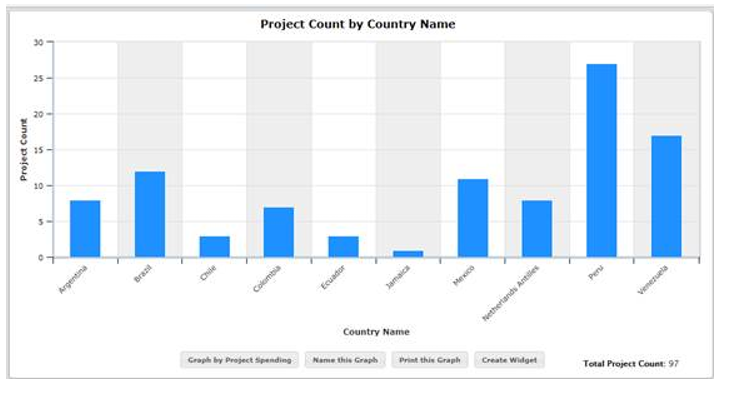
So far, Industrial Info has identified 97 capital and maintenance projects that have been impacted by COVID-19.
Argentina:
YPF has reduced production by an additional 10% at its Lujan de Cuyo (113,200 barrels per day (BBL/d)) and La Plata (205,000 BBL/d) refineries, and the facilities are now processing at 50% of normal capacity. The 28,000- BBL/d Plaza Huincul Refinery was forced to shut down earlier this week since storage capacity reached its limit, and current demand for petroleum products continues to drop.
Ecuador:
EP Petroecuador's Esmeraldas Refinery (110,000 BBL/d) continues to run at approximately 60% of total capacity.
Colombia:
Ecopetrol has experienced COVID-19 cases among workers at its 250,000-BBL/d Barrancabermeja Refinery, which forced to shutdown of the 35,000-BBL/d FCCU (UOP 2) unit. The facility continues operating with only the minimum essential personnel at approximately 45% of total capacity.
Brazil:
Petrobras: The 314,500-BBL/d RLAM and 251,000-BBL/d REVAP refineries have been processing at 60% since March 30.
Venezuela:
PDVSA's 625,000-BBL/d Amuay Refinery continues to shut down the 120,000-BBL/d Crude 4 and 180,000-BBL/d Crude 5 units due to the pandemic and export restrictions. Also, PDVSA accelerated the previously set 45-day planned turnaround and revamp on the 80,000-BBL/d FCCU set to be performed later this year; however, due the catalytic cracker will remain under major maintenance and repairs until June. Separately, the 75,000-BBL/d Crude Distillation 2; 77,000-BBL/d FCCU and associated units from the 295,000-BBL/d Cardon Refinery are to remain offline for two more weeks due to a lack of labor, financial constraints and COVID-19. The 75,000-BBL/d Crude Distillation 1 and 75,000-BBL/d Crude 4 will remain offline until late May.
Oil & Gas
The crude oil and natural gas production sector in Latin America has been heavily affected by the restrictions on crude oil exports. In addition, the lack of idle storage capacity is forcing large oil companies to make drastic decisions regarding the production of their large assets.
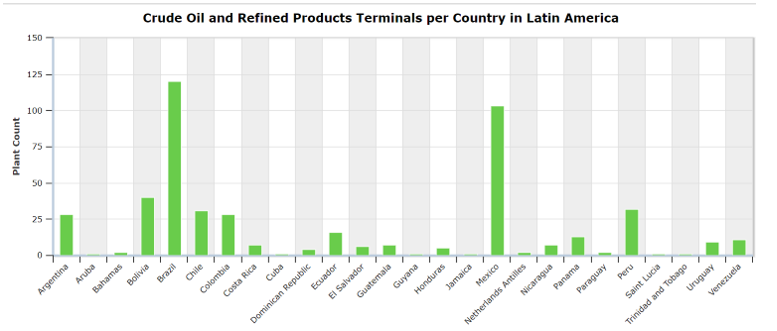
In Argentina, YPF (the largest national producer) and the private ROCH SA are evaluating a stop in production at their Tierra del Fuego assets. Mexico is deploying its fleet of cargo vessels to store crude oil produced on the coast awaiting the emergence of crude oil buyers. The Mexican state-owned company Pemex is expected to review its storage capacity in a few weeks if it cannot find buyers for its product. In Brazil, Petrobras decided to stop the production of 63 shallow water platforms and some onshore assets to decrease the volumes of national production. Of these platforms, 30 are already out of operation, and Petrobras continues to analyze strategic interruptions to face the drop in oil prices.
While the virus continues to spread throughout the region, the most affected countries are Ecuador (whose national economy depends mainly on crude oil exports) and Peru, where most private companies decided to delay their investments while awaiting an improvement in the price of crude oil. This is a strong blow to the Peruvian government that, after many years of failed attempts, hoped to diversify its energy matrix by incorporating the development of fields in the hands of private players in 2020 and 2021.
Brazil and Mexico, the main oil and natural gas offshore producing countries in the region, have reported cases of contagion this week in their marine-production assets. Petrobras was forced to halt production of two FPSOs with approximately 40 cases in both units. ExxonMobil in Guyana announced its new investment plans for the development of its Stabroek block. Click here for a list of related projects.
Chemical Processing
Ethylene producers in Latin America have been forced to reduce production rates. Braskem in Brazil, Pampa Energia in Argentina and Petroleos Venezolanos in Venezuela have de-rated their ethylene production until early May 2020. Other producers, such as Dow and Pemex, are still able to maintain their production levels.
Specific sectors within the Chemical Processing Industry such as industrial gases and cleaning products, which have a key role during the pandemic, continue to be fully operational.
Industrial Info Resources (IIR), with global headquarters in Sugar Land, Texas, six offices in North America and 12 international offices, is the leading provider of global market intelligence specializing in the industrial process, heavy manufacturing and energy markets. Industrial Info's quality-assurance philosophy, the Living Forward Reporting Principle, provides up-to-the-minute intelligence on what's happening now, while constantly keeping track of future opportunities. Follow IIR on: Facebook - Twitter - LinkedIn. For more information on our coverage, send inquiries to info@industrialinfo.com or visit us online at https://www.industrialinfo.com.
/news/article.jsp
false
Want More IIR News Intelligence?
Make us a Preferred Source on Google to see more of us when you search.
Add Us On GoogleAsk Us
Have a question for our staff?
Submit a question and one of our experts will be happy to assist you.

Forecasts & Analytical Solutions
Where global project and asset data meets advanced analytics for smarter market sizing and forecasting.
Explore Our Solutions
PECWeb Global Market Intelligence Platform
Identify opportunities, anticipate change, and execute with confidence. PECWeb connects the industrial intelligence you need, from projects and assets to operational events, all in one platform.
Discover PecwebIndustry Intel
-
Mining Capital Spending 2026: Copper, Rare Earths, AluminumPodcast Episode / Oct 23, 2026
-
Brazil Critical Minerals 2027: Rare Earths, Lithium, CopperPodcast Episode / Oct 16, 2026
-
US Craft Labor Outlook 2026: Wages, Per Diems, Data CentersPodcast Episode / Oct 16, 2026
-
Latin America Data Center Outlook 2026: Power, Hubs & GrowthPodcast Episode / Oct 9, 2026
-
Food and Beverage CapEx Outlook 2026: Tariffs, AI, AfricaPodcast Episode / Oct 9, 2026