Metals & Minerals
Coal India Investing $543 Million to Build 20 Coal Washeries
India's state-owned coal producer Coal India Limited (CIL) (Kolkata, West Bengal) will invest about $543 million to develop 20 new coal washeries with a total washing capacity of 111.1 million tons per year.
Released Wednesday, March 03, 2010
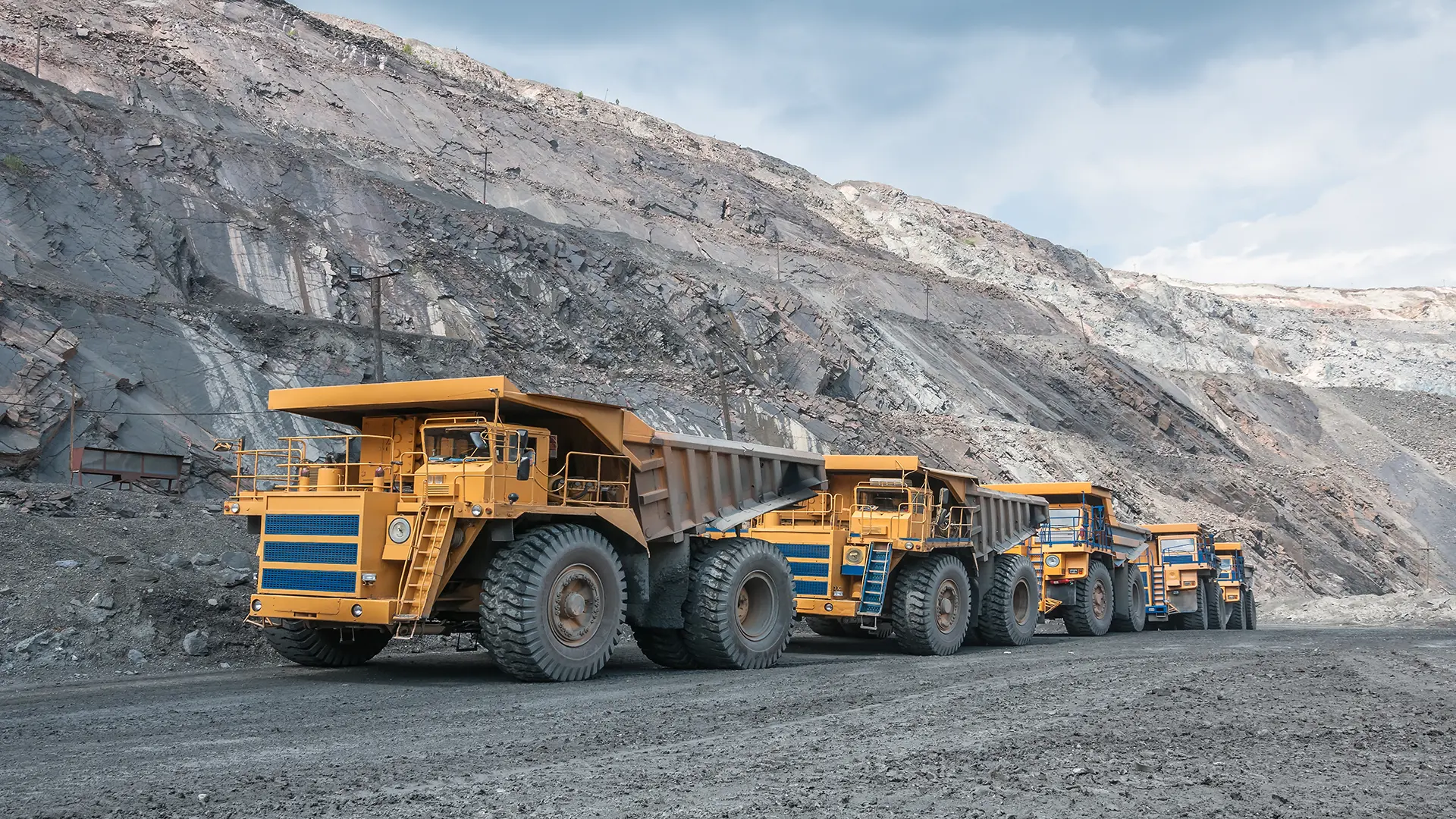
Researched by Industrial Info Resources (Sugar Land, Texas)--India's state-owned coal producer Coal India Limited (CIL) (Kolkata, West Bengal) will invest about $543 million to develop 20 new coal washeries with a total washing capacity of 111.1 million tons per year. Seven coking coal and 13 non-coking coal washeries will be developed to help reduce the ash content in domestic coal and enhance the calorific value of the fuel. CIL has not specified a commissioning schedule for these units.
This announcement follows an earlier one made in September last year, when CIL said that it would invest more than $650 million to commission 19 large-scale coal washeries with a total capacity of 105 million tons, over a period of five years. CIL announced that the units will be developed on a build-operate-maintain (BOM) basis.
The firm planned to finalize contracts for six of the 19 proposed washeries by March this year, with a schedule to commission the six units by March 2013. Of these, three units will be developed at Bharat Coking Coal Limited (BCCL) (Dhanbad, Jharkhand), two at Mahanadi Coalfields Limited (MCL) (Sambalpur, Orissa), and one at Central Coalfields Limited (CCL) (Ranchi, Jharkhand).
Following this, another set of global tenders for a further eight units will be floated in a period of six months, with commissioning scheduled for 2013-14. The last set of five washeries is planned to be developed by 2014-15, taking the total to 19 units. CIL also said that this development would be followed by a second phase that would entail the addition of 20 coal washeries after 2015.
Coal washing entails separation of impurities such as sand, shale and stones from coal. The process is based on differences in specific gravities. The process does not alter the physical properties of coal. It can be carried out either by grinding coal into smaller pieces and causing separation of impurities based on gravity, or through the method of froth flotation, in which coal floats on a liquid of high specific gravity while the impurities sink and are removed.
On average, Indian coal has about 35% to 40% of ash content, and washing helps reduce this by about 7% to 8%. This, in turn, yields various benefits when washed coal is used for power generation, including reduction of emissions and smaller size of coal-handling plants, ash disposal units and ash ponds required at the power station. Reduced ash content causes less wear and tear of machinery and also helps increase freight-carrying capacity as more coal with less ash is transported.
According to CIL's website, the firm currently operates 18 washeries: 12 coking and six non-coking coal-washing units. It had originally planned to develop 19 coal washeries with a total annual capacity of 100.6 million tons by the end of the ongoing 11th five-year plan period, 2007-12. These projects were to be developed in the states of Jharkhand, West Bengal and Chhattisgarh.
Earlier attempts at undertaking large-scale washing of coal did not see much progress since it couldn't be decided who would bear the cost of washing coal. In June 2008, the Indian government made it mandatory for all coal producers to undertake the washing of domestically produced coal.
Subsequently, CIL decided to fund the development of coal washeries in all its prospective open cast coalmines with capacities of at least 2.5 million tons. CIL proposes to provide funds for the venture as well as requisite infrastructure such as land, water, power and railway siding. Although the firm would bear the cost of washing coal, consumers would be charged a premium for the resulting consistency in the quality of coal as well as its increased calorific value.
Global tenders have so far been floated for six washeries. These are the Madhuban and Patherdih projects, with annual capacities of 5 million tons each, the 2.5 million-ton-per-year Dugda washery, and the 1.6 million-ton-per-year Dahibari project, all four of which will be developed by BCCL in Jharkhand. Tenders have also been floated for MCL's 10 million-ton-per-year Basundhara washery in Orissa and for CCL's 10 million-ton-per-year Ashok washery in Jharkhand.
Industrial Info Resources (IIR) is the leading provider of global market intelligence specializing in the industrial process, heavy manufacturing and energy-related markets. For more than 26 years, Industrial Info has provided plant and project opportunity databases, market forecasts, high resolution maps, and daily industry news.
/news/article.jsp
false
Want More IIR News Intelligence?
Make us a Preferred Source on Google to see more of us when you search.
Add Us On GoogleAsk Us
Have a question for our staff?
Submit a question and one of our experts will be happy to assist you.

Forecasts & Analytical Solutions
Where global project and asset data meets advanced analytics for smarter market sizing and forecasting.
Explore Our Solutions
Industrial Project Opportunity Database and Project Leads
Get access to verified capital and maintenance project leads to power your growth.
Discover Our DatabaseIndustry Intel
-
2026-2027 Investment Radar for Mexico, Central America & the CaribbeanPodcast Episode / May 29, 2026
-
Innovations Shaping the Next Era of Power GenerationPodcast Episode / May 22, 2026
-
The Role of Contract Manufacturing in Global Pharma GrowthPodcast Episode / May 8, 2026
-
2026 North American Labor OutlookPodcast Episode / Apr 24, 2026
-
2026 European Metals & Minerals Project Spending OutlookPodcast Episode / Apr 7, 2026