Production
Cross-Border Praise for Tariff Exemptions on Energy
The American Petroleum Institute (API), a vocal advocate for the U.S. oil and gas sector, said the Trump administration recognized the complexity of supply chains in its decision to avoid tariffs for energy imports.
Released Friday, April 04, 2025
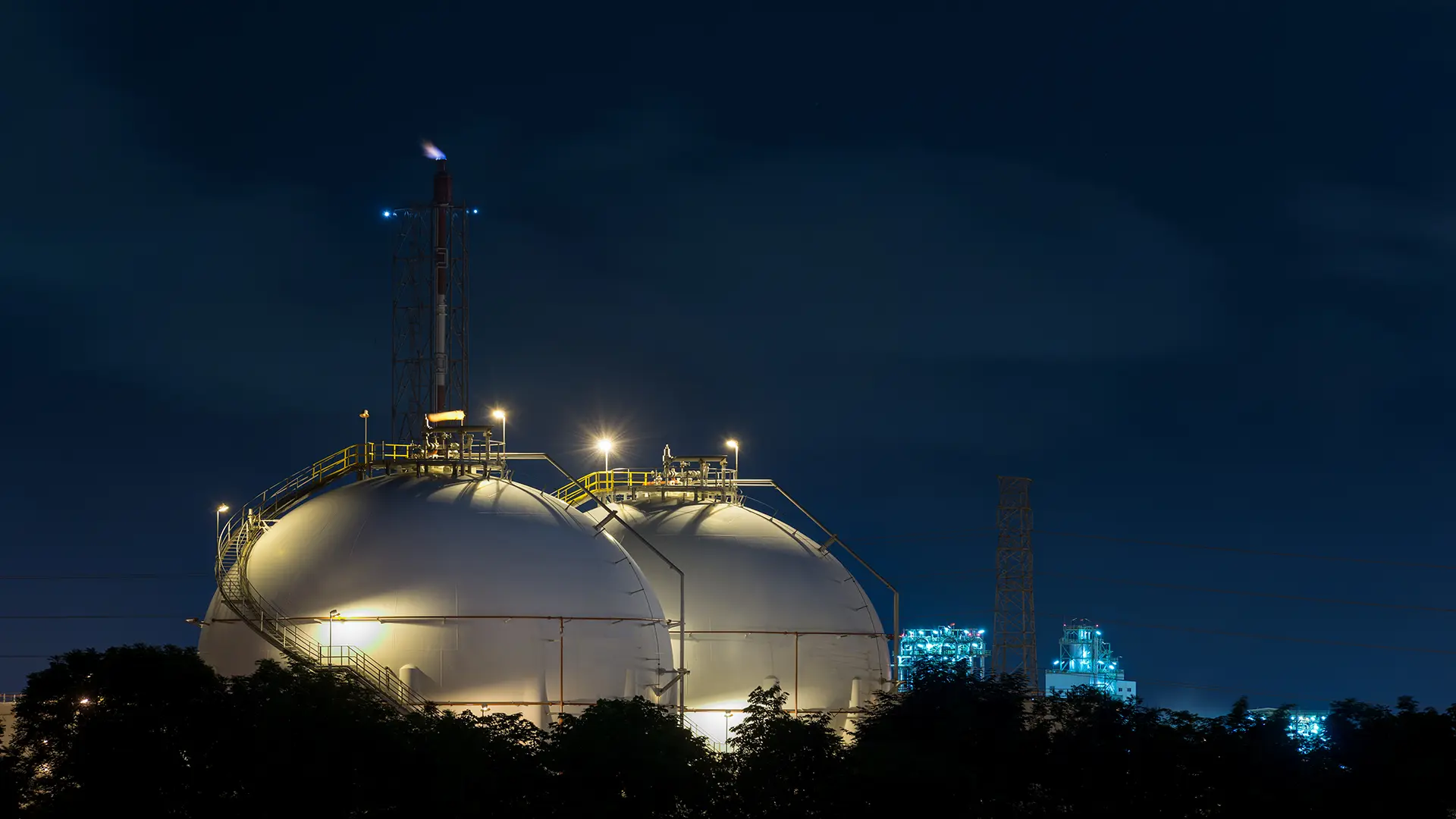
Written by Daniel Graeber for Industrial Info Resources (Sugar Land, Texas)--The American Petroleum Institute (API), a vocal advocate for the U.S. oil and gas sector, said the Trump administration recognized the complexity of supply chains in its decision to avoid tariffs for energy imports.
U.S. President Donald Trump on Wednesday used a national emergency declaration to justify sweeping tariffs on trading partners from China and Japan, to the European Union. His order on tariffs said a persistent trade deficit hollowed out the manufacturing base and disrupted supply chains.
"These conditions have given rise to the national emergency that this order is intended to abate and resolve," he said.
Trump before returning to the White House for his second, non-consecutive term in office pledged stiff tariffs on North American trading partners, even after brokering a free-trade deal with Canada and Mexico during his first term. A general 10% tariff was imposed Wednesday, though oil and gas exports were exempt.
Canada and Mexico both produce a heavier type of crude oil that typically runs through the U.S. refining sector. Together, they account for about 70% of the crude oil imported by the U.S. economy.
Mike Sommers, the head of the API, said the Trump administration's decision to exclude oil and natural gas from new reciprocal tariffs was positive news.
"We welcome President Trump's decision to exclude oil and natural gas from new tariffs, underscoring the complexity of integrated global energy markets and the importance of America's role as a net energy exporter," he said.
From Canada, meanwhile, Alberta Premier Danielle Smith said the decision marked a victory, though there's still work to be done on trade.
"Unfortunately, tariffs previously announced by the United States on Canadian automobiles, steel and aluminum have not been removed," she said. "The efforts of premiers and the federal government should therefore shift towards removing or significantly reducing these remaining tariffs as we go forward and ensuring affected workers across Canada are generously supported until the situation is resolved."
While Mexican President Claudia Sheinbaum has opted for a more measured response, the Canadian government has pressed for action. Smith and Canada's Conservative Party Leader Pierre Poilievre have pressed for more coastal trade options to break the North American landlock.
Despite some reprieve on energy, tariffs remain in place on steel and aluminum, complicating flows across a highly-integrated North American supply chain. Canadian Prime Minister Mark Carney said that Canada would respond "with purpose and with force."
Elsewhere, following a Trump referendum in a Wisconsin Supreme Court election that saw the conservative candidate lose despite a major cash infusion from Trump confidante Elon Musk, four Republicans in the Senate crossed party lines to vote on a measure blocking tariffs.
Senate leaders argued the national emergency declaration used to justify Canadian tariffs was misguided as it relies on cross-border flows of fentanyl. Data compiled by The Globe and Mail newspaper in Canada show about 0.13%, or less than a pound, of fentanyl seized by U.S. border officials last year arrived from Canada.
"Americans want costs to go down, not a tax hike in the form of nonsensical tariffs," the bill's sponsors, Sens. Tim Kaine, D-Va., Amy Klobuchar, D-Minn., and Mark Warner, D-Va., said in a joint statement.
The bill passed 51-48 in the Senate. It goes next to the House of Representatives, where Republican allies of President Trump hold the majority.
Industrial Info Resources (IIR) is the leading provider of industrial market intelligence. Since 1983, IIR has provided comprehensive research, news and analysis on the industrial process, manufacturing and energy related industries. IIR's Global Market Intelligence (GMI) helps companies identify and pursue trends across multiple markets with access to real, qualified and validated plant and project opportunities. Across the world, IIR is tracking over 200,000 current and future projects worth $17.8 Trillion (USD).
/news/article.jsp
false
Want More IIR News Intelligence?
Make us a Preferred Source on Google to see more of us when you search.
Add Us On GoogleAsk Us
Have a question for our staff?
Submit a question and one of our experts will be happy to assist you.

Forecasts & Analytical Solutions
Where global project and asset data meets advanced analytics for smarter market sizing and forecasting.
Explore Our SolutionsRelated Articles
-
Canadian Energy Trade Still Tied to U.S. EconomyMay 29, 2026
-
Canada's Ksi Lisims LNG a Slam Dunk, Premier SaysMay 28, 2026

Industrial Project Opportunity Database and Project Leads
Get access to verified capital and maintenance project leads to power your growth.
Discover Our DatabaseIndustry Intel
-
2026-2027 Investment Radar for Mexico, Central America & the CaribbeanPodcast Episode / May 29, 2026
-
Innovations Shaping the Next Era of Power GenerationPodcast Episode / May 22, 2026
-
The Role of Contract Manufacturing in Global Pharma GrowthPodcast Episode / May 8, 2026
-
2026 North American Labor OutlookPodcast Episode / Apr 24, 2026
-
2026 European Metals & Minerals Project Spending OutlookPodcast Episode / Apr 7, 2026