Power
EIA Sees U.S. Hitting Record Grid Capacity Additions in 2026, Adding 86 GW
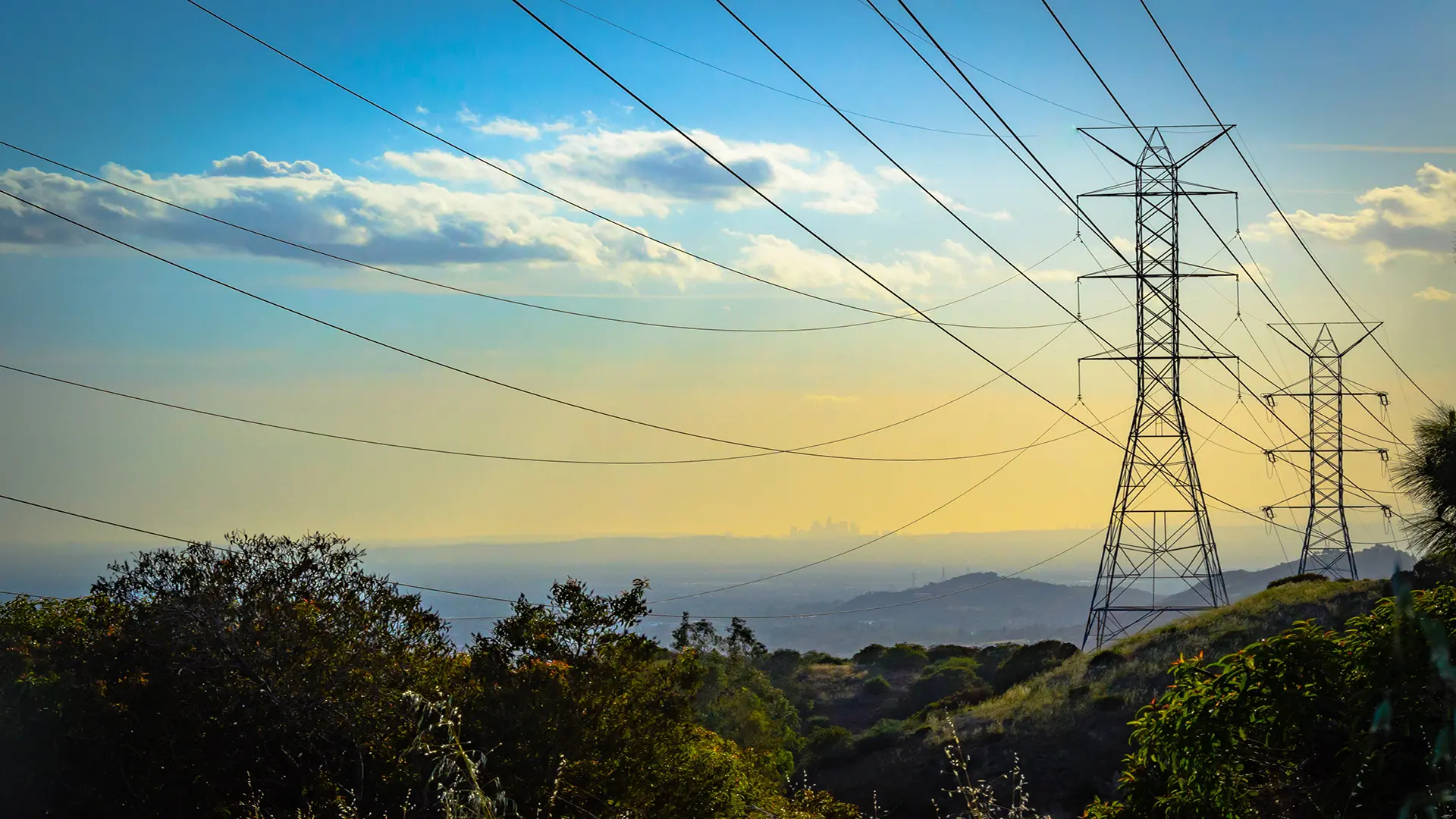
As U.S. grid operators struggle to keep up with skyrocketing power demands, they are poised to see a new record for grid capacity additions in 2026, if all expansion plans work out.
Released Friday, February 27, 2026
Reports related to this article:
Project(s): View 8 related projects in PECWeb
Plant(s): View 7 related plants in PECWeb
Written by Paul Wiseman for IIR News Intelligence (Sugar Land, Texas)
Summary
Solar and BESS lead the way, as the grid struggles to keep up with expected record demand from industry and data centers.Keeping Up with the Data Center Joneses
As U.S. grid operators struggle to keep up with skyrocketing power demands, they are poised to see a new record for grid capacity additions in 2026, if all expansion plans work out.That's the estimation of a February 20 report from the U.S. Energy Information Administration (EIA). The EIA's survey shows a total of 86 gigawatts (GW) coming online this year. At 51% (43.4 GW), solar leads the way, followed by battery energy storage systems (BESS) at 28% (24.3 GW), and wind at 14% (11.8 GW).
Natural gas is the only other source outside the "All Other" category, accounting for 7% of the total, adding 6.3 GW of capacity. All Other sources are adding 0.2 GW in 2026.
On projects with expected 2026 completion, Industrial Info is tracking 243 U.S. solar projects for a total investment of $45.40 billion; 27 wind projects, with a total investment $18.11 billion; 132 BESS projects for a total investment of $27.04 billion; and 133 natural gas projects worth $15.78 billion.
The 86 GW planned for 2026 is up significantly from 2025's 53 GW of new capacity, and the 2025 number was the largest capacity installation since 2002.
Breaking Down the Energy Types
Solar additions will be up 60% from last year, said the EIA. Four states will account for more than half of new installations, with Texas alone seeing 40% of them. Other sunny states follow, with California and Arizona at 6% each, and not-so-sunny Michigan with 5%.Wind and solar generation are often accompanied by BESS, as a way to stabilize power output, and the largest planned solar installation is no exception. Tehuacana Creek 1 Solar (Project ID: 300783078) and BESS (Project ID: 300783070) will add 837 megawatts (MW), with an additional 418 MW in BESS capacity. However, Industrial Info shows that the project has been on hold since 2024, possibly for sale, which puts a 2026 completion date in doubt. Subscribers to Industrial Info's Global Market Intelligence (GMI) Project Database can learn more by viewing the related project reports.
And, as might be expected for BESS, the top three states are also the top three in solar installation: Texas (53%, 12.9 GW), California (14%, 3.4 GW) and Arizona (13%, 3.2 GW).
Some of the larger projects include:
- Bellefield 2 Solar & Energy Storage Farm - Kern County, California, 500 MW (Click here to see the project report.)
- The Tehuacana Creek 1 Solar & BESS project in Navarro County, Texas, 418 MW (discussed above).
State leaders in this category are New Mexico, Texas, Illinois and Wyoming, totaling almost 60% of 2026 additions.
This year's top wind projects include:
- Vineyard Wind 1 in Massachusetts, 800 MW (See project report.)
- Revolution Wind in Rhode Island, 704 MW (See project report.)
- SunZia Wind in New Mexico, 3,650 MW, the largest onshore wind development in the U.S. (See project report.)
Five states account for 80% of the 2026 additions: Texas, Oklahoma, Ohio, Tennessee and Florida. The two largest are combined-cycle plants.
- Orange County Advanced Power Station in Texas, 1,243 MW (See project report.)
- Trumbull Energy Center in Ohio, 940 MW (See project report.)
How Much Is Enough?
Noticeably absent from view are highly anticipated nuclear and geothermal projects, most of which are considered to be years away from making an impact.Will the growth be enough to supply the rise in demand? In January of this year, the EIA reported that it expects 2026 demand to grow 1% over 2025 levels. That would be the strongest year-over-year growth since 2000.
On February 10, the EIA's Short-Term Energy Outlook (STEO) projected that power demand will rise from the 2025 record of 4,195 billion kilowatt-hours (kWh) to 4,268 billion kWh this year, then to 4,372 billion kWh in 2027.
Will the new capacity fill the need? Some of the projected power use depends on the weather. And since most of the new capacity is intermittent that is somewhat relieved by attached BESS, it is uncertain. More baseline options like small modular nuclear are still in the distance. So, as with other predictions, it will be interesting to see how this plays out.
By the Numbers
- 86 GW: Amount of new grid generation expected to come online in 2026, a record
- 73 billion kWh: Amount of expected grid demand increase in 2026 over 2025
- Solar, battery (BESS) and wind--in that order--are the leading additions to U.S. grid power expected this year.
- BESS storage is needed to help those intermittent renewables approach the ability to provide baseline power (kicking in at sundown, etc.)
- Natural gas finished last in significant grid additions expected for the year
About IIR News Intelligence
IIR News Intelligence is a trusted source of news for the industrial process and energy markets, powered by Industrial Info Resources' Global Market Intelligence (GMI).
About Industrial Info Resources
Industrial Info Resources (IIR) is the leading provider of industrial market intelligence. Since 1983, IIR has provided comprehensive research, news and analysis on the industrial process, manufacturing and energy related industries. IIR's Global Market Intelligence (GMI) helps companies identify and pursue trends across multiple markets with access to real, qualified and validated plant and project opportunities. Across the world, IIR is tracking over 250,000 current and future projects worth $30.2 Trillion (USD).
/news/article.jsp
false
Want More IIR News Intelligence?
Make us a Preferred Source on Google to see more of us when you search.
Add Us On GoogleAsk Us
Have a question for our staff?
Submit a question and one of our experts will be happy to assist you.

Forecasts & Analytical Solutions
Where global project and asset data meets advanced analytics for smarter market sizing and forecasting.
Explore Our SolutionsRelated Articles
-
Trump Admin Continues Offshore Wind War with Revolution Wind...October 15, 2026
-
Industrial Info Data: U.S. Wind, Solar Completed Project Spe...October 01, 2026
-
U.S. Power Transmission 'Super-Highways' Moving AlongSeptember 15, 2026
-
Global Power Construction Spending Led by Nuclear, WindAugust 24, 2026
-
WSP Broadens Role in U.S. Power, Data Center DevelopmentAugust 18, 2026

PECWeb Global Market Intelligence Platform
Identify opportunities, anticipate change, and execute with confidence. PECWeb connects the industrial intelligence you need, from projects and assets to operational events, all in one platform.
Discover PecwebIndustry Intel
-
Mining Capital Spending 2026: Copper, Rare Earths, AluminumPodcast Episode / Oct 23, 2026
-
Brazil Critical Minerals 2027: Rare Earths, Lithium, CopperPodcast Episode / Oct 16, 2026
-
US Craft Labor Outlook 2026: Wages, Per Diems, Data CentersPodcast Episode / Oct 16, 2026
-
Latin America Data Center Outlook 2026: Power, Hubs & GrowthPodcast Episode / Oct 9, 2026
-
Food and Beverage CapEx Outlook 2026: Tariffs, AI, AfricaPodcast Episode / Oct 9, 2026