Petroleum Refining
Mid-Year Outlook: Refiners Prep for Heavy Demand, Eye Renewable Diesel
Refiners still want to maximize profits by making high-margin gasoline in the short term. But renewable diesel and other newer products are likely to see demand soar in the coming years
Released Tuesday, May 24, 2022
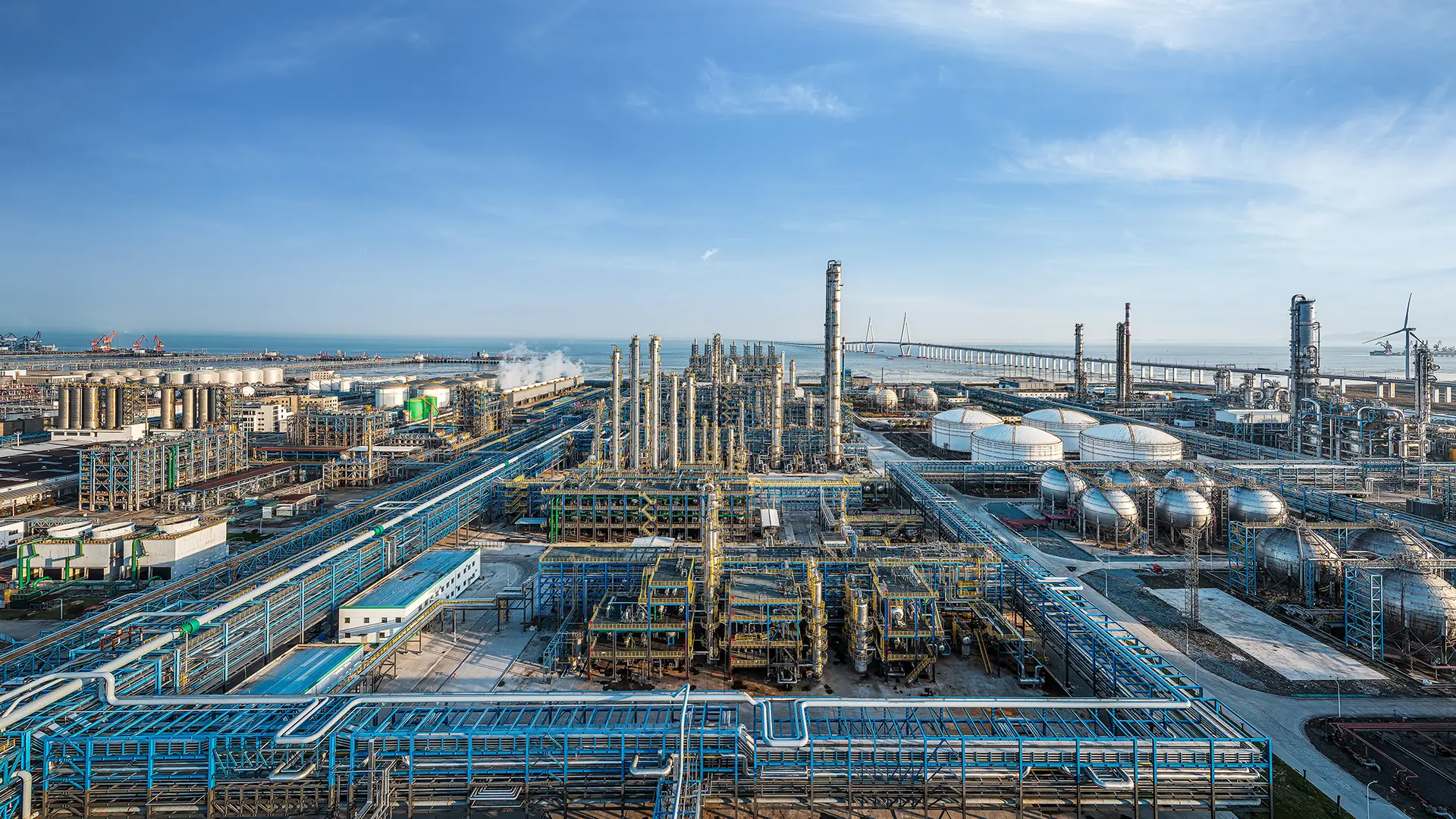
Researched by Industrial Info Resources (Sugar Land, Texas)--The U.S. and Canadian Petroleum Refining Industry is learning that obstacles can be turned into opportunities. Hillary Stevenson, an oil market expert and correspondent for IIR Energy, told attendees at Industrial Info's U.S. & Canada Industrial Market Outlook event last week that refiners still want to maximize profits by making high-margin gasoline in the short term. But renewable diesel and other newer products are likely to see demand soar in the coming years--and could offer a new life to refineries that have closed their doors since the start of the pandemic.
"Over the past few years, refiners have been dealt a rough hand," Stevenson said. "Obviously, the situation between Russia and Ukraine has put refineries back in the forefront. Obviously, high gasoline and high diesel prices are making margins a lot better, but we're short on capacity." For related information, see May 24, 2022, article -- Diesel Prices Are the Latest Economic Headwind.
To date, 2022 has seen a strong demand for refined products, in part due to voluntary or enforced sanctions against Russian crude. But Stevenson warned that it would be a long time before refiners returned to the utilization levels seen in 2018 and 2019, since many refineries closed amid the demand destruction stemming from the COVID-19 pandemic.
"The peak utilization in 2018 was over 18 million barrels per day of crude runs, but we only have 17.9 million barrels of crude capacity operational in the U.S. right now," Stevenson said. Gasoline is now sitting at the bottom of its five-year range for total days of supply, while diesel supply remains extremely tight: "We are below the five-year average [for diesel], and that's really causing those diesel prices to be elevated."
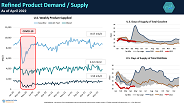 Click on the image at right for a series of graphs detailing averages for the U.S. weekly supply of gasoline, diesel and jet fuel since the beginning of 2020, as well as the five-year ranges for days of supply for gasoline and diesel.
"Those facilities that are operational need to work." Refiners who delayed maintenance projects in 2020 and 2021--when demand was low and the pandemic reduced the availability of onsite labor--are now reviving turnarounds that had been put on hold.
"Obviously, we have a lot of maintenance projects scheduled for the U.S. Gulf Coast," Stevenson said. "That's were a lot of the refineries are, and [2022 is expected to see] a 20% increase over the number of projects in 2021." This coming fall season is expected to be the biggest maintenance season since 2019, with about 80% more spending expected.
Industrial Info is tracking nearly $1.5 billion worth of maintenance-related projects at U.S. and Canadian refineries that are scheduled to begin through the end of 2022, and nearly $1.4 billion worth that are scheduled to begin throughout 2023. Subscribers to Industrial Info's Global Market Intelligence (GMI) Petroleum Refining Project Database can click here for a full list of reports for 2022's maintenance projects, and click here for a full list of reports for 2023.
Feedstock flexibility has emerged as another major need for the refining industry: "Refiners need to be able to switch crude types, based on market prices and availability." This year is expected to have the highest spending across the industry on crude and vacuum units since 2019, as refiners want their facilities to be able to handle a variety of crude types--and to be able to switch from one to another at a moment's notice.
"U.S. refiners are spending a lot of money to run more light crudes," Stevenson said. "We now have a lot of supply of light crude: Traditionally, U.S. refiners ran a lot of medium sour crude, or heavier crudes from Canada, and now we're shipping a lot of lighter crude off to Europe. So, we're spending a lot of money to retrofit those units to run light crude."
Eleven refineries have closed across the U.S. since the start of 2020, totaling about $1.8 billion in lost spending at those facilities. "Basically, every facility cut runs or shut down completely during COVID, but this wasn't due to lack of spending," Stevenson said. "Most of these facilities had major projects in 2019." Harsh weather was among the other factors driving these closures, including hurricanes along the U.S. Gulf Coast and an earthquake that knocked out Marathon Petroleum Corporation's (NYSE:MPC) (Findlay, Ohio) Martinez refinery in California.
About 33% of the total spending on project kickoffs in 2022 and 2023 is attributed to environmental, social and corporate governance (ESG) investments, with renewable diesel accounting for a significant share of that slice. For more information, see Industrial Info's March 25, 2022, article - U.S. Renewable Diesel Sees Brighter Outlook through 2050.
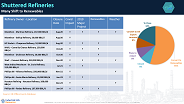 Click on the image at right for a graph with details on U.S. refineries to be shuttered since early 2020 and how they are being repurposed.
"It's not just refineries that are converting to renewable diesel," Stevenson said. "We see 79 greenfield projects for renewable diesel over the next few years. Right now, there's 11 units at 10 facilities making 1.3 million gallons per year. Should all these projects come to fruition, we're going to see about 6.5 billion gallons per year of renewable diesel produced at these facilities."
But Stevenson warned feedstock availability could constrain some of these renewable diesel projects. "Feedstock for renewable diesel are plant-based feedstocks like corn, soy and palm oil. They also use animal fats and cooking oil. So, the variability of plant-based feedstocks is just like crude: You don't have a stable supply, because it all depends on planting seasons and weather."
"But you also have headwinds for the feedstocks that go into growing those plants: Fertilizer prices are going up, fuel prices are going up, so that's going to push the prices of those plant-based commodities up, which may make some of those renewable diesel projects pushed out into the future uneconomical."
For related information, see May 23, 2022, article -- U.S. Alt-Fuel Refiners, Feedstock Producers Turn to Offseason Crops.
Industrial Info Resources (IIR) is the world's leading provider of market intelligence across the upstream, midstream and downstream energy markets and all other major industrial markets. IIR's Global Market Intelligence Platform (GMI) supports our end-users across their core businesses, and helps them connect trends across multiple markets with access to real, qualified and validated project opportunities. Follow IIR on: LinkedIn.
/news/article.jsp
false
Want More IIR News Intelligence?
Make us a Preferred Source on Google to see more of us when you search.
Add Us On GoogleAsk Us
Have a question for our staff?
Submit a question and one of our experts will be happy to assist you.

Forecasts & Analytical Solutions
Where global project and asset data meets advanced analytics for smarter market sizing and forecasting.
Explore Our Solutions
Industrial Project Opportunity Database and Project Leads
Get access to verified capital and maintenance project leads to power your growth.
Discover Our DatabaseIndustry Intel
-
2026-2027 Investment Radar for Mexico, Central America & the CaribbeanPodcast Episode / May 29, 2026
-
Innovations Shaping the Next Era of Power GenerationPodcast Episode / May 22, 2026
-
The Role of Contract Manufacturing in Global Pharma GrowthPodcast Episode / May 8, 2026
-
2026 North American Labor OutlookPodcast Episode / Apr 24, 2026
-
2026 European Metals & Minerals Project Spending OutlookPodcast Episode / Apr 7, 2026