Metals & Minerals
Queue at Australia's Newcastle Port Increases as Coal Supply Chain Clogs
Australia's Newcastle port is the world's largest coal export harbor, and last week, coal shipments from the port fell 5%, while the number of waiting vessels...
Released Friday, July 24, 2009
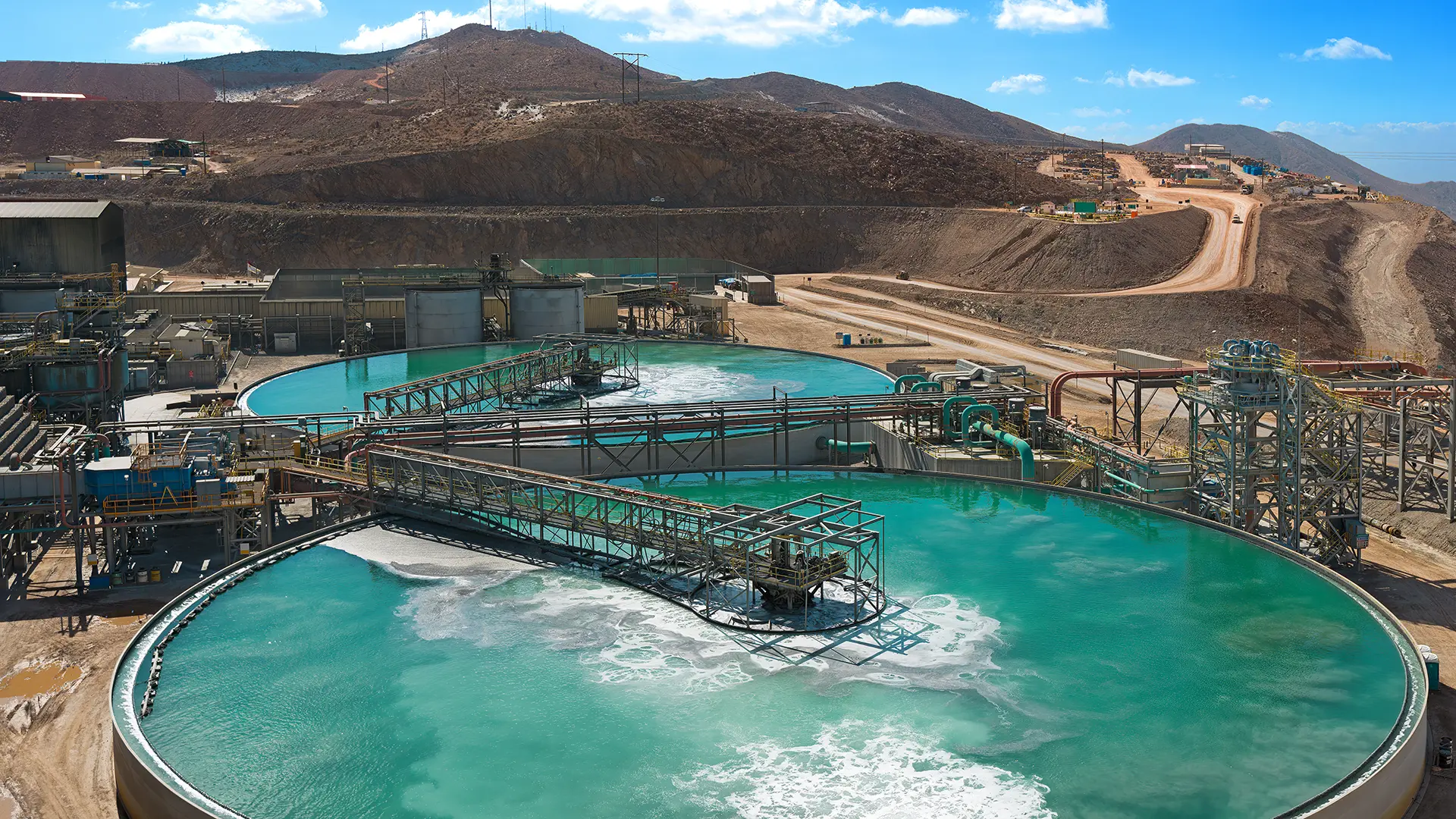
Researched by Industrial Info Resources (Sugar Land, Texas)--Australia's Newcastle port is the world's largest coal export harbor, and last week, coal shipments from the port fell 5%, while the number of waiting vessels increased. The volume of coal exported in the week ending at 7 a.m. on Monday, July 20, was 1.95 million tons, which is 5% lower than the previous week's 2.05 million tons. The number of vessels waiting to load 3.9 million tons of coal increased from 42 to 48 during the week.
The operator of the port's export terminals, Port Waratah Coal Services Limited, has informed coal producers that it intends to reduce export allocations by 1 million tons during this quarter in order to reduce the queue of ships. The average waiting time for coal ships to load increased from 12.7 days to 14.2 days last week. The waiting time for general cargo ships is a mere 0.97 days. Some of the large mining companies that use the Newcastle port to ship coal are BHP Billiton Limited (NYSE:BHP) (Melbourne, Victoria), Rio Tinto Limited (ASX:RIO) (Melbourne) and Xstrata plc (LSE:XTA) (Zug, Switzerland).
The increasing congestion on the Hunter Valley Coal Chain (HVCC) is unexpected and indicates that ships picking up the coal are being sent by customers before it has even been mined. According to summary reports released by the HVCC Logistics Team, exports have been reduced because of coal availability issues and stockpile constraints. Of the 43 ships waiting at the Newcastle port at the time of the report, 15 were facing coal availability problems and were classed as "dead," while nine arrived with no coal waiting to be loaded.
The Australia Competition and Consumer Commission (ACCC) (Adelaide, South Australia) has not yet approved of the new export quota system for the port. The ACCC is in the process of assessing the export plan, which is expected to ease all infrastructure bottlenecks and pave the way for the expansion of the Newcastle port. The export plan is also aimed at bringing down the number of ships waiting in queue, which has been known to number more than 80 at its worst. The current long queues at the port have affected the thermal markets of the Asia-Pacific region, and the congestion is causing an increase in coal price. Buyers have acknowledged that at least $5 per ton is being added in demurrage to the free on board (FOB) thermal coal prices. According to the GlobalCoal Newcastle Index, Newcastle thermal coal prices increased 6.4% to reach $76.23 per ton, which is significantly higher than the price of $64.08 per ton quoted at Richards Bay in South Africa. The coal prices at Newcastle port are a benchmark for the Asian thermal coal market.
Long queues have also formed at Dalrymple Bay and Hay Point, the coal terminals of the Queensland Coal Chain. In spite of the recent capacity expansion of the Dalrymple Bay to handle 85 million tons per year of coal, there were 49 ships waiting in queue recently. The McCloskey Coal Report has commented that the ongoing issues are a "massive rebound from the dark days of economic collapse in late 2008."
China imported 10.47 million tons of coal from Australia in the first five months of 2009, a six-fold increase over the same period last year. In May 2009, China imported 15 times more coal than it did in May 2008. According to traders, the buying spree was driven by the sharp drop in freight rates and Australian coal prices, which again was because of the plunge in regional demand for coal brought on by the global economic crisis.
China is the largest producer of coal in the world, but in recent times, the country's supplies have been unable to meet its huge demands. In order to resolve this issue and stabilize prices, the National Development and Reform Commission (Beijing) intends to build coal reserves in the province of Shandong. The project is expected to be ready in three to five years. Earlier this month, coal stock at China's Qinhuangdao port, the largest coal port of China, rose to 6.61 million tons, and the spot price of high-grade mixed coal dropped from $88.5 per ton to $86 per ton.
Industrial Info Resources (IIR) is the leading provider of global market intelligence specializing in the industrial process, heavy manufacturing and energy related markets. For more than 26 years, Industrial Info has provided plant and project opportunity databases, market forecasts, high resolution maps, and daily industry news.
/news/article.jsp
false
Want More IIR News Intelligence?
Make us a Preferred Source on Google to see more of us when you search.
Add Us On GoogleAsk Us
Have a question for our staff?
Submit a question and one of our experts will be happy to assist you.

Forecasts & Analytical Solutions
Where global project and asset data meets advanced analytics for smarter market sizing and forecasting.
Explore Our Solutions
Industrial Project Opportunity Database and Project Leads
Get access to verified capital and maintenance project leads to power your growth.
Discover Our DatabaseIndustry Intel
-
2026-2027 Investment Radar for Mexico, Central America & the CaribbeanPodcast Episode / May 29, 2026
-
Innovations Shaping the Next Era of Power GenerationPodcast Episode / May 22, 2026
-
The Role of Contract Manufacturing in Global Pharma GrowthPodcast Episode / May 8, 2026
-
2026 North American Labor OutlookPodcast Episode / Apr 24, 2026
-
2026 European Metals & Minerals Project Spending OutlookPodcast Episode / Apr 7, 2026