Chemical Processing
South Korea's STX Heavy to Build $3.2 Billion Petrochemical Plant in Basra
STX Heavy Industries is reported to have signed a preliminary contract with the Iraqi Ministry of Industry and Minerals to build a $3.2 billion petrochemical project in Basra, Iraq. ...
Released Monday, March 01, 2010
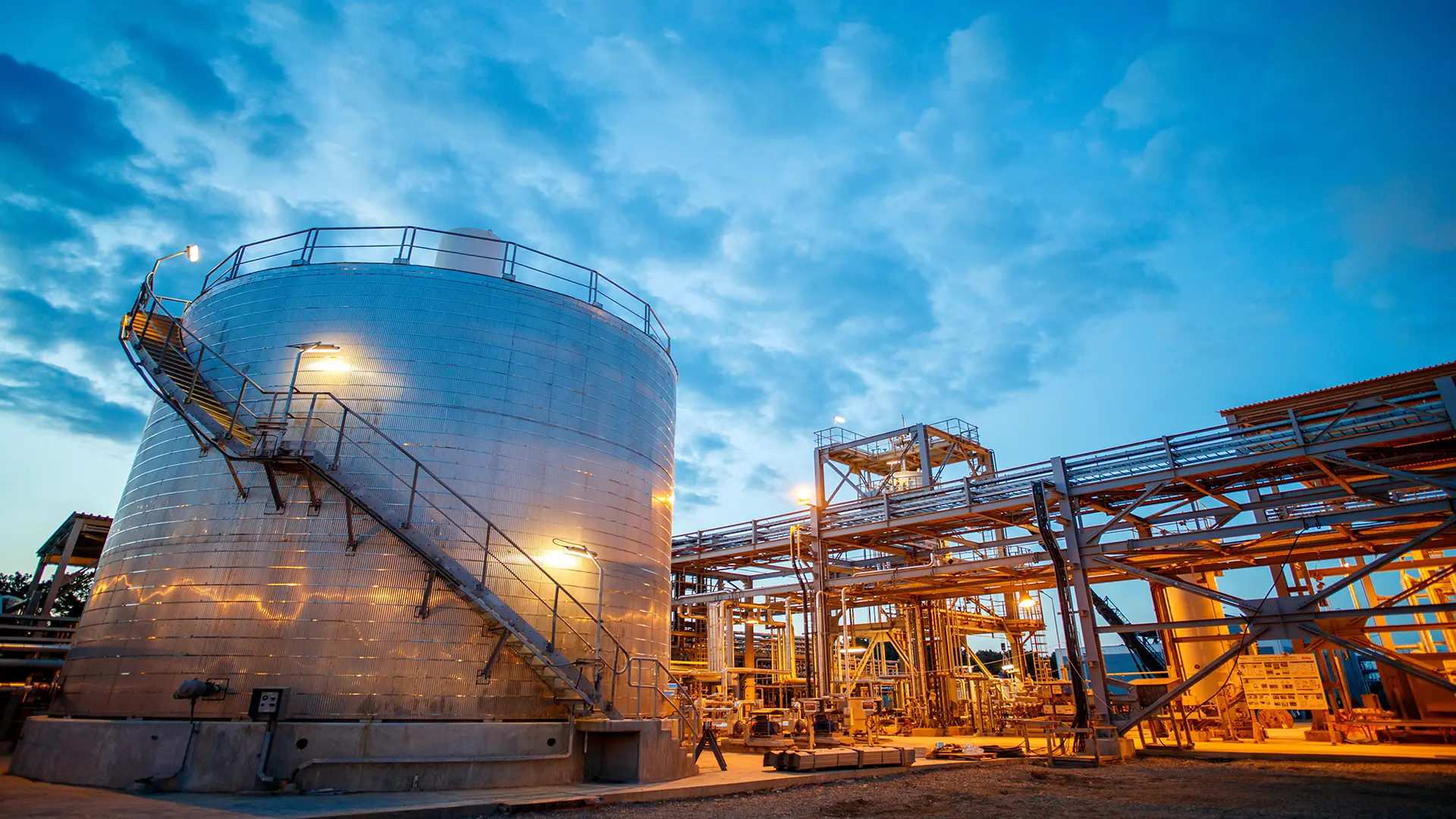
Researched by Industrial Info Resources (Sugar Land, Texas)--South Korean engineering, procurement and construction services provider STX Heavy Industries (Changwon, South Korea) is reported to have signed a preliminary contract with the Iraqi Ministry of Industry and Minerals to build a $3.2 billion petrochemical project in Basra, Iraq.
Scheduled to commence operations in 2014, the facility will produce ethylene, polyethylene, propylene and polyvinyl chloride (PVC). When construction is completed, STX Heavy will hand over the facility to Iraq's State Company for Petrochemical Industries (SCPI) (Basra, Iraq).
A memorandum of understanding reportedly was signed in Baghdad, where a 57-member South Korean delegation met with Iraqi officials to discuss ways in which South Korea could participate in post-war reconstruction projects in Iraq. However, company officials reportedly have denied the signing of a memorandum of understanding.
SCPI operates the Basra petrochemical complex, which was Iraq's first petrochemical facility to be developed. The complex was built in 1977 and currently has annual production capacities of 132,000 tons of ethylene, 30,000 tons of high-density polyethylene (HDPE), 60,000 tons of low-density polyethylene (LDPE), 660,000 tons of vinyl chloride monomer, 60,000 tons of PVC, and 42,000 tons of liquid chlorine.
It was only earlier this month that STX Heavy secured a $3 billion contract from the government of Iraq to develop a steel-manufacturing facility with a capacity of 3 million tons per year and a 500-MW gas-fired power plant in Basra. Upon development, the plants would be handed over to State Company for Iron and Steel of Iraq (Basra). The projects are part of Iraq's post-war reconstruction program.
With more than 115 billion barrels of proven oil reserves, the third-largest in the world, Iraq's underdeveloped oil, gas and downstream petrochemical sectors have garnered increased international attention in the past few years. Of the 80 known oil fields in the country, only 15 have been developed so far, producing a total of 2.4 million barrels per day.
Since Saddam Hussein's deposition in 2003, international oil majors have been lining up for a piece of the action, resulting in some isolated deals that did not involve local presence. More serious involvement was hampered due to the unclear legal position of the new government, as well as the dangerous security situation in Iraq. For instance, BP plc (NYSE:BP) (London, England) has been involved since 2004 in the development of the Rumaila oil field in southern Iraq, providing analysis of geophysical data and guidance on enhancing oil recovery rates.
A first attempt made to lure foreign expertise into the country through two-year service contracts collapsed in 2008 and was superseded by a series of 20-year service and investment deals. Under the contracts, the winning bidder, instead of taking over the entire operations of the field, is required to establish a joint venture with the Iraqi state company concerned to expand and develop the field. The contracts do not entail production sharing, and are offered based on a fixed fee per barrel of oil extracted from the fields instead of an equity stake. The oil major and the Iraqi partner would both make investments in the project, and based on successful achievement of production targets, the international firm will recover its costs and be paid a fee.
Iraq's invitation for bids to develop six oil fields and two gas fields, the first such opportunity in the country since its oil sector was nationalized four decades ago, met with enthusiastic response last year with bids from 32 companies from the U.S., India, China, Indonesia and South Korea. But, in June 2009, international energy majors snubbed Iraq by rejecting all but one deal for rights to develop the nation's oil and gas sector over doubts arising from having to partner with Iraqi state-owned firms and sharing management of the fields.
After a day of bidding, tenders for developing five oil fields were unsuccessful, due to a gulf between the price that the government was willing to pay and what international companies demanded. For the Maysan oil field in southern Iraq, China National Offshore Oil Corporation (CNOOC) (Beijing, China) and China Petroleum & Chemical Corporation (NYSE:SNP) (Sinopec) (Beijing) demanded $25.4 per barrel against Iraq's offer of $2.30 per barrel. ConocoPhilips (NYSE:COP) (Houston, Texas) demanded $26.70 per barrel to work in the Bai Hassan oil field, but Iraq offered only $4 per barrel. BP and CNPC International Limited were the only bidders to win, having accepted Iraq's offer of $2 per barrel of oil extracted from the Rumaila oil field.
Iraqi Prime Minister Nuri al-Maliki said that the nation required money from oil production to fund its restoration and reconstruction programs after being ravaged by three wars and more than a decade of debilitating economic sanctions. Iraq has since signed multi-billion dollar deals with Lukoil Company (OTC:LUKOY) (Moscow, Russia), Statoil ASA (NYSE:STO) (Stavanger, Norway), Royal Dutch Shell plc (NYSE:RDS.A) (The Hague, Netherlands), and Petroliam Nasional Berhad (Petronas) (Kuala Lumpur, Malaysia) among others to develop its oil fields. But earlier this month, al-Maliki said that the nation has no further plans to engage international energy companies to develop its oil fields beyond the ones that were auctioned off in June and December last year.
Oil exports constitute about 95% of Iraq's revenues and are the only way to fund the reconstruction of the shattered nation. Iraq is estimated to require about $50 billion in investments to increase oil output to 12 million barrels per day in seven years.
Industrial Info Resources (IIR) is the leading provider of global market intelligence specializing in the industrial process, heavy manufacturing and energy related markets. For more than 26 years, Industrial Info has provided plant and project spending opportunity databases, market forecasts, high resolution maps, and daily industry news.
/news/article.jsp
false
Want More IIR News Intelligence?
Make us a Preferred Source on Google to see more of us when you search.
Add Us On GoogleAsk Us
Have a question for our staff?
Submit a question and one of our experts will be happy to assist you.

Forecasts & Analytical Solutions
Where global project and asset data meets advanced analytics for smarter market sizing and forecasting.
Explore Our SolutionsRelated Articles

Industrial Project Opportunity Database and Project Leads
Get access to verified capital and maintenance project leads to power your growth.
Discover Our DatabaseIndustry Intel
-
2026-2027 Investment Radar for Mexico, Central America & the CaribbeanPodcast Episode / May 29, 2026
-
Innovations Shaping the Next Era of Power GenerationPodcast Episode / May 22, 2026
-
The Role of Contract Manufacturing in Global Pharma GrowthPodcast Episode / May 8, 2026
-
2026 North American Labor OutlookPodcast Episode / Apr 24, 2026
-
2026 European Metals & Minerals Project Spending OutlookPodcast Episode / Apr 7, 2026