Petroleum Refining
U.S. Begins Slow Recovery from Heavy Refinery Maintenance Season
A decline in refinery utilization in the U.S. Gulf Coast and Midwest markets is pushing retail gasoline prices far above the national average in some areas
Released Monday, March 11, 2024
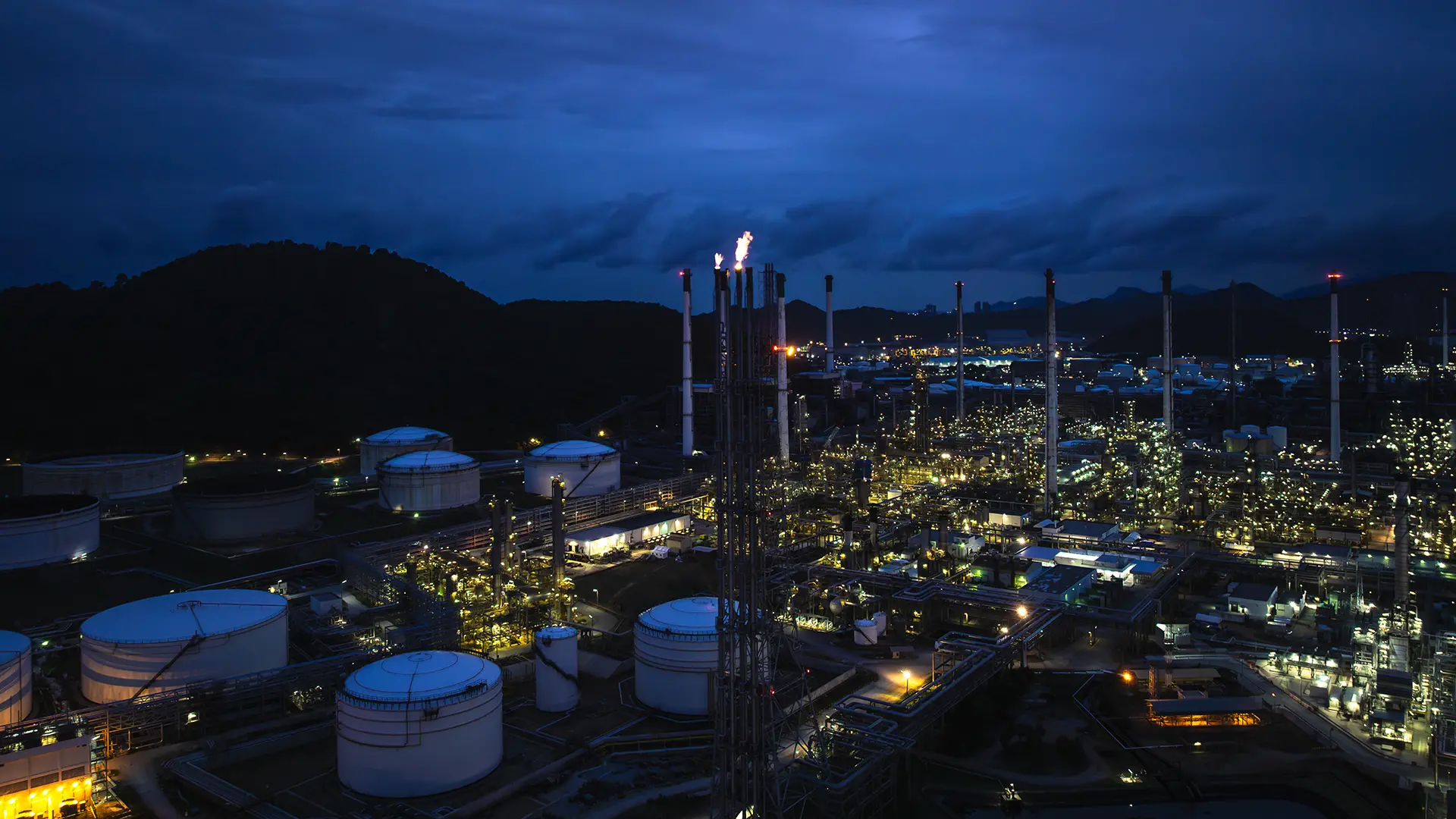
Written by Daniel Graeber for Industrial Info Resources (Sugar Land, Texas)--A decline in refinery utilization in the U.S. Gulf Coast and Midwest markets are the result of weather-related incidents, accidents and maintenance, pushing retail gasoline prices far above the national average in some areas.
For the week ending March 1, the U.S. Energy Information Administration (EIA) found that the nation's refineries were operating at 84.9% of their peak capacity. That's slightly above the five-year average for this time of year and marks a rebound after utilization decreased by 11% in January to as low as 81%.
"The sharp decline in refinery utilization is the result of reduced plant operations in both the Midwest and Gulf Coast regions and more intense seasonal patterns," the EIA explained.
To March 1, the EIA shows refinery utilization is below year-ago levels in three of the five Petroleum Administration for Defense Districts, or PADDs. For PADD 3 (the Gulf Coast region), refinery utilization was at 85.3%, nearly 1% below year-ago levels. Utilization in PADD 2, the Midwest, at 88.6% was 2.6% below the rate from this time last year. PADD 4, the Rocky Mountain region, also showed a drop in both week-ago and year-ago levels.
In PADD 3, utilization dipped below 80% in early January in part due to planned maintenance and weather-related events. Overnight lows dropped below freezing in parts of Texas earlier this year, testing the state's infrastructure.
"Weatherization against extreme cold is less common on the Gulf Coast compared with other regions, such as the Midwest, and a lack of winterization can contribute to power outages or damage to instruments, resulting in temporary shutdowns," the EIA explained.
But it may be the Midwest that's suffering the most. IIR's own data show at least six refineries are working below peak capacity due to unplanned or planned outages. For example, PBF Energy Incorporated (NYSE:PBF) (Parsippany, New Jersey) on February 28 announced the start of a 40-day period of maintenance at its refinery in Toledo, Ohio, while a mechanical event at a refinery in Lima, Ohio, operated by Cenovus Energy Incorporated (NYSE:CVE) (Calgary, Alberta), forced the closure of a coker unit.
But perhaps the most significant issue in PADD 2 is the status of BP's (NYSE:BP) (London, England) facility in Whiting, Indiana, on the shores of Lake Michigan. The facility, which boasts capacity of 430,000 barrels per day (BBL/d) of processing, shut down Feb. 1 after losing power.
Industrial Info expected production at the Whiting Refinery to resume during the weekend of March 9 but reported Friday that BP may take another 10-14 days on the restart.
Refinery issues would tend to have a nation-wide impact on retail gasoline prices. Travel club AAA listed a national average retail price of $3.40 for a gallon of regular unleaded, slightly below year-ago levels, but 25 cents higher than levels a month ago.
PADD 2, however, is seeing larger retail price increases than most other parts of the country. In Michigan, gasoline prices averaged $3.55, with some major metropolitan areas listing prices as high as $3.70 per gallon. Illinois has a state-wide average of $3.74, with Chicagoland prices flirting with $4.00 per gallon.
Analysis from consultant group Wood Mackenzie found this season's maintenance cycle was heavier than usual due to years of deferrals, though outages likely peaked in February. That said, the EIA recently cut its capacity forecast by 120,000 BBL/d starting this month in part in response to a decision from Phillips 66 to stop processing crude oil in favor of renewable fuels at its Rodeo Refinery near San Francisco.
Consumers still dealing with some degree of inflationary pressure might not see much relief at the pump anytime soon as refiners need to overhaul operations in order to switch to the summer blend of gasoline by May 1. That blend is more expensive because of the additional processing steps necessary to keep gasoline from evaporating during warmer months.
That said, lower travel volumes due to a work-from-home culture, better gas mileage and the adoption of electric and hybrid vehicles all put a ceiling on retail gasoline prices. The EIA expects the price at the pump to average $3.31 this year, about 20 cents lower than the 2023 average.
Industrial Info Resources (IIR) is the leading provider of industrial market intelligence. Since 1983, IIR has provided comprehensive research, news and analysis on the industrial process, manufacturing and energy related industries. IIR's Global Market Intelligence (GMI) helps companies identify and pursue trends across multiple markets with access to real, qualified and validated plant and project opportunities. Across the world, IIR is tracking over 200,000 current and future projects worth $17.8 Trillion (USD).
/news/article.jsp
false
Want More IIR News Intelligence?
Make us a Preferred Source on Google to see more of us when you search.
Add Us On GoogleAsk Us
Have a question for our staff?
Submit a question and one of our experts will be happy to assist you.

Forecasts & Analytical Solutions
Where global project and asset data meets advanced analytics for smarter market sizing and forecasting.
Explore Our SolutionsRelated Articles
-
U.S. Strategic Oil Reserves Lowest in Nearly 40 YearsJune 17, 2026
-
Oil Prices Collapse on Middle East UnderstandingJune 15, 2026

Industrial Project Opportunity Database and Project Leads
Get access to verified capital and maintenance project leads to power your growth.
Discover Our DatabaseIndustry Intel
-
Brazil: Efficiency, Innovation, and Opportunities in the Food & Beverage IndustryPodcast Episode / Jun 12, 2026
-
2026-2027 Investment Radar for Mexico, Central America & the CaribbeanPodcast Episode / May 29, 2026
-
Innovations Shaping the Next Era of Power GenerationPodcast Episode / May 22, 2026
-
The Role of Contract Manufacturing in Global Pharma GrowthPodcast Episode / May 8, 2026
-
2026 North American Labor OutlookPodcast Episode / Apr 24, 2026