Production
EOG Resources' Fortunes Soar as Production Grows from Eagle Ford Shale
Continued high crude-oil prices create the environment for years of continued success for EOG Resources Incorporated
Released Monday, July 28, 2014
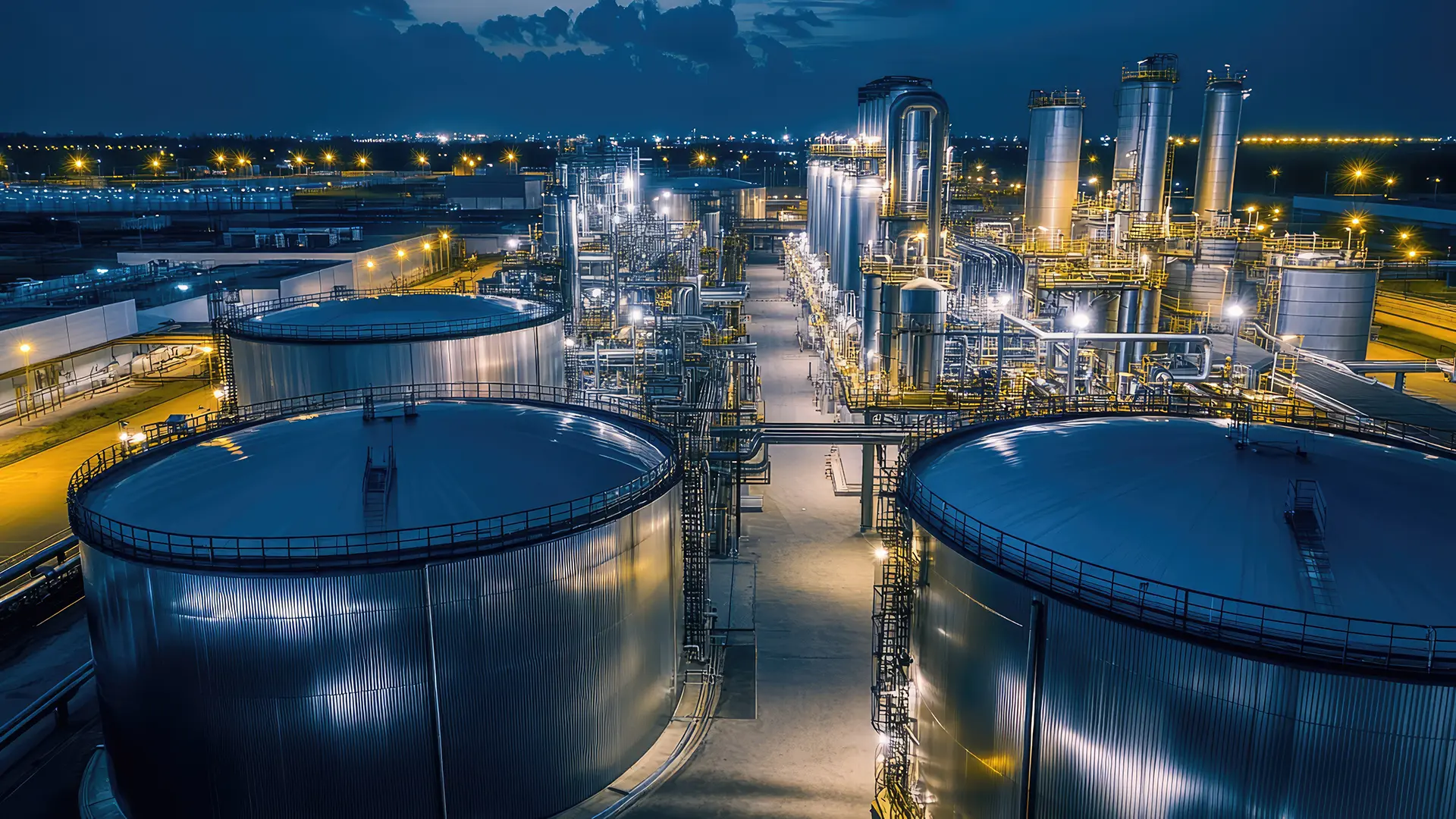
Written by John Egan for Industrial Info Resources (Sugar Land, Texas)--Being at the right place at the right time is a key part of the success story at EOG Resources Incorporated (NYSE:EOG) (Houston, Texas). But a willingness to adjust its asset portfolio and an ongoing effort to lower costs also are important reasons why investors have bid up EOG's stock in recent years. The company is the Eagle Ford Shale's largest crude-oil producer and acreage holder. Continued high crude-oil prices could mean years of continued success for the company.
EOG's crude-oil production in the Eagle Ford has risen an astonishing 63,780% since 2009, the very definition of "hockey-stick" growth. The company produced about 56.7 million barrels of oil in the Eagle Ford in 2013, up dramatically from full-year 2009 production of about 89,000 barrels, according to data compiled by the Texas Railroad Commission (Austin, Texas). It's no wonder that EOG's stock price has shot up nearly 360% over that five-year timeframe--from about $40 a share in 2009 to about $184 per share earlier this year, prior to a two-for-one stock split. Since the stock split, EOG's shares have risen another 26%, to a recent $116 per share.
 Click on the image at right to see EOR Resources' annual crude oil production totals for the Eagle Ford Shale in Texas.
 About 78% of EOG's Eagle Ford production is crude oil, and another 10% is natural gas liquids (NGLs), the company told investors earlier this year. Two of the company's Eagle Ford wells recorded initial production rates approaching 5,000 barrels of oil per day, significantly over the industry average. In the Eagle Ford, EOG's 3P Reserves--proved, probable and possible--have risen 250% over the last four years, to a total of 3.2 billion barrels of oil equivalent (BOE) in early 2014 from about 900 million BOE in April 2010. Strong results in the Eagle Ford, as well as in other formations like the Bakken Shale and the Denver-Julesburg (DJ) Basin, caused EOG to increase its overall capital budget this year to about $8.2 billion, from $7.1 billion in 2013. About 79% of this year's capital outlays will go to exploration and development activities, the company told investors. The company's planned capital spend does not include potential spending for additional acreage, it added.
 Click on the image at right to see how EOG Resources' 3P Reserves in the Eagle Ford have risen over the last four years.
 EOG has some limited operations in Canada and other overseas countries, but the overwhelming majority--about 75%--of its production comes from U.S. fields. The company predicted overall crude oil production growing about 64,000 barrels per day this year, to about 284,000 barrels per day. Since 2009, when production totaled 55,000 barrels per day, EOG has increased production by a compound annual growth rate (CAGR) of 39%. This year, the company predicts a 29% increase in crude-oil and condensate production across its portfolio. Looking forward to 2015-17, EOG leaders told investors to expect "continued best-in-class double-digit growth" in crude-oil and condensate production across its holdings.
 Click on the image at right to see EOG's crude oil production gains since 2009.
Surging production and sustained high crude-oil prices have benefitted many E&P companies, but EOG also has been lowering its well-completion costs, a critical ingredient that supports profitability should oil prices decline. In the Eagle Ford, well-completion costs for a 5,300-foot lateral have declined about 15% since 2011, and EOG is trying to lower than an additional 10% this year, to about $5.5 million.
 Click on the image at right to see EOG's declining well-completion costs for wells in the Eagle Ford.
Unlike some other oil & gas producers whose revenue stream has been hurt by the last few years of weak gas prices, only a small portion of EOG's revenue comes from natural gas. Natural gas will account for about 12% of EOG's revenue this year, down sharply from 2006-08, when it exceeded 70%. Until gas prices recover, the company has been letting production decline modestly across its North American footprint.
 Click the image at right at right to see EOG's revenue mix has shifted to oil since 2006.
"The EOG story in the Eagle Ford is really extraordinary combination of geological knowledge, production know-how, cost discipline and a favorable price environment," said Jesus Davis, Industrial Info's vice president of research for Oil & Gas Production, Pipelines and Terminals. "Among companies, hockey-stick growth is kind of like a Unicorn or Bigfoot--must discussed, rarely seen, and written off as a myth by some. EOG's production growth in the Eagle Ford shows that hockey-stick growth can be done."
Industrial Info Resources (IIR), with global headquarters in Sugar Land, Texas, three offices in North America and 10 international offices, is the leading provider of global market intelligence specializing in the industrial process, heavy manufacturing and energy markets. Industrial Info's quality-assurance philosophy, the Living Forward Reporting Principle, provides up-to-the-minute intelligence on what's happening now, while constantly keeping track of future opportunities.
/news/article.jsp
false
Want More IIR News Intelligence?
Make us a Preferred Source on Google to see more of us when you search.
Add Us On GoogleAsk Us
Have a question for our staff?
Submit a question and one of our experts will be happy to assist you.

Forecasts & Analytical Solutions
Where global project and asset data meets advanced analytics for smarter market sizing and forecasting.
Explore Our SolutionsRelated Articles
-
Canadian Energy Trade Still Tied to U.S. EconomyMay 29, 2026
-
Canada's Ksi Lisims LNG a Slam Dunk, Premier SaysMay 28, 2026

Industrial Project Opportunity Database and Project Leads
Get access to verified capital and maintenance project leads to power your growth.
Discover Our DatabaseIndustry Intel
-
2026-2027 Investment Radar for Mexico, Central America & the CaribbeanPodcast Episode / May 29, 2026
-
Innovations Shaping the Next Era of Power GenerationPodcast Episode / May 22, 2026
-
The Role of Contract Manufacturing in Global Pharma GrowthPodcast Episode / May 8, 2026
-
2026 North American Labor OutlookPodcast Episode / Apr 24, 2026
-
2026 European Metals & Minerals Project Spending OutlookPodcast Episode / Apr 7, 2026