Petroleum Refining
KazMunayGas Suspends Construction of Ceyhan and Batumi Refinery Projects
Kazakhstan's state-owned oil company KazMunayGas JSC (KMG) (Astana, Kazakhstan) has announced that the company will not be going ahead with the construction...
Released Tuesday, January 06, 2009
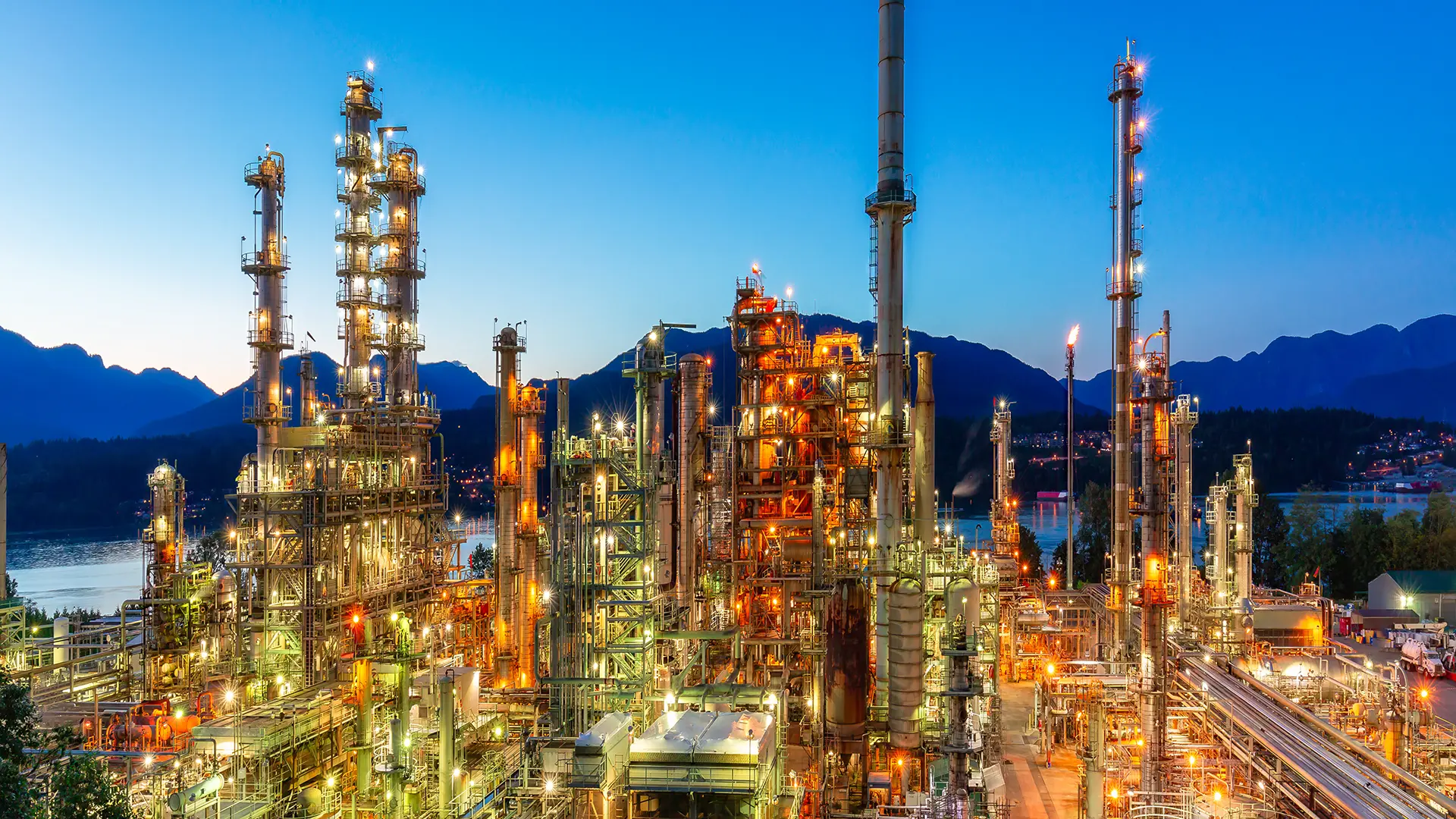
Researched by Industrial Info Resources (Sugar Land, Texas)--Kazakhstan's state-owned oil company KazMunayGas JSC (KMG) (Astana, Kazakhstan) has announced that the company will not be going ahead with the construction of refineries in Ceyhan and Batumi. KMG has listed economic feasibility and the current financial crisis as reasons for discontinuing the projects. The economic slowdown has led KMG to review and prioritize investments on projects and divert funds to domestic refineries. The company now plans to enhance production of three refineries in Kazakhstan and increase national energy output.
The proposed 428,000-barrel-per-day (BBL/d) Ceyhan refinery, which was to be built near the Ceyhan port in Turkey, was to begin construction in early 2009 and start operations by 2012. The estimated investment for this project was around $5 billion. Oil India Limited (New Delhi, India) partnered with KMG to conduct a feasibility study for this project, while ENI S.p.A. (NYSE:E) (Milan, Italy) was to operate the refinery on completion. The local Turkish partner was Calik Enerji (Ankara, Turkey). The refinery was designed to manufacture diesel, aviation fuel, fuel oil, high-octane gasoline and other petrochemical products.
The Ceyhan refinery would have become a center of crude delivery with three key pipeline routes passing through this region. The first, the 1,768-kilometer Baku-Tblisi-Ceyhan pipeline that was inaugurated in 2006, would carry up to about 1 million BBL/d. Turkey had planned another 1 million-BBL/d pipeline connecting Samsun and Ceyhan. Construction of this 550-kilometer pipeline has started. The Kirkurk-Ceyhan pipeline was expected to deliver 1.5 million BBL/d of crude to the refinery. The combined supply of more than 3.5 million BBL/d of crude by these three pipelines to Ceyhan would have made this port the world's largest, surpassing Rotterdam, which presently receives about 3.2 million BBL/d. The refinery at Ceyhan would have had access to many lucrative markets in Europe and the Mediterranean. Turkey, which does not have big refineries of its own, was seen as a potential market. The country, which has an oil demand of about 685,000 BBL/d, was expected to buy around 214,000 BBL/d from the refinery.
KMG was also planning to invest in excess of $1 billion in the Batumi refinery, located on the Georgian Black Sea coast. KMG decided to postpone the construction of the refinery after a feasibility study. The refinery was conceived in early 2007 after KMG entered into an agreement with Greenoak Group (London, United Kingdom) to build a refinery in Batumi. Greenoak Group held ownership of the Batumi oil terminal and port. A joint venture company was also announced that would oversee the construction, operation and maintenance of the refinery complex. The refinery, capable of processing between 100,000 and 150,000 BBL/d was to be built on 80 hectares of land that was procured by the Greenoak Group. The refinery was seen as a step to improve infrastructure in this region and also provide employment to people in Georgia.
In February 2008, KMG bought 100% of the oil terminal through subsidiary TransOil JSC (Atyrau, Kazakhstan) and received exclusive operation rights for 49 years. Kazakhstan planned to transport crude through Batumi and the Baku-Supsa pipeline to Romania, eventually tapping the European market through this route. The recent Georgia-Russia conflict left the Georgian port of Poti damaged and raised concerns about the viability of the refinery. Kazakhstan stopped all exports through the Batumi oil terminal during the political unrest but resumed operations in September 2008. KMG has denied that its decision to freeze construction of Batumi refinery is politically linked.
Kazakhstan, considered the largest oil producer in central Asia, aims to produce about 1.5 million BBL/d of oil this fiscal year. The country has traditionally relied on Russian pipeline routes to deliver oil. With the commissioning of the new refineries at Batumi and Ceyhan, Kazakhstan was seeking to open new markets for exports and gain energy independence from Russia.
Industrial Info Resources (IIR) is a marketing information service specializing in industrial process, energy and financial related markets with products and services ranging from industry news, analytics, forecasting, plant and project databases, as well as multimedia services.
/news/article.jsp
false
Want More IIR News Intelligence?
Make us a Preferred Source on Google to see more of us when you search.
Add Us On GoogleAsk Us
Have a question for our staff?
Submit a question and one of our experts will be happy to assist you.

Forecasts & Analytical Solutions
Where global project and asset data meets advanced analytics for smarter market sizing and forecasting.
Explore Our Solutions
Industrial Project Opportunity Database and Project Leads
Get access to verified capital and maintenance project leads to power your growth.
Discover Our DatabaseIndustry Intel
-
2026-2027 Investment Radar for Mexico, Central America & the CaribbeanPodcast Episode / May 29, 2026
-
Innovations Shaping the Next Era of Power GenerationPodcast Episode / May 22, 2026
-
The Role of Contract Manufacturing in Global Pharma GrowthPodcast Episode / May 8, 2026
-
2026 North American Labor OutlookPodcast Episode / Apr 24, 2026
-
2026 European Metals & Minerals Project Spending OutlookPodcast Episode / Apr 7, 2026