Metals & Minerals
LionOre Raises Phoenix Nickel Mine in Botswana to African Top Spot
Phoenix mine, a former Anglo American (LSE:AAL, JSE:AMSJ) (London, United Kingdom) mine situated 43 kilometers northwest of Francistown in eastern Botswana, changed hands earlier...
Released Friday, November 08, 2002
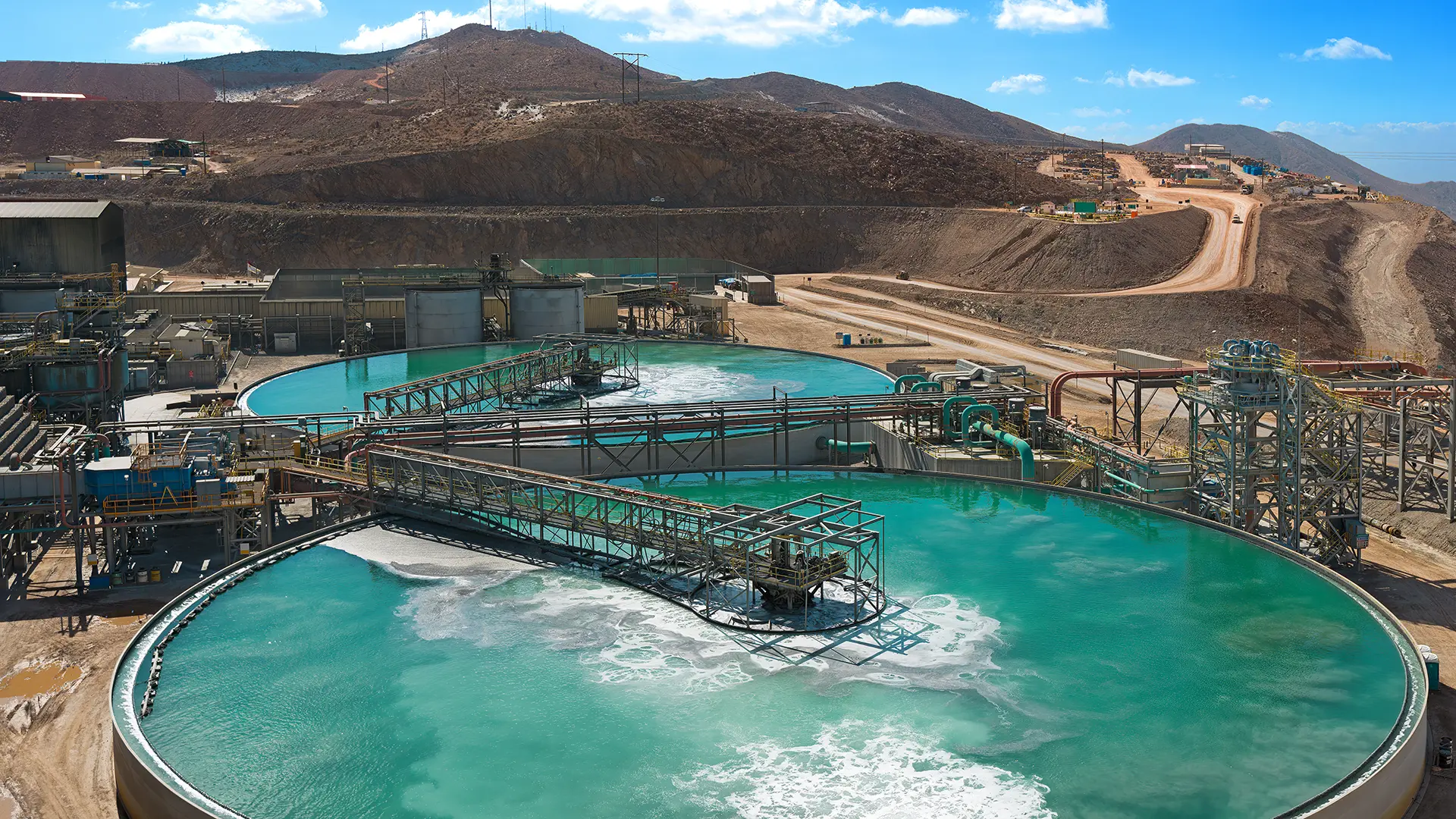
Researched by Industrialinfo.com (Industrial Information Resources Incorporated; Houston, Texas) The Phoenix mine in Botswana in southern Africa is set to become the largest nickel mine in Africa following a cooperative deal between the mining conglomerate LionOre International (TSE:LIM) (Toronto, Canada) and the Botswana government to expand the mine's operations and quadruple production. Total production will now be 3.6 million tons of ore and 13 million tons of rock a year.
Phoenix mine, a former Anglo American (LSE:AAL, JSE:AMSJ) (London, United Kingdom) mine situated 43 kilometers northwest of Francistown in eastern Botswana, changed hands earlier in 2002 in a deal that saw 85% of its shares going to LionOre International and the balance held by the Botswana government.
Phoenix management are claiming that Phoenix nickel production tops that of the BCL (Bamangwato Concessions Limited) mine in Selebi-Phikwe, which is a 50/50 copper and nickel producing mine whose shareholders include the Botswanan government. The mine produces around 3.5 million tons of ore per annum that is graded 0.62% nickel and 0.71% copper. 40,000 tons of copper and nickel matte is produced for refining in Zimbabwe and Norway.
The comparative lead in profitably held by Phoenix is based on the fact that 6% of Phoenix concentrate is nickel. Concentrate extracted from the mine is trucked to the BCL mine-smelter where it is treated before being exported to Rio Tinto (LSE:RIO,ZSE:RTNR) (London, United Kingdom) of Zimbabwe, which then exports the products to Canada and Norway.
LionOre International operates its Botswana interests at Phoenix and Selkirk under the Tate Nickel mine and is moving on the $66 million project to consolidate its position as the leading nickel producing mine in Africa and expand the life of the mine by at least 13 years to 2015. On the basis of proven deposits, an opencast mine of 300 meters depth and 1.4 kilometers length will provide production up to 2015. There is also a significant potential for the location of additional ore resources, which will lead to mining to a depth of 600 meters and a length of 5 kilometers. The Phoenix deposit, plus several satellite nickel anomalies, is hosted by complex outcrops about 5 kilometers long with a striking subvertical dyke feature.
The Botswanan government is hailing this expansion venture as a demonstration of the good climate in the country for private investors. Increasing the value of the mine, upgrading the regional industrial infrastructure, and creating more jobs and revenue is the motivation for the government to provide stable conditions for investors, once the locals have established the investor's technical competence, financial prudence, and social responsibility. Botswana is one of the world's leading diamond miners through Debswana (Gaborone, Botswana) and other multi-national ventures.
The deal LionOre negotiated with Anglo American earlier in 2002 means that through various cross holdings it is in a driving position at the BCS smelter/refiner.
LionOre also has 80% in LionOre Australia (Nickel) (ASX:LON) (Perth, Western Australia) that owns 100% of the Emily Ann nickel deposit and 31% of the Maggie Hays nickel deposit in the Lake Johnston region of Western Australia. The Emily Ann, 540 kilometers east of Perth, utilizes an onsite conventional nickel sulphide concentrate plant with a designed annual throughput of 250,000 tons of ore producing an average of 6,700 tons of payable nickel a year over the life of the mine. During the March quarter of its commissioning and ramp-up phase, a total of 44,213 tons of ore were mined at an average grade of 2.94% nickel and 7,436 tons of nickel concentrate at a concentrate grade of 13.2% nickel. Concentrates are shipped to Inco in Canada.
If you want to catch an Australian, South African, or Canadian miner talking to an American about talking to a government official about a mining project involving a Norwegian who knows a Libyan who knows an Anglo/Italian equipment supplier with Russo-German connections through Paris, then catch a sundowner flight out of Johannesburg or Perth or Gaborone or Accra or Kinshasa any evening.
/news/article.jsp
false
Want More IIR News Intelligence?
Make us a Preferred Source on Google to see more of us when you search.
Add Us On GoogleAsk Us
Have a question for our staff?
Submit a question and one of our experts will be happy to assist you.

Forecasts & Analytical Solutions
Where global project and asset data meets advanced analytics for smarter market sizing and forecasting.
Explore Our Solutions
Industrial Project Opportunity Database and Project Leads
Get access to verified capital and maintenance project leads to power your growth.
Discover Our DatabaseIndustry Intel
-
2026-2027 Investment Radar for Mexico, Central America & the CaribbeanPodcast Episode / May 29, 2026
-
Innovations Shaping the Next Era of Power GenerationPodcast Episode / May 22, 2026
-
The Role of Contract Manufacturing in Global Pharma GrowthPodcast Episode / May 8, 2026
-
2026 North American Labor OutlookPodcast Episode / Apr 24, 2026
-
2026 European Metals & Minerals Project Spending OutlookPodcast Episode / Apr 7, 2026