Petroleum Refining
Petroleos Mexicanos to Invest $12 Billion on Refinery Reconfiguration and Greenfield Expansion
Petroleos Mexicanos (PEMEX) (Mexico City, Mexico), a state-controlled oil and energy enterprise, will invest about $12.2 billion to upgrade a facility and develop...
Released Tuesday, April 28, 2009
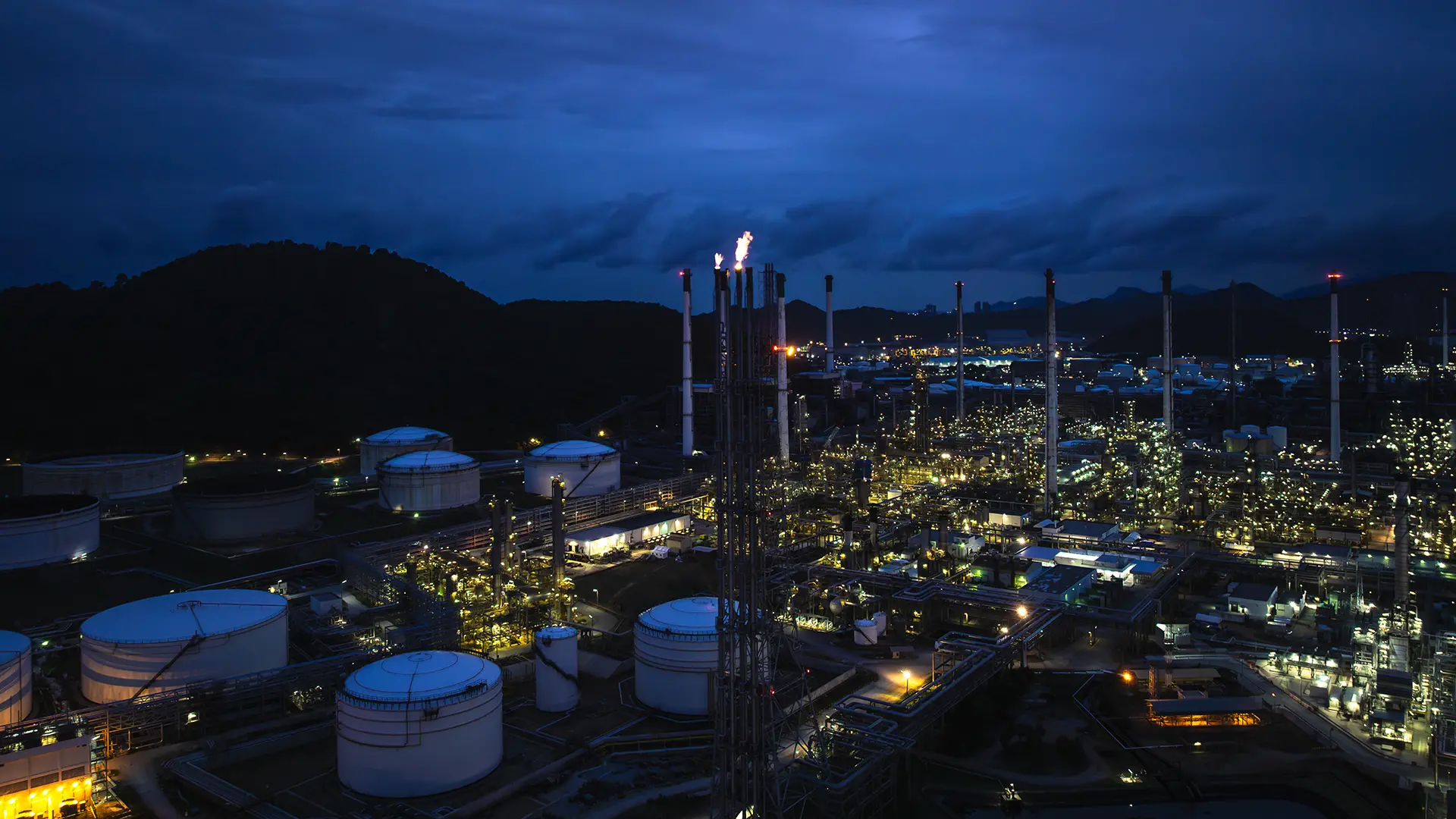
Researched by Industrial Info Resources (Sugar Land, Texas)--Petroleos Mexicanos (PEMEX) (Mexico City, Mexico), a state-controlled oil and energy enterprise, will invest about $12.2 billion to upgrade a facility and develop a new refinery in the country. The refinery in Salamanca, Guanajuato, will be augmented and reconfigured at a cost of $3.07 billion. A new refining facility, which will also process residue fuel, will be set up in Tula, Hidalgo, at an estimated cost of $9.13 billion. The refinery will be the first in 30 years to be built in Mexico. It will increase Mexico's refining capability and reduce its dependence on oil imports from the U.S.
Construction is dependent on local governmental authorities, which need to acquire 700 hectares of land in 100 days. With a refining capacity of 300,000 barrels per day (BBL/d), the refinery will produce 12,000 BBL/d day of jet fuel, 142,000 BBL/d of gasoline, and 82,000 BBL/d of diesel, all of which will have ultra-low-sulfur content.
PEMEX decided to build the refining complex in Tula after considering eight other locations, including La Cangrejera, Tuxpan, Salina Cruz, Cadereyta, Lazaro Cardenas, Dos Bocas, Campeche and Manzanillo. Based on the results of the feasibility study, PEMEX chose Tula in August 2008. The report indicated that Tula provided the highest net present value among all locations. The choice was also based on the ability of the refining site to process residue fuel, which would not only make additional crude available for exports but also lower gasoline imports. Residue fuel refers to the remainder of crude oil after the extraction of distillate fuel oil and gasoline.
PEMEX will initiate preliminary preparation at the site along with engineering and design activity this year. Construction is expected to begin in 2010 and will be completed by 2015. The upgraded Salamanca refinery will start operation by 2014.
Several international and domestic construction companies are expected to take part in the tendering and bidding process for the two projects. While no announcement has been made regarding the tender model, PEMEX has said it will not follow the process adopted for the tendering of the Minatitlan project in Vera Cruz. The tendering process for the Minatitlan project was carried out in six phases, with each phase supervised by a different company. This led to the project overshooting budgets and facing long delays in execution. PEMEX proposes to select one company, which will not only oversee the entire construction activity but also assist PEMEX in evaluating proposals, define tender parameters for sub-contracts, and set contract terms and criteria.
PEMEX, one of Mexico's biggest revenue-generating firms, operates six refineries at Salina Cruz, Cadereyta, Minatitlan, Tula, Madero and Salamanca, with a combined capacity of 1.54 million BBL/d. The company takes part in the entire oil exploration lifecycle through its subsidiaries: PEMEX Refinacion (Refinery Division), PEMEX Petroquimica Exploracion y Produccion (Petrochemical Division -- Exploration, Prospecting and Production), and PEMEX Gas y Petroquimica Basica (Gas Petrochemicals Division).
The U.S. recently granted a loan of $900 million to PEMEX through the Export-Import Bank (Washington, D.C.) to enable the company to procure equipment manufactured in the U.S. for oil and gas projects. A 10-year $600 million loan has been sanctioned for the purchase of equipment for PEP projects, earlier known as New Pidregas Projects, which include 18 natural gas and crude oil exploration schemes at the Bay of Campeche. The equipment will consist of offshore platforms, engineering services, oil field machinery, and drilling tools. About $300 million of the loan amount will be utilized for the Cantarell offshore field at the Bay of Campeche. Since 1998, PEMEX has borrowed about $8.3 billion toward the procurement of products from the U.S.
Mexico is the sixth largest producer of crude oil in the world but relies heavily on oil imports from the U.S. In 2008, Mexico imported 336,200 BBL/d of oil from the U.S., which accounted for 40% of the former's domestic demand. In the first quarter of this year, Mexico's oil production declined by 7.6% to 2.67 million BBL/d from 2.89 million BBL/d in the same period a year ago. This slump has been attributed to the maturing Cantarell oil field. Cantarell, Mexico's largest oil field, produced 787,000 BBL/d during the first quarter. This was 34% lower compared with the same period in 2008.
View Project Report - 65000729 65000774 65000917 65001013
Industrial Info Resources (IIR) is a marketing information service specializing in industrial process, energy and financial related markets with products and services ranging from industry news, analytics, forecasting, plant and project databases, as well as multimedia services.
/news/article.jsp
false
Want More IIR News Intelligence?
Make us a Preferred Source on Google to see more of us when you search.
Add Us On GoogleAsk Us
Have a question for our staff?
Submit a question and one of our experts will be happy to assist you.

Forecasts & Analytical Solutions
Where global project and asset data meets advanced analytics for smarter market sizing and forecasting.
Explore Our SolutionsRelated Articles
-
U.S. Retail Gas Prices Down for Three Weeks StraightJune 12, 2026
-
Upstream Responded to War-Related Spike in Oil PricesJune 05, 2026

Industrial Project Opportunity Database and Project Leads
Get access to verified capital and maintenance project leads to power your growth.
Discover Our DatabaseIndustry Intel
-
Brazil: Efficiency, Innovation, and Opportunities in the Food & Beverage IndustryPodcast Episode / Jun 12, 2026
-
2026-2027 Investment Radar for Mexico, Central America & the CaribbeanPodcast Episode / May 29, 2026
-
Innovations Shaping the Next Era of Power GenerationPodcast Episode / May 22, 2026
-
The Role of Contract Manufacturing in Global Pharma GrowthPodcast Episode / May 8, 2026
-
2026 North American Labor OutlookPodcast Episode / Apr 24, 2026