Production
Deepwater Industry Standardization, Collaboration Could Cut Costs but Likely Won't Happen
Standardizing equipment and streamlining commercial processes could help deepwater offshore, but biggest savings may be missed due to company confidentiality.
Released Tuesday, May 31, 2016
Reports related to this article:
Plant(s): View 2 related plants in PECWeb
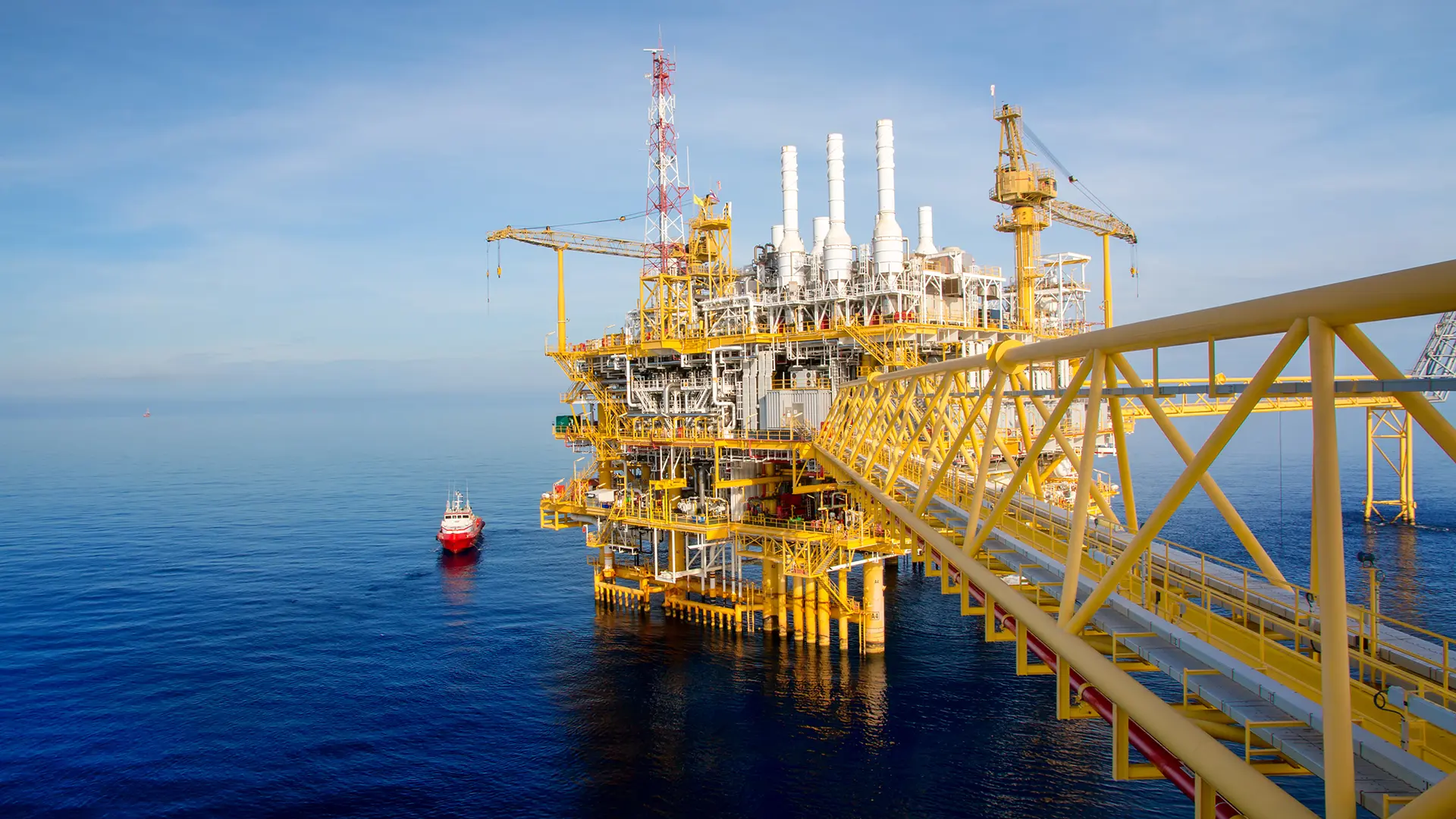
Researched by Industrial Info Resources (Sugar Land, Texas)--Splitting the bill, reusing materials and buying pre-made rather than custom are great ways to save money. These simple strategies are the rationale behind portions of the Deepwater Offshore Industry's push for standardization. Allying with contractors and other operators, involving them at early stages of the project; reusing designs and contractors from one project to the next; and standardizing process equipment, allowing it to be produced ahead of time could save operators significant sums of money on their deepwater projects. However, industry-wide standardization of equipment, one of the larger cost savers, is unlikely as the level of disclosure required is anathema to operators and their engineers. Intra-company and operator-service provider standardization, however, may still help the offshore industry stay afloat.
As it stands, corporate alliances are many in the world of deepwater offshore. Companies like Anadarko Petroleum Corporation (NYSE:APC) (The Woodlands, Texas) have signed frame agreements with service providers like FMC Technologies Incorporated (NYSE:FTI) (Houston, Texas) to design and supply things like wellhead systems, topsides or manifolds. Service providers like Technip SA (Paris, France) have pointed out the benefit of involving contractors early in the design process. The idea being that during the early design, operators can communicate with service providers and vice versa about what design aspects are more buildable at lower costs. The earlier contractors are involved, the more design aspects they can add feedback on and thus generate more savings.
Having frame agreements in place saves operators the time and expense of searching for qualified bidders, conducting the bid process and finally negotiating the entire contract. This allows the project to be guided by its execution, not its engineering. To further simplify things, designs can be reused, as was the case for the Lucius and Heidelberg platforms. From a design standpoint the two platforms are identical, which obviously saves time on the designing of the second platform; however they may also play a role in expediting regulatory permitting as the engineering review portion could largely be approved on precedent. Keeping the same design may also help make equipment less expensive as well when it is a part of a company's standardization of process equipment. In standardizing equipment, manufacturers are able, in a way, to mass produce parts, thus streamlining their operation and keeping costs low. For related information, see May 24, 2016, article - Deepwater O&G Projects Get Creative in Development Structures, Cutting Costs and Expanding Reach.
While great in theory, this is not the first time standardization and collaboration have been put forth as possibilities for reducing costs in the deepwater industry. It was brought up in the 80s during the oil shock then, and while some aspects of the industry are said to have been standardized, by and large, there is little being done on the standardization of deepwater offshore technology. Cross-company standardization hinges on competing operators sharing information about their processes and technology with one another as well as service providers. No company has stepped forward to initiate this process of sharing, possibly for fear of being the first and only one to do so. Secrets are kept and held close, and the chance to save as much as 40% on project costs by standardizing industry-wide is lost, instead only reaching around 20%, by some estimates, by standardizing within the company.
Industrial Info Resources (IIR), with global headquarters in Sugar Land, Texas, five offices in North America and 10 international offices, is the leading provider of global market intelligence specializing in the industrial process, heavy manufacturing and energy markets. Industrial Info's quality-assurance philosophy, the Living Forward Reporting Principle, provides up-to-the-minute intelligence on what's happening now, while constantly keeping track of future opportunities. Follow IIR on: Facebook - Twitter - LinkedIn. For more information on our coverage, send inquiries to info@industrialinfo.com or visit us online at https://www.industrialinfo.com/.
/news/article.jsp
false
Want More IIR News Intelligence?
Make us a Preferred Source on Google to see more of us when you search.
Add Us On GoogleAsk Us
Have a question for our staff?
Submit a question and one of our experts will be happy to assist you.

Forecasts & Analytical Solutions
Where global project and asset data meets advanced analytics for smarter market sizing and forecasting.
Explore Our SolutionsRelated Articles
-
Occidental Ups Oil & Gas Efforts as OxyChem Selloff Nears En...November 14, 2025
-
U.S. Oil & Gas Industry Racks Up $725 Million in Maintenance...August 17, 2018

PECWeb Global Market Intelligence Platform
Identify opportunities, anticipate change, and execute with confidence. PECWeb connects the industrial intelligence you need, from projects and assets to operational events, all in one platform.
Discover PecwebIndustry Intel
-
Latin America Data Center Outlook 2026: Power, Hubs & GrowthPodcast Episode / Oct 9, 2026
-
Food and Beverage CapEx Outlook 2026: Tariffs, AI, AfricaPodcast Episode / Oct 9, 2026
-
North America Refining 2026: New Pipelines to PADD 5Podcast Episode / Oct 2, 2026
-
Biomanufacturing Onshoring 2026: GLP-1, CDMO and ReshoringPodcast Episode / Oct 2, 2026
-
2026 US Data Center Outlook: Power, Land & CoolingPodcast Episode / Sep 18, 2026