Chemical Processing
Technology Driven Sasol Steps Up Fuel Diversification Effort with Global Coal, Natural Gas, Gas-To-Liquids, and Downstream Projects
Sasol now is positioned to exploit its traditional synfuel feedstock, coal, on a global scale and to make rapid strides in constructing new gas to liquid (GTL) production plants - Includes interviews with Sasol executives Pieter Cox and Pat Davies, as well as photos and diagrams
Released Thursday, March 18, 2004
Written by Richard Finlayson, International Correspondent for Industrialinfo.com(Industrial Information Resources Incorporated; Houston, Texas). Although, Sasol (NYSE:SSL, JSE:SOL) (Johannesburg, South Africa) headlines itself as "an integrated oil and gas group with substantial chemical interests," it is the historical background of synthetic fuels production that has given the company its special chemistry and an accustomed confidence when processing molecules into required formations. The company's new logo tells that story.
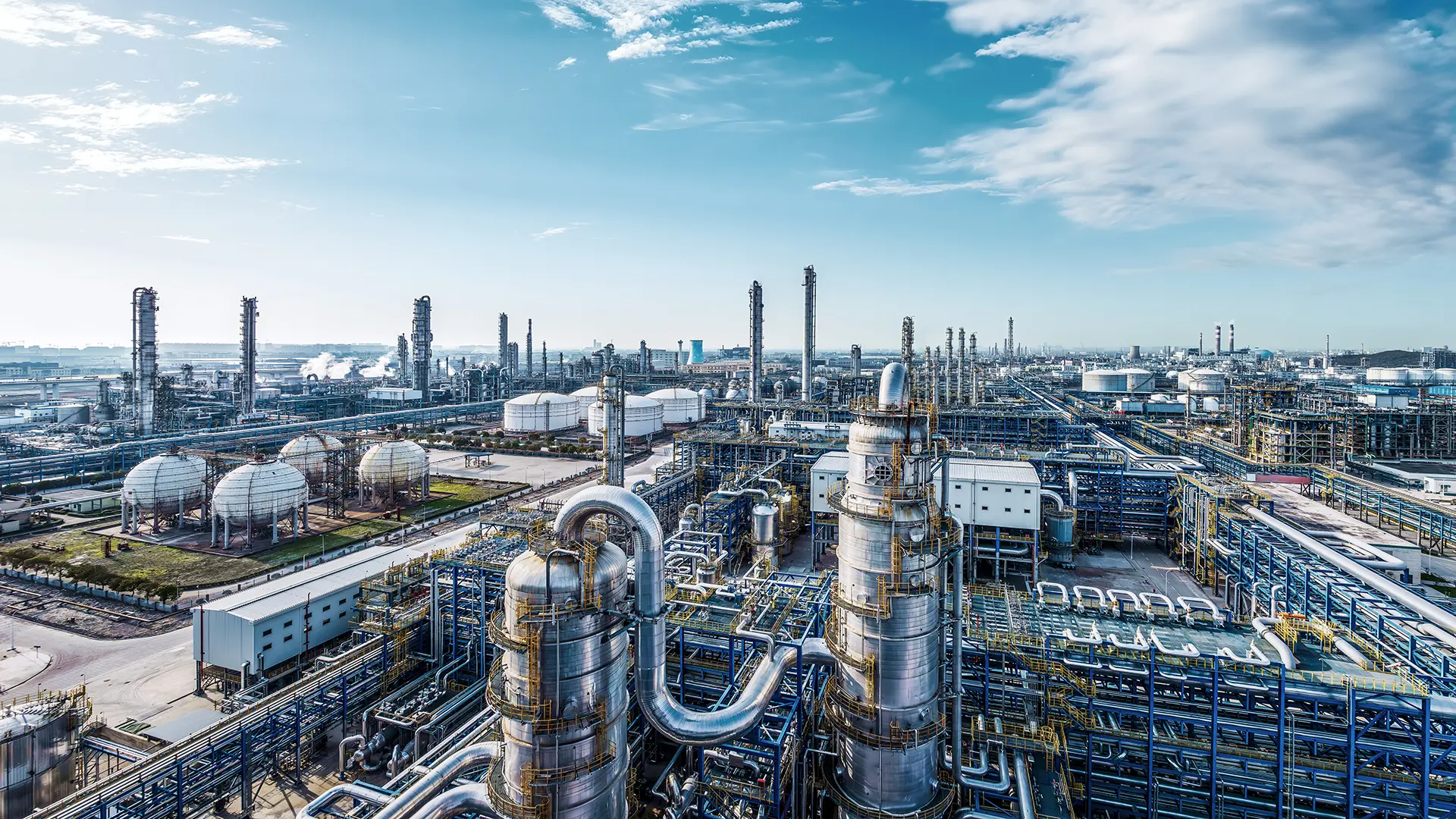
Sasol now is positioned to exploit its traditional synfuel feedstock, coal, on a global scale and to make rapid strides in constructing new gas to liquid (GTL) production plants in regions where the gas feedstock is readily available. The increase in the rate of construction of GTL plants is of parallel importance to the technology employed to produce liquid fuels, as the volume of production and research and development of the technology will witness a continued reduction in prices for GTL.
 Industrialinfo.com spoke to Pat Davies, (Click on image at right to view photo) Sasol's Executive Director for Oil, Gas, GTL, Research and Development, and Technology, in Johannesburg, South Africa last week (March 8) after the presentation of Sasol's interim results by the company's chief executive, Pieter Cox.
"In the 1960's the cost of establishing a plant for GTL production was around $30,000 per daily barrel. Currently, that cost has come down to around $25,000 per daily barrel and in another five years we could be looking at $20,000 per daily barrel or less," said Davies.
When translated to the current cost of building a plant to produce 66,000 barrels per day he said this would come out at $1.65 billion. The current comparative all-inclusive cost for the installation of a conventional crude oil refinery would be around $16,000 per daily barrel, he added.
"The reduction of cost in the GTL production process is similar to the way in which LNG capital expenditure has reduced over time," Davies said (For details see: Gas to Liquids - Global Prospects).
This indicates the possible convergence of the establishment cost of a GTL refinery and conventional crude oil refinery in the course of the next decade. In a presentation given to Deutsche Bank by Davies in late 2003, Davies gives a sense of perspective for GTL in the global oil-energy scene. He showed that Sasol is targeting a daily GTL production of 500,000 barrels per day within the next ten years.
Industrialinfo.com estimates that this 500,000 bpd figure could be compared to around 2.5% of current U.S. daily petrol consumption and about 4.5% of U.S. current daily petroleum imports. These figures are used solely to illustrate the potential contribution of only one company in the GTL field. A number of major oil companies and fuel technology companies are all developing GTL production capacity worldwide. Qatar alone could have something approaching an output of one million bpd of GTL in the next decade, if current plans are realized. Even at $20,000 per daily barrel installed, there is a case to be made for GTL to compete with conventional refinery output with the added advantage that it is a 'clean' fuel.
Oil and gas will each claim 19% ($3.04 trillion) of a total global energy investment of $16 trillion through 2030, according to the International Energy Agency (IEA) and in the gas sector, tankers and GTL are seen as having the highest growth rates. IEA sees the LNG chain, excluding exploration and development and tankers and storage, taking a slice of 8% ($30.2 billion) of the total gas sector. Companies involved will have substantial slices at each end of the 92% ($2.8 trillion), ranging from exploration to transportation and storage and the cape expenditures involved in planning, engineering, and construction. GTL is a capex seed area in this 25-year scenario.
GTL fuels carry a premium over conventional crude oil on account of their near zero sulfur content and can be freighted in standard tankers, whereas LNG requires specialized vessels.
 Davies told industrialinfo.com that Sasol has a research program centered on the Fischer Tropsch (LTFT) slurry bed reactor technology. The proprietary LTFT process is used in the Sasol Slurry Phase reactor, the heart of the integrated, three-step Sasol Slurry Phase Distillate (SPD) process to convert natural gas into a notably clean synthetic diesel (GTL) and other high-grade petrochemical feedstock. (Click on the image to the left to view the Fischer Tropsch reactor and product flow diagram illustration).
From 1992 to 2000, Sasol developed, tested, and refined its new advanced cobalt catalyst at its Sasolburg R&D facility, located 80 kilometers south of Johannesburg. Sasol entered an exclusive agreement with Engelhard Corporation (NYSE:EC) (Iselin, New Jersey) for the production of the cobalt catalyst at a dedicated $24.5 million facility at De Meern in the Netherlands, which has been in operation since 2002. The catalyst is produced for the exclusive use in Sasol GTL projects and with the company's project associate companies. Prior to developing its advanced cobalt catalyst, Sasol's LTFT slurry bed process had been based on various generations of iron-based catalysts.
A factor in the strategy of Sasol's constantly increasing pace of development has been in what would be called in military terms "interior lines of supply". The Sasolburg and Secunda complexes were established with their own local coal mine feeds and if and when Sasol moves into full project development in China the abundant coal supply will be there at hand. "We are in the discussion phase on Chinese projects at present and no specific moves will be made until the end of the year," said Davies. "Our ability to be competitive exporters of product to global market customers far from our South Africa plants has proved the low cost advantages of our integrated feedstock and production network," he added.
In 2002-2003, Sasol Mining produced 51.3 million tons of coal, of which 45.8 million tons was sold to Sasolburg and Secunda, and external international sales only accounted for 3.6 million tons.
With new GTL projects in the planning and construction phases, the use of available gas resources has been the push preceding the pull of the product marketing. Qatar's North Gas Field will provide 330 million cubic feet per day of lean gas for the greater than $900 million Oryx GTL plant at Ras Laffan (PEC 98890047), the world's first commercial GTL venture outside South Africa, which Sasol is constructing as the 49% partner with Qatar Petroleum. The project, which is planned for completion in December 2005, will produce 34,000 barrels per day of liquids output - 24,000 bpd diesel, 9,000 bpd naphtha, and 1,000 bpd LPG.
 Click on image at right to view Oryx GTL plant construction photo.
The Sasol Chevron Escravos GTL (EGTL) venture (PEC 84600019) in the Niger Delta region of southwestern Nigeria will use the associated natural gas accompanying the oil produced by CNL and NNPC. In using this feedstock it will contribute to local environmental concerns, as the gas is currently being flared with residues going into the atmosphere. Site preparation at the site is complete and the EPC contract is expected to be awarded in June this year. Sasol has a $729 million share of 50% risk based financing in the project that will have total design capacity of 34,000 barrels of liquid output per day.
Back at home in South Africa, the first natural gas feedstock from the Temane gas fields arrived in Secunda after a three day, 865 kilometer cross border pipeline trip from Mozambique on February 23. Supply from the Tande and Pande gas fields was ahead of schedule and began the process of the initial phase of delivery of 80 million gigajoules (Gj) per annum of gas, which will replace coal as feedstock at the company's Sasolburg chemicals plant and supplement coal at its synthetic fuels plants at Secunda. Some of the natural gas will be converted into synthesis gas, which is an important building block for the production of Sasol's commodity, intermediate, and specialty chemicals.
The project is expected to deliver 120 million Gj per annum by 2008. Conversion of customers' facilities to receive the gas will start at the end of March and the company's Sasolburg facility will be ready to receive the natural gas at the end of this month. The supply from Mozambique will boost South Africa's primary energy supply of natural gas from 1.5% to around 4.3%. It will also assist government's policy of diversifying energy supply and pushing for cleaner environmental air standards. 20% could be the eventual target figure for the share of gas in the country's energy supply.
Sasol, with some 800 industrial customers, is hoping to push the current project supply to 240 Gj in the course of time. Market sources also say that the company has identified more gas reserves in Mozambique, which could add to the processing production potential at its facilities and to the distribution of natural gas into the national energy system. The $1.2 billion project will boost Mozambique GDP by around 20% and the government will receive some $2 billion in taxes and royalties over the project's 25-year lifespan.
The biggest single project being undertaken at present by Sasol is the $2 billion Project Turbo (with $1.2 billion approved) that has to produce fuel to meet the statutory legal need to produce lead free petrol for the South African market by 2006. The primary need has been constructed into a polymers project with profitable spin-offs. The capacity of the Turbo project will be 190,0000 tons per annum (tpa) of ethylene, 255,000 tpa propylene, 300,000 tpa polypropylene, and 220,000 tpa polyethylene. The cracker and polyethylene should be on stream by the third quarter of 2005 and polyproylene production should be moving in the first quarter of 2006.
As new Sasol projects keep streaming through; a new $100 million oxygen unit; a new $170 million butanol plant, and most recently, the announcement that Sasol is merging with the Malaysian Petronas service station and refinery interests to feed a 1,500 service chain in Southern Africa; the growth is organic growth. This venture will also bolster Sasol's black empowerment credentials, a critical element in any venture for South African companies.
"We have our technical expertise and our experience in managing contractors to keep us up to speed of implementation of new plans and projects it is also important that we know what we are not getting into. For instance we have no ambitions to go into power generation, cogen, or other forms, and we are not pushing hydrogen priorities; although, we have the naphtha and other chemical technological resources to be aware of new opportunities, when and if the time comes," Pat Davies told industrialinfo.com.
In reviewing Sasol's performance the CEO, Pieter Cox noted that the South African Rand's strength against the dollar (R6: $ end 2001, R13: $ 2002, R6.5: $ 2004) had affected operating profit by over $500 million for the year. But he expects will be materially better in the next six months with cost reduction initiatives and ongoing productivity programs expected to yield significant benefits. The dividend per share was maintained. The CEO also and confirmed a number of ongoing projects including industry cooperative agreements between Sasol and other companies.
 Click on image at right to view Pieter Cox Photo
Among these was the Aria Sasol polymers project in Iran, which will have a one million tpa ethane cracker and 300,000 tpa HDPE and LDPE plants. The cracker will be completed in the second quarter 2005 and the polys plants in the fourth quarter 2005. He also confirmed the February 2004 completion date for the $250 million dia-acrylates plant commissioned in February with 25% partner Mitsubishi Chemical Corporation at Sasolburg.
Sasol has research facilities worldwide, including Austin, Texas and St Andrews, Scotland. In the U.S. Sasol has high tech plants producing olefins and surfactants and solvents in Baltimore and Lake Charles. Upstream exploration and development is taking place up the West African Coast with ChevronTexaco (NYSE:CVX) (San Ramon, California)
In its corporate statement the company records a market capitalization of $9 billion and operations in fifteen countries worldwide/outside South Africa. In the future, Sasol expects to apply its synthetic fuel and chemical technology for the commercial production of synthetic fuels and chemicals for low-grade coal (Sasol has a research agreement with KFx Incorporated (AMX: KFX) (Denver, Colorado)). It will apply this technology to convert natural gas to diesel and chemicals. Sasol manufactures over 200 fuel and chemical products that are sold in 90 countries.
Combining organic growth, blending the molecules, and organic production feedstock, Sasol has just announced a project to produce biodiesel fuel from soya beans. Sasol's project manager, Johan Thyse said that 400,000 tons of soya beans would be needed annually to produce around 90 million liters of biodiesel. The current soya crop in South Africa totals about 230,000 tons produced in the eastern, higher rainfall areas. The soya contribution, refined with methanol and other chemicals, would constitute only 5% of the new fuel, but would improve engine lubrication, decrease emission and create human or animal feed as a by-product.
Thyse told Grain SA, a body representing about 17,000 grain producers across South Africa, "The diesel produced is almost better than normal diesel." A two and a half year feasibility study has found that the project is economically viable, even without subsidies and could produce thousands of jobs in poor rural areas. In order for Sasol's management to give the scheme the green light suitable partners, including black empowerment partners, will have to be found - a blend that Sasol should find relatively easy.
Want More IIR News Intelligence?
Make us a Preferred Source on Google to see more of us when you search.
Add Us On GoogleAsk Us
Have a question for our staff?
Submit a question and one of our experts will be happy to assist you.

Forecasts & Analytical Solutions
Where global project and asset data meets advanced analytics for smarter market sizing and forecasting.
Explore Our SolutionsRelated Articles
-
Fertil Pampa Avanza Construccion De Planta De FertilizantesOctober 23, 2026
-
Europe's Mild Winter Outlook Tests Natural Gas PreparednessOctober 16, 2026
-
South Korea's US$747 Billion Energy Transition PlanOctober 16, 2026
-
High Global Fuel Prices Are About Refinery Issues as Much as...October 14, 2026
-
Argentina Fertilizer Plant Construction Moves ForwardOctober 14, 2026

PECWeb Global Market Intelligence Platform
Identify opportunities, anticipate change, and execute with confidence. PECWeb connects the industrial intelligence you need, from projects and assets to operational events, all in one platform.
Discover PecwebIndustry Intel
-
Brazil Critical Minerals 2027: Rare Earths, Lithium, CopperPodcast Episode / Oct 16, 2026
-
US Craft Labor Outlook 2026: Wages, Per Diems, Data CentersPodcast Episode / Oct 16, 2026
-
Latin America Data Center Outlook 2026: Power, Hubs & GrowthPodcast Episode / Oct 9, 2026
-
Food and Beverage CapEx Outlook 2026: Tariffs, AI, AfricaPodcast Episode / Oct 9, 2026
-
North America Refining 2026: New Pipelines to PADD 5Podcast Episode / Oct 2, 2026