Power
Technological Advances, Policy Support Brighten Photovoltaic Sector's Future in North America, Asia
The global photovoltaic (PV) market has grown significantly in recent years, and growth is expected to accelerate in some markets, as supportive policies increase demand and improved manufacturing processes lower costs...
Released Tuesday, April 19, 2011
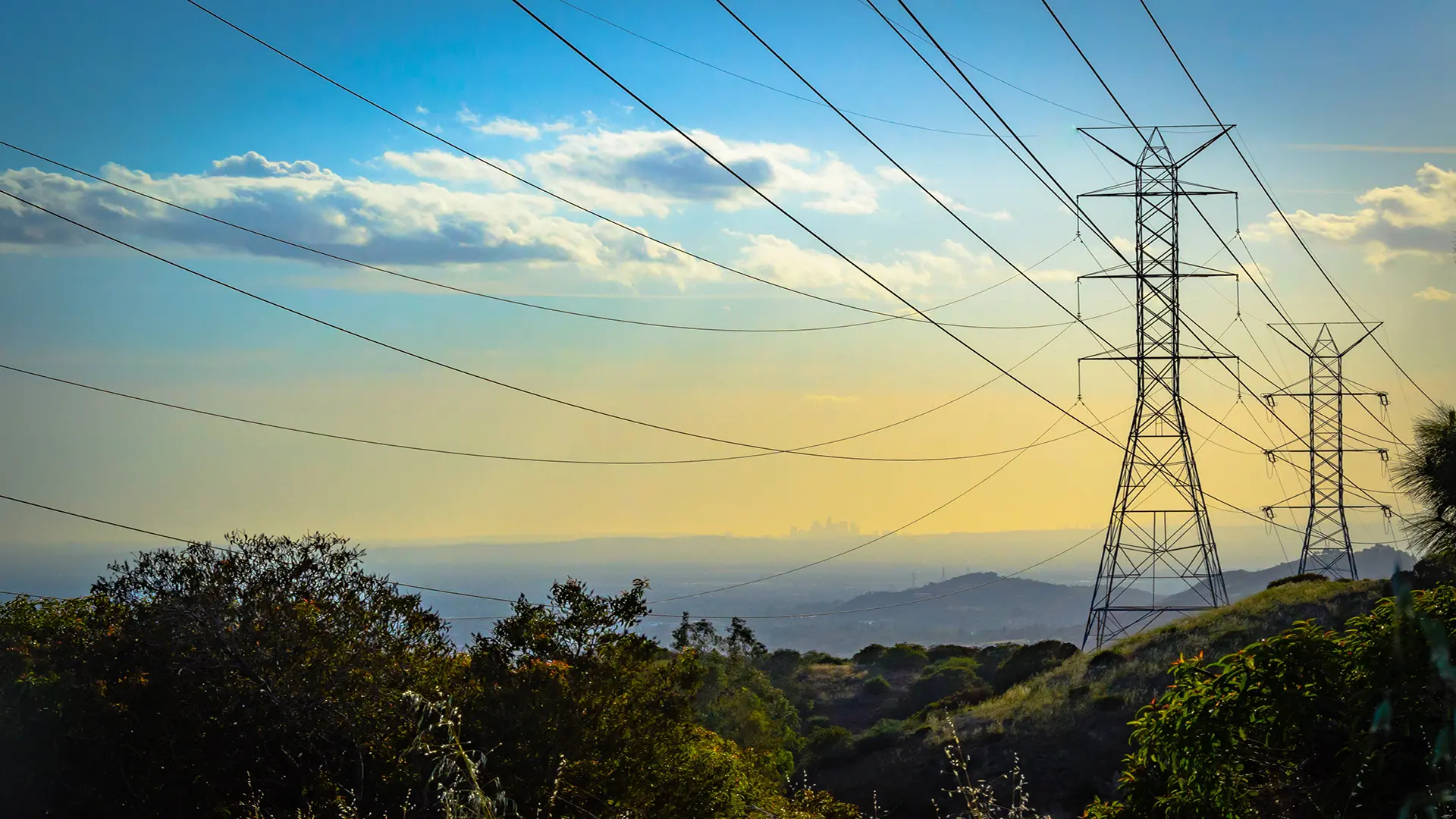
Written by John Egan for Industrial Info Resources (Sugar Land, Texas)--The global photovoltaic (PV) market has grown significantly in recent years, and growth is expected to accelerate in some markets, as supportive policies increase demand and improved manufacturing processes lower costs, speakers from Black & Veatch (B&V) (Overland Park, Kansas) said at an industry webcast last week.
"Solar power is poised to grow exponentially," according to B&V's Gary Layton. "We have seen declining manufacturing costs and successful installations in areas where the sun doesn't shine all the time."
Layton's colleague, Oscar Mak, agreed: "We see global PV demand rising in 2011 pretty much across the board, but there will be some divergence between markets in 2012: European demand is expected to contract in 2012, because declining policy support in some national markets will cut demand." But annual installations in the U.S. and Canada are expected to rise sharply over the 2011-12 period, he added.
Industrial Info's Renewables Tracker database includes more than 6,000 megawatts (MW) of North American solar power projects (both PV and concentrated solar thermal) that are scheduled to begin this year. IIR expects that many of these projects will be delayed due to transmission constraints and difficulties negotiating power purchase agreements (PPAs).
"Policy support for PV is critical to the success of that energy source," continued Mak, a B&V manager specializing in renewable energy. In Asia and North America, policy support is being continued, while in some European markets it is declining, he added.
To demonstrate one type of "policy support," Mak pointed to last week's announcement by the U.S. Department of Energy of a $1.187 billion conditional loan guarantee to the California Solar Valley Ranch, a 250-MW PV project to be built in San Luis Obispo County, California. The project is being developed by SunPower Corporation (NASDAQ:SPWRA) (San Jose, California). NRG Solar LLC, a subsidiary of NRG Energy Incorporated (NYSE:NRG) (Princeton, New Jersey) will own the project, which is expected to begin construction later this year and come online in phases over the 2011-13 period. The project will create an estimated 350 jobs during construction. When complete, it will be one of the world's largest PV installations.
"Fortunately, PV projects in the U.S. were able to make it through the most recent round of congressional budget-cutting without reductions to the DoE's loan guarantee program," Mak noted.
Another form of policy support for PV is on display in Ontario, where various government renewable energy requirements have led to a dramatic increase in both PV manufacturing capability and PV installations, Mak continued. The provincial government enacted a "standard offer program" to spur renewable development over the 2006-09 period, then replaced it with a "feed-in tariff" program last year where homeowners are paid handsome rates for placing PV arrays on their rooftops.
The Ontario government also required 50% of PV components to be sourced from within the province in 2009 and 2010, and this year the level of "domestic sourcing" jumped to 60%, he said. Domestic sourcing requirements are another example of policy support that has nurtured strong growth in the solar industry, Mak said
Mak noted the $6.7 billion renewable-power project award given a few years ago by the Ontario government to a consortia led by Samsung C&T (SEO:000830) (Seoul, South Korea) and Korea Electric Power Corporation (NYSE:KEP) (KEPCO) (Seoul). The consortia will build a 2,500-MW renewable energy generation complex in Ontario, consisting of 500 MW of PV generation and 2,000 MW of wind power over the 2011-16 period. For more on this issue, see January 29, 2010, article - Samsung-KEPCO Consortium Secures $6.7 Billion Green Energy Contract in Ontario. The majority of the equipment for the power complex will be sourced from Ontario.
"These are exciting times for PV--we are seeing rapid growth in markets and the entry of new companies into the business," Ralph Romero, a B&V director, told the webcast. "Over the last few years, we have seen vast improvements in the size, reliability, pricing, and efficiency of PV modules. There has been a significant improvement in the quality of PV modules in the field, and we expect that to continue to improve. But the quality is not uniform across the different types of PV materials. Some companies still have a ways to go."
As the PV industry continues to grow rapidly, Romero said that achieving a more uniformly high quality in the manufacturing and installation of modules will be necessary to fulfill PV's promise.
The webcast's third speaker, Sondra Martinez, discussed how utility-scale PV projects are accounting for a growing percentage of PV installations and PV generating capacity. "Utility-scale PV used to be defined as 10 MW or more in ground-mounted arrays. But today, 'utility-scale' has been redefined to be over 100 MW, with 250 or 300 MW not unusual."
In 2007, utility-scale PV accounted for only 6% of the market, but that figure rose to 28% in 2010, and is projected to continue rising in the next few years, said Martinez, a B&V manager with broad experience in PV projects.
The larger sizes of today's utility-scale PV installations make them harder to site and build: "PV used to be thought of as a 'simple' technology. That's no longer the case," she observed.
Martinez said that investors and lenders are increasingly considering a PV project's technology risk, construction risk, and manufacturing risk before they invest or lend to a PV developer: "With so many new entrants into the PV market, there are questions whether all of the new entrants will be around and have the financial strength to honor their long-term product warranties." She noted that failure of PV inverters have caused a disproportionate share of PV outages. Also, as more and more utility-scale PV projects are connected to the electric grid, utilities are requiring solar farms to have reactive power and ride-through capabilities to cope with grid-related events, she added.
One of the "construction" risks facing PV developers is the ability to find enough qualified subcontractors, Martinez noted: "In large projects, your subcontractors are essentially installing and connecting thousands of the same modular PV arrays. You need to be sure that your subcontractors are not repeating their mistakes thousands of times across the entire project." For more information on the importance of skilled craft labor's fulfilling the promise of renewable energy, see February 8, 2010, article - Green Energy Project Construction Driving Shortage of Skilled Craft Labor in North America.
For more information on the prospects for utility-scale solar power, both PV and concentrated solar thermal, see May 25, 2010 article - Utility-scale Solar Power: A Bright Future Driven by Growing Acceptance, Falling Prices and Growing Demand.
In a recent interview, IIR's Brock Ramey noted that the availability of financing has caused a shift within the solar industry from concentrated solar power (CSP) to more traditional photovoltaic (PV) technologies. "Banks know that PV is a proven technology, and they are more willing to get behind that than they are for some of the more unproven CSP technologies," said Ramey, the research manager for North American Power. "A lot of developers who were proposing large CSP projects have revamped their designs and come back to investors and banks with PV projects, which are getting financed."
View Plant Profile - 1079389
View Project Report - 6005583
Industrial Info Resources (IIR) is the leading provider of global market intelligence specializing in the industrial process, heavy manufacturing and energy markets. IIR's quality-assurance philosophy, the Living Forward Reporting Principle, provides up-to-the-minute intelligence on what's happening now, while constantly keeping track of future opportunities.
/news/article.jsp
false
Want More IIR News Intelligence?
Make us a Preferred Source on Google to see more of us when you search.
Add Us On GoogleAsk Us
Have a question for our staff?
Submit a question and one of our experts will be happy to assist you.

Forecasts & Analytical Solutions
Where global project and asset data meets advanced analytics for smarter market sizing and forecasting.
Explore Our SolutionsRelated Articles

PECWeb Global Market Intelligence Platform
Identify opportunities, anticipate change, and execute with confidence. PECWeb connects the industrial intelligence you need, from projects and assets to operational events, all in one platform.
Discover PecwebIndustry Intel
-
Brazil: Efficiency, Innovation, and Opportunities in the Food & Beverage IndustryPodcast Episode / Jun 12, 2026
-
2026-2027 Investment Radar for Mexico, Central America & the CaribbeanPodcast Episode / May 29, 2026
-
Innovations Shaping the Next Era of Power GenerationPodcast Episode / May 22, 2026
-
The Role of Contract Manufacturing in Global Pharma GrowthPodcast Episode / May 8, 2026
-
2026 North American Labor OutlookPodcast Episode / Apr 24, 2026