Metals & Minerals
U.S. Mining Workforce Outlook: Bright Spots but Significant Vulnerabilities
The U.S. Mining Industry is expected to create 11,000 to 13,000 new jobs per year for the next 20 years, but it is an open question if mining companies can offset the projected exodus of skilled workers...
Released Wednesday, March 21, 2012
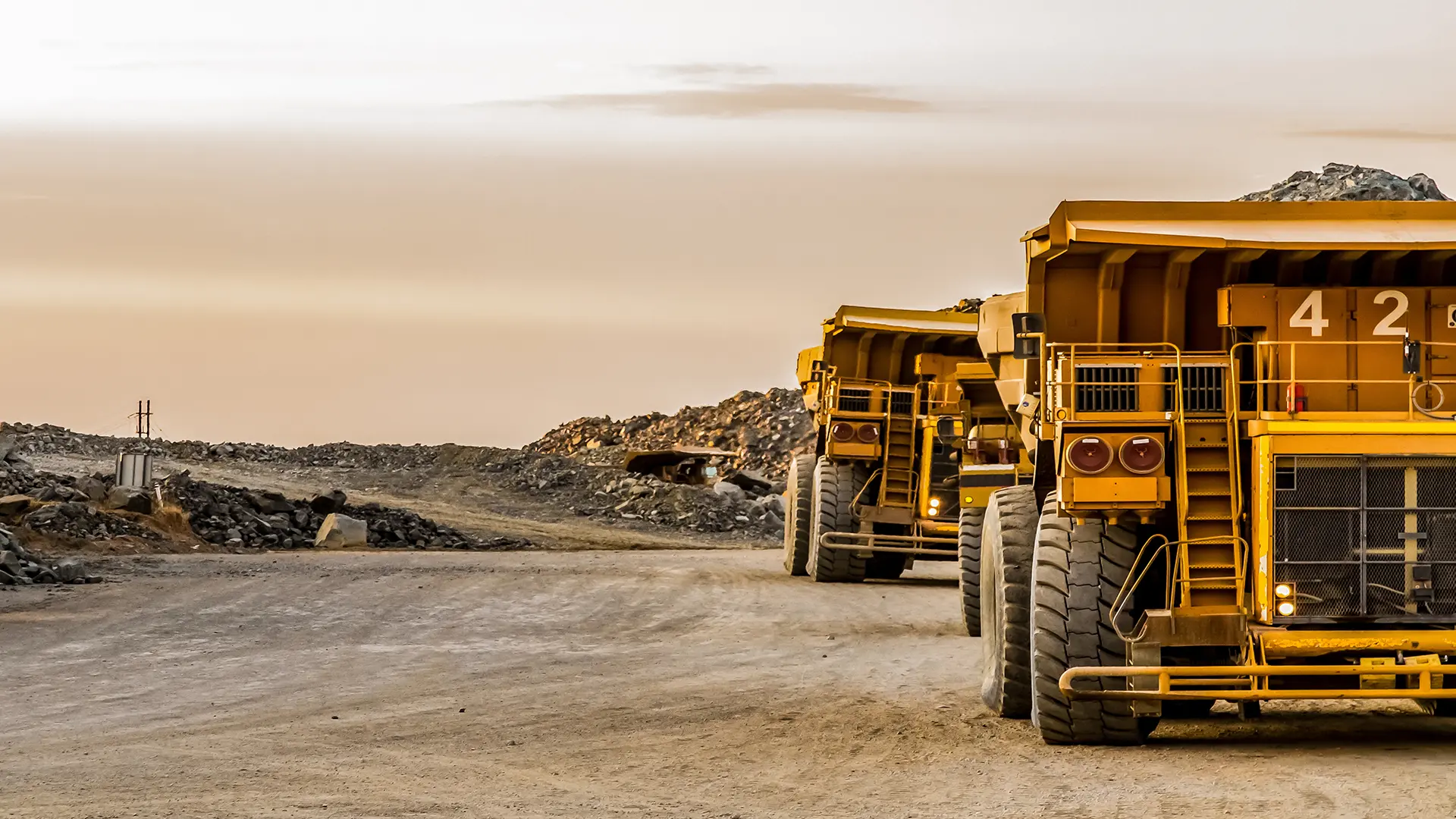
Written by John Egan for Industrial Info Resources (Sugar Land, Texas)--The U.S. Mining Industry is expected to create 11,000 to 13,000 new jobs per year for the next 20 years, but it is an open question if mining companies can offset the projected exodus of skilled workers from the industry, according to a recent mining industry workforce study from the Society of Mining, Metallurgy & Exploration (SME) (Englewood, Colorado).
Including contract labor, all segments of the mining industry employ about 350,000 workers today. The metals and minerals mined by those workers are the starting point in a value chain that accounts for between 10% and 14% of the U.S. gross national product (GNP), according to the study, "Emerging Workforce Trends in the U.S. Mining Industry." Commenting on the study, SME Executive Director David L. Kanagy said: "In order to continue to provide that significant value to the U.S. economy and meet the growing demand for minerals, the mining industry needs a huge influx of skilled and properly trained workers to offset the projected 52% loss of skilled senior labor" between now and 2029.
The expected departure of seasoned mining industry employees, both in the field and in management, is only one strategic trend challenging U.S. mining companies. The study, authored by Clifford N. Brandon III, president of Automated System Alliance Incorporated (Aurora, Colorado), also observed that fast-growing middle classes around the world will increase competition for resources, and the increased demand should push resource prices higher over time. The U.S. is the world's largest consumer of minerals, and as its economy grows, that consumption is expected to rise as well. Meeting the growing global demand for metals and minerals will require creativity on the part of mining companies, the study said.
The study notes that there is "an emerging trend toward mineral nationalism and restrictive trade policies. This could make the U.S. vulnerable to shortages in critical and strategic commodities." The U.S. is particularly vulnerable to "mineral nationalism," as it imports 100% of more than a dozen non-fuel strategic minerals like indium, manganese and rare earth elements (REE). The U.S also relies on imports for 50% or more of 43 other important non-fuel commodities like platinum, iodine, diamonds and cobalt.
While longtime trading partners like Canada, Chile and Australia hold significant deposits of some of these minerals, China also holds large quantities of several strategic minerals, including about 37% of the world's deposits of REE. Until it severely restricted exports of REE in mid-2011, China had supplied an estimated 97% of the world's REE, the report noted.
"The rise of mineral nationalism and restrictions on exports exacerbates the problem of commodity availability," the report continued. "The recent changes in the REE market provide a vivid example of (U.S. vulnerabilities on) this issue."
"Until recently, cost of REE from China has made it impractical, from an investment perspective, for a prospective U.S. REE producer to go through the costly and time-consuming process of permitting a new mine," the SME report observed. Even though Molycorp Incorporated (NYSE:MCP) (Greenwood Village, Colorado) last year restarted work on its $520 million Mountain Pass above-ground rare earth element mine to meet the expected increased demand for REEs in the U.S. and abroad, the report predicts new REE deposits will need to be "identified, permitted, and fast-tracked to production."
The report considers five mining sectors: coal, stone, sand and gravel, metals, and nonmetals (industrial minerals). While each sector has its differences and distinctions, each shares a need to safely and profitably extract and process minerals from the ground. And to do this, they need a skilled workforce.
Overall employment in the U.S. mining industry shrunk from about 425,000 in 1984 to about 350,000 in 2010. Most of the job losses have come in the coal industry, the result of environmental regulation and economic forces that have closed a number of higher-cost Eastern coal mines and shifted a significant portion of production to Western mines, which typically require fewer employees to extract coal by strip-mining. Since the early 1980s, contractors have made up an escalating portion of the workforce, rising from 6% in 1983 to 30% in 2008, the report notes.
The report states that rising reliance on contract labor saves mining companies money, but poses challenges in three specific areas:
- Knowledge base: Increased use of contractors means a company's knowledge base may not reside within the business.
- Fence-hopping: If mining company employees can obtain better pay and benefits as a contractor, employees may attempt to hop the fence and become contractors.
- Control: Like all businesses using contract labor, mines have limited control over the firms that supply contract labor.
The typical U.S. mine employs workers that are about 5.5 years older, on average, than the typical non-mine U.S. business, the report noted. As a growing portion of the mining workforce progresses toward retirement, they will be replaced by younger workers, who have higher incidents of accidents and injuries on the job. The report urges mining companies to consider bringing back retiring works as contractors to train these younger workers, thus passing along valuable operational knowledge and helping prevent accidents and injuries on the job.
View Plant Report - 1008159
View Project Report - 6005786
Industrial Info Resources (IIR), with global headquarters in Sugar Land, Texas, and eight offices outside of North America, is the leading provider of global market intelligence specializing in the industrial process, heavy manufacturing and energy markets. Industrial Info's quality-assurance philosophy, the Living Forward Reporting Principle, provides up-to-the-minute intelligence on what's happening now, while constantly keeping track of future opportunities.
/news/article.jsp
false
Want More IIR News Intelligence?
Make us a Preferred Source on Google to see more of us when you search.
Add Us On GoogleAsk Us
Have a question for our staff?
Submit a question and one of our experts will be happy to assist you.

Forecasts & Analytical Solutions
Where global project and asset data meets advanced analytics for smarter market sizing and forecasting.
Explore Our SolutionsRelated Articles
-
Australia Cutting 500 Jobs at Largest Steelworks WhyallaSeptember 18, 2026
-
Canada Draws in Billions from Toronto Investment SummitSeptember 17, 2026

PECWeb Global Market Intelligence Platform
Identify opportunities, anticipate change, and execute with confidence. PECWeb connects the industrial intelligence you need, from projects and assets to operational events, all in one platform.
Discover PecwebIndustry Intel
-
2026 US Data Center Outlook: Power, Land & CoolingPodcast Episode / Sep 18, 2026
-
2026 Global Power Demand Outlook: Gas, Nuclear & RenewablesPodcast Episode / Sep 18, 2026
-
2026 Oil & Gas CapEx Outlook: Middle East, LNG & PermianPodcast Episode / Sep 4, 2026
-
The Answer Age Starts with Trusted Data: Introducing IIR Envoy™ MCPPodcast Episode / Sep 1, 2026
-
European Chemicals and Transport Fuels OutlookPodcast Episode / Jul 10, 2026