Power
Nuclear, Renewable Energy Expected to Soar as China Flexes its Energy Muscles
China has a big impact on global wind energy, solar energy and nuclear power generation.
Released Monday, June 26, 2017
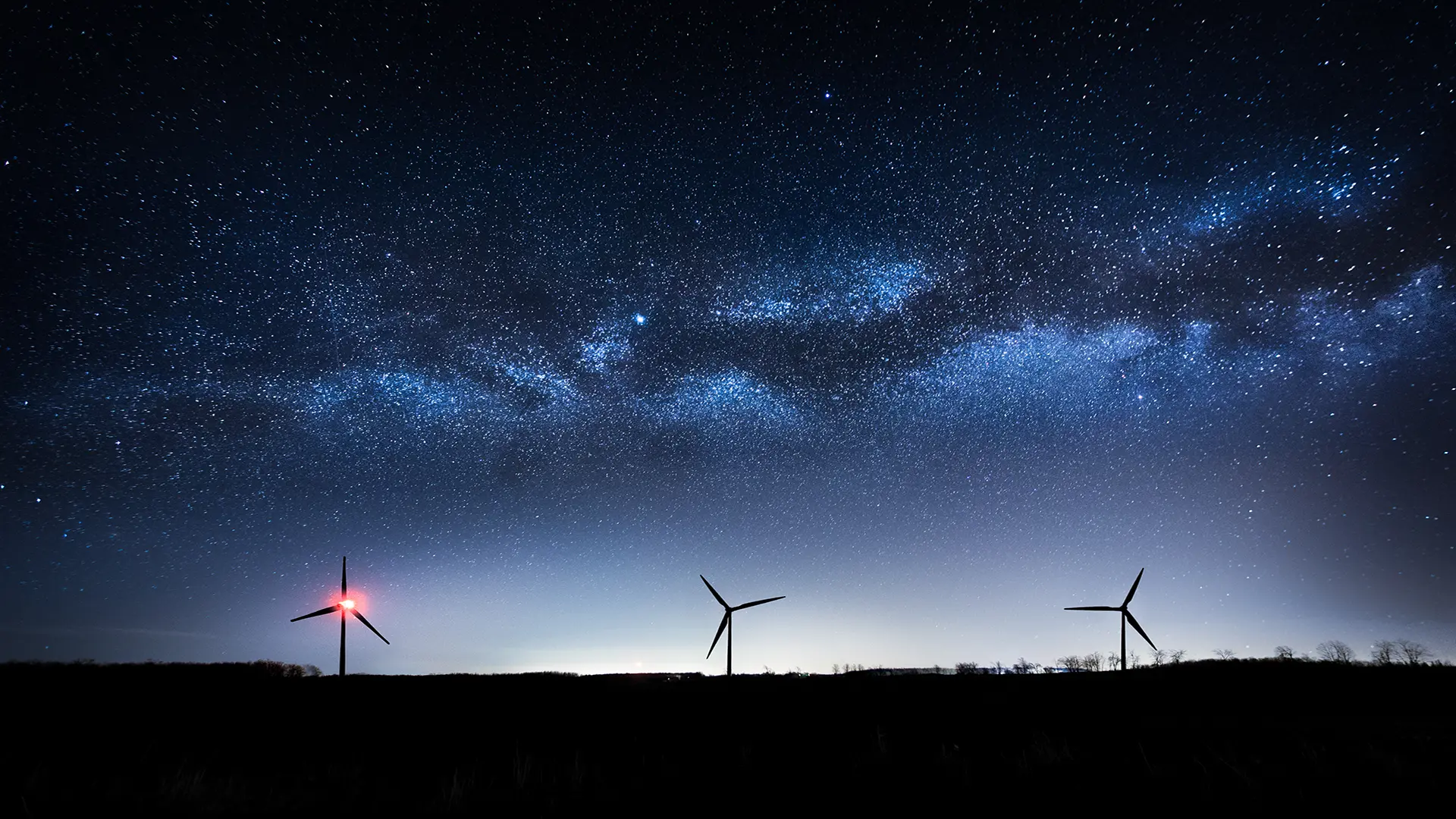
Written by John Egan for Industrial Info Resources (Sugar Land, Texas)--When it comes to the Global Power Industry, China is the proverbial 800-pound gorilla, and that country's changing patterns of electric generation will have a significant impact on wind energy, solar energy and nuclear power through 2035, according to the BP Statistical Review of World Energy, released June 13.
China dramatically increased its output of hydroelectric generation in the 10-year period through 2015, more than tripling its output compared to the 1995-2005 period, BP said. But hydroelectric output in China is expected to slow dramatically over the 2015-2025 and 2025-2035 periods, BP predicted.

Some of hydro's expected slowdown in China can be attributed to that country having already tapped its best-quality resources during the 2005-2015 period, Spencer Dale, BP's group chief economist, said June 13 during the unveiling of the outlook. But the anticipated rise of nuclear power also contributes to hydro's expected dramatic reduction in output.
"In terms of other non-fossil fuels: China provided the main source of world growth in both hydro (up 2.8%, or 120 terawatt-hours [TWh]) and nuclear (up 1.3% or 41 TWh) power," Dale said. "Growth in China's hydro power has slowed sharply in recent years from the rapid rates of expansion that characterized the latter part of the 2000s. In contrast, China's nuclear program is just beginning to ramp up: it brought on five new reactors last year--the largest ever annual increase in China's nuclear history--and has more than 20 reactors currently under construction."
China's rapid expansion of its nuclear fleet, which is slated to grow 11% annually through 2035, is forecast to account for nearly 75% of the world's growth in nuclear generation, BP said. If all of the nuclear generation under development in China comes online as scheduled, it will amount to one new reactor beginning to operate every three months for the next 20 years, the analysis said. On a global basis, China's nuclear program will propel a 2.3% annual growth in nuclear-generated electricity for the next 18 years.

Nuclear energy generation is also expected to grow meaningfully in Organisation for Economic Cooperation and Development (OECD) Asian countries, notably Japan, which is expected to continue its nuclear restart program over the next few years. However, that restart program is not expected to lead to the reactivation of every shuttered reactor in Japan. The Fukushima Dai'ichi accident in 2011 dramatically reduced nuclear generation in OECD countries between 2005 and 2015. Europe's nuclear generation is expected to ramp down over the next 18 years, as the retirement of aging reactors outpaces the construction of new units. By 2035, Europe's nuclear generation is about 30% lower than its 2015 output.
Turning to renewable energy, mainly wind and solar, BP forecasted a 7.6% annual growth for the duration of its outlook, to 2035, dramatically increasing those fuels' share of power output to about 20% in 2035 from about 7% in 2015.
European Union countries are expected to continue aggressively adding renewable generation: those fuels' share of the power market is expected to double, to about 40%, by 2035, far outpacing renewables' share of the U.S., Chinese and world power generation market.

While Europe will be aggressively adding to its wind and solar power generation fleet in an absolute sense, the Continent's renewable power growth rate will fall dramatically from what it was during the 1995-2015 period, BP said. China's renewable power growth rate, meanwhile, is projected to surge over the next two decades, doubling its strong growth rate of the prior 20-year period. Although the U.S. growth rate of renewable generation is expected to remain strong, over the next two decades, China will add more solar and wind generation than the U.S. and Europe combined, BP predicted.

The rising role of renewable energy in electric power is one of the three critical takeaways from the BP annual energy projection, the BP economist said. The rise of renewables will be propelled by continued lowering of costs coupled with carbon taxes that hobble coal's competitiveness, BP said. "The leading light of the energy transition is, of course, renewable energy, which continued to grow rapidly last year, led by wind (up 15.6% or 131 TWh) and solar (up 29.6% or 77 TWh)," Dale said.
"China continued to dominate renewables growth, contributing over 40% of global growth--more than the entire OECD--and surpassing the U.S. to become the largest producer of renewable power," he added.
BP projected wind power and solar power will grow rapidly through 2035, but wind power's growth rate will be faster than solar's because its costs will continue to decline more rapidly than solar's.
In North America, the cost to build new wind generation ranged between about $30 and $60 per megawatt-hour (MWh) in 2015, a range that will drop markedly over the next 20 years. By contrast, solar generation cost between $55 and $115 per MWh to build in 2015, a range that is expected to drop to between $40-$85 per MWh in 2025 and about the same in 2035.
"Wind power costs are assumed to fall materially throughout the (next 18 years), reflecting the view that there is considerable scope to improve the performance of wind turbines in harvesting the wind, BP said. "The cost of solar power is expected to continue to fall, although the pace of that reduction slows, as the rapidly-declining PV module costs account for a decreasing share of the total installed solar costs."
China will see a similar decline in new-build costs for wind and solar, with wind's costs falling faster than solar's.
Meanwhile, the cost to build new gas- and coal-fired generation is expected to increase in North America and China, mainly because of expected carbon taxes that begin at $20 per ton of carbon dioxide (CO2) in 2015 and rise to $40 per ton of CO2 in 2025 and $60 per ton in 2035. Those taxes were measured in 2015 dollars. While a number of European countries have a carbon tax, the U.S. does not. That, plus the Trump administration's commitment to exit the Paris climate accord and revise the Obama administration's Clean Power Plan, could throw a monkey wrench into BP's assessment of future new-build generation prices.

"Overall, the analysis, including the estimated impact of system integration costs, suggests that onshore wind power will remain more competitive than solar energy in both the U.S. and China power sectors, with gas providing the main source of competition in the U.S. and coal in China," BP said.
Industrial Info Resources (IIR), with global headquarters in Sugar Land, Texas, five offices in North America and 10 international offices, is the leading provider of global market intelligence specializing in the industrial process, heavy manufacturing and energy markets. Industrial Info's quality-assurance philosophy, the Living Forward Reporting Principle, provides up-to-the-minute intelligence on what's happening now, while constantly keeping track of future opportunities. Follow IIR on: Facebook-Twitter-LinkedIn. For more information on our coverage, send inquiries to info@industrialinfo.com or visit us online at https://www.industrialinfo.com/.
/news/article.jsp
false
Want More IIR News Intelligence?
Make us a Preferred Source on Google to see more of us when you search.
Add Us On GoogleAsk Us
Have a question for our staff?
Submit a question and one of our experts will be happy to assist you.

Forecasts & Analytical Solutions
Where global project and asset data meets advanced analytics for smarter market sizing and forecasting.
Explore Our SolutionsRelated Articles
-
Trump Admin Continues Offshore Wind War with Revolution Wind...October 15, 2026
-
U.S. Nuclear Body Gives Second SMR Permit in Six MonthsOctober 15, 2026
-
Europe Makes its First SMR InvestmentOctober 14, 2026
-
Fervo Starts Up 33-MW Utah Geothermal Power Plant UnitOctober 13, 2026

PECWeb Global Market Intelligence Platform
Identify opportunities, anticipate change, and execute with confidence. PECWeb connects the industrial intelligence you need, from projects and assets to operational events, all in one platform.
Discover PecwebIndustry Intel
-
Latin America Data Center Outlook 2026: Power, Hubs & GrowthPodcast Episode / Oct 9, 2026
-
Food and Beverage CapEx Outlook 2026: Tariffs, AI, AfricaPodcast Episode / Oct 9, 2026
-
North America Refining 2026: New Pipelines to PADD 5Podcast Episode / Oct 2, 2026
-
Biomanufacturing Onshoring 2026: GLP-1, CDMO and ReshoringPodcast Episode / Oct 2, 2026
-
2026 US Data Center Outlook: Power, Land & CoolingPodcast Episode / Sep 18, 2026
