Petroleum Refining
An Industry Profile: U.S. Petroleum Refining Outlook
The next wave that petroleum refiners will be riding will be more of an investment in capacity expansion as well as a feedstock change, or ratio modification from sweet crude, the more expensive, to sour crude, the cheaper oil - Includes U.S. Petroleum Refining Industry Project Spending Analysis Chart
Released Tuesday, March 21, 2006
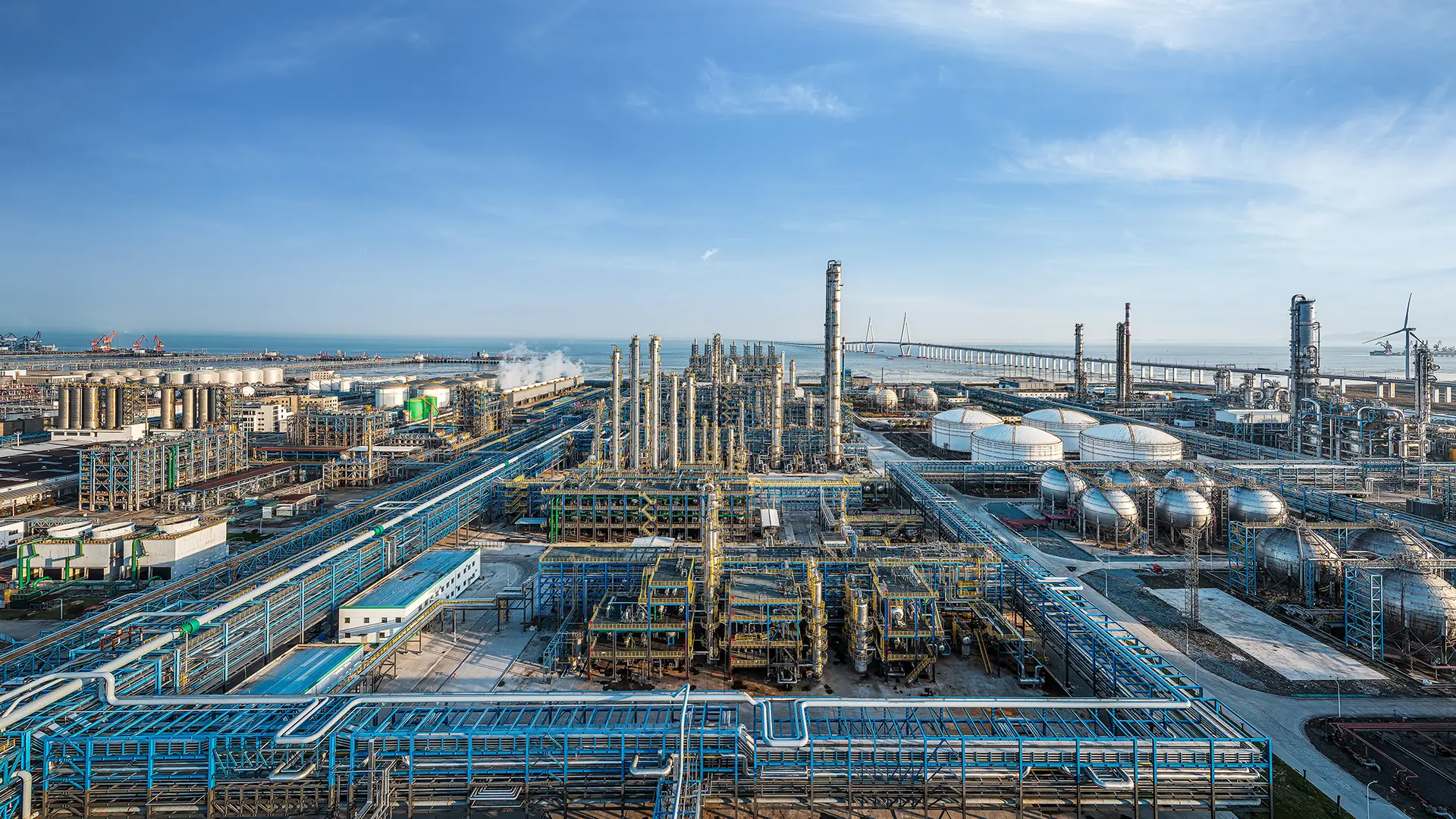
Researched by Industrial Info Resources (Sugar Land, Texas). The next wave that petroleum refiners will be riding will be more of an investment in capacity expansion as well as a feedstock change, or ratio modification from sweet crude, the more expensive, to sour crude, the cheaper oil. Each refinery and each refiner will individually define these projects depending on geography, purchase agreements and accessibility, all will all play a role in determining the direction and amount invested in the future. Some refiners might prefer to double the input of oil into the front-end of the refinery, while others might choose to incrementally increase the amount of downstream products produced. These are no small projects, regardless of what decision is made. These are all billion-dollar projects and will be engineered and implemented over the next six years.
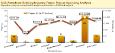 Industrial Info is tracking more than $20 billion in future project spending in the Petroleum Refining Industry in the U.S. at about 567 projects. Click on the image at right to view a chart showing the breakdown of these projects by market region.
Companies from the Gulf Coast up through the Midwest are investing in these projects to stay competitive in an ever-changing market place. Marathon Petroleum Corporation, LLC in Garyville, Louisiana is planning at least six new unit additions that include a second crude unit, delayed coker unit, reformer unit, fluid cat cracker unit, hydrocracker unit and a kerosene hydrotreater unit. All of these particular projects amount to $2.2 billion in investment dollars. Motiva Enterprises, LLC is also planning on spending over $2 billion on unit additions at its site in Port Arthur, Texas. The new units will include a catalytic reformer unit, delayed coker unit, hydrocracker unit, sulfur recovery unit and a crude unit. In Whiting, Indiana, BP is planning on spending only half as much as the other two companies by investing more than $1 billion on unit additions that include a delayed coker and a diesel desulfurizer unit. BP is also planning to revamp its number 12 crude unit.
The clean fuel requirements hit refiners with changes just to maintain operations. The capacity increases, be it feedstock or downstream products, and ratio changes from sweet to sour are considered more revenue generating projects.
The instability in the Middle East and South America, two of our largest importer regions, have led refiners to seriously consider oil sands in Canada. The country is more stable and, at this time, much confidence is invested, as well as money, in this next generation of oil supply.
The U.S. Refining Industry is fast approaching the imposed deadline for all petroleum refineries to meet the EPA demand of reducing the sulfur content of on-road diesel fuel to 15 parts per million (ppm). June of 2006, refineries in the United States and all imported diesel fuel must meet the regulations that are intended to reduce sulfur emissions, thereby decreasing the amount of sulfuric oxides in the atmosphere that are believed to be party to global warming, acid rain, and human health issues.
Hydrotreaters have been installed across the nation and will continue to be upgraded and modified as the emission standards become more stringent regarding refineries. These hydrotreaters allow the refiners to produce the ultra-low sulfur diesel that is now demanded by U.S. law.
The next hurdle for clean fuels will be directed towards heating oil, off-road diesel, locomotive, and agricultural use. By 2010, the same 15 ppm requirement will be imposed on the manufacturing of these fuels. This will necessitate multi-billion dollars worth of refinery additions, upgrades and modifications. Just like with the first round of emission reductions, the refineries will be given credits to adjust between units and among sites, but an overall compliance will be enforced.
For details on the projects mentioned in this article contact Industrial Info's Member Center at 1-800-762-3361.
Industrial Info Resources (IIR) is a Marketing Information Service company that has been doing business for over 23 years. IIR is respected as the leader in providing comprehensive market intelligence pertaining to the industrial processing, heavy manufacturing, and energy-related industries throughout the world.
/news/article.jsp
false
Want More IIR News Intelligence?
Make us a Preferred Source on Google to see more of us when you search.
Add Us On GoogleAsk Us
Have a question for our staff?
Submit a question and one of our experts will be happy to assist you.

Forecasts & Analytical Solutions
Where global project and asset data meets advanced analytics for smarter market sizing and forecasting.
Learn MoreRelated Articles
-
Western Gateway Pipeline to Advance in U.S.April 21, 2026
-
Gasoline Prices Crimping U.S. EconomyApril 17, 2026

Industrial Project Opportunity Database and Project Leads
Get access to verified capital and maintenance project leads to power your growth.
Learn MoreIndustry Intel
-
2026 Regional Chemical Processing OutlookOn-Demand Podcast / Mar. 2, 2026
-
From Data to Decisions: How IIR Energy Helps Navigate Market VolatilityOn-Demand Podcast / Nov. 18, 2025
-
Navigating the Hydrogen Horizon: Trends in Blue and Green EnergyOn-Demand Podcast / Nov. 3, 2025
-
ESG Trends & Challenges in Latin AmericaOn-Demand Podcast / Nov. 3, 2025
-
2025 European Transportation & Biofuels Spending OutlookOn-Demand Podcast / Oct. 27, 2025