Petroleum Refining
Balance 2005: The Economy of Latin American Refineries
Overall, Latin America contains 13% of the worlds oil reserves and is now the second largest region of oil production after the Middle East - Includes Latin America Refineries List
Released Wednesday, March 01, 2006
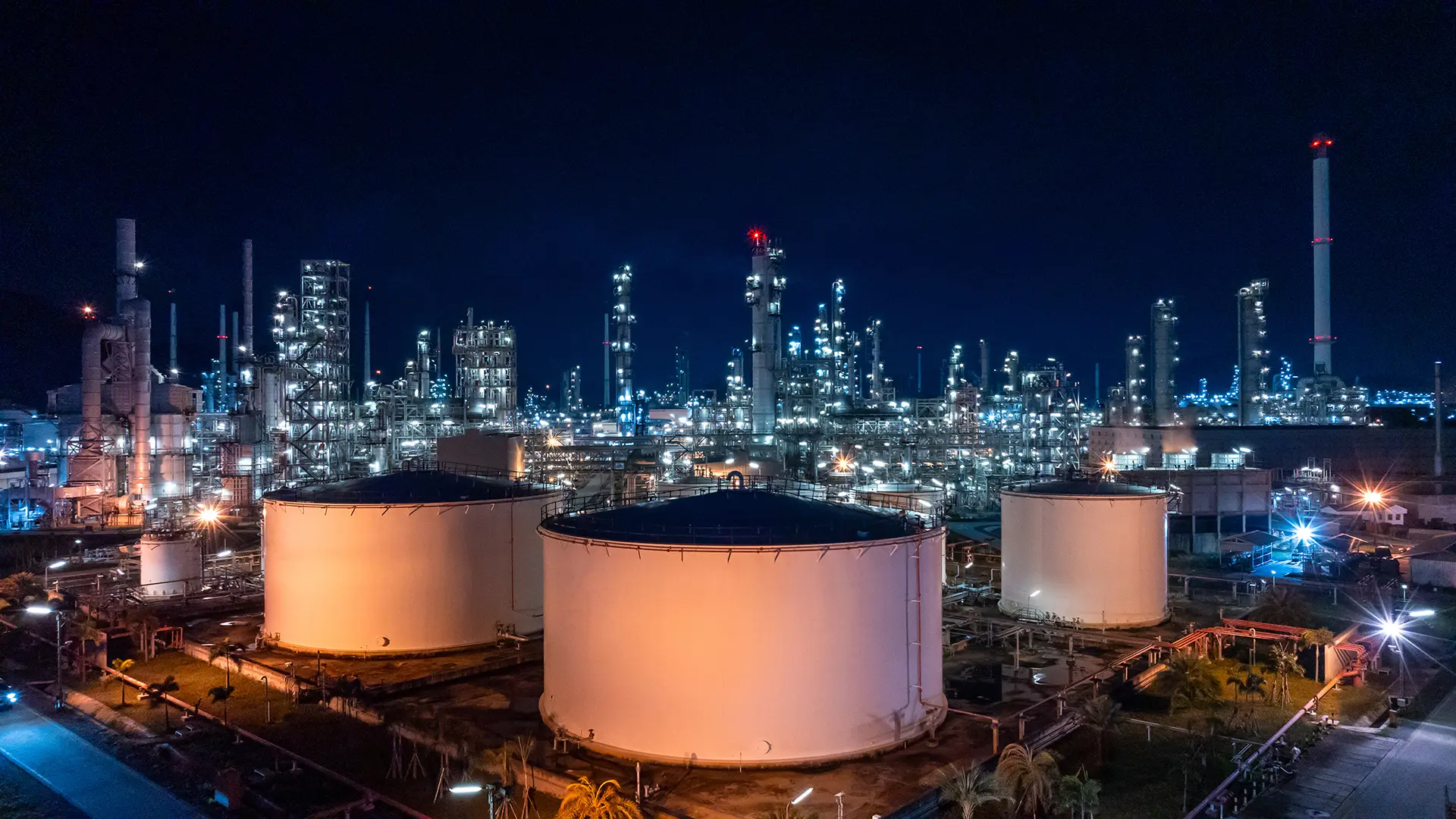
Industrialinfo.com (Industrial Information Resources, Incorporated; Houston, Texas). In 2005, according to the Economic Commission for Latin America and the Caribbean (CEPAL), Latin America experienced economic growth (GDP) of 4.3% overall. The countries with the greatest growth in Latin America were Venezuela, Argentina, and the Dominican Republic with economic growth of 9%, 9%, and 7%, respectively. Uruguay, Peru, Panama and Chile showed 6% growth, Haiti 1.5%, and equally Brazil and El Salvador increased by 2.5%.
Latin Refinery Overview
Overall, Latin America contains 13% of the worlds oil reserves and is now the second largest region of oil production after the Middle East. According to the Fact Book of América Economía, Latin America supplies about 30% of the oil consumed by the United States, the world´s largest oil consumer. The largest and most important oil companies of the region (Pétroleos Mexicanos- D.F., México, PVDSA Caracas, Venezuela, and Petrobras Sao Paulo, Brazil) recorded a turnover in 2004 of more than $180 billion, equivalent to the GDP of a country the size of Portugal.
Fuel price increases have peaked interest on petroleum industries and consequently brought about the maximum utilization of the capacity of each refinery, as well as plans for expansion for the coming decade. Both Brazil and Venezuela are planning to build at least five additional refineries. In addition, Petrocaribe (of Venezuela), Petrosur (of Argentina, Brazil, and Venezuela), and Petroandina (of Bolivia, Colombia, Ecuador, Peru and Venezuela) are planning to adapt their refineries to process Venezuelan heavy crude oil.
 Click on the image at right to view a list of Latin American Refineries.
Argentina
INDEC (National Institute of Statistics and Census) announced that in 2005 Argentina broke the record by exporting more than $13 million in raw materials, mining, and agricultural goods. This is a 16% increase compared to 2004, and thus accumulated a trade surplus of $3.6 million.
Last year the production of petroleum derived products increased 15.7% in regards to the elaboration of fuel oil, 5.4% in fuels for jet propulsion, and 1% in gasoline. There were important drops in diesel oil by 3.2%, kerosene by 31. 4%, and even LPG (Liquefied Petroleum Gas) dropped 9.8%.
Mercosur, a free trade zone commonly known as the Southern Common Market, consolidated itself as the main buyer with 19% of the total Argentinean production. Other buyers are the European Union with 17%, ASEAN (Korea, China, Japan and India) with 16%, and NAFTA (North American Free Trade Agreement between Canada, USA and Mexico) the remaining 15%.
Venezuela
According to the Organization of Countries Exporting Petroleum, even though there has been an increase in production of 55 thousand barrels per day, Venezuelan crude oil production remained at 2.6 million barrels per day, only a little bit higher than the previous 2.57 million barrels per day registered in 2004.
Mexico
Overall, 2005 was a good year for Mexico in that the country earned altogether $16 billion and a 65% of that amount is associated with petroleum exports. According to Mexicos Treasury, the oil income grew 10% due to high international prices of crude oil.
Last year, Mexicos state owned petroleum company Petroleos Mexicanos (PEMEX) accumulated the highest trade surplus in its history by reaching 25% more than in 2004.
Brazil
According to the International Energy Agency (IEA), an intergovernmental body committed to ensure reliable and affordable energy for its 26 members; Brazil is the third oil producer in Latin America, with a production of 1.9 million barrels per day.
Petrobras is the most important company in the area operating throughout the world. Other important petroleum companies are PEMEX (Mexico) and PDVSA (Venezuela). What is more, Brazil accounts for the third largest gas reserve in Latin America with a volume of 10 billion cubic meters, even though Brazil is still the fourth largest producer in Latin America.
Moreover, this year Brazil could reduce $400 million in imports due to the reduction in oil dependence through the use of bio fuels (view related note February 13, 2006: Petrobras Studies the Construction of an Ethanol Pipeline)
For more information on refining in the Americas see Industrial Info's Petroleum Refining Database or contact Member Center at 1-800-762-3361 for details.
Industrial Info Resources (IIR) is a Marketing Information Service company that has been doing business for over 23 years. IIR is respected as the leader in providing comprehensive market intelligence pertaining to the industrial processing, heavy manufacturing, and energy-related industries throughout the world.
/news/article.jsp
false
Want More IIR News Intelligence?
Make us a Preferred Source on Google to see more of us when you search.
Add Us On GoogleAsk Us
Have a question for our staff?
Submit a question and one of our experts will be happy to assist you.

Forecasts & Analytical Solutions
Where global project and asset data meets advanced analytics for smarter market sizing and forecasting.
Learn More
Industrial Project Opportunity Database and Project Leads
Get access to verified capital and maintenance project leads to power your growth.
Learn MoreIndustry Intel
-
2026 Regional Chemical Processing OutlookOn-Demand Podcast / Mar. 2, 2026
-
From Data to Decisions: How IIR Energy Helps Navigate Market VolatilityOn-Demand Podcast / Nov. 18, 2025
-
Navigating the Hydrogen Horizon: Trends in Blue and Green EnergyOn-Demand Podcast / Nov. 3, 2025
-
ESG Trends & Challenges in Latin AmericaOn-Demand Podcast / Nov. 3, 2025
-
2025 European Transportation & Biofuels Spending OutlookOn-Demand Podcast / Oct. 27, 2025